Dominate TikTok Shop: 7 Beauty Brand Success Strategies
Discover how 7 beauty brands are crushing it on TikTok Shop with real case studies, proven playbooks, and strategies driving millions in sales. Learn more.
Beauty isn't just thriving on TikTok Shop — it's rewriting the rules of how products get discovered, trusted, and purchased.
- Seed products to hundreds of creators at scale, as one brand turned 400 seeded creators into $500K/month in TikTok Shop revenue.
- Price your beauty products between $10 and $45 to hit TikTok Shop's impulse-buy sweet spot, where 60% of purchases are under $50.
- Leverage before-and-after and swatch-style short-form videos that communicate product value in under 10 seconds to maximize engagement.
- Target beauty content specifically, since it receives 2.5x higher engagement rates than the TikTok platform average.
- Build for repeat purchases by promoting consumable products like skincare that drive reorders every 6–8 weeks beyond the initial viral spike.
In 2024, beauty and personal care became the single largest product category on TikTok Shop in the U.S., accounting for an estimated 25–30% of total GMV on the platform, according to data from Tabcut and Kalodata market reports. Hashtags like #TikTokMadeMeBuyIt have accumulated over 70 billion views, and a disproportionate share of those viral moments belong to skincare serums, lip products, SPF mists, and hair treatments.
But here's the thing most brands miss: the beauty brands winning on TikTok Shop aren't just lucky. They're running specific, repeatable playbooks — creator strategies, content formats, promotional cadences, and seeding programs — that turn algorithmic momentum into seven-figure revenue.
This post breaks down seven anonymized case studies of TikTok Shop beauty brands that are dominating the platform right now. For each one, we'll dissect the exact strategy behind their success so you can steal the playbook and apply it to your own brand.
Whether you're a DTC skincare founder exploring how to sell beauty products on TikTok Shop, or a brand manager at a mid-market cosmetics company looking to scale past $100K/month, this is your blueprint.
Let's get into it.
Why Beauty Products on TikTok Shop Are Outperforming Every Other Category
Before we dive into the case studies, let's understand why beauty has such a structural advantage on TikTok Shop.
The Perfect Storm: Visual, Emotional, and Impulse-Driven
Beauty products check every box that TikTok's algorithm and commerce infrastructure reward:
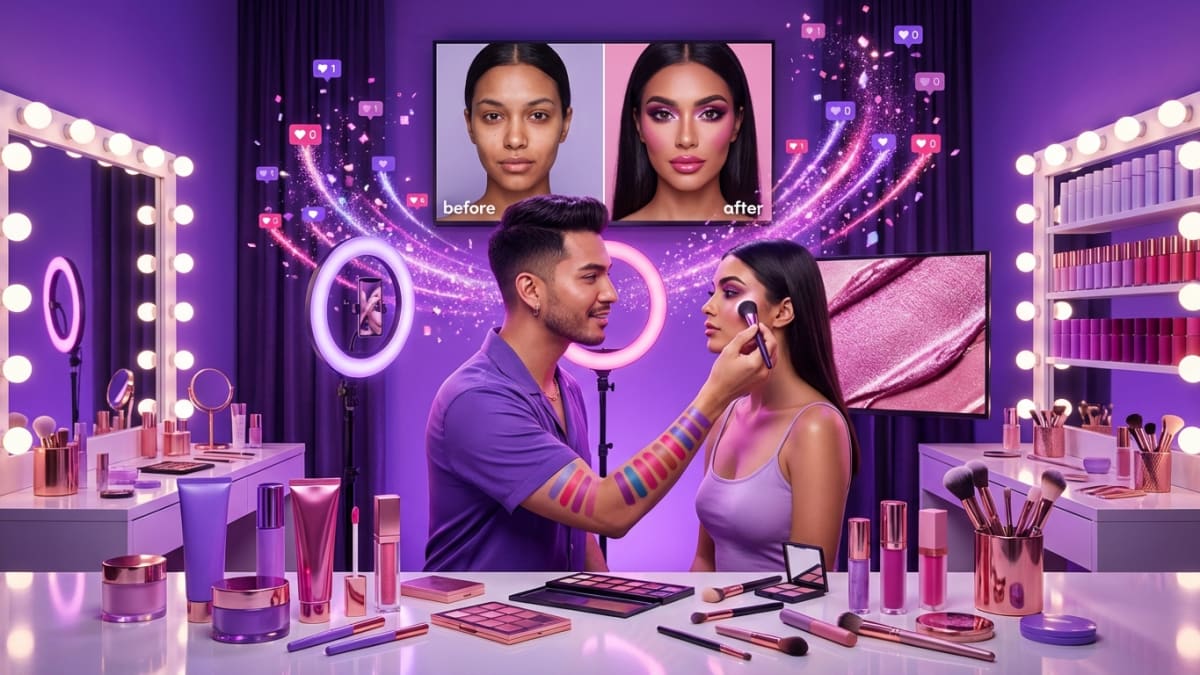
- Visually demonstrable. A before-and-after skincare transformation or a lipstick swatch video communicates value in under 10 seconds. TikTok's short-form format was practically built for this.
- Emotionally resonant. Beauty is tied to identity, confidence, and self-expression — the emotional triggers that drive impulse purchases.
- Price-point sweet spot. The average beauty product on TikTok Shop falls between $10 and $45, which sits perfectly in the platform's impulse-buy range. According to a 2024 Jungle Scout consumer trends report, 60% of TikTok Shop purchases are under $50.
- Repeat purchase potential. Skincare and cosmetics are consumable.One viral moment doesn't just drive a spike — it creates a customer who reorders every 6–8 weeks.
- Creator-friendly. Virtually any creator can authentically review a beauty product.You don't need a niche expert; you need someone with a face, a camera, and an honest opinion.
TikTok's own 2024 commerce report found that beauty-related shopping content receives 2.5x higher engagement rates than the platform average. The algorithm literally favors this content because users engage with it more.
Now let's see how the smartest brands are capitalizing.
Case Study #1: The Viral Serum Brand — How Product Seeding at Scale Created a $500K Month
The Brand
A U.S.-based skincare brand selling a vitamin C serum priced at $28. They were doing roughly $30K/month through their Shopify store before launching on TikTok Shop.
The Playbook
This brand went all-in on product seeding — sending free units to hundreds of micro and mid-tier creators (10K–250K followers) without requiring any content in return. Their philosophy: remove friction, trust the product, and let authentic content emerge organically.
Over a 90-day period, they seeded approximately 400 creators through a structured outreach program.Of those 400:
- ~180 posted at least one piece of content
- ~35 videos exceeded 100K views
- 3 videos crossed 2 million views
The Results
The brand hit $500K in TikTok Shop revenue in a single month — a 16x increase from their pre-TikTok baseline. Their best-performing video was a simple "morning routine" clip from a creator with 47K followers showing the serum's texture and glow effect.
Key Takeaway for TikTok Shop Beauty Brands
Product seeding works at scale when you have a product with a strong visual payoff. The math is simple: if you send 400 units at a cost of $5–$8 each (COGS), your total investment is $2,000–$3,200. Even one viral hit can return 100x that investment.
For a deeper dive into this strategy, check out our complete guide on TikTok Shop Product Seeding.
Case Study #2: The Lip Product Brand — Leveraging Affiliate Commissions to Build a Creator Army
The Brand
A cosmetics brand specializing in lip glosses and lip liners, with products priced between $12 and $18.
The Playbook
Instead of relying solely on seeding, this brand built an aggressive affiliate program through TikTok Shop's native affiliate marketplace. They offered creators a 20% commission — significantly above the category average of 10–15% — and paired it with exclusive discount codes that gave buyers 15% off.
The higher commission rate attracted a flood of creators. But the brand didn't stop there.They created a "Creator Resource Hub" — a simple Google Drive folder with product photos, key talking points, trending audio suggestions, and example hooks. This reduced the creative burden on affiliates and dramatically increased content quality.
The Results
Within 60 days, the brand had over 600 active affiliates producing content.Their TikTok Shop revenue grew from $15K/month to $180K/month. The average order value increased by 22% because creators frequently bundled lip liner + gloss recommendations.
Key Takeaway
Commission rate is a competitive lever most beauty brands underutilize. When you're in a crowded category like lip products, offering 18–25% commission makes creators choose you over competitors. The margin hit is more than offset by volume.
Case Study #3: The SPF Brand — Winning with Educational Content and Dermatologist Creators
The Brand
A clean beauty SPF brand with a hero product priced at $34.
The Playbook
This brand recognized that sunscreen is an education-driven purchase. Consumers don't impulse-buy SPF the way they buy a lip gloss — they need to understand UV protection, ingredient safety, and application technique.
So they built their entire TikTok Shop strategy around dermatologist and esthetician creators. They identified approximately 50 licensed skincare professionals on TikTok with followings between 20K and 500K and offered them a hybrid deal: free product + a flat fee of $200–$500 per video + affiliate commission on sales.
The content format was consistent: "Derm reacts" and "Esthetician explains why this SPF is different" — formats that leveraged authority and trust.
The Results
The brand's TikTok Shop conversion rate was 3.2x higher than the beauty category average, driven by the credibility of professional creators. They scaled to $120K/month within 90 days, with a customer acquisition cost (CAC) 40% lower than their Meta ads.
Key Takeaway
For beauty products that require education or trust-building (SPF, retinol, chemical exfoliants), expert creators outperform lifestyle influencers. The perceived authority translates directly into higher conversion rates.
Case Study #4: The Hair Care Brand — Dominating Through Live Shopping Events
The Brand
A hair care brand selling a bond-repair treatment and styling cream, with products priced between $22 and $38.
The Playbook
This brand made TikTok Shop Live the centerpiece of their strategy. They hosted live shopping events 4–5 times per week, each lasting 2–4 hours. But they didn't just go live from their own account — they partnered with hair stylists and beauty creators to host lives from their accounts, tapping into established audiences.
Their live format followed a tight structure:
- Hook (first 5 minutes): Creator demonstrates a dramatic hair transformation using the product
- Education (minutes 5–15): Explain the science behind bond repair, answer live questions
- Social proof (minutes 15–25): Show user-submitted before/after photos
- Flash offer (every 30 minutes): Limited-time bundle deal exclusive to live viewers
According to TikTok's 2024 live commerce data, users who watch a TikTok Shop Live for more than 10 minutes are 5x more likely to purchase than those who discover a product through a short-form video alone.
The Results
The brand's live shopping events generated an average of $8,000–$15,000 per session. Their best single live event — a "wash day" transformation hosted by a stylist with 300K followers — generated $47,000 in revenue in 3 hours. Monthly TikTok Shop revenue stabilized at $250K+.
Key Takeaway
Live shopping is the most underutilized tool for beauty products on TikTok Shop. The format allows for real-time demonstration, Q&A, and urgency creation — all of which are critical for higher-priced beauty products. For a complete breakdown of live commerce strategy, see our guide on TikTok Shop Live Shopping Strategy.
Case Study #5: The K-Beauty Brand — Riding Trend Waves with Speed-to-Content
The Brand
A Korean beauty brand selling cushion compacts, snail mucin products, and glass skin serums, with price points between $14 and $30.
The Playbook
This brand built a trend response system that allowed them to activate creators within 24–48 hours of a trending beauty moment on TikTok. When "glass skin" surged as a search term, they had 15 creators posting content within 36 hours. When a competitor's product went viral for the wrong reasons (ingredient controversy), they had comparison videos live within a day.
Their secret weapon was maintaining a roster of 50+ pre-vetted, pre-seeded creators who had already received products and were on standby for activation. When a trend hit, the brand simply sent a brief via DM: the trending audio, a suggested hook, and a reminder of their affiliate link.
The Results
The brand's fastest trend response generated $90,000 in 72 hours when a "dewy skin routine" trend exploded. Over 6 months, their TikTok Shop revenue averaged $200K/month with remarkably consistent performance because they were constantly riding micro-trends.
Key Takeaway
Speed is a competitive moat on TikTok. Beauty brands that can activate creators within 24–48 hours of a trend will capture disproportionate share. This requires having pre-built creator relationships — not scrambling to find partners after a trend has already peaked.
This is exactly the kind of always-on creator infrastructure that MomentIQ builds for beauty brands. Through algorithmic creator matching and managed seeding programs, MomentIQ ensures you have a deep bench of activated creators ready to move when the algorithm presents an opportunity.
Case Study #6: The Clean Beauty Brand — Building a Loyalty Loop Through TikTok Shop Exclusives
The Brand
A clean beauty brand selling a curated line of fragrance-free, vegan skincare products priced between $18 and $42.
The Playbook
This brand differentiated on TikTok Shop by offering platform-exclusive products and bundles — items that couldn't be found on their website, Amazon, or in retail. They launched a "TikTok Shop Only" discovery kit ($29) that included travel sizes of their three hero products.
The exclusivity angle gave creators a compelling narrative: "You can ONLY get this on TikTok Shop." It also gave the brand a way to introduce new customers to their full product line at a low commitment price point.
They paired this with a promotional cadence that followed a monthly rhythm:
- Week 1: Seed new creators with the exclusive kit
- Week 2: Creator content goes live; run TikTok Shop ads amplifying top-performing organic videos
- Week 3: Launch a flash sale (20% off the kit) to create urgency
- Week 4: Retarget engaged users with full-size product offers
The Results
The discovery kit became their #1 selling SKU across all channels, with a 38% repurchase rate for full-size products within 60 days. TikTok Shop revenue grew from $0 to $160K/month in 4 months.
Key Takeaway
TikTok Shop-exclusive products create urgency, give creators a unique story to tell, and allow you to control pricing without channel conflict. For beauty brands selling through multiple channels, this strategy is a game-changer.
Case Study #7: The Indie Fragrance Brand — Micro-Creators and the Power of Sensory Storytelling
The Brand
An indie fragrance brand selling perfume oils and body mists priced between $20 and $55.
The Playbook
Fragrance is arguably the hardest beauty category to sell through video — you can't smell through a screen. This brand overcame that challenge through sensory storytelling: they coached creators to describe scents using vivid, relatable comparisons.
Instead of saying "this smells like bergamot and sandalwood," creators said things like: "This smells like the lobby of a luxury hotel in Dubai" or "Imagine walking through a garden after it rains, but make it expensive."
The brand worked exclusively with nano and micro-creators (1K–30K followers), sending product to 200+ creators per month. They found that smaller creators produced more authentic, conversational content — and TikTok's algorithm rewarded that authenticity with outsized reach.
The Results
The brand's average video from a micro-creator received 4.7x more engagement per follower than content from creators with 100K+ followings. Their TikTok Shop revenue reached $85K/month within 5 months, with fragrance becoming one of the fastest-growing sub-categories in beauty on the platform.
Key Takeaway
Don't underestimate micro-creators. For beauty brands — especially in sensory categories like fragrance — smaller creators often deliver higher ROI because their content feels like a genuine recommendation from a friend, not a polished ad.
Scaling micro-creator outreach is where become invaluable, automating the discovery and outreach process so you can seed hundreds of creators per month without a massive team.
The Universal Playbook: How to Sell Beauty Products on TikTok Shop
Across all seven case studies, several patterns emerge. Here's the consolidated playbook that every TikTok Shop beauty brand should follow:
1. Seed Aggressively and Consistently
Product seeding isn't a one-time campaign — it's an always-on engine. The top-performing beauty brands in our case studies were sending product to 100–400 creators per month, every month. Volume creates optionality; optionality creates viral moments.
2. Optimize Your Affiliate Commission
The beauty category on TikTok Shop is competitive. If you're offering 10% commission while competitors offer 20%, creators will promote their products instead of yours. Benchmark your commission against category leaders and don't be afraid to go aggressive — especially during launch phases.
3. Match Creator Type to Product Type
- Impulse products (lip gloss, mascara, setting spray): Lifestyle and beauty creators, 10K–250K followers
- Education products (SPF, retinol, acids): Dermatologists, estheticians, skincare professionals
- Sensory products (fragrance, body care): Micro-creators who excel at storytelling
- Transformation products (hair treatments, acne solutions): Before/after content specialists
4. Build a Content Cadence, Not Just a Content Calendar
The most successful beauty brands on TikTok Shop follow a weekly rhythm:
- Monday–Tuesday: Seed new creators, send briefs for trending content
- Wednesday–Thursday: Amplify top-performing organic content with TikTok Shop ads
- Friday–Saturday: Host live shopping events (peak engagement hours: 7–10 PM local time)
- Sunday: Analyze performance data, identify top creators for deeper partnerships
5. Use TikTok Shop-Exclusive Offers to Drive Urgency
Flash sales, exclusive bundles, and platform-only products give creators a compelling reason to promote your brand now — and give consumers a reason to buy now instead of comparison shopping.
6. Invest in Live Commerce
TikTok's internal data shows that brands using live shopping see an average of 30% higher GMV compared to those relying solely on short-form video. For beauty, where demonstration and real-time Q&A are powerful, live should be a core pillar — not an afterthought.
7. Prioritize Speed Over Perfection
The TikTok algorithm rewards recency and relevance. A slightly imperfect video posted during a trending moment will outperform a beautifully produced video posted a week late. Build systems that let you activate creators in 24–48 hours.
Why Creator Matching Is the #1 Growth Lever for Beauty Brands on TikTok Shop
If there's one thread that ties all seven case studies together, it's this: the right creator makes or breaks your TikTok Shop performance.
But finding the right creators at scale is brutally hard. Most beauty brands face the same challenges:
- Spending hours manually searching TikTok for creators who actually post beauty content
- Sending hundreds of outreach messages with single-digit response rates
- Partnering with creators who have large followings but low commerce intent
- Struggling to maintain relationships with creators across multiple campaigns
This is the problem MomentIQ was built to solve.
MomentIQ's algorithmic creator matching platform identifies creators who are not just relevant to your beauty niche, but who have demonstrated commerce performance — meaning they've actually driven sales on TikTok Shop before. The platform handles everything from creator discovery and outreach to product seeding logistics, content coordination, and performance tracking.
For beauty brands specifically, MomentIQ's approach means:
- Faster creator activation: Get matched with pre-vetted beauty creators in days, not weeks
- Higher conversion rates: Creators are selected based on commerce metrics, not just follower count
- Scalable seeding programs: Send product to hundreds of creators per month with full logistics support
- Live commerce strategy: Access creators experienced in TikTok Shop Live who can host high-converting sessions
The beauty brands dominating TikTok Shop in 2025 aren't doing it alone. They're leveraging infrastructure that lets them move fast, seed wide, and convert consistently.
The Bottom Line: Beauty Products on TikTok Shop Are Just Getting Started
TikTok Shop is projected to exceed $17.5 billion in U.S. GMV in 2024, according to estimates from Bloomberg and eMarketer. Beauty is leading that charge, and the brands that build their TikTok Shop infrastructure now will compound that advantage for years.
The seven case studies above prove that there's no single path to success — but there are universal principles: seed aggressively, match creators to product types, move at the speed of culture, and invest in live commerce.
The question isn't whether your beauty brand should be on TikTok Shop. It's whether you're building the systems to win there.
Ready to Build Your TikTok Shop Beauty Playbook?
If you're a beauty brand doing $10K–$500K/month and you want to scale faster on TikTok Shop, MomentIQ can help you build the creator infrastructure, seeding programs, and live commerce strategy to get there.
We'll analyze your current TikTok Shop performance, identify the creator strategy that fits your product line, and map out a 90-day plan to accelerate your growth. No fluff. No generic advice. Just a data-driven roadmap built for beauty brands ready to dominate.