
How Fashion Brands Skyrocket on TikTok Shop
Discover 5 niche strategies helping fashion brands drive $1M+ on TikTok Shop in 2025. Learn how top sellers dominate the fastest-growing social commerce vertica
Fashion is the fastest-growing vertical on TikTok Shop — and it's not even close.
- Prioritize affiliate creator programs over owned content and paid ads alone, as fashion brands using affiliates generate 4.7x more GMV.
- Leverage try-on hauls, outfit transitions, and GRWM formats to tap TikTok's algorithm, which disproportionately surfaces visual transformation content.
- Use bundling strategies and live commerce upsells to increase AOV, which rose 28% YoY for TikTok Shop fashion in Q4 2024.
- Optimize product listings to set accurate size and fit expectations, reducing margin-killing returns from misaligned buyer expectations. reducing margin-killing returns
- Act now to build your TikTok Shop fashion infrastructure — active sellers grew 300% in one year, and early movers gain compounding algorithmic advantages.
According to TikTok's 2024 Commerce Report, apparel and accessories accounted for 35% of all TikTok Shop GMV in the U.S., outpacing beauty, home goods, and electronics combined. Statista projects thewill surpass $100 billion globally by the end of 2025, with TikTok commanding an increasingly dominant share of that pie.
But here's the uncomfortable truth most TikTok Shop fashion brands won't admit: the vast majority are leaving seven figures on the table.
They're seeding products to the wrong creators.They're running GRWM content that generates views but zero add-to-carts. They're hemorrhaging margin on returns because their listings fail to set accurate expectations. And they're— burning 30+ hours a week on outreach that yields a 3% acceptance rate.
Sound familiar? You're not alone. And you're not stuck.
This guide breaks down the five niche strategies that separate fashion brands generating $1M+ on TikTok Shop from everyone else stuck below six figures. These aren't generic "post more content" tips. They're the exact frameworks — from size-inclusive try-on haul campaigns to creator archetype matrices — that MomentIQ deploys for fashion and apparel clients scaling to seven figures and beyond.
If you're a fashion brand manager, DTC founder, or TikTok Shop seller ready to stop guessing and start scaling, Talk to a Strategist — and see exactly where your current strategy is leaking revenue.
Let's get into it.
Why TikTok Shop Fashion Brands Are Dominating Social Commerce in 2025
Before we dive into strategy, let's ground ourselves in why fashion on TikTok Shop is fundamentally different from every other e-commerce channel — and why the opportunity window is narrowing faster than most brands realize.

The Algorithm Favors Fashion Content
TikTok's recommendation engine disproportionately surfaces fashion content.Try-on hauls, outfit transitions, and GRWM videos consistently rank among the top 5 content formats by watch time and engagement, according to TikTok's Creative Center data. The algorithm rewards visual transformation — and nothing transforms more visually than clothing.
This creates a compounding advantage: fashion content gets more organic distribution, which drives more affiliate creator interest, which generates more content, which feeds the algorithm further. Brands that enter this flywheel early build an algorithmic moat that latecomers simply cannot replicate.
The Numbers Don't Lie
Consider these data points shaping the TikTok Shop apparel landscape in 2025:
- eMarketer reports that 67% of Gen Z consumers have purchased clothing through a social platform, with TikTok Shop leading conversion rates at 2.4x the social commerce average.
- Average order values for fashion on TikTok Shop rose 28% year-over-year in Q4 2024, driven by(TikTok Commerce Report, 2024).- Fashion brands using affiliate creator programs generate 4.7x more GMV than those relying solely on owned content and paid ads (FastMoss Industry Benchmark, 2024).
- The TikTok Shop fashion category saw over 300% growth in active sellers between January 2024 and January 2025 — meaningyou wait.
Here's what this means for you: the brands building their TikTok Shop fashion infrastructure right now will own the category. The ones still "evaluating the channel" will be paying 5x the creator rates and competing against entrenched algorithmic advantages 12 months from now.
Your competitors are already scaling. The question isn't whether TikTok Shop works for fashion — it's whether you'll capture your share before the window closes.
Strategy #1: Size-Inclusive Try-On Haul Creator Campaigns
Why Generic Try-On Content Fails Fashion Brands
Most fashion brands approach TikTok Shop creator campaigns with a fatal flaw: they seed products to creators who look like their lookbook models.

The result? Content that feels aspirational but not relatable. Viewers watch, double-tap, and scroll — without ever clicking "Add to Cart." The conversion gap between aspirational fashion content and relatable fashion content on TikTok Shop is staggering: relatable try-on content converts at 3.2x the rate, according to aggregate TikTok Shop analytics data.
The brands hitting $1M+ have figured out something critical: TikTok Shop shoppers buy when they can see themselves in the product. That means size-inclusive campaigns aren't just a nice DEI initiative — they're a revenue multiplier.
The Size-Inclusive Campaign Framework
Here's how top-performing fashion brands structure these campaigns:
- Seed each SKU across 4-5 body types. Don't send your bestselling dress to 20 size-4 creators. Send it to creators in sizes XS, M, L, XL, and 2XL. Each creator's audience self-selects, and you capture demand across the entire size curve.
- Script the "honest fit" angle. The highest-converting try-on hauls on TikTok Shop include candid commentary: "Here's how this fits my size 14 body — where it's snug, where it flows, and whether I'd actually wear it out." This builds trust and dramatically reduces returns (more on that in Strategy #4).- Tag every video to the same product listing. When a shopper lands on your listing and sees video reviews from creators who look like them, purchase confidence skyrockets. Listings with diverse creator content see 41% higher conversion rates than those with homogeneous content.
- Use creator content as Spark Ads fuel. The top-performing Spark Ads for fashion brands aren't polished brand videos — they're raw, authentic try-on clips from real creators across body types.
One mid-size women's apparel brand implemented this exact framework with MomentIQ's algorithmic creator matching system.Within 60 days, they scaled from $22K to $187K in monthly TikTok Shop GMV — with their size-inclusive content outperforming their traditional influencer content by 280% on ROAS.
The challenge? Finding and managing creators across this many body types, content styles, and audience demographics at scale. Manual outreach doesn't cut it — you'd need a full-time team just to maintain the pipeline.This is exactly where MomentIQ's proprietary matching technology and managed seeding infrastructure eliminate the bottleneck.
Strategy #2: GRWM Content Funnels That Actually Convert
The GRWM Trap Most Fashion Brands Fall Into
"Get Ready With Me" content is the single most-watched format in fashion on TikTok — but it's also the format with the widest gap between views and sales.

Why? Because most brands treat GRWM as a top-of-funnel awareness play. The creator shows the outfit, maybe mentions the brand, and the video dies in the algorithmic ether without a single conversion event.
The brands generating seven figures treat GRWM as a full-funnel commerce engine. Here's the difference.
Building a GRWM-to-Cart Funnel
Stage 1: The Hook GRWM (Discovery)
This is the viral layer. Short, punchy, visually compelling. "Getting ready for a first date in all [Brand] pieces under $40." No hard sell. The goal is watch time, shares, and follower acquisition. These videos should target broad audiences and optimize for engagement, not immediate conversion.
Stage 2: The Deep-Dive GRWM (Consideration)
Once a viewer has engaged with Stage 1 content (liked, followed, or watched to completion), they enter the retargeting pool. Stage 2 content is longer-form: detailed styling breakdowns, fabric close-ups, "5 ways to wear this one piece" videos. These videos link directly to TikTok Shop product pages and should include the yellow shopping basket icon.
Stage 3: The Social Proof GRWM (Decision)
This is where the sale happens. Compilation-style content featuring multiple creators wearing the same piece. Customer comment screenshots. "I bought this because of TikTok — here's my honest review." Decision-stage GRWM content converts at 5.8x the rate of discovery-stage content when properly sequenced.
The key insight: these three stages must be orchestrated across your creator roster, not left to chance. You need different creator archetypes producing content for each stage — and a data system that identifies which creators drive engagement versus which drive conversions.
Most fashion brands don't have this infrastructure. They seed products, hope for the best, and wonder why their GRWM views don't translate to GMV. If your GRWM content is generating views but not revenue, Talk to a Strategist to see how algorithmic creator matching and full-funnel content orchestration can transform your conversion rates.
Strategy #3: Seasonal Trend-Jacking Calendars for TikTok Shop Apparel
Why Fashion Brands Need a TikTok-Native Trend Calendar
Here's what most sellers get wrong about selling fashion on TikTok Shop: they plan their content calendar around traditional retail seasons.

Spring collection drops in March. Fall preview in August. Holiday push in November.
TikTok doesn't operate on retail time. It operates on trend time. And trend cycles on TikTok move 3-5x faster than traditional fashion cycles.
"Coastal grandmother" went from zero to 500 million views in 11 days. "Office siren" dominated for three weeks before pivoting to "corporate core." "Mob wife aesthetic" drove an estimated $14M in TikTok Shop fashion sales in a single month before the trend peaked.
The brands generating $1M+ don't react to trends — they anticipate them with a systematic trend-jacking calendar.
Building Your 90-Day Trend-Jacking Calendar
A TikTok Shop fashion trend-jacking calendar operates on three layers:
Layer 1: Predictable Moments (Plan 60+ Days Out)
These are the cultural tentpoles you can plan around:
- Back-to-school (July-August)
- Festival season (March-June)
- Wedding guest season (April-September)
- Holiday party dressing (November-December)
- "New year, new wardrobe" resets (January)
- Valentine's Day date night looks (February)
For each moment, pre-identify 3-5 SKUs, brief 10-15 creators, and have content ready to deploy the moment search volume spikes.
Layer 2: Emerging Aesthetic Trends (React Within 48 Hours)
This is where most brands fail. An aesthetic trend surfaces — "quiet luxury," "coquette," "tomato girl summer" — and by the time the brand's marketing team gets approval to create content, the trend has peaked.
The fix: maintain a pre-briefed creator roster that can produce trend-responsive content within 24-48 hours. This requires having products already in creators' hands and a rapid-activation communication system.
Layer 3: Micro-Moments (Real-Time Activation)
A celebrity wears something similar to your product. A viral sound pairs perfectly with your latest drop. A TikTok creator starts a styling challenge that aligns with your brand.
Brands with always-on creator networks can activate on micro-moments within hours — generating GMV spikes that competitors miss entirely.
One streetwear brand working with MomentIQ built a trend-jacking calendar that covered all three layers. When a specific aesthetic trend exploded in Q3 2024, they activated 47 creators within 36 hours — generating $312K in GMV from a single trend cycle that lasted less than two weeks. Their competitors, still stuck in the approval process, captured zero.
This kind of speed requires infrastructure — a pre-vetted, pre-seeded creator network, real-time trend monitoring, and instant activation capability. It's not something you can duct-tape together with a spreadsheet and a VA.
Strategy #4: Return-Rate Mitigation Through Video-First Listings
The Hidden Margin Killer for Fashion on TikTok Shop
Let's talk about the metric that keeps fashion brand CFOs up at night: return rates.
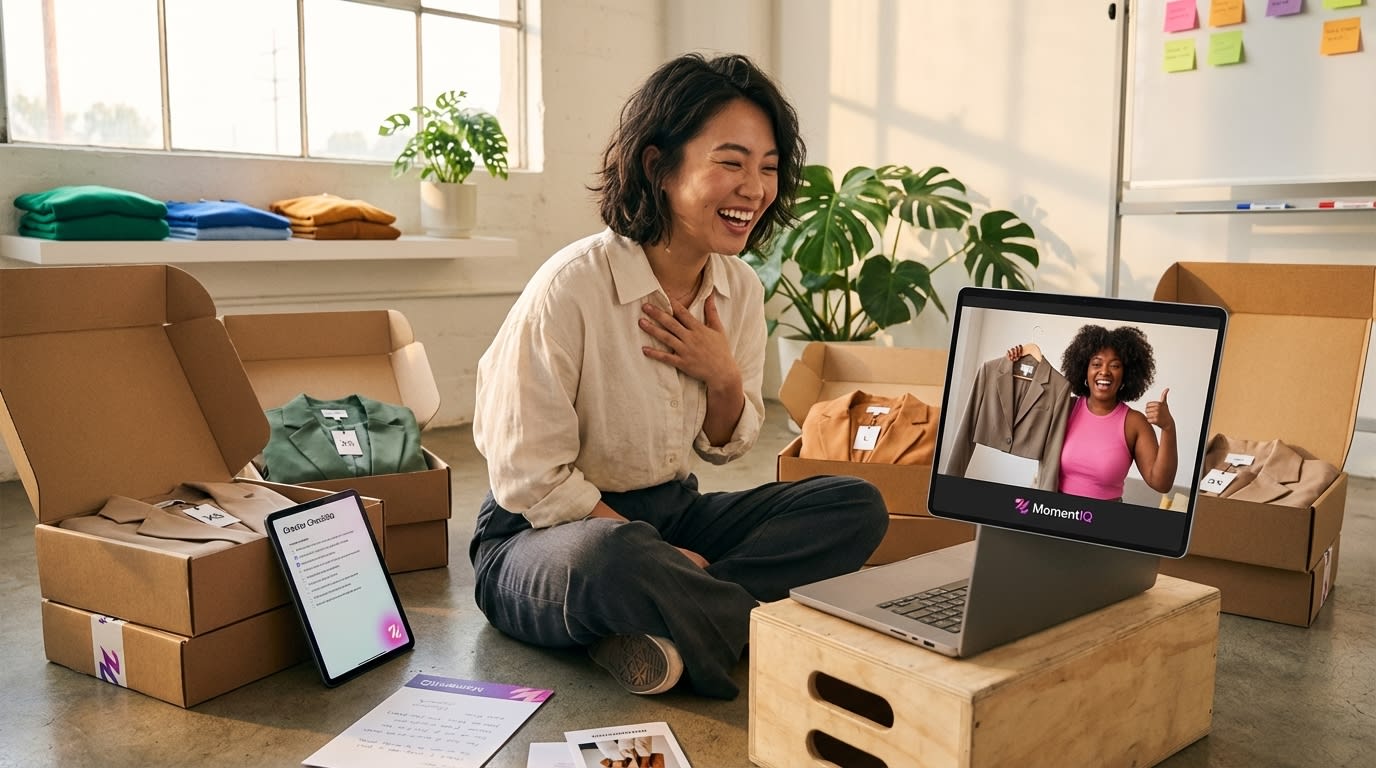
Across e-commerce, fashion return rates average 24-30% (National Retail Federation, 2024). On TikTok Shop, where impulse purchasing is higher and product evaluation happens through short-form video rather than detailed product pages, fashion return rates can spike to 35-40% for brands that don't actively mitigate them.
Every return doesn't just cost you the sale — it costs you shipping, restocking, potential product damage, and the customer acquisition cost you already invested. A 10% reduction in return rates can translate to a 15-20% increase in net margin for fashion brands operating at scale.
The brands winning on TikTok Shop have discovered that video-first listings are the single most effective return-rate mitigation tool available.
The Video-First Listing Framework for Fashion
Element 1: The 360-Degree Fit Video
Replace static product photos as your primary listing asset with a 15-30 second video showing the garment on a model — front, back, side, in motion. Listings with video as the primary asset see 23% lower return rates than photo-only listings, according to aggregate TikTok Shop seller data.
Element 2: Multi-Body Video Reviews
Remember the size-inclusive creator content from Strategy #1? The best-performing fashion brands pin 3-5 creator try-on videos directly to their product listing. When a size-12 shopper can watch a size-12 creator try on the exact product, she knows what she's getting.
Element 3: The "Honest Sizing" Callout
Top-performing fashion listings include a creator video specifically addressing sizing: "I'm 5'6", 155 lbs, and wearing a medium. It runs slightly small in the bust — I'd size up if you're between sizes." This single content element has been shown to reduce sizing-related returns by up to 31%.
Element 4: Fabric and Movement Close-Ups
The number-one driver of fashion returns (after sizing) is fabric expectations. A garment that looks silk in photos but feels like polyester in person gets returned immediately. Short video clips showing fabric texture, drape, and movement eliminate this disconnect.
The ROI math is simple: if you're doing $200K/month in TikTok Shop GMV with a 35% return rate, reducing returns to 25% saves you roughly $20K/month in direct costs — plus the downstream benefits of higher customer satisfaction and repeat purchase rates. Over a year, that's $240K in recovered margin from a single optimization.
"But building all this video content is expensive and time-consuming."
It doesn't have to be. When you're already running creator seeding campaigns at scale, the video-first listing content is a byproduct — not an additional cost center. The brands working with MomentIQ repurpose creator try-on content directly into listing assets, turning a single product seed into both an affiliate sales driver and a return-rate mitigation tool.
Strategy #5: The Creator Archetype Matrix for Seven-Figure Fashion Brands
Why Most Fashion Brands Pick the Wrong Creators
This is the strategy that separates brands plateaued at $50K/month from those breaking through to $1M+.
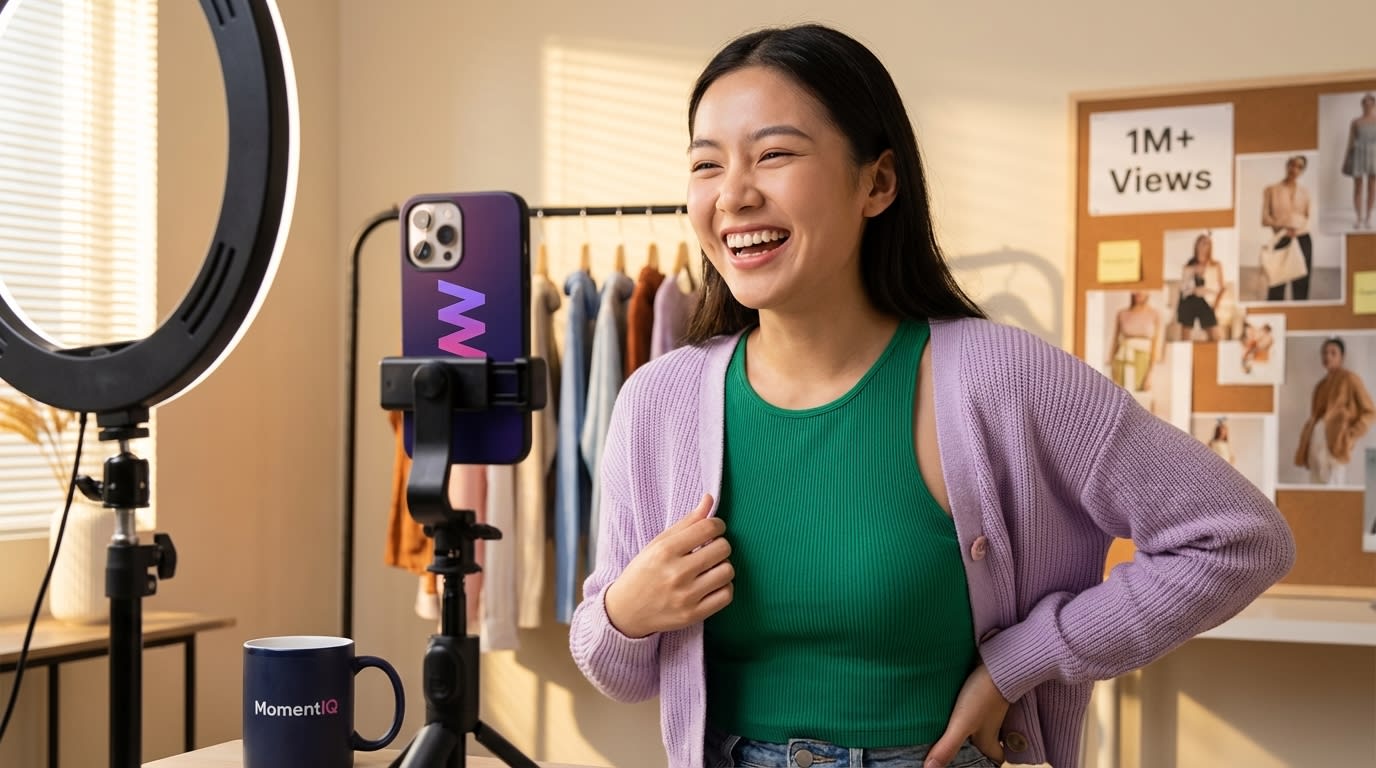
Most fashion brands select creators based on surface-level metrics: follower count, engagement rate, and "does their aesthetic match our brand?" This is why 73% of TikTok Shop fashion affiliate programs underperform — they're optimizing for the wrong variables.
The brands generating seven figures use a Creator Archetype Matrix that maps creator types to specific business objectives across the funnel.
The Four Fashion Creator Archetypes
Archetype 1: The Trend Translator (Discovery)
- Profile: 50K-500K followers. Posts daily. Covers multiple aesthetic trends. High video output, moderate production quality.
- Role: Produces high-volume, trend-responsive content that drives product discovery. Not necessarily your highest converter — but the engine that feeds your top-of-funnel.
- Key Metric: Video output velocity and view-to-profile-visit ratio.
- Commission Structure: Lower base rate (10-12%), volume-based bonuses.
Archetype 2: The Fit Authority (Consideration)
- Profile: 10K-100K followers. Known for honest, detailed try-on content. Often size-inclusive or niche-specific (petite, tall, plus-size, maternity). High trust with audience.
- Role: Produces the deep-dive content that moves shoppers from "that's cute" to "I need to see how this fits someone like me." These creators generate the highest click-through rates to product listings.
- Key Metric: Click-through rate and add-to-cart rate.
- Commission Structure: Mid-range (12-18%), with bonuses for content that gets pinned to listings.
Archetype 3: The Style Curator (Conversion)
- Profile: 25K-200K followers. Creates aspirational but achievable styling content — "5 outfits for work with one pair of pants." Audience trusts their taste and buys what they recommend.
- Role: Drives direct conversions. These creators have the highest GMV-per-video ratios. Their content works as both organic and Spark Ads fuel.
- Key Metric: GMV per video and conversion rate.
- Commission Structure: Higher base (15-20%), performance bonuses tied to GMV thresholds.
Archetype 4: The Community Builder (Retention)
- Profile: 5K-50K followers. Highly engaged community. Responds to every comment. Often hosts lives. Audience feels like a friend group, not a fanbase.
- Role: Drives repeat purchases and brand loyalty. These creators are your live commerce hosts, your "haul of the month" partners, your always-on brand advocates.
- Key Metric: Repeat purchase rate from their audience and live commerce GMV.
- Commission Structure: Moderate base (12-15%), exclusive early access to new drops, long-term partnership agreements.
Deploying the Matrix at Scale
Here's where it gets real: a seven-figure TikTok Shop fashion brand needs 15-25 active creators across all four archetypes, producing 80-150 pieces of content per month.

Managing this manually is a full-time job for 3-4 people. You need to:
- Source and vet creators across archetypes
- Manage product seeding logistics for dozens of SKUs
- Brief each archetype differently based on their funnel role
- Track performance by archetype, not just by creator
- Continuously optimize your roster based on conversion data
- Handle contracts, payments, and communication at scale
This is exactly why fashion brands that try to manage TikTok Shop creator programs in-house hit a ceiling around $50-80K/month. The operational complexity overwhelms the team before the revenue can scale.
"We can manage creators ourselves" is the most expensive belief in TikTok Shop fashion. The math doesn't work: hiring 3-4 full-time employees to manage your creator program costs $180-280K/year in salary and overhead. An agency like MomentIQ, with proprietary algorithmic matching, managed seeding infrastructure, and real-time performance optimization, delivers superior results at a fraction of that cost — with no ramp-up time.
One contemporary fashion brand made the switch from in-house management to MomentIQ's full-stack creator program. Within 90 days, they scaled from $45K to $380K in monthly GMV while reducing their creator management overhead by 60%. Their affiliate acceptance rate jumped from 4% (manual outreach) to 34% (algorithmic matching through MomentIQ's platform), and their average creator GMV-per-video increased by 215%.
Addressing the Elephant in the Room: Common Objections Fashion Brands Have About TikTok Shop Agencies
You've read the strategies. You see the opportunity. But you've got objections. Let's address them head-on.
"We don't have the budget for an agency right now."
Let's flip this: can you afford NOT to have one?
If you're currently doing $30K/month on TikTok Shop and an agency engagement costs $5-8K/month but scales you to $150K+/month within 90 days, your ROI is 15-30x. The agency doesn't cost you money — your current underperformance is costing you money. Every month you spend managing a suboptimal creator program in-house is a month of lost GMV you'll never recover.
MomentIQ structures engagements around performance alignment. This isn't a retainer-and-pray model — it's a partnership built on measurable revenue outcomes.
"We've tried agencies before and they didn't deliver."
Most agencies that claim TikTok Shop expertise are actually influencer marketing agencies that bolted on a TikTok Shop offering. They don't understand the platform's unique commerce mechanics — affiliate commission structures, Shop Tab optimization, live commerce conversion tactics, or how the algorithm weights shopping intent signals differently from engagement signals.
MomentIQ is a TikTok Shop Partner of the Year and an official TikTok Marketing Partner. That's not a self-awarded title — it's recognition from TikTok itself that MomentIQ operates at the highest level of platform expertise. The difference between a generic agency and a TikTok-native commerce partner is the difference between a general practitioner and a surgeon. Both are doctors. Only one should be operating.
"TikTok Shop is too new — what if the platform changes or gets banned?"
TikTok Shop processed over $20 billion in global GMV in 2024 (TikTok Commerce Report). It's not a beta experiment — it's a mature commerce platform growing at 150%+ year-over-year. As for regulatory risk, the brands that built on Instagram early, despite similar uncertainty, captured audiences and revenue that funded their expansion into every subsequent channel.
The risk isn't being on TikTok Shop. The risk is not being on TikTok Shop while your competitors build the audience, algorithmic authority, and creator relationships that will define the next decade of social commerce.
"We can figure this out with a small in-house team."
You can — up to a point. Most fashion brands can self-manage to $30-50K/month. But scaling beyond that requires infrastructure that doesn't make sense to build internally: algorithmic creator matching across thousands of potential affiliates, automated product seeding logistics for dozens of SKUs, real-time performance analytics across hundreds of content pieces, and trend-responsive activation capabilities.
Building this in-house takes 6-12 months and $300K+ in technology and personnel costs. Or you can plug into MomentIQ's existing infrastructure and start scaling next week.
How to Sell Fashion on TikTok Shop: Your 2025 Action Plan
Let's distill everything into a concrete action plan for fashion brands ready to scale:
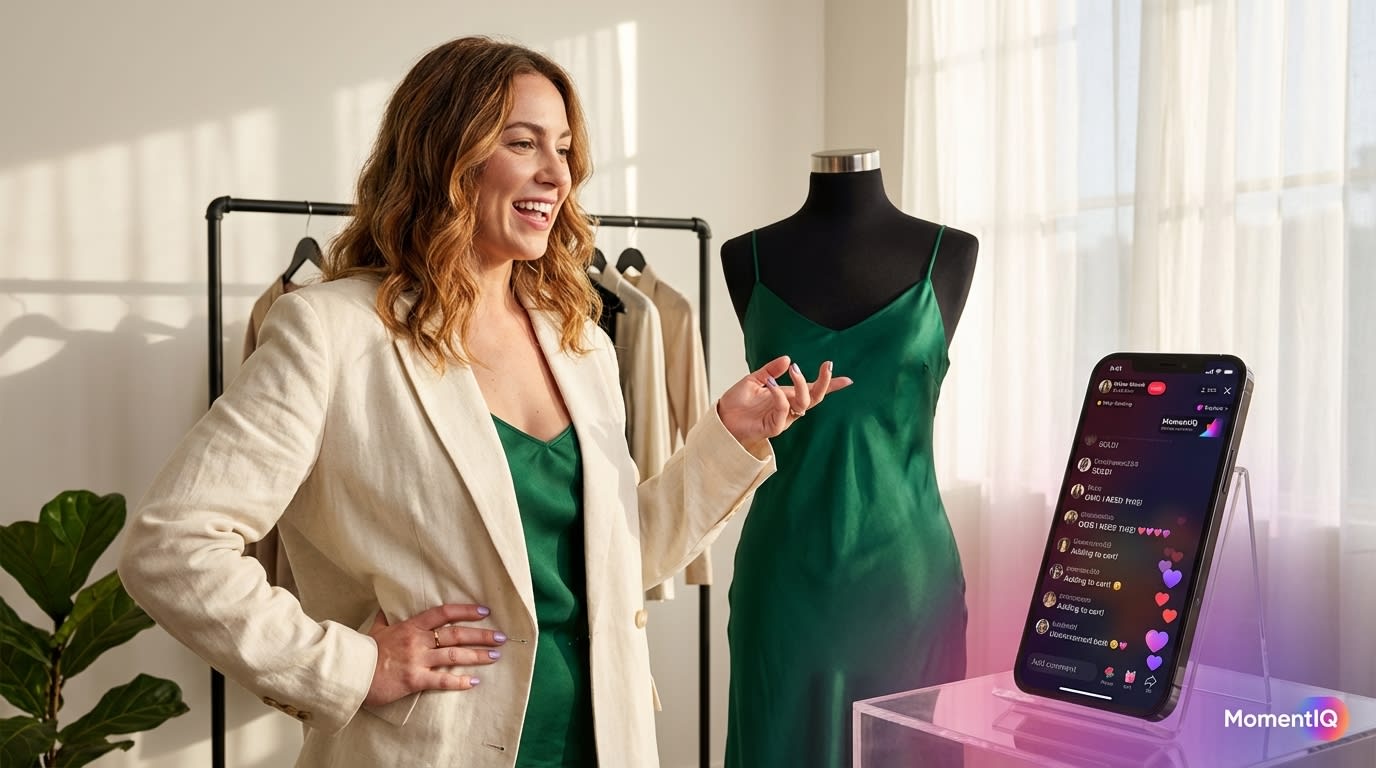
Month 1: Foundation
- Audit your current TikTok Shop setup — listing quality, affiliate commission rates, content library, and creator roster
- Build your Creator Archetype Matrix — identify gaps across all four archetypes
- Optimize your top 10 SKU listings with video-first assets and multi-body content
- Establish your trend-jacking calendar with Layer 1 (predictable moments) mapped for the next 90 days
Month 2: Activation
- Launch size-inclusive seeding campaigns across your top-performing SKUs
- Deploy GRWM content funnels with creators briefed for each funnel stage
- Begin Spark Ads testing using top-performing creator content
- Activate your first trend-jacking response within 48 hours of an emerging trend
Month 3: Scale
- Expand your creator roster to 20+ active affiliates across all four archetypes
- Implement return-rate mitigation by pinning creator content to all fashion listings
- Launch weekly live commerce sessions with Community Builder archetype creators
- Analyze and optimize using per-archetype performance data
This is the exact scaling framework MomentIQ deploys for fashion brands — compressed from the typical 6-month learning curve to 90 days through proprietary technology and platform expertise.
The Window Is Closing: Why Fashion Brands Must Act Now
Let's end with the data point that should make every fashion brand founder uncomfortable:
Active fashion sellers on TikTok Shop grew 300% in 2024. Creator commission expectations are rising. Ad costs are increasing. The algorithmic advantage that early movers enjoy — built through months of content velocity, creator relationship depth, and listing optimization — compounds over time.
The fashion brands that build their TikTok Shop infrastructure in Q1-Q2 2025 will own the algorithmic real estate that latecomers will spend 3-5x more to compete for by Q4.
This isn't speculation. It's the same pattern we saw with Amazon in 2015, Instagram DTC in 2018, and TikTok organic in 2021. First movers don't just win — they make it exponentially harder for everyone else.
Your competitors are already scaling. Some of them are working with MomentIQ right now, building the creator networks, content engines, and conversion infrastructure that will define their category for years.
The question isn't whether TikTok Shop works for fashion brands. The question is whether you'll capture your share of a $100B+ market before the cost of entry makes it prohibitive.
The brands that move now will look back on this moment as the inflection point. The ones that wait will wonder what happened.
Don't be the brand that wonders what happened.