TikTok Shop Competitor Research: 10 Free and Paid Methods
Ten free and paid methods for TikTok Shop competitor research: track rival products, creatives, and GMV signals to sharpen your own strategy.
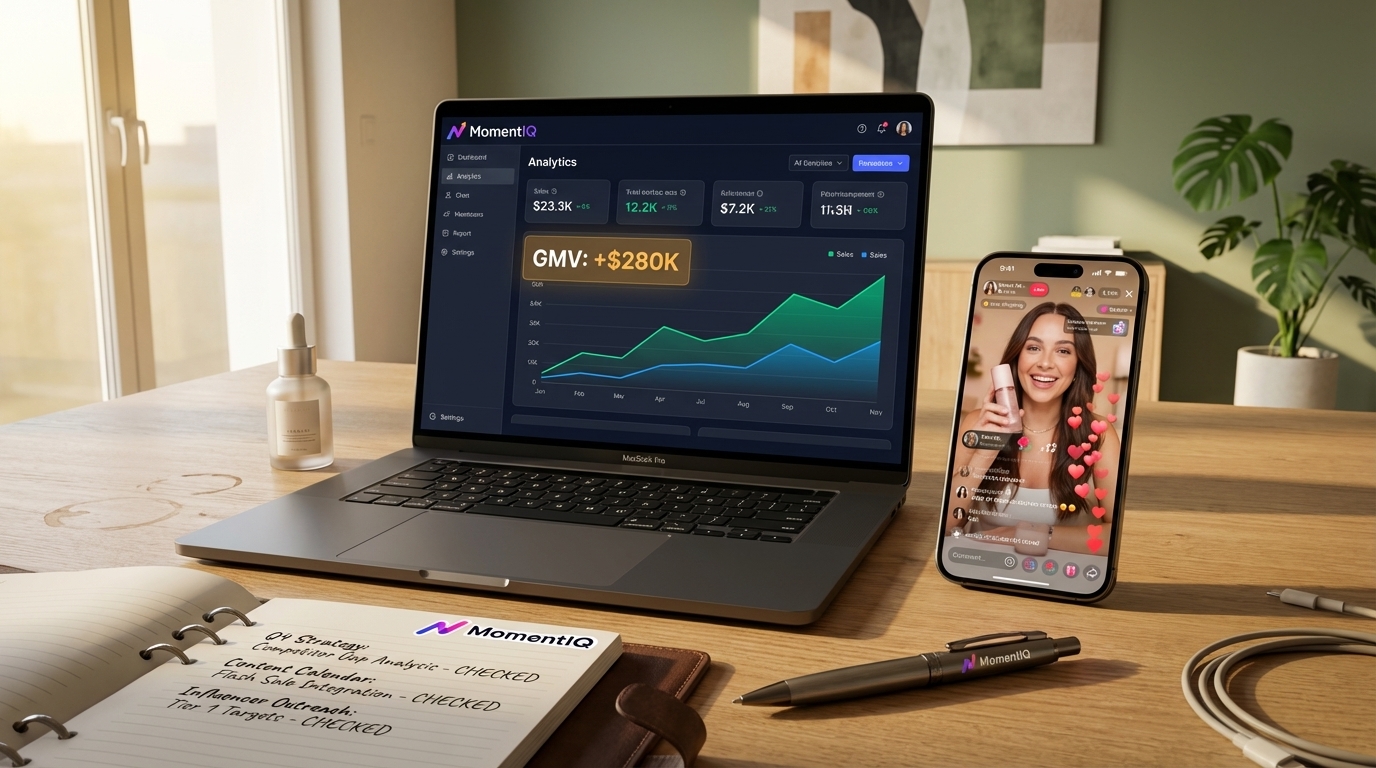
Your competitor just did $280K in GMV last month on TikTok Shop. You know because you watched their bestseller climb the category rankings while your listing sat on page three. You've seen their creators pumping out content that racks up millions of views. You've noticed their pricing shift three times in two weeks.
- Systematically monitor competitors' TikTok Shop storefronts weekly — track pricing shifts, product lineup changes, review sentiment, and shop scores to exploit their weaknesses.
- Act fast on winning product strategies since top TikTok Shop listings have roughly a 60-day lifecycle before competitors replicate the formula.
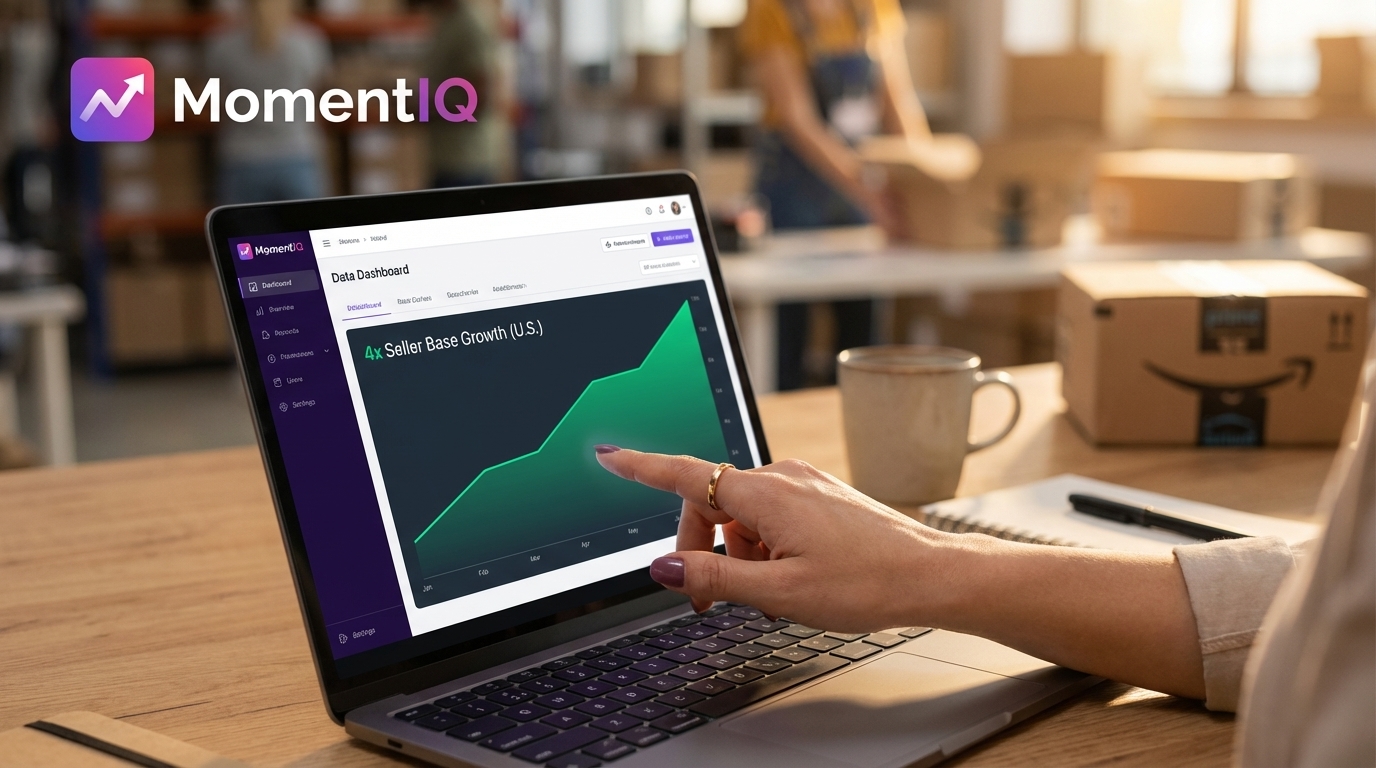
- Recognize that TikTok Shop's U.S. seller base grew 4x between 2023–2024, making systematic competitive intelligence essential to stand out in crowded categories.
- Screenshot and document competitor listing copy, title structures, and keyword usage to reverse-engineer their SEO and conversion tactics.
- Leverage the fact that 71% of TikTok users purchase products discovered on the platform by studying which [competitor content formats](/blog/tiktok-shop-competitor-content-analysis-reverse-engineer-rivals) drive the most engagement.
But you have no idea why any of it is working.
Here's the uncomfortable truth most TikTok Shop sellers won't admit: they're flying blind. They're guessing at pricing, randomly reaching out to creators, and copying surface-level tactics without understanding the underlying strategy. Meanwhile, the brands dominating their categories are running systematic competitive intelligence operations — tracking every price change, every creator partnership, every ad rotation, every listing tweak their rivals make.
TikTok Shop competitor analysis isn't optional anymore. According to TikTok's own Commerce reports, the platform surpassed $20 billion in global GMV in 2023, and eMarketer projects U.S. social commerce will hit $82 billion by 2025. With that kind of money flooding in, every category is getting more crowded by the week. The sellers who win aren't just making great products — they're making smarter decisions because they have better data. This guide gives you the complete TikTok Shop competitor analysis toolkit: 10 methods (free and paid) to spy on TikTok Shop competitors, reverse-engineer their strategies, and turn their playbook into your unfair advantage.
And if you'd rather skip the DIY learning curve and have a team that already has proprietary competitive intelligence baked into every decision, Talk to a Strategist — they'll show you exactly where you're losing ground and how to take it back.
Why TikTok Shop Competitive Research Is Non-Negotiable in 2025
Let's set the stage with some numbers that highlight the urgency of actively monitoring competitors.
- Statista reports that TikTok had over 1.9 billion monthly active users globally by late 2024, with shopping behavior accelerating faster than any other social platform.
- TikTok Shop's U.S. seller base grew 4x between 2023 and 2024, meaning your category likely doubled or tripled in competition in the last 12 months alone.
- According to Marketplace Pulse, the average top-performing TikTok Shop listing sees a 60-day lifecycle before a competitor replicates the winning formula — meaning your window to capitalize on any advantage is shrinking.
- 71% of TikTok users say they've purchased something they discovered on the platform, per TikTok's internal commerce data.
The brands crushing it on TikTok Shop aren't working harder. They're working with better intelligence. Here's what that intelligence actually looks like. For a data-driven approach to growth, explore our guide on how to scale TikTok Shop.
Brands working with a dedicated TikTok Shop management partner consistently outperform those going it alone.
Method 1: Manual TikTok Shop Storefront Monitoring (Free)

The simplest TikTok Shop competitive research method costs nothing but time. Visit your competitors' TikTok Shop storefronts directly and document everything.
What to Track:
- Product lineup changes — What are they adding? What are they discontinuing? Identifying these shifts can reveal emerging trends or product gaps you can fill. For more on finding winning products, check out our guide on TikTok Shop product research.
- Pricing shifts — Screenshot prices weekly. Track discounts, bundles, and flash sale frequency. Understanding their pricing strategy helps you position your own offers. Learn more about TikTok Shop pricing tactics.

- Product listing copy — Note their title structures, bullet point formats, and keyword usage. This helps you reverse-engineer their SEO and conversion tactics.
- Review volume and sentiment — How fast are reviews accumulating? What are customers complaining about? This provides direct feedback on product strengths and weaknesses.
- Shop score and ratings — A dipping score signals fulfillment or quality issues you can exploit.
How to Do It:
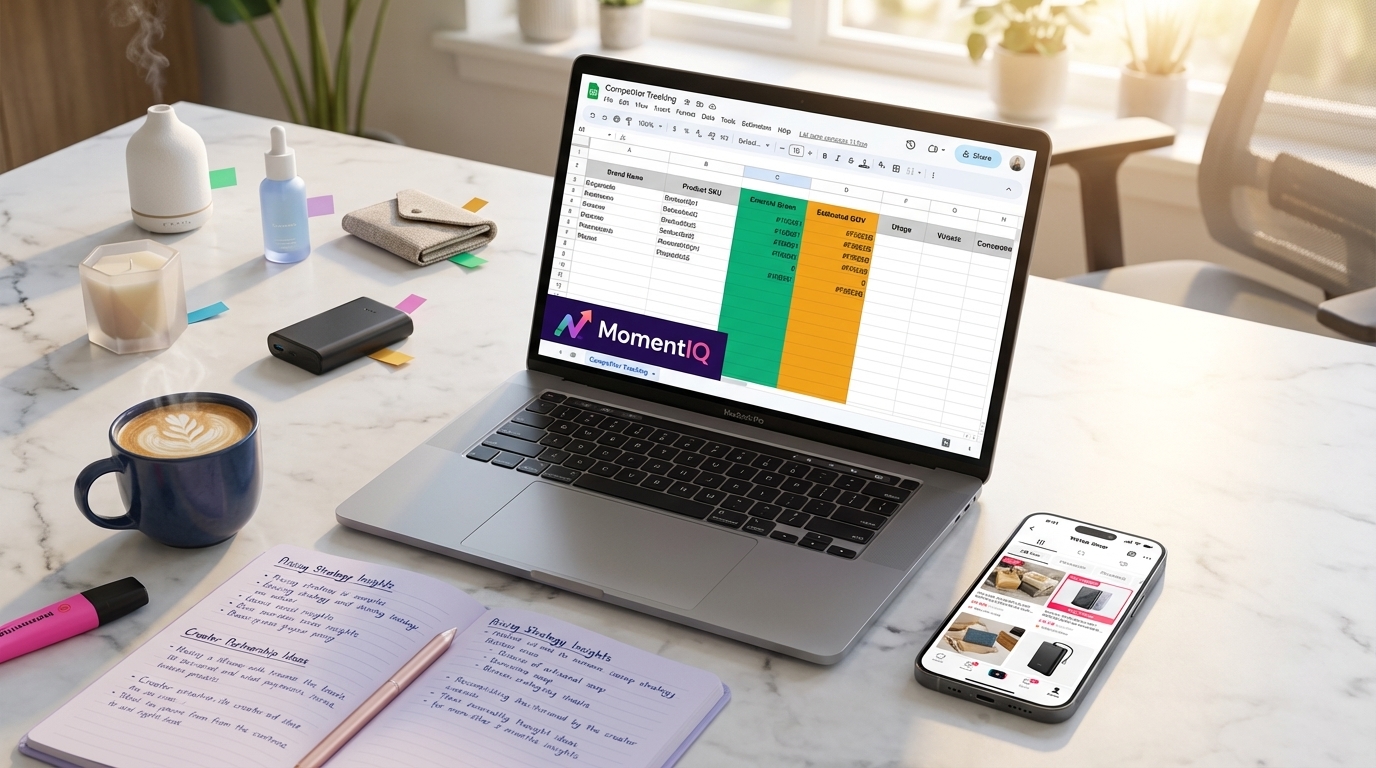
Create a simple spreadsheet with 5-10 competitor storefronts. Set a weekly 30-minute calendar block to visit each one and log changes. The patterns you'll spot after 4-6 weeks of consistent tracking are worth more than any single tool.
For example, if you notice a competitor drops their price by 15% every Thursday evening and runs a weekend flash sale, that's not random — that's a tested conversion strategy you can either counter or replicate.
Pro tip: Use TikTok's search function to search your category keywords and sort by "Best Sellers." The ranking order itself is competitive intelligence — it tells you what the algorithm is currently favoring.
Method 2: Creator Partnership Reverse-Engineering (Free)
This is where most sellers leave massive money on the table. Your competitors' creator partnerships are visible if you know where to look.
The Process:
- Search your competitor's brand name or product name on TikTok. Filter by "Most Liked" to find their top-performing creator content.
- Click into each creator's profile. Note their follower count, engagement rate, content style, and posting frequency. This helps you understand their creator strategy.
- Check if the creator has a TikTok Shop showcase. If they're promoting your competitor's products, they're likely in the affiliate program. This is a strong indicator of a successful partnership.
- Track which creators appear repeatedly. Repeat partnerships signal a creator who converts — these are the ones you want to recruit. For more on finding the right partners, explore our guide on how to find TikTok Shop creators.
Why This Matters:
One of the biggest pain points TikTok Shop sellers face is abysmal affiliate acceptance rates. You send 500 product invitations and get 12 responses. Meanwhile, your competitor seems to have an army of creators posting daily.
The secret? They're not sending blind invitations. They're strategically targeting creators who are already proven converters in the category — often creators who've promoted similar products before.
By reverse-engineering their creator roster, you skip the guesswork entirely. You know exactly who converts in your niche because someone else already tested and paid for that data. This intelligence is invaluable for your own TikTok Shop creator recruitment funnel.
This is also where scale becomes the bottleneck. Manually tracking 50+ competitor-creator relationships across multiple rivals is a full-time job. When scaling from 10 to 500 creators, this becomes even more challenging.
It's one reason brands partner with MomentIQ, whose algorithmic creator matching system automates this intelligence-gathering and identifies high-converting creators before competitors even find them. As a TikTok Shop Partner of the Year, MomentIQ has proprietary data on creator performance that no manual process can replicate.
Method 3: TikTok Creative Center Ad Library Analysis (Free)
TikTok's Creative Center (ads.tiktok.com/business/creativecenter) is one of the most underused free TikTok Shop competitive research tools available. It offers deep insights into competitor ad strategies.
What You Can Find:
- Top-performing ads in your product category, filterable by region, industry, and objective. This helps you identify successful ad creatives.

- Ad creative formats — see whether competitors are using Spark Ads, Product Shopping Ads, or standard in-feed ads. Understanding these formats can inform your own TikTok Shop ad creative strategy.
- Hook patterns — analyze the first 3 seconds of top-converting ads to identify what stops the scroll. Learn more in our TikTok Shop hook writing masterclass.
- CTA structures — see which calls-to-action competitors use in their paid placements.
- Ad longevity — ads that run for weeks are profitable; ads that disappear after days are losers. This is a key indicator of ad effectiveness.
How to Use It:
Search by keyword or browse by category. Pay special attention to ads that have been running for 14+ days — these are almost certainly profitable and worth studying. Note the creative style, the offer structure, and the landing experience. For tips on launching profitable campaigns, read our guide on TikTok Shop ads for small budgets.
If you see a competitor consistently running Spark Ads featuring specific creators, that tells you two things: those creators convert, and the brand has budget behind paid amplification. Both are actionable intelligence.
Method 4: FastMoss and Kalodata for Deep Sales Analytics (Paid)
If you're serious about TikTok Shop competitor analysis, third-party analytics platforms are where free methods hit their ceiling and paid tools take over. These tools provide granular data that manual methods can't. For a comprehensive overview of essential tools, check out our guide on top TikTok Shop tools.
FastMoss:
- Tracks estimated GMV, units sold, and revenue trends for competitor products.
- Shows creator partnership networks — who's promoting what, and how much revenue each creator drives. This is crucial for identifying high-converting TikTok Shop creators.

- Reveals bestseller rankings with historical data so you can spot trends before they peak.
- Provides live commerce analytics including viewer counts, engagement rates, and conversion metrics.
Kalodata:
Kalodata offers another powerful suite of analytics to spy on TikTok Shop competitors.
- Offers product-level sales estimates with daily granularity.
- Maps creator-to-product relationships across your entire category. This helps you understand the full scope of affiliate activity.
- Tracks pricing history so you can see exactly when competitors adjust and correlate it with sales impact.
- Provides category trend data to identify emerging product opportunities before they saturate. This is vital for TikTok Shop product research.
What This Looks Like in Practice:
Imagine knowing that your top competitor's hero SKU did $47K in the last 7 days, driven by 3 specific creators who each generated 200+ orders. You'd know exactly which creators to recruit, what price point converts, and what content style drives purchases.
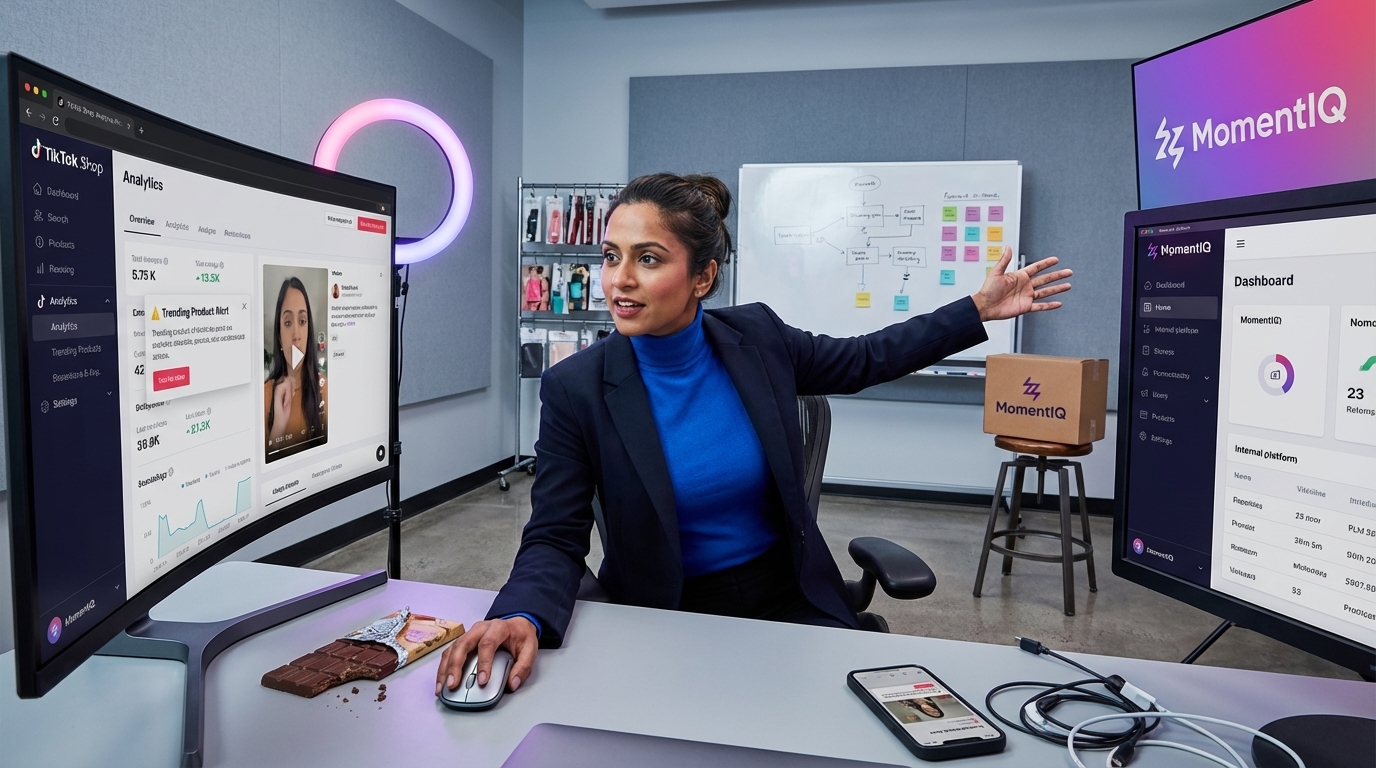
That's the difference between guessing and knowing. And it's why brands that invest in TikTok Shop competitive research tools consistently outperform those relying on gut instinct.
Method 5: Hashtag and Sound Trend Monitoring (Free)
Competitor strategy isn't just about products and pricing — it's about content strategy. And on TikTok, content strategy lives in hashtags and sounds. Monitoring these elements is a free way to gain TikTok Shop competitive intelligence.
What to Monitor:
- Branded hashtags your competitors create or sponsor.
- Category hashtags they consistently use (and their view counts over time).
- Trending sounds they attach to product content.
- Challenge participation — are they launching or joining viral challenges? This can reveal their approach to TikTok Shop content strategy.
How to Track:
Use TikTok's search and the Discover page to monitor hashtag volume weekly. A sudden spike in a competitor's branded hashtag usually signals a coordinated creator campaign — which means they've just seeded product to dozens of creators simultaneously.
When you spot this, you have a 2-3 week window to counter-program before their campaign peaks. Speed matters here. For more on leveraging trends, check out our TikTok Shop trend riding playbook.
Method 6: Product Review Mining for Positioning Gaps (Free)
Your competitors' negative reviews are your product development roadmap. This free method provides direct TikTok Shop competitive intelligence on customer pain points.
The Technique:
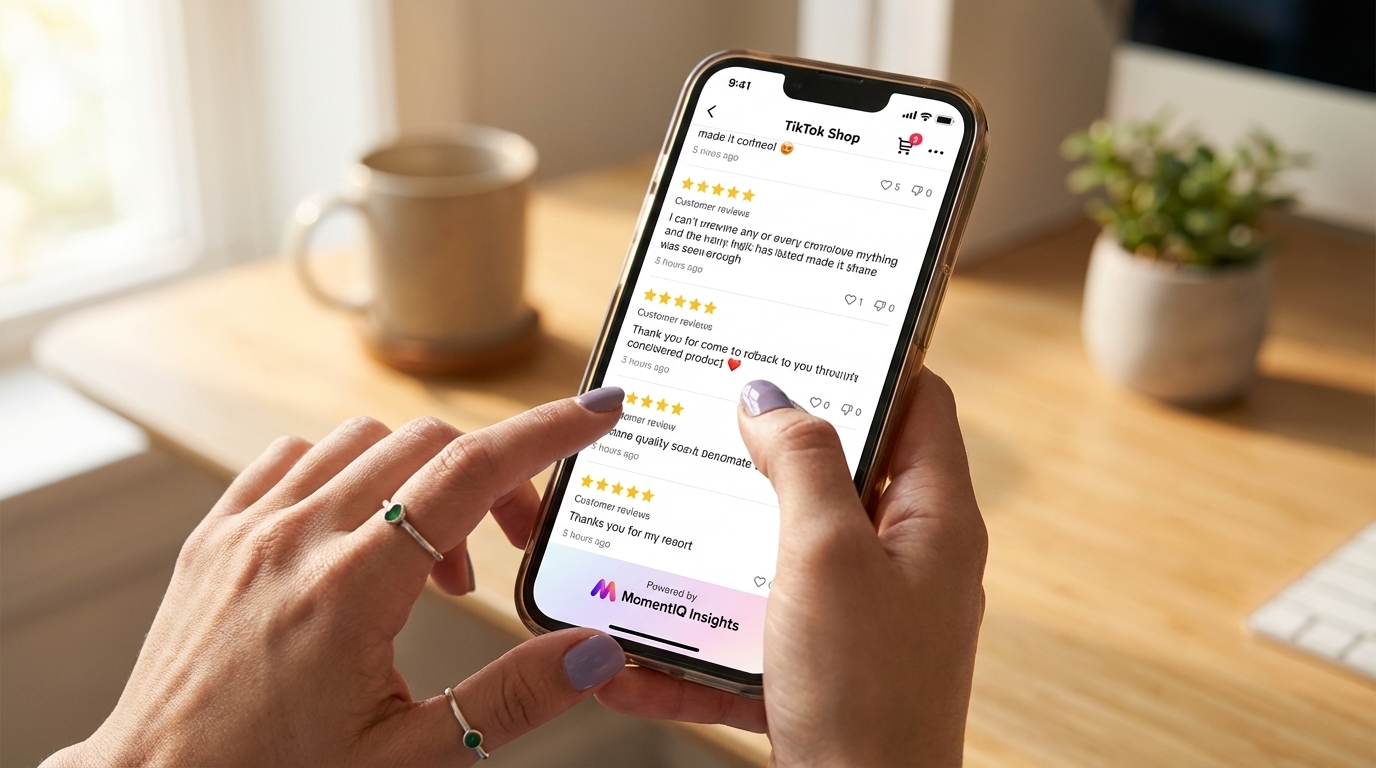
- Read the 1-star and 2-star reviews on competitor products. Look for patterns.
- Categorize complaints: quality issues, sizing problems, shipping delays, misleading descriptions, missing features.
- Cross-reference with your own product. Can you solve the problems their customers are complaining about?
- Use their customers' exact language in your listing copy and creator briefs. This helps you craft compelling product descriptions and TikTok Shop video scripts.
Why This Is Gold:

If a competitor's top-selling skincare serum has 47 reviews mentioning "sticky texture" or "broke me out," and your formula doesn't have those issues, that's your entire marketing angle. You don't need to invent positioning — your competitor's unhappy customers just handed it to you.
Bold the solutions in your product listing. Brief your creators to address those exact pain points. This is competitive intelligence translated directly into conversion rate optimization. For more on optimizing listings, see our TikTok Shop product listing optimization checklist.
Method 7: Live Shopping Session Reconnaissance (Free)
Live commerce is exploding on TikTok Shop. According to TikTok, live shopping sessions drive 3x higher conversion rates than static product listings. Your competitors know this — and the smart ones are investing heavily. Monitoring their live sessions is a crucial way to spy on TikTok Shop competitors.
What to Spy On During Competitor Lives:
- Stream frequency and timing — When do they go live? How often? This helps you understand their TikTok Shop live scheduling strategy.
- Viewer counts and engagement — How many concurrent viewers? What's the chat activity like?
- Pricing tactics — Do they offer live-only discounts? Flash deals? Bundle offers? Learn more about TikTok Shop coupon & discount strategy.
- Host style and scripting — Is it scripted or conversational? Do they use urgency tactics?
- Product sequencing — Which products do they lead with? What's the upsell flow?
- Pin placement and CTA timing — When do they pin products? How do they drive clicks?
How to Act on This:
Record (screen capture) competitor live sessions. Watch them at 2x speed and take timestamped notes. After 3-5 sessions, you'll have a clear picture of their live commerce playbook.
Then build yours to be better. Counter-program their schedule (go live 30 minutes before they do). Offer sharper deals on overlapping products. Use the engagement tactics that work and discard the ones that don't. For more insights, explore our guide on TikTok Shop live engagement hacks.
Method 8: Affiliate Commission Rate Benchmarking (Free + Paid)
If you're wondering why competitors attract more creators than you do, the answer is almost always commission rates. Benchmarking these rates is a critical piece of TikTok Shop competitive intelligence.
How to Benchmark:
- Check the TikTok Shop affiliate marketplace as a creator (or have someone on your team with a creator account do it). You can see commission rates for competing products. This provides direct insight into what creators are being offered.
- Use FastMoss or Kalodata to see estimated commission structures across your category. These paid tools offer a broader view of the market.
- Ask creators directly. When you're recruiting, ask what commission rates they typically see in your niche. They'll tell you.
The Insight:
If your category average commission is 15-20% and you're offering 10%, that's why your affiliate acceptance rate is in the single digits. Creators are rational economic actors — they promote products that pay them well and convert reliably.
Here's what most sellers get wrong: they set commission rates based on their margin comfort, not on competitive reality. The brands winning the creator game set rates based on what it takes to attract top-tier affiliates — and then optimize their funnel to make the unit economics work. For more on this, read our guide on TikTok Shop affiliate commission strategy.
One supplement brand we've seen in the market scaled from $18K to $420K/month in 90 days after restructuring their commission tiers and deploying a strategic creator matching approach. The commission increase cost them 5% in margin per unit — but the 23x GMV increase more than compensated.
Feeling overwhelmed yet? This is exactly why brands that try to manage TikTok Shop competitive intelligence in-house eventually hit a wall. There are too many data points, too many competitors, and too many variables changing daily. Talk to a Strategist to see how their proprietary analytics platform tracks all of this automatically — and turns raw intelligence into actionable growth strategies.
Method 9: Google Alerts and Social Listening for Brand Mentions (Free)
Competitive intelligence doesn't live exclusively on TikTok. Your competitors are being discussed across the internet, and you should be listening. This broadens your scope beyond the platform itself.
Set Up Alerts For:
- Competitor brand names (Google Alerts, free)
- Competitor product names (Google Alerts + Reddit search)
- Category keywords + "TikTok Shop" (track new entrants and trending discussions)
- Competitor founder/team names (catch PR, podcast appearances, and strategy reveals)
Where to Listen:
- Reddit (r/tiktokshop, r/ecommerce, r/dropshipping) — sellers openly discuss strategies, results, and frustrations. This is a goldmine for candid feedback.
- Twitter/X — search competitor names for customer complaints and praise.
- YouTube — many TikTok Shop sellers create "how I did $X" videos that literally reveal their playbook. This is a great source for detailed operational insights.
- Facebook Groups — TikTok Shop seller communities are goldmines of competitive chatter.
For official resources, see TikTok Creator Portal and TikTok Shop Seller Center.
The Payoff:
You'll catch competitor product launches before they hit TikTok Shop. You'll spot partnership announcements. You'll find disgruntled creators who left a competitor's program and are ready to switch. Information asymmetry is the ultimate competitive advantage. For more on leveraging data, explore our TikTok Shop analytics masterclass.
Method 10: Proprietary Data Platforms and Agency Intelligence (Paid)
Here's where we get real about the limitations of DIY TikTok Shop competitive research.
Methods 1-9 will get you 70% of the way there. They'll give you visibility into what competitors are doing on the surface. But the remaining 30% — the deep algorithmic insights, the creator performance data at scale, the predictive trend modeling — requires either building an expensive in-house data team or partnering with someone who already has the infrastructure.
What Proprietary Platforms Offer That Free Tools Can't:

- Algorithmic creator matching — identifying not just who your competitors work with, but which untapped creators have the highest predicted conversion rate for your specific product.
- Real-time GMV tracking across hundreds of competitor SKUs simultaneously.
- Content performance pattern recognition — understanding which creative formats, hooks, and CTAs drive the highest ROAS in your category. This is key for optimizing your TikTok Shop content strategy.
- Predictive trend modeling — spotting category shifts 2-4 weeks before they show up in public data. This allows you to capitalize on TikTok Shop trends early.
- Commission optimization modeling — calculating the exact commission rate that maximizes creator recruitment without destroying margins.
The DIY vs. Agency Math:
Let's address the elephant in the room. "We don't have the budget for an agency."
Run the numbers:
- A dedicated in-house TikTok Shop analyst: $65K-$95K/year salary + benefits
- Paid tool subscriptions (FastMoss, Kalodata, social listening): $500-$2,000/month
- Creator management software: $300-$1,000/month
- Time cost of manual competitive research: 15-20 hours/week of someone's time
That's $90K-$140K/year for a single person who still can't match the data depth of a specialized platform. And they'll take 6-12 months to build the processes and institutional knowledge that an established agency already has.
Contrast that with a partner like MomentIQ, which brings TikTok Shop Partner of the Year expertise, proprietary data analytics, algorithmic creator matching through MomentIQ's automated outreach system, and a team that's already managing millions in monthly GMV across dozens of brands. The ROI math isn't close.
One beauty brand saw their monthly GMV jump from $12K to $340K within 90 days after switching from in-house management to a data-driven agency approach — primarily because the agency's competitive intelligence identified three untapped creator segments and a pricing gap the brand had been blind to.
How to Build Your Competitive Intelligence System: The Weekly Workflow
Knowing the methods isn't enough. You need a repeatable system. Here's a weekly TikTok Shop competitive intelligence workflow you can implement today:
Monday (30 minutes): Storefront Scan
- Visit top 5 competitor storefronts
- Log pricing changes, new products, and rating shifts
- Screenshot any new listing copy or imagery
Tuesday (30 minutes): Creator Tracking
- Search competitor brand names on TikTok
- Note new creator partnerships and top-performing content
- Add high-performing creators to your recruitment list. For more on managing creators, see our TikTok Shop creator management playbook.
Wednesday (20 minutes): Ad Library Review
- Check TikTok Creative Center for new competitor ads
- Note creative formats, hooks, and offers
- Flag ads running 14+ days as proven winners. This helps you identify effective TikTok Shop ad creative strategy.
Thursday (30 minutes): Analytics Deep Dive
- Pull FastMoss/Kalodata reports on competitor GMV trends
- Compare category rankings week-over-week
- Identify commission rate changes. This is vital for your TikTok Shop affiliate commission strategy.
Friday (20 minutes): Social Listening Review
- Check Google Alerts and Reddit mentions
- Scan seller communities for competitor discussions
- Log any strategic insights or market shifts
Total time investment: ~2.5 hours/week. That's less than most sellers spend scrolling TikTok aimlessly — and it delivers 10x more strategic value.
The 4 Biggest Competitive Intelligence Mistakes TikTok Shop Sellers Make
Mistake 1: Copying Without Understanding
Seeing a competitor's tactic and blindly copying it is not TikTok Shop competitive intelligence — it's imitation without context. You don't know their margin structure, their creator agreements, or their backend conversion data. A strategy that works at their price point and volume might destroy your profitability.
Instead: Use competitive intelligence to inform your strategy, not dictate it. Understand the why behind their moves, then adapt to your unique position. For a deeper dive into strategy, read our guide on how to scale TikTok Shop with a data-driven strategy.
Mistake 2: Tracking Too Many Competitors
Monitoring 30 competitors means monitoring none of them well. Pick 3-5 direct competitors and 2-3 aspirational competitors (brands in adjacent categories that are doing TikTok Shop exceptionally well). Go deep, not wide.
Mistake 3: Ignoring the "Boring" Data
Everyone wants to spy on creative and content. Few sellers track shipping times, return policies, bundle structures, and customer service response quality. These operational details often explain performance gaps better than any content analysis. For more on operational optimization, see our guide on TikTok Shop shipping & delivery optimization.
Mistake 4: Not Acting on Intelligence
The most common failure: collecting data and never doing anything with it. Competitive intelligence has a shelf life. A pricing insight from two weeks ago is stale. A creator opportunity from last month is gone. Build action triggers into your workflow — when you spot an insight, assign an owner and a deadline.
When DIY Competitive Research Isn't Enough
Let's be honest about the limitations.
"We've tried agencies before" — and maybe they delivered generic influencer reports that didn't move the needle. That's because most agencies treat TikTok Shop like Instagram with a shopping cart. They don't understand the affiliate ecosystem, the algorithm's content-to-commerce loop, or the platform-specific mechanics that drive conversion.
MomentIQ is different because they're built exclusively for TikTok Shop commerce. Not influencer marketing. Not social media management. TikTok Shop revenue generation, full stop.
Here's what that means in practice:
- Algorithmic creator matching through MomentIQ's automated outreach system identifies high-converting creators based on actual sales data — not follower counts or engagement rates that don't correlate with purchases. This is crucial for TikTok Shop creator performance tracking.
- Managed product seeding at scale — MomentIQ coordinates seeding to 50-500+ creators simultaneously, something that would take an in-house team months to execute. Learn more about TikTok Shop product seeding.
- Real-time competitive intelligence baked into every strategy decision — not as a separate report, but as a living input that shapes creator selection, pricing, and content direction daily.
- Full-funnel commerce support from listing optimization to live shopping strategy to ad amplification. For a comprehensive approach, see our guide on how to sell on TikTok Shop.
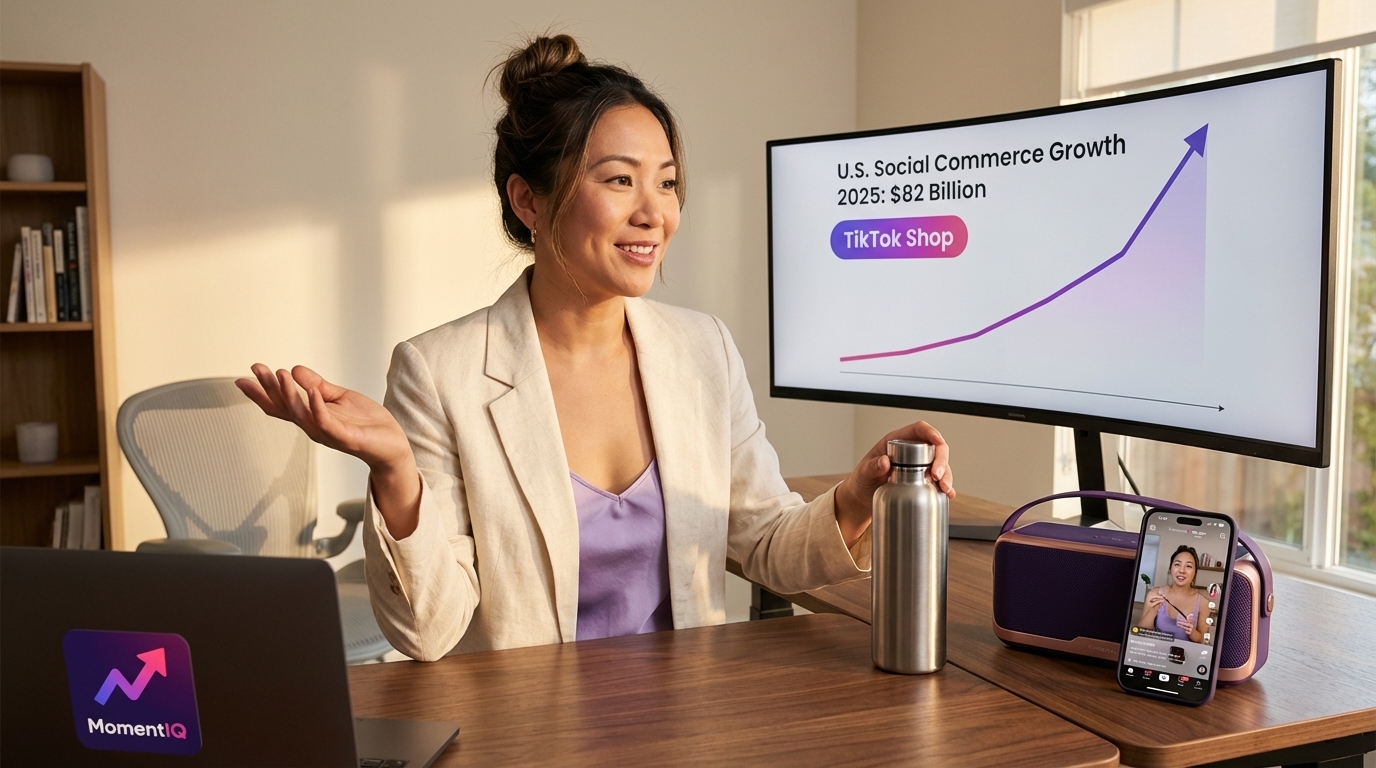
"TikTok Shop is too new and risky." With $20 billion in global GMV and the fastest-growing social commerce ecosystem in the world, TikTok Shop isn't a risk — ignoring it is. According to Insider Intelligence, TikTok's share of U.S. social commerce sales grew from 4% to over 18% between 2022 and 2024. Brands building now will own the algorithmic advantage that latecomers can't replicate.
One home goods brand that was skeptical about TikTok Shop entirely went from zero presence to $190K/month in GMV within 120 days after deploying a structured competitive intelligence and creator seeding strategy. The competitive research phase alone — identifying which creators were driving sales for rival brands and recruiting them — accounted for roughly 40% of the initial growth.
Your Competitive Intelligence Checklist: Start Today
Here's your action plan, ranked by impact and ease of implementation:
- Identify your top 5 competitors on TikTok Shop (search your category keywords, sort by bestsellers)
- Set up your tracking spreadsheet with tabs for pricing, creators, ads, and listings
- Bookmark TikTok Creative Center and run your first ad library search
- Create Google Alerts for each competitor's brand name
- Join 2-3 TikTok Shop seller communities on Reddit and Facebook
- Evaluate FastMoss or Kalodata for paid analytics (most offer free trials)
- Block 2.5 hours/week on your calendar for the competitive intelligence workflow
- Audit your commission rates against category benchmarks
- Build a creator recruitment list from competitor partnership analysis
- Set action triggers — define what you'll do when you spot specific competitive moves
For brands ready to scale, MomentIQ's TikTok Shop management services provide end-to-end support from catalog optimization to fulfillment.
The Bottom Line: Intelligence Wins the TikTok Shop Race
The TikTok Shop landscape is evolving faster than any e-commerce channel in history. Categories that were wide open six months ago now have 10+ serious competitors. The window to establish dominance is measured in weeks, not years.
The sellers who win this race won't be the ones with the biggest budgets or the best products (though those help). They'll be the ones with the best information — and the fastest ability to act on it. For more on scaling with data, check out our data-driven playbook for TikTok Shop growth.
Every method in this guide gives you a piece of the puzzle. Combined, they give you a competitive intelligence engine that keeps you ahead of the market. But building and maintaining that engine while also managing products, creators, fulfillment, ads, and everything else on your plate? That's where most brands break.
If you're ready to stop guessing and start growing with data-driven competitive intelligence built into every decision, get your free custom scaling roadmap from MomentIQ at bemomentiq.com. As TikTok's Shop Partner of the Year, MomentIQ has the proprietary data, the algorithmic creator matching, and the operational scale to turn competitive intelligence into revenue — faster than any in-house team or generic agency can match.
Your competitors are already watching you. The question is: are you watching them back?