
TikTok Shop Live Selling: 15 Psychology-Backed Tactics
Fifteen psychology-backed live selling techniques for TikTok Shop: urgency, proof, and pacing tactics that ethically move live viewers to buy now.
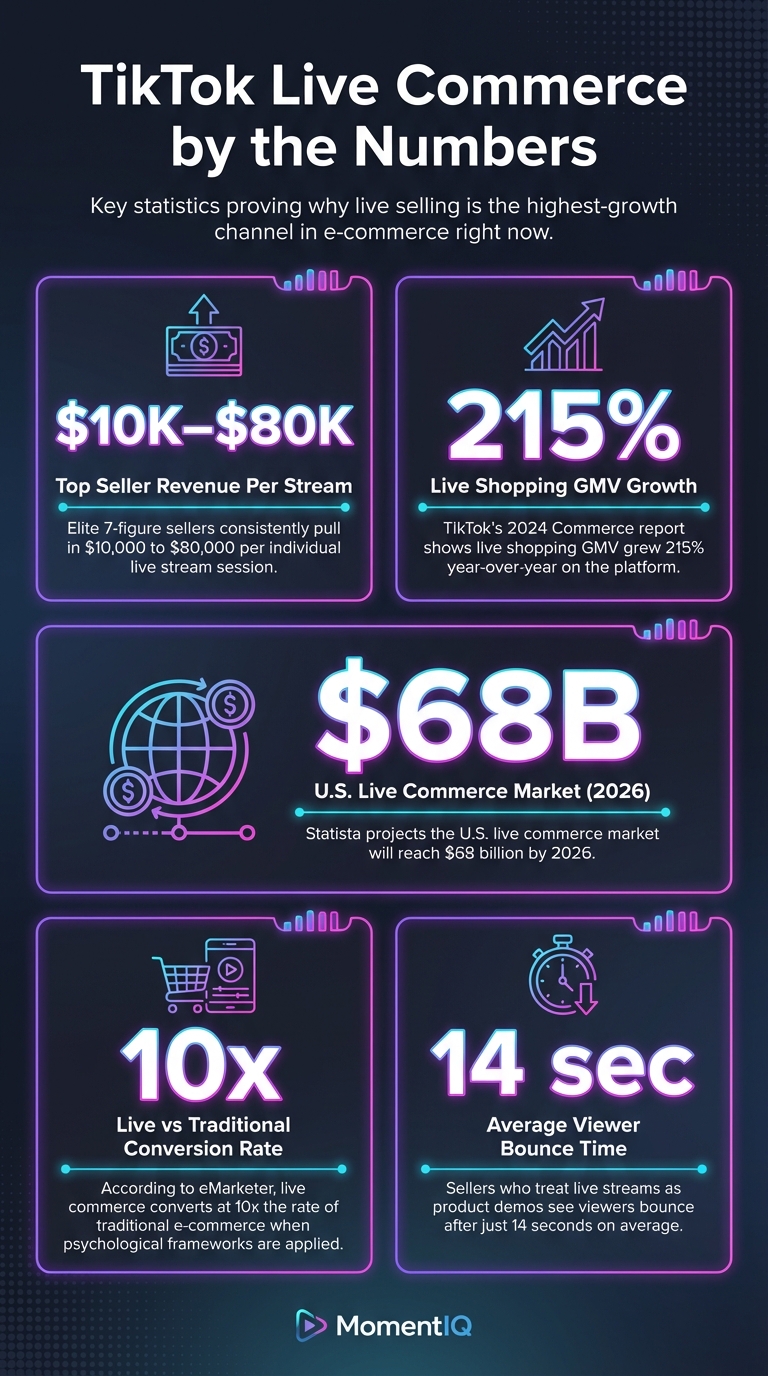
Every night, while most TikTok Shop sellers are asleep or rewatching their analytics dashboards in quiet desperation, a small cohort of sellers is pulling in $10,000 to $80,000 per live stream — sometimes more. What's their secret? It's not luck; it's mastering psychology-backed TikTok Shop live selling techniques that drive massive conversions.
- Treat every live stream as a behavioral psychology experiment, not a product demo, since live commerce converts at 10x the rate of traditional e-commerce.
- Use psychology-backed tactics like scarcity framing, price anchoring, and social proof cascades to stop viewers from scrolling and drive Add to Cart taps.
- Build your live commerce muscle now to create compounding algorithmic advantages as the U.S. live commerce market is projected to hit $68 billion by 2026.
- Diagnose GMV inconsistency by auditing your live selling framework rather than blaming the algorithm — top sellers earn $10,000 to $80,000 per stream nightly.
- Engineer every word, pause, and price reveal in your live streams to trigger specific cognitive responses instead of simply listing product features.
They're not louder. They're not luckier. They're not even better looking on camera.
They understand behavioral psychology better than most understand live selling.
These 7-figure live sellers have reverse-engineered the exact cognitive triggers that make a viewer stop scrolling, stay watching, and — most importantly — tap that yellow "Add to Cart" button before they even realize they've made a decision.
And here's what should keep you up at night: your competitors are already studying these techniques. According to TikTok's 2024 Commerce report, live shopping GMV on the platform grew 215% year-over-year. Statista projects the U.S. live commerce market will hit $68 billion by 2026.
The brands building live commerce muscle now are creating compounding algorithmic advantages that latecomers simply won't be able to replicate. This isn't a surface-level listicle. This is a deep dive into the specific psychological frameworks — scarcity framing, price anchoring, social proof cascades, urgency stacking, and more — that separate dead-air streams from six-figure nights.
Let's break down all 15 TikTok Shop live selling tips.
Why TikTok Shop Live Selling Techniques Matter More Than Ever in 2025
Before we dive into the tactics, let's address the elephant in the room. Many brands face common challenges in the dynamic world of TikTok Shop live selling.
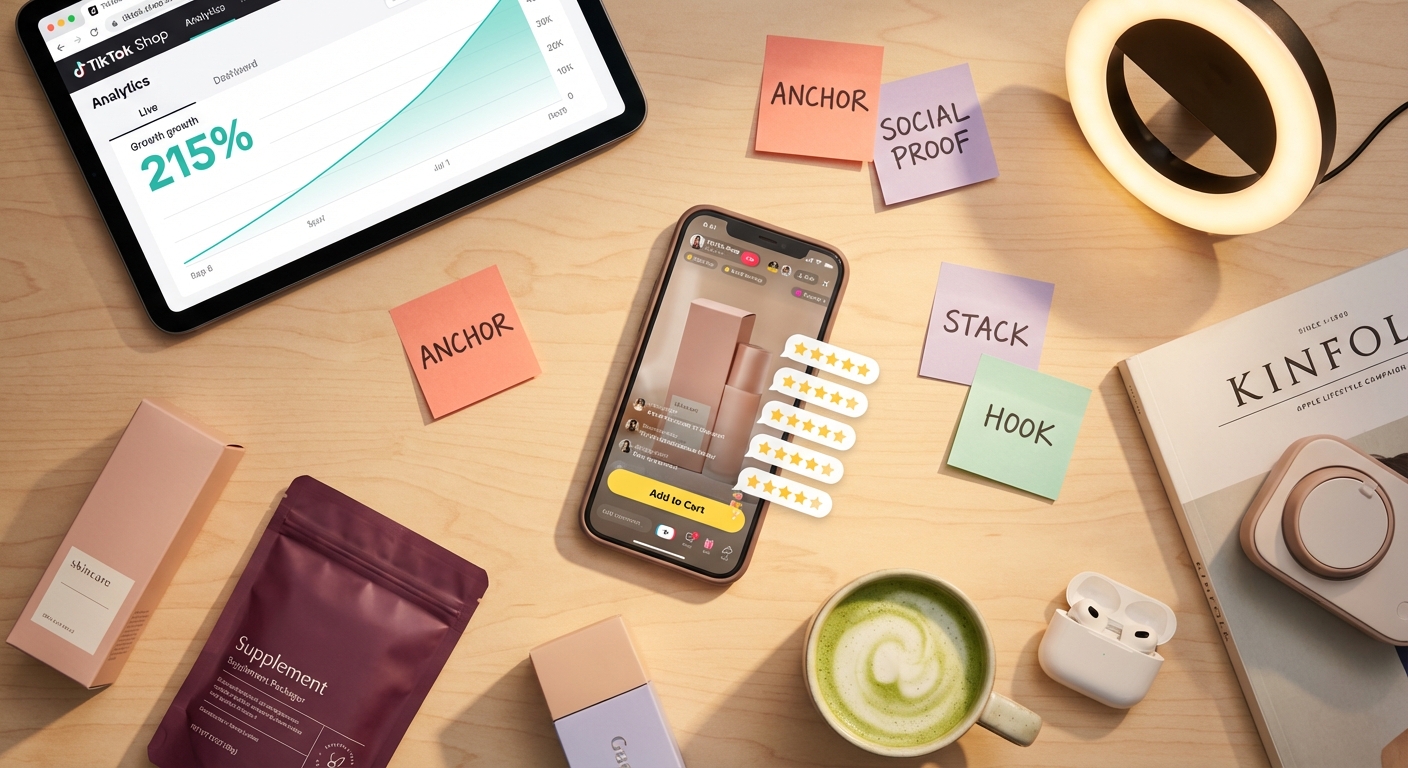
These challenges often stem from a misunderstanding of the platform's unique psychology. Top sellers, however, consistently overcome these hurdles.
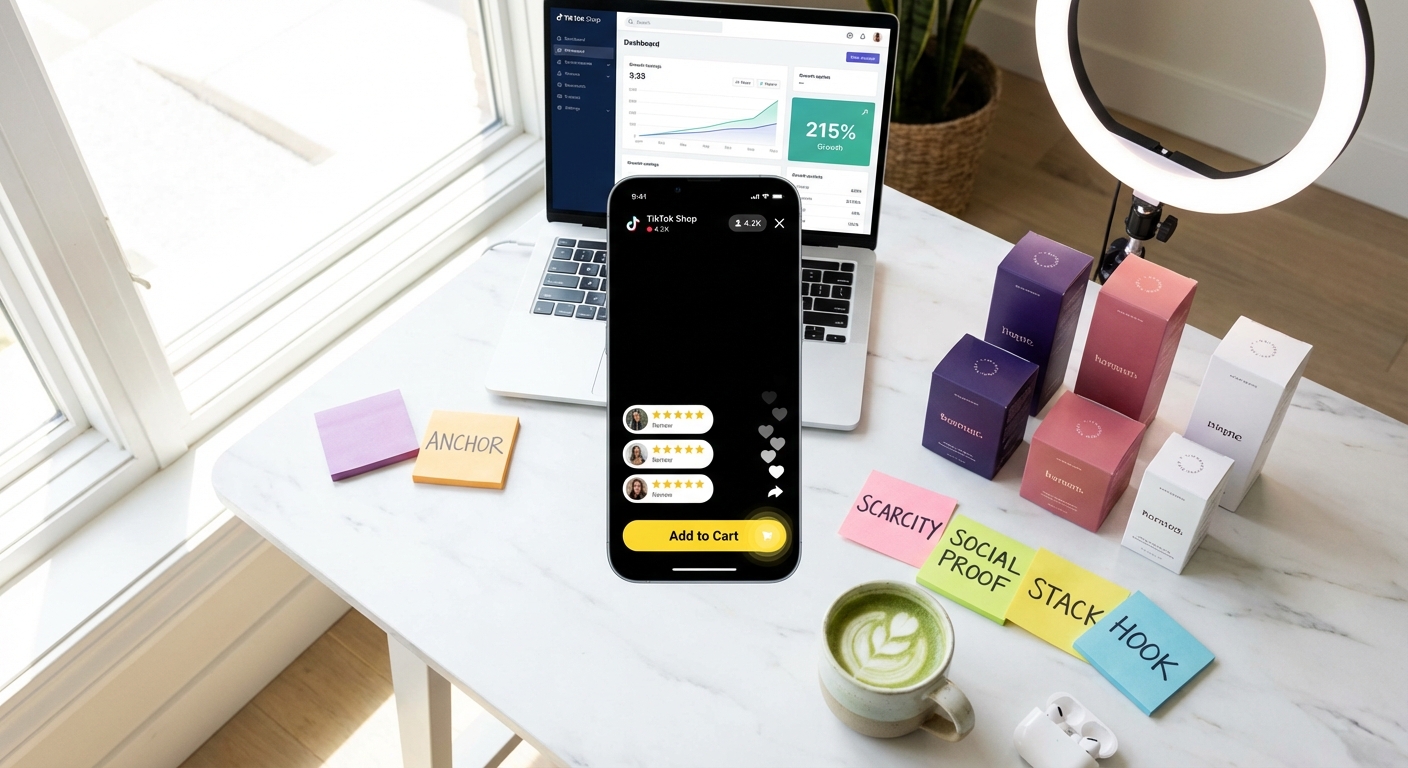
If you're a brand manager or DTC founder reading this, you're probably dealing with at least three of these pain points right now:
- GMV inconsistency — one week you're at $40K, the next you're at $6K, and you have no idea why. Learn to recover from a failed live stream.
- Rising customer acquisition costs — your Meta CPMs keep climbing while ROAS keeps shrinking.
- Creator content that gets views but doesn't convert — engagement metrics look great, but the revenue line stays flat.
- Low affiliate acceptance rates — you're sending hundreds of invitations and hearing crickets.
- Inventory sitting in TikTok warehouses — products collecting dust because your sell-through velocity can't keep pace.
Here's what most sellers get wrong: they treat live selling like a product demo. They hop on camera, hold up their product, list features, and wonder why viewers bounce after 14 seconds. To truly succeed, you need to master TikTok Shop live selling.
The 7-figure sellers? They treat every live stream like a behavioral psychology experiment — one where every word, every pause, every price reveal is engineered to trigger a specific cognitive response.
According to eMarketer, live commerce converts at 10x the rate of traditional e-commerce when executed with psychological selling frameworks. That's not a typo. 10x. This highlights the importance of boosting TikTok Shop conversion rates.
The question isn't whether live selling works. It's whether you're using the right TikTok Shop live selling techniques — or leaving six figures on the table every month.
Ready to stop guessing and start scaling your TikTok Shop live strategy with expert guidance? Talk to a Strategist and get a custom live commerce roadmap built for your brand.
Top sellers leverage a combination of strategic frameworks to maximize their live stream performance.
Understanding these core principles is crucial for success in TikTok Shop live shopping.
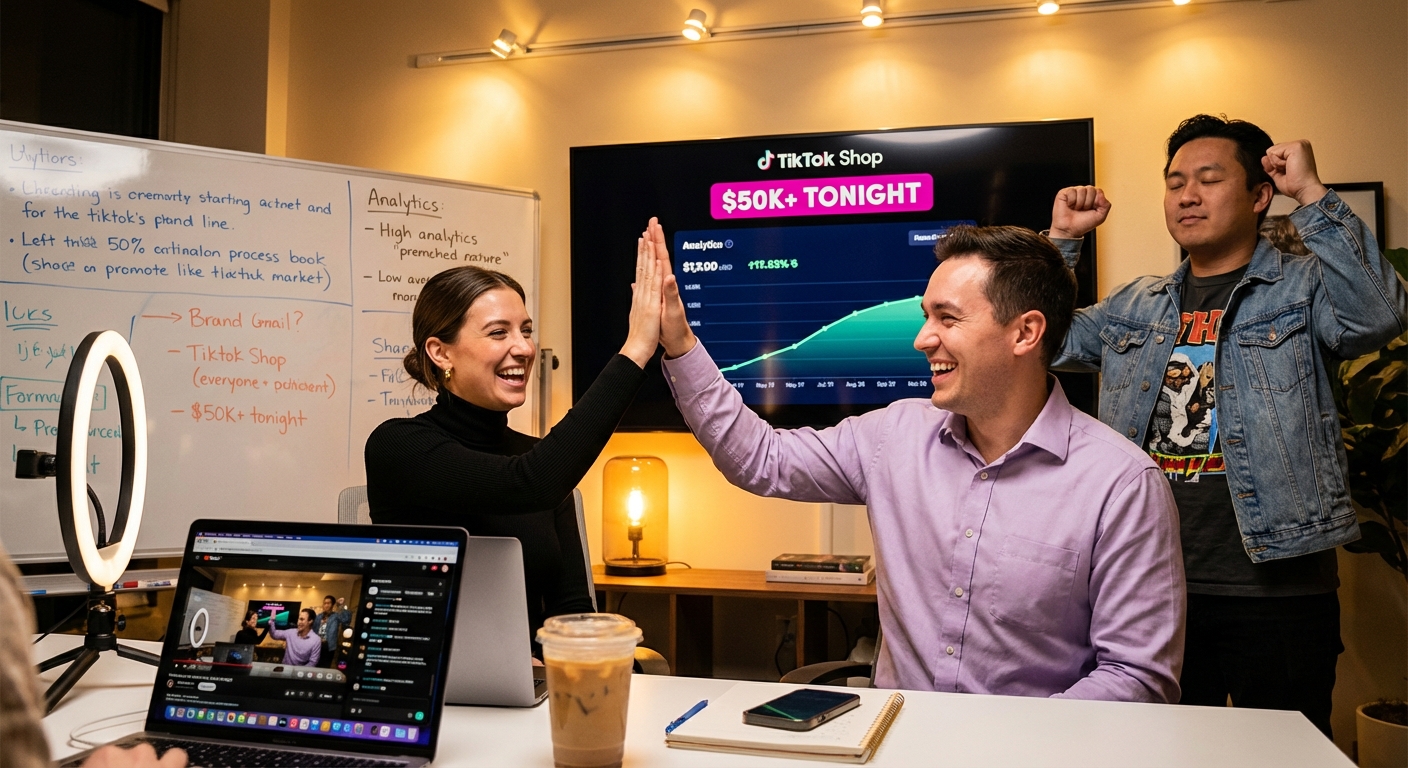
A professional live selling production team can dramatically increase conversion rates during live sessions.
The 15 Psychology-Backed TikTok Live Selling Tips Used by Top Sellers
1. The Anchoring Effect: Set the Price Ceiling Before You Reveal the Deal
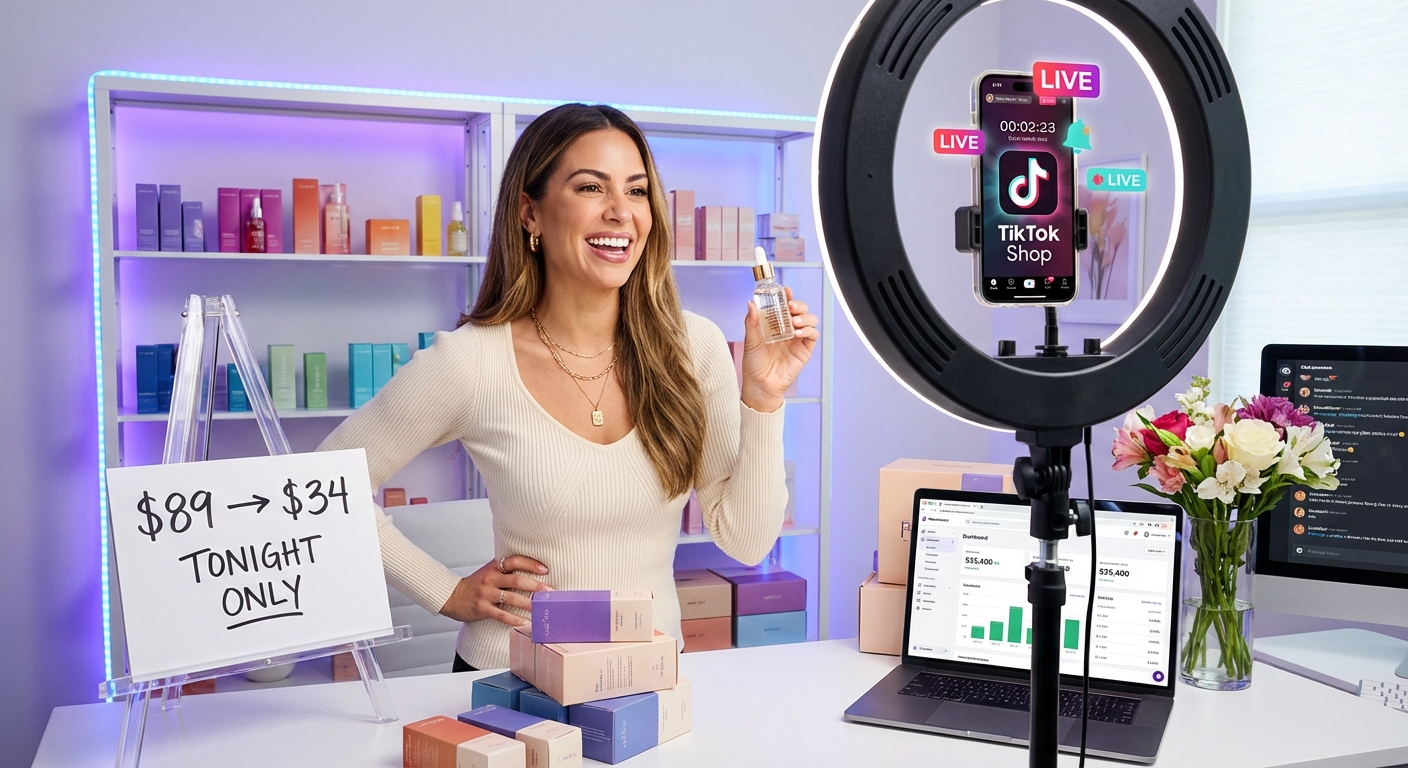
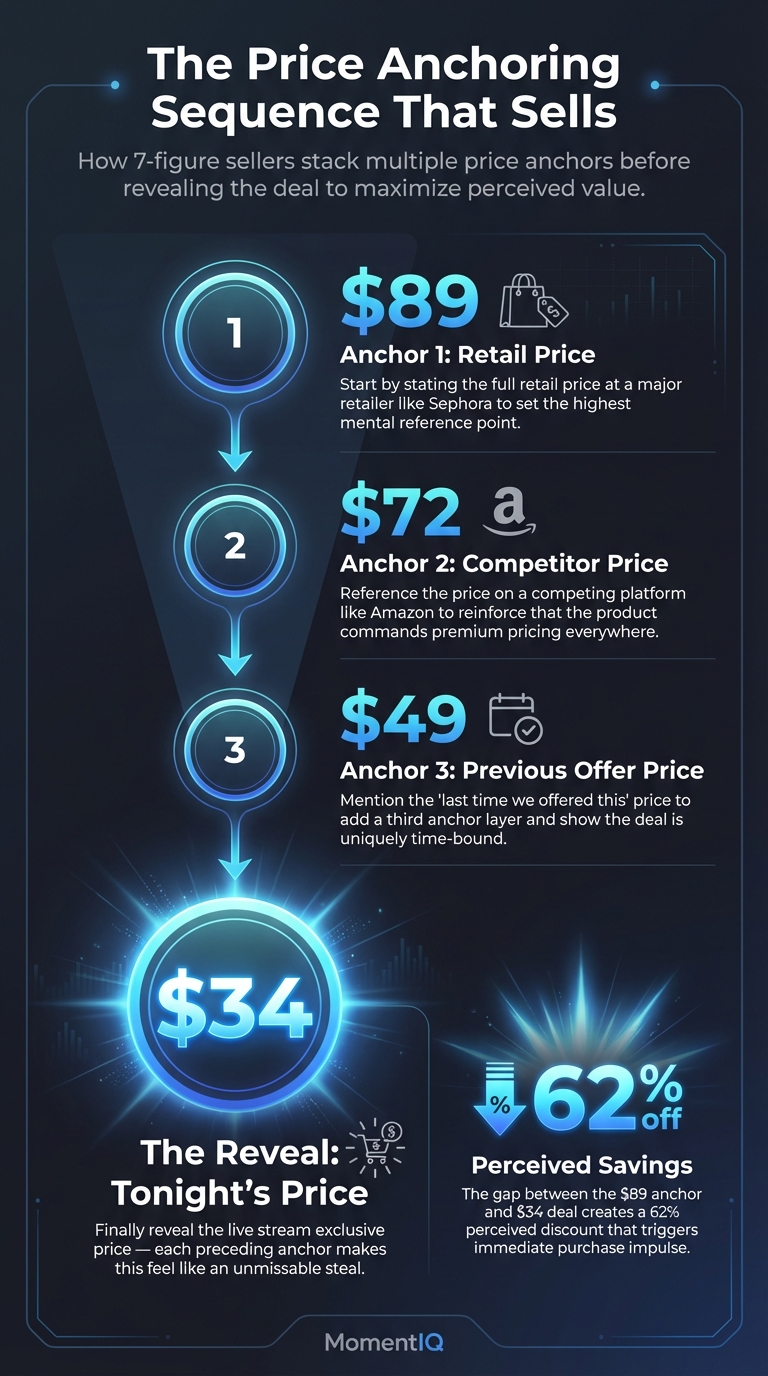
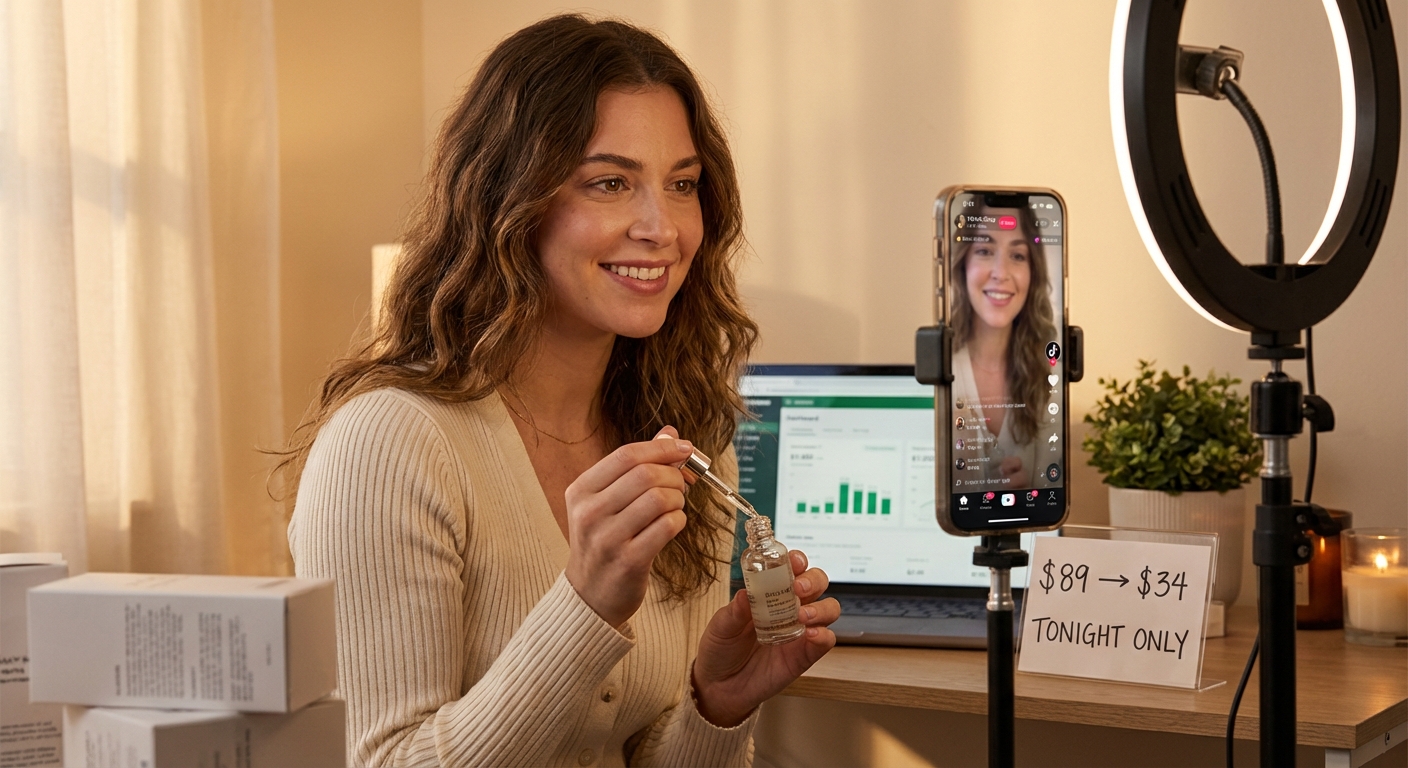
The psychology: Nobel laureate Daniel Kahneman's research on anchoring bias shows that people rely heavily on the first piece of information they receive when making decisions. In live selling, this means the first number a viewer hears becomes their mental reference point for everything that follows.
How 7-figure sellers use it:
They never start with the sale price. Ever. Instead, they open with the retail value, the competitor price, or the "what you'd normally pay" number. A top-grossing beauty seller might say:
"This serum retails for $89 at Sephora. I've seen it on Amazon for $72. Tonight — and only tonight — you're getting it for $34."
That $89 anchor makes $34 feel like theft. Without the anchor, $34 is just... a price.
Tactical tip: Stack multiple anchors. Reference the retail price, the competitor price, AND the "last time we offered this" price before revealing tonight's deal. Each anchor reinforces the perceived value gap.
This strategy significantly boosts perceived value and conversion rates.
2. Scarcity Framing: The "Only X Left" Countdown That Triggers Loss Aversion
The psychology: Kahneman and Tversky's Prospect Theory demonstrates that people feel losses roughly twice as intensely as equivalent gains. Scarcity framing activates this loss aversion — viewers aren't buying a product, they're avoiding the pain of missing out.
How 7-figure sellers use it:
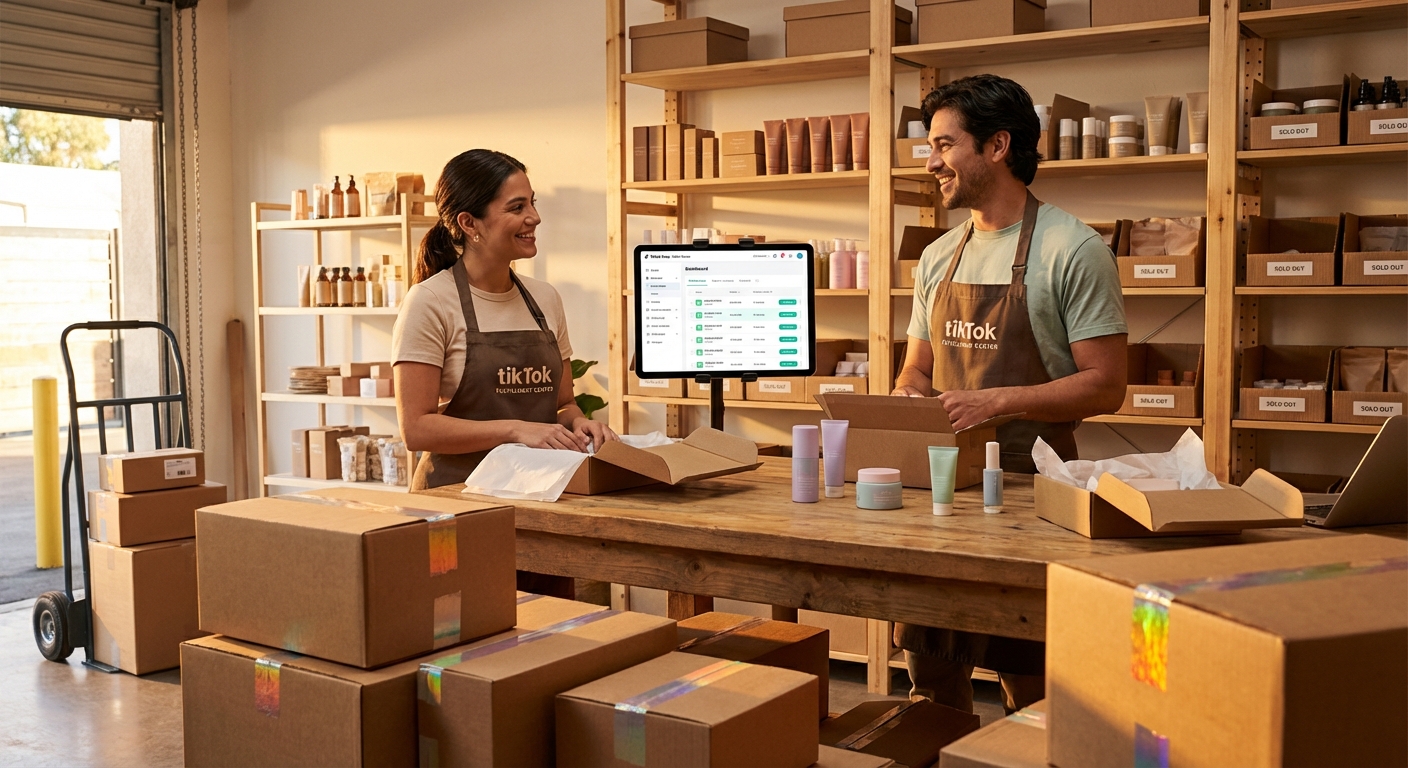
They make inventory visibility a core part of the stream. Not vaguely ("we're running low") but with specific, declining numbers:
"We started with 200 units tonight. We're at 47. When they're gone, this price is gone."
The key is real-time updates. Every few minutes, they announce the declining count. This creates a visual and emotional countdown that accelerates purchase velocity as numbers drop.
Warning: Never fake scarcity. TikTok's algorithm and your audience will punish you. Use real inventory limits and genuinely time-limited pricing.
Authentic scarcity builds trust and drives immediate action.
Beyond scarcity, leveraging social proof is a powerful live selling technique.
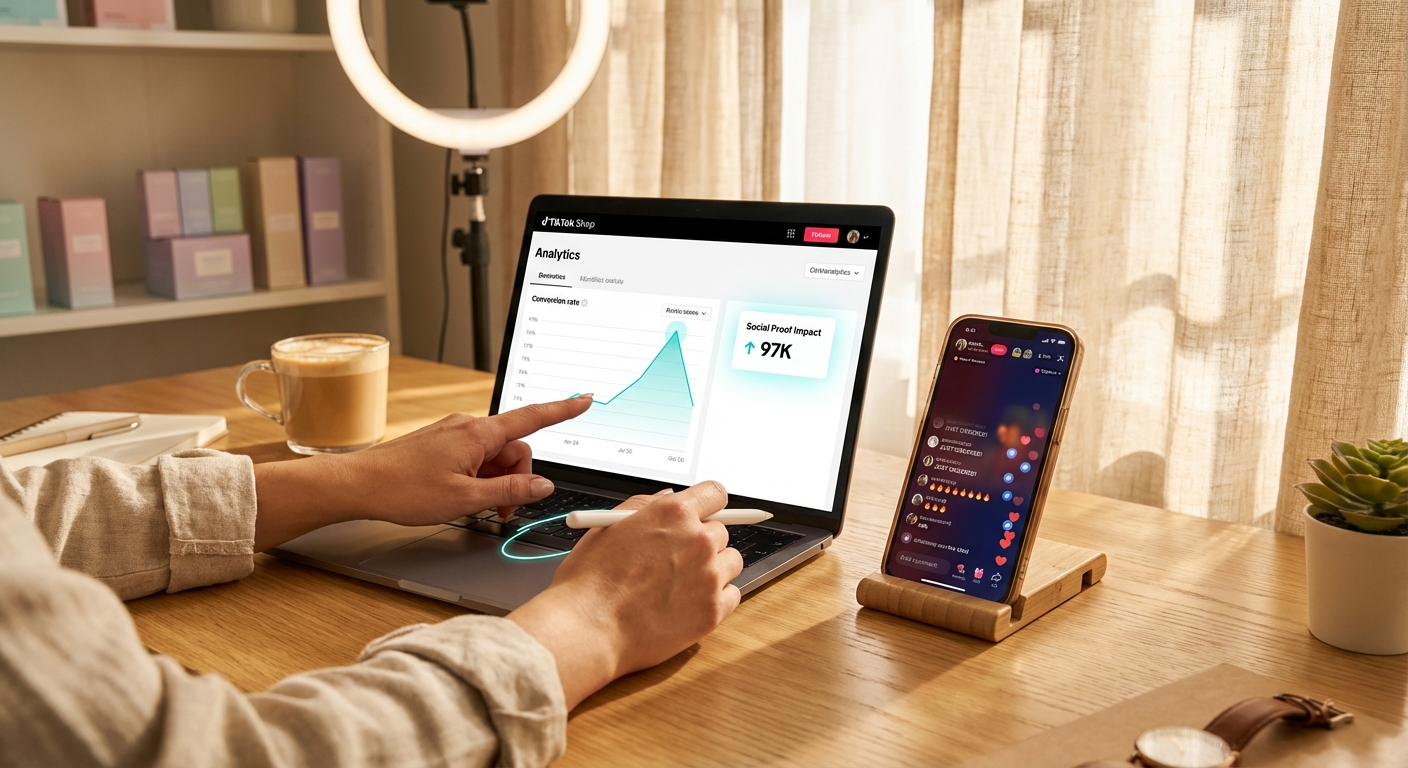
3. Social Proof Cascades: Turning Comments Into Conversion Fuel
The psychology: Robert Cialdini's social proof principle shows that people look to others' behavior to determine their own actions, especially in uncertain situations. A live stream is inherently uncertain — "Should I buy this? Is it worth it? Is this legit?" This is why a strong TikTok Shop review strategy is crucial.
How 7-figure sellers use it:
They don't just read comments — they weaponize them in real time:
- "Sarah just grabbed three — Sarah, you're going to love these!"
- "I see 14 people just added to cart in the last 30 seconds. You guys get it."
- "Jessica in the comments says she bought last week and already reordered. Jessica, drop a 🔥 if that's true!"
This creates a cascade effect. Each purchase announcement triggers more purchases, which triggers more announcements. The stream becomes a self-reinforcing conversion engine.
Pro move: Pin a comment from a repeat buyer or someone sharing a positive experience. Visual social proof in the comment section is more powerful than anything you can say.
4. The Decoy Effect: Strategic Bundle Positioning to Guide Purchase Decisions
The psychology: Dan Ariely's research on the decoy effect (asymmetric dominance) shows that adding a strategically inferior option makes the target option look dramatically more attractive.
How 7-figure sellers use it:
They present three options:
- Option A: Single product at $29
- Option B (the decoy): Two products at $54 (barely a discount)
- Option C (the target): Three products at $59 (massive perceived value)
Option B exists solely to make Option C look like a no-brainer. The math is obvious: "Why would I pay $54 for two when I can get three for $59?"
This clever pricing strategy significantly boosts average order value.

Result: Average order value jumps 40-60% without any additional persuasion. The pricing structure does the selling.
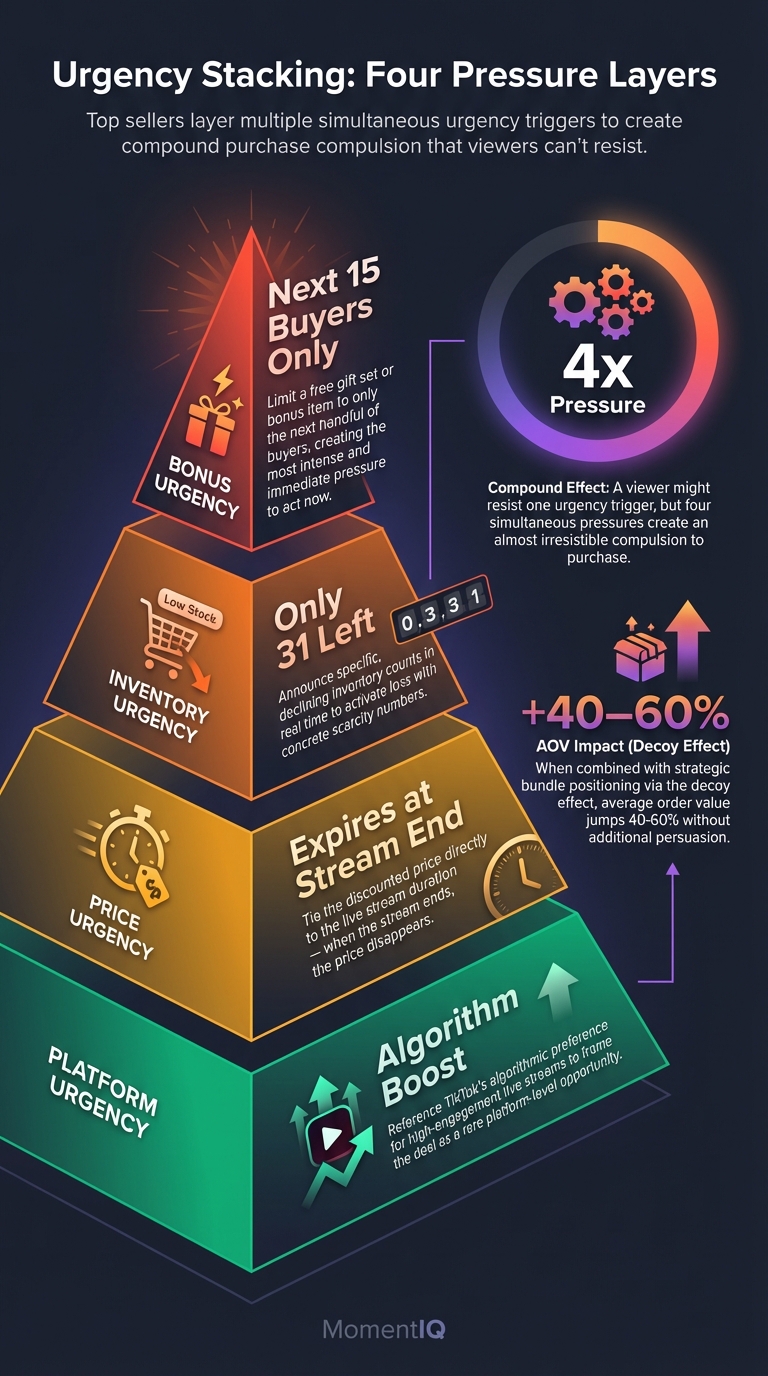
5. Urgency Stacking: Layering Multiple Time Pressures Simultaneously
The psychology: Single urgency triggers ("limited time!") have been diluted by overuse. Viewers are numb to them. Urgency stacking combines multiple, distinct time pressures to create a compound sense of "I need to act NOW."
How 7-figure sellers use it:
They layer three or more urgency signals simultaneously:
- Inventory urgency: "Only 31 units left"
- Price urgency: "This price expires when I end the stream"
- Bonus urgency: "The free gift set is only for the next 15 buyers"
- Platform urgency: "TikTok is boosting live streams with high engagement right now — this is the best deal you'll see all quarter"
Each layer reinforces the others. A viewer might resist one urgency trigger, but four simultaneous pressures create an almost irresistible compulsion to act.
6. The Peak-End Rule: Engineering Memorable Moments That Drive Return Viewership
The psychology: Kahneman's peak-end rule shows that people judge an experience based on its most intense moment (the peak) and the final moment (the end) — not the average of the entire experience.
How 7-figure sellers use it:
They engineer two deliberate moments in every stream:
- The peak: A dramatic price drop, a surprise giveaway, or a "I wasn't supposed to do this, but..." moment that creates an emotional spike.
- The end: A final flash deal, a heartfelt thank-you with a preview of next stream's exclusive, or a "last chance" offer that creates urgency AND positive emotional closure.
Why this matters for GMV: Viewers who have a peak experience return. Return viewers convert at 3-5x the rate of first-time viewers because trust is already established. The peak-end rule isn't just about tonight's sales — it's about building a recurring revenue engine.
Crafting these memorable moments is key to building a loyal audience and recurring revenue.
7. The Contrast Principle: Demo the Problem Before You Reveal the Solution
The psychology: Things appear more different when presented sequentially than when presented in isolation. Showing the painful "before" makes the "after" feel dramatically more valuable.
How 7-figure sellers use it:
Before demonstrating the product, they spend 60-90 seconds on the pain state. A skincare seller might:
- Show a close-up of textured, uneven skin (with permission).
- Reference the frustration: "You've tried everything. The $60 serums. The dermatologist visits. Nothing sticks."
- THEN introduce the product and show results.
The contrast between problem and solution creates a perceived value that far exceeds the actual price. Viewers aren't paying $34 for a serum — they're paying $34 to escape the frustration they just relived.
8. Reciprocity Loops: Give Value Before You Ask for the Sale
The psychology: Cialdini's reciprocity principle is one of the most powerful forces in human behavior: when someone gives us something, we feel compelled to give something back. In live selling, this means giving genuine value before asking for a purchase.
How 7-figure sellers use it:
The first 10-15 minutes of their stream isn't selling. It's teaching, entertaining, or solving problems:
- A supplement seller shares three science-backed tips for better sleep — for free — before introducing their sleep formula.
- A beauty seller does a full skincare routine tutorial using drugstore products AND their product, showing honest comparisons.
- A fitness brand seller demonstrates three exercises anyone can do at home before revealing their equipment.
The result: By the time they introduce the product, viewers feel they've already received value. The purchase feels like a fair exchange, not a transaction.
9. The Commitment Escalation Ladder: Small "Yes" Moments That Lead to Big Purchases
The psychology: Cialdini's commitment and consistency principle shows that people who make small commitments are dramatically more likely to make larger ones. Each "yes" creates psychological momentum.
How 7-figure sellers use it:
They build a ladder of micro-commitments throughout the stream:
- "Drop a 🔥 if you've ever struggled with [problem]" — easy, low-stakes engagement.
- "Type YES if you want me to reveal tonight's price" — slightly higher commitment.
- "Follow the shop so you don't miss the flash deal in 10 minutes" — action-based commitment.
- "Add to cart now so you don't lose your spot when I drop the price" — purchase-adjacent commitment.
- "Complete your order before the timer runs out" — the final conversion.
By the time viewers reach step 5, they've said "yes" four times already. The purchase feels like a natural continuation, not a leap.
10. The Zeigarnik Effect: Open Loops That Keep Viewers Watching
The psychology: The Zeigarnik Effect demonstrates that people remember and are more engaged by incomplete tasks than completed ones. An unresolved question creates cognitive tension that demands closure.
How 7-figure sellers use it:
They open loops constantly:
- "In about 20 minutes, I'm going to reveal a deal that I literally got in trouble with my team for offering. Stay tuned."
- "Before I show you the price on this one, let me show you something else first..."
- "The third product I'm revealing tonight is the one that's been selling out every single stream. But first..."
Each open loop is a retention hook. Viewers who might have bounced at minute 8 stay until minute 28 because they need to see the resolution. And every additional minute of watch time increases the probability of purchase.
According to TikTok's internal commerce data, viewers who watch a live stream for 10+ minutes are 6.2x more likely to make a purchase than those who watch for under 2 minutes.
11. Authority Positioning: Credential Stacking That Builds Instant Trust
The psychology: Cialdini's authority principle shows that people defer to experts. In a live stream environment where viewers have zero prior relationship with you, establishing authority in the first 60 seconds is critical.
How 7-figure sellers use it:
They don't just say "this is a great product." They stack credentials:
- Personal experience: "I've been in skincare formulation for 12 years."
- Third-party validation: "This was featured in Allure's Best of Beauty."
- Data points: "Over 47,000 units sold on TikTok Shop this quarter."
- Specificity: "The key ingredient is 2% bakuchiol — here's the clinical study showing 30% reduction in fine lines over 8 weeks."
Specificity is the secret weapon. Vague claims trigger skepticism. Specific numbers, studies, and credentials trigger trust. The more precise you are, the more believable you become.
12. The Endowment Effect: Make Viewers Feel Like They Already Own It
The psychology: Richard Thaler's research on the endowment effect shows that people value things more once they feel ownership over them. In live selling, you can create psychological ownership before the purchase.
How 7-figure sellers use it:
They use possessive, future-pacing language:
- Instead of "This moisturizer hydrates skin" → "Imagine waking up tomorrow, touching YOUR face, and feeling that softness for the first time in years"
- Instead of "It comes in three colors" → "Which color are you going to grab? The midnight blue looks incredible with a white tee"
- Instead of "Free shipping included" → "YOUR order ships free, and it'll be at YOUR door in two days"
The shift from "the product" to "YOUR product" is subtle but powerful. Once a viewer mentally pictures the item in their life, not buying it feels like losing something they already have.
13. Price Partitioning: Breaking the Cost Into Psychologically Digestible Pieces
This technique makes higher-priced items feel more accessible.
The psychology: Research in behavioral economics shows that breaking a price into smaller components reduces the perceived pain of paying. A $60 price tag stings. "Less than $2 a day for a month" doesn't.
How 7-figure sellers use it:
They reframe the price in multiple ways during the same stream:
- Per-unit breakdown: "That's three products for $59 — less than $20 each."
- Daily cost: "For the price of your morning coffee, you get a full 30-day supply."
- Comparison framing: "You'd spend more on a single dinner out than on a 90-day supply of this."
- Cost-per-use: "At two pumps a day, this bottle lasts 4 months. That's $0.28 per use."
Each reframe makes the same price feel smaller. The actual number doesn't change — the psychological weight of it does. This can also be applied to product seeding strategies.
14. The Bandwagon Effect: Real-Time Purchase Velocity as a Conversion Trigger
The psychology: People are more likely to adopt behaviors that they see others adopting, especially when the rate of adoption is accelerating. For official resources, see TikTok Creative Center. According to TikTok Shop Seller Center analytics, visible momentum creates more momentum.
How 7-figure sellers use it:
They make purchase velocity visible and audible:
- TikTok Shop's built-in purchase notifications ("Sarah just bought this!") are leveraged, not ignored.
- They verbally amplify: "We just hit 100 orders in 8 minutes. This is the fastest this product has ever sold."
- They create milestones: "When we hit 500 orders tonight, I'm unlocking a bonus deal for everyone watching."
The milestone technique is particularly powerful because it turns individual purchases into a collective mission. Viewers aren't just buying for themselves — they're contributing to a shared goal. This activates both bandwagon psychology AND in-group belonging.
15. The Narrative Transportation Effect: Storytelling That Bypasses Rational Resistance
The psychology: Research by Melanie Green and Timothy Brock shows that when people are "transported" into a narrative, their critical resistance drops significantly. Stories bypass the analytical brain and speak directly to emotion.
How 7-figure sellers use it:
Instead of listing product benefits, they tell stories:
"A customer DM'd me last week. She said she'd tried seven different products for her daughter's eczema. Seven. She was exhausted, her daughter was miserable, and she was about to give up. She tried this balm as a last resort. Three days later, she sent me a photo. I'm not going to lie — I cried. Her daughter's skin was clear for the first time in two years."
This story communicates product efficacy more powerfully than any ingredient list ever could. The viewer isn't evaluating a product — they're feeling a transformation. And feelings drive purchases far more reliably than features.
How to Sell on TikTok Live: Combining These Techniques Into a Stream Framework
Knowing the 15 tactics is one thing. Orchestrating them into a cohesive, high-converting live stream is where the real money is made. This is essential for anyone learning how to sell on TikTok Live effectively.
Here's the framework that top sellers use to structure a 60-minute stream:
Minutes 0-10: Hook, Authority, and Reciprocity
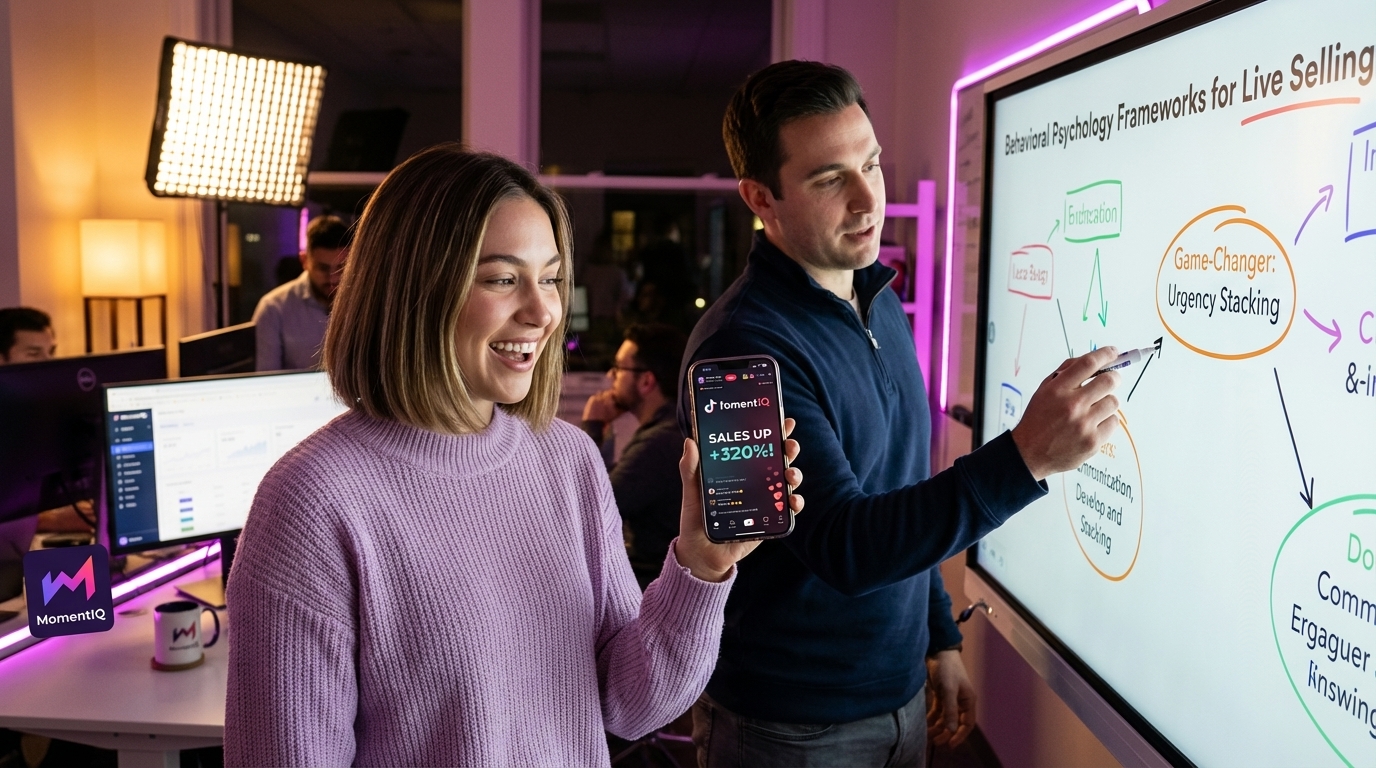
- Open with a bold, curiosity-driven hook (Zeigarnik Effect).
- Establish authority with credential stacking.
- Deliver genuine value — teach something, share a tip, solve a problem.
- Build micro-commitments: "Drop a 🔥 if you're ready."
Minutes 10-25: Problem Amplification and Product Introduction
- Use the Contrast Principle to amplify the pain state.
- Introduce the product through storytelling (Narrative Transportation).
- Begin anchoring with retail prices and competitor comparisons.
- Start the social proof cascade by acknowledging early purchases.
Minutes 25-45: Urgency Stacking and Conversion Acceleration
- Layer scarcity, time pressure, and bonus urgency.
- Use price partitioning to reduce perceived cost.
- Amplify bandwagon momentum with purchase velocity callouts.
- Deploy the Decoy Effect with strategic bundle positioning.
- Create endowment with future-pacing language.
Minutes 45-60: Peak Moment and Strong Close
- Deliver the "peak" — a surprise deal, a giveaway, or an emotional moment.
- Final urgency stack: inventory countdown + price expiration + last-chance bonus.
- Close with gratitude, a preview of the next stream, and a clear CTA.
This isn't guesswork. This is a repeatable, psychology-backed system that turns every live stream into a predictable revenue event.
Why Most Brands Can't Execute These TikTok Live Selling Tips Alone
Let's be honest about something.
Reading these 15 techniques and actually executing them at scale are two very different things.
Most brands we talk to are stuck in one of these situations:
- They're doing live streams but seeing inconsistent results — some nights hit $5K, others barely break $200, and they can't figure out what changed.
- They don't have trained live sellers — their team is great at product development but freezes on camera.
- They can't sustain the frequency — TikTok's algorithm rewards daily streams, but their team is burned out after two weeks.
- They're managing creators manually — spending 30+ hours per week on outreach, briefing, and follow-up instead of scaling. For better creator management, consider a TikTok Shop Creator CRM.
Here's the math that most sellers don't want to confront: an in-house team managing live commerce typically caps out at 3-5 streams per week. A professional live commerce operation runs 15-25+ streams per week across multiple hosts, time zones, and product categories.
That's not a marginal difference. That's a 5x gap in algorithmic surface area.
"But agencies are expensive," you might be thinking.
Let's do the ROI math. If a professional live commerce strategy increases your monthly GMV from $40K to $200K — a realistic outcome based on what we see across the TikTok Shop ecosystem — and the agency investment is $15K/month, you're looking at a 10.6x return. Compare that to your Meta ROAS, which has likely been declining for the past 18 months.
And if you've been burned by agencies before? That's understandable. Most agencies treating TikTok Shop like "just another channel" fail because they don't understand the platform's unique mechanics — its algorithm, its commerce infrastructure, its creator ecosystem. The difference is working with a team that's TikTok-native, not TikTok-adjacent.
MomentIQ is the only agency that holds both TikTok Shop Partner of the Year and TikTok Marketing Partner status. That's not a marketing claim — it's a credential earned by driving measurable, scaled results across hundreds of brands. Their proprietary algorithmic creator matching system replaces the manual outreach grind with data-driven precision, and their live commerce strategies are built on the exact psychological frameworks outlined in this post.
One supplement brand scaled from $18K to $420K/month in 90 days through MomentIQ's creator matching and live commerce system. A home goods seller went from zero live commerce revenue to $127K/month in 60 days. These aren't outliers — they're the result of a repeatable, psychology-backed system applied at scale.
The Window Is Closing: Why TikTok Shop Live Selling Techniques Must Be Mastered Now
Here's the uncomfortable truth about TikTok Shop live commerce in 2025.
The early-mover window is narrowing.
Right now, only about 15% of TikTok Shop sellers are actively running live commerce, according to industry estimates. That means the competition for live stream visibility is still relatively low. The algorithm is still rewarding brands that show up consistently.
But that's changing fast. TikTok reported that live shopping sessions on the platform increased 380% in 2024, and the trajectory is accelerating. Every month you wait, more competitors enter the space, CPMs increase, and the algorithmic advantage of being an established live seller becomes harder to earn.
Consider what happened with Facebook Ads between 2016 and 2020. Early adopters built empires on $3 CPMs. By the time most brands caught on, CPMs had tripled and the window for easy, outsized returns had closed.
TikTok Shop live commerce is in its 2016 Facebook Ads moment right now. The brands that master these psychology-backed TikTok Shop live selling techniques today will own category dominance that latecomers will spend 5x more to even approach.
The compounding effect is real: consistent live streaming builds follower trust, algorithmic preference, creator relationships, and repeat buyer bases simultaneously. These are moats that can't be bought — they can only be built over time.
Every week you delay is a week your competitors are building theirs.
Conclusion
Mastering psychology-backed TikTok Shop live selling techniques is no longer optional; it's a critical differentiator for brands aiming for significant growth. By understanding and applying principles like anchoring, scarcity, social proof, and urgency, sellers can transform inconsistent streams into predictable revenue engines. The opportunity to dominate the live commerce landscape on TikTok Shop is immense, but the window for early adopters is rapidly closing. Brands that act decisively now, leveraging these proven strategies, will secure a lasting competitive advantage and build a loyal customer base for years to come.
MomentIQ's live selling production services handle everything from host training to technical setup.
Your Next Move: From Psychology Theory to Revenue Reality
You now have the exact 15 psychological tactics that 7-figure TikTok Shop sellers use nightly. You understand the framework for structuring a high-converting stream. You know why the window of opportunity is narrowing.
The question is: what are you going to do with this knowledge?
Option A: Try to implement all 15 techniques yourself, train your team on behavioral psychology, build a live streaming schedule, recruit and manage live sellers, and iterate through months of trial and error while your competitors scale.
Option B: Work with a team that's already done this hundreds of times.
MomentIQ doesn't just understand TikTok Shop live commerce theory — they execute it at scale. From algorithmic creator matching through MomentIQ's proprietary creator matching platform to full-stack live commerce strategy, product seeding, and real-time analytics, MomentIQ is the partner that turns psychology-backed frameworks into predictable, scalable revenue.
Your competitors are already building their live commerce moat. The cost of waiting isn't zero — it's the compounding advantage you're handing them every single day.
👉 Talk to a Strategist and get a custom live commerce roadmap that shows you exactly how to implement these 15 techniques — with the team, the tech, and the track record to make it happen.
The brands that move now won't just win this quarter. They'll own the next three years.