
Do TikTok Shop Videos Need Professional Production?
Only 0.2% of top-selling TikTok Shop videos were professionally produced (n=1,001). Where the production budget belongs instead, and when polish matters.
If you search for TikTok Shop video production, most of what comes back is written by people who sell production: studio shoots, lighting packages, "premium content that stops the scroll". It is a reasonable instinct for a brand used to television or paid social. On TikTok Shop it points the budget at the one variable the top of the market has almost entirely stopped using.
We analysed 1,001 top-selling US TikTok Shop videos, together accounting for about $69.6M in estimated revenue and 3.71B views, and labelled more than 40 attributes on each. Of the 1,001, 0.2% were professionally produced. The rest were creator-style video shot the way creators shoot: handheld, natural light, somebody's bedroom or kitchen.
- 98.1% of top-selling videos were UGC-style (66.4% semi-polished, 31.7% raw); 0.2% were professionally produced (n=1,001).
- The work that shows up is in the edit and the brief: text overlays on 99.8%, captions on 92.8%, product on screen for 82.6% of runtime and first seen at about 1.6 seconds.
- Polish is a category decision: 52 of 57 vacuum videos were semi-polished; 15 of 22 shapewear videos were raw.
- Fast cutting is table stakes, not an edge: a median 15 cuts per minute (IQR 12-16).
- This describes winners. It proves you do not need a studio; it does not prove a studio hurts.
What the top sellers actually look like

The sample is the 1,001 highest-revenue US TikTok Shop videos in a rolling 30-day window in April 2026, drawn from a Kalodata export. Each video was analysed frame by frame by a vision-language model against a fixed attribute schema (mean labelling confidence 0.88): production style, camera, lighting, setting, presenter, hook, narrative, captions, on-screen text, audio, product visibility and call to action.
The production-style split is the headline because it is both the most lopsided and the most robust. It is a coarse label, hard to get wrong, applied to a large sample.
| Production style | Share of top-selling videos (n=1,001) |
|---|---|
| Semi-polished UGC | 66.4% |
| Raw UGC | 31.7% |
| Professional production | 0.2% |
| Other formats | 1.7% |
The physical setup follows the same pattern. The camera was handheld but stable in 77.5% of videos. Lighting was natural indoor light in 66.5%. The setting was overwhelmingly a home: bedroom, bathroom, living room, kitchen. The dominant presenter was one person speaking in a medium, conversational register (75.2%), not a high-energy host.
In other words, the winning "look" is a person using the product at home and talking about it, filmed handheld by someone who knows how to hold the camera still. Semi-polished means exactly that: clean framing, decent light, a tidy edit. It does not mean a crew.
Where the production effort actually goes

If the top sellers are not spending on cameras, they are not spending on nothing. The effort is visible, and almost all of it sits in two places: the edit layer, and how the product is shown.
| Attribute | Top-selling videos (n=1,001) |
|---|---|
| On-screen text overlays | 99.8% |
| Captions | 92.8% |
| Product demonstrated | 98.9% |
| Product on screen, share of runtime | 82.6% |
| First product appearance | about 1.6 seconds |
| Call to action at the end, spoken and on screen | 86.7% spoken plus text; 96.8% placed at the end |
Nearly every top seller carried on-screen text, usually a written version of the hook (69% of videos) and often a written call to action (34.5%). The product was in frame for most of the runtime and appeared within the first two seconds. It was demonstrated, not merely shown, in almost every video. The most common opening was a demonstration hook (38.7%), ahead of a problem statement (18.1%) and a bold claim (12.8%).
None of those decisions needs a studio. Every one of them needs a good brief, a creator who follows it, and an editor, often the creator, who knows what the first two seconds are for. That is where a production budget earns its keep on this platform: the brief, the sample flow that gets product into many creators' hands, and the edit. Our guide to writing TikTok Shop hooks covers the first two seconds in depth, and our creator content guidelines cover the brief itself.
The things that do not separate winners from the rest
Within the top sellers, the top revenue decile out-earned the bottom decile by about 5.3x on the mean. So it is worth asking what, if anything, the best of the best did differently.
Several of the usual production suspects do not separate them. Fast cutting is one: the whole sample clustered tightly at a median of 15 cuts per minute (interquartile range 12-16). Everybody cuts fast; cutting faster is not an edge. The call to action is another: almost every video used the same spoken-plus-text close, which means it cannot be what distinguishes the ones that sold most.
What did lean toward the top decile was substance rather than finish. The top decile handled objections more often (80%, against 69.9% across all 1,001), showed slightly more product close-ups (about 3.2 per video, against about 3 across the sample), and was more often semi-polished rather than raw (79%, against 66.4%). That last one is the only production-quality signal in the set, and it points toward "tidy", not toward "professional".
Polish is a category decision
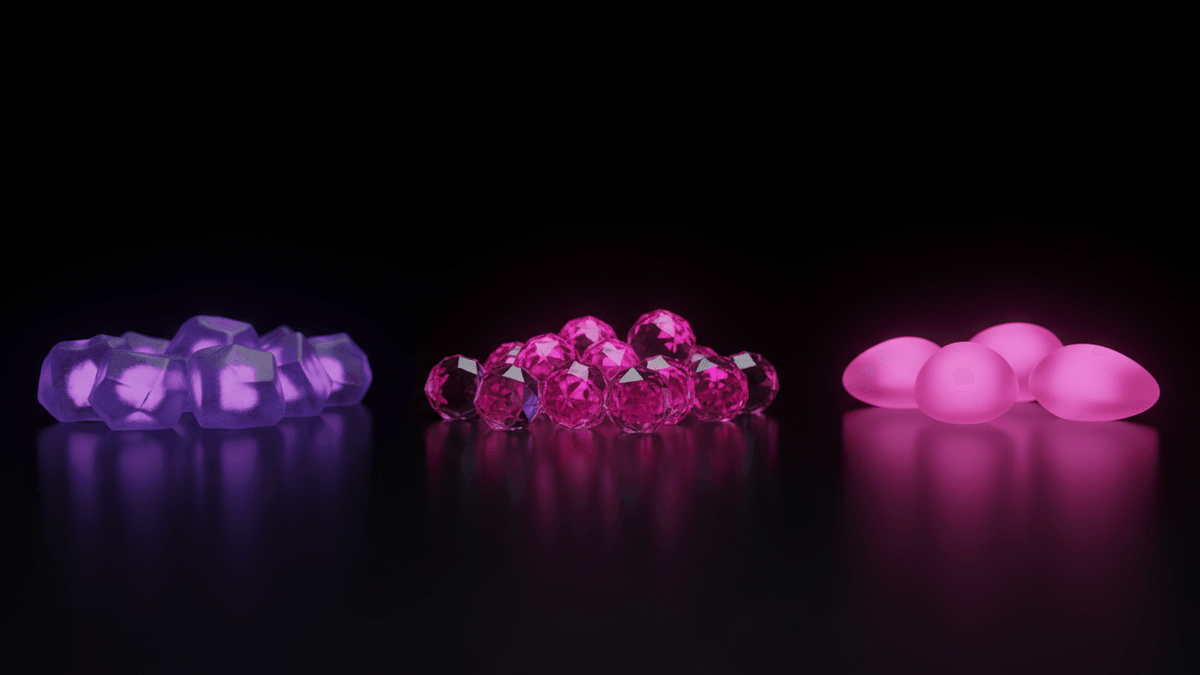
Semi-polished beating raw overall does not make it a universal rule. Production style turned out to be close to one-mode within a category: the winners in a given category mostly shared a look, and different categories settled on different looks.
| Category | Dominant style among top sellers |
|---|---|
| Vacuums and floor care | Semi-polished (52 of 57) |
| Air purifiers | Semi-polished (11 of 12) |
| Shapewear | Raw (15 of 22) |
The pattern is intuitive once you see it. An appliance is judged on whether it visibly works, so the winning video looks like a clean, well-lit demonstration. Shapewear is judged on whether it works on a real body, so the winning video looks unstaged. The per-category counts are small, and three categories are illustrations rather than a law, but the general point holds across the 268 categories in the sample: polish is a strong signal inside a category and a weak one across categories.
The practical rule is to look at the top sellers in your own category before you set a house style, and match the level of polish they have converged on. A single brand-wide production standard applied to every product line is how a brand that sells both appliances and apparel ends up shooting its apparel like an appliance demo.
A correction we owe you, and a conflict we have not resolved
This analysis replaced an earlier 194-video pilot run through the same pipeline, and some of the pilot's conclusions reversed at scale. The clearest: the pilot suggested top sellers tended to run without a music bed. At 1,001 videos, 96.3% carried music, usually a trending track at a quiet background level (62.3%). If you took "skip the music" from any earlier version of this research, discard it.
There is also a conflict we have not closed. A separate, smaller internal corpus, a top-200 set of shoppable posts scored with a different rubric at a different time, reported most of its winners running without music and without captions. That flatly contradicts the 96.3% and 92.8% above. The two corpora differ in size, vintage and labelling method, and we treat the 1,001-video baseline as the reference until a fresh extraction adjudicates, but we are not going to pretend the disagreement does not exist. The production-style finding, which is the subject of this article, is not one of the contested figures.
How to read your own category in an afternoon
You do not need a 1,001-video pipeline to apply this. You need twenty videos and a checklist.
- Pull the top twenty videos in your category by revenue for the last 30 days, from Seller Center analytics or any third-party TikTok Shop data tool. Revenue, not views: views and shop revenue are close to unrelated on this platform.
- Label each one on five questions. Raw or tidy? Is the product in frame within two seconds? Is it demonstrated or only held up? Is the hook written on screen? Does the video answer an objection a buyer would actually have?
- Count, do not judge. If sixteen of twenty are raw, your category has told you its look. If the product is on screen by the second second in eighteen of them, that is your brief's first line.
- Write the brief from the counts, not from brand guidelines written for another channel. Keep the brand rules that protect you, such as claims and safety, and drop the ones that only protect a look.
- Repeat quarterly. Formats drift. A category's winning look is a measurement of the current market, not a permanent style guide.
If your category is regulated, the claims side of the brief matters more than the production side. Supplements, for example, need structure-and-function language only, whatever the video looks like.
Where this reading is provisional
This describes winners. The sample is the top 1,001 videos by revenue. We can see what the top of the market looks like; we cannot see how many professionally produced videos were made and failed, or how many raw videos were made and failed. So the finding licenses "you do not need professional production", which almost nobody at the top used, and does not license "professional production hurts".
One extraction, machine-labelled. The attributes come from a single April 2026 run labelled by a vision model. Coarse labels such as production style are reliable at this sample size; finer ones such as music volume or caption style are less so, which is exactly where the conflict above sits. Revenue figures are Kalodata estimates, used here only to rank and to compare deciles.
Shoppable video, not every placement. These are the videos that sold the most through TikTok Shop, many of them boosted with ad spend. The findings say nothing about brand-awareness ads that never carried a product link, where a produced spot may still have a role.
What to do with this
- Stop budgeting for studio shoots for shoppable video. Move that money to sampling and creator volume. More creators posting competent video beats fewer, prettier assets; the math on turning samples into posted videos is in our sample-to-video analysis.
- Write the brief around the first two seconds. Product in frame immediately, a demonstration rather than a pitch, and the hook written on screen as well as spoken.
- Make captions and on-screen text non-negotiable. At 99.8% and 92.8% among top sellers, they are the cheapest production decisions with the widest adoption.
- Set polish per category. Pull the top sellers in your category, note whether they read raw or semi-polished, and brief to that.
- Judge a video on objection handling and demonstration, not on how it looks. Those are what leaned toward the top decile.
For the wider system these videos sit inside, sourcing and managing creator content at volume, see our TikTok Shop UGC playbook. If you want a read on what the top sellers in your own category look like, and a brief built from it, that is the first thing our content strategy engagements deliver. Talk to our team.