Your Best TikTok Ad Creative Sits in a Forgotten Folder
Most brands sit on 50-70 unused UGC videos. Inventory the archive, run an ad-authorization wave, and license only the proven winners for Spark Ads.
Every brand we onboard hands us a folder.
It is usually a Google Drive link, sometimes a Dropbox, occasionally a hard drive someone has to go find. Inside are the videos: paid UGC from a production shop, organic posts from seeded creators, a few things an intern shot on an iPhone. Nobody has opened it in months.
We count them. The number lands between 50 and 70 pieces almost every single time — regardless of category, regardless of whether the brand is doing $40K a month or $400K. Fifty to seventy videos that were paid for, produced, and then never uploaded to TikTok, never tagged to a SKU, and never ad-authorized.
That folder is not a content archive. It is an ad account waiting to be turned on.
This piece walks the entire path from dormant asset to boosted inventory: how to inventory and tag what you already own, how to run a dedicated message wave whose only job is mass ad authorization, how to convert your best Meta creative into commission-free shoppable video on your own brand page, and — the part that decides whether any of it is profitable — how to structure rights so you are not paying full buyout prices for creative that will never perform.
If you want the wider context on generating creator content in the first place, our UGC strategy playbook covers the front half. This is the back half: extracting revenue from what already exists.
Why the Archive Goes Dormant in the First Place

Nobody decides to waste 60 videos. The archive goes cold because of a structural gap between how content is commissioned and how ads are run.
Content gets commissioned by a brand or social lead against a campaign brief. The campaign ends. The videos get delivered to a folder, three of them go up on Instagram, and the folder closes. Meanwhile, the person running paid is briefing new creative, because their workflow starts at "what do we need" and never at "what do we have."
Three failure points compound:
- No SKU tagging. A video of a product is not searchable as a video of that product unless somebody labels it. At 60 assets across 8 SKUs, nobody browses. So nobody uses.
- No ad authorization. A creator-made video you technically own the file for is still not runnable as a Spark Ad from the creator's handle without their authorization. The asset is legally usable and operationally useless.
- No performance memory. Nobody recorded which of these ran anywhere, or what happened when it did. So every asset is treated as unproven, which means every asset is treated as not worth the effort.
Fix those three and the folder converts. Here is the sequence.
Step 1: Inventory and Tag the Archive

Before anything creative happens, do the boring part. One spreadsheet, one row per asset, seven columns. This takes one person a single afternoon for a 60-asset archive and it is the highest-leverage afternoon in the entire program.
| Column | What goes in it | Why it matters |
|---|---|---|
| Asset ID | Sequential, e.g. A-034 |
You will reference these in creator messages |
| SKU | The exact product shown | Determines which campaign it can enter |
| Source | Paid UGC / seeded organic / brand-shot | Decides which rights path applies |
| Creator handle | @handle or "none" |
You cannot request authorization without it |
| Posted where | TikTok / Meta / nowhere | "Nowhere" is the biggest bucket, usually 60-70% |
| Prior performance | Any metric you have, or blank | The single field that ranks the whole archive |
| Ad-authorized | Yes / No / Requested | The status field the entire wave runs against |
Two tagging rules matter more than the rest.
Tag by hook type, not by aesthetic. A "problem-solution open," an "unboxing open," and a "before/after open" are three different creative hypotheses. Aesthetic tags ("clean," "cozy," "gym") tell you nothing you can test. When you go to build ad groups, you want to be able to pull all six problem-solution opens across four SKUs and run them against each other.
Flag every asset that has already run paid anywhere. These are your first-wave candidates because they carry performance history from another platform. Everything else is untested inventory.
Once tagged, the archive splits cleanly into three piles: assets you can run today (brand-shot or fully licensed), assets that need creator authorization (the majority), and assets that are dead weight (wrong SKU, discontinued packaging, unusable audio). Expect roughly a 20/60/20 split. That middle 60% is what the next step exists to unlock. If you want ideas for stretching each unlocked asset further, our twelve ways to repurpose a single creator video is the companion piece.
Step 2: Run a Dedicated Ad-Authorization Wave

Here is the play that does not appear anywhere in TikTok's own documentation, because TikTok documents the button and not the operation.
You have a population of creators who already received your samples. They know the product. They have your box on their shelf. Many of them have already posted. That population is the single highest-conversion audience for ad authorization that will ever exist, and most brands never message them again after fulfillment.
So message them. As a separate, named wave whose only purpose is mass ad authorization.
Why it must be its own wave
The instinct is to bolt the authorization ask onto your existing creator sequence. Do not. Our outreach templates that actually get replies exist to convert a creator from cold to sampled — that sequence is optimized for a completely different decision, and adding a rights request to it does two bad things at once. It lowers reply rate on the outreach sequence, because you have made a simple "want a free sample?" message into a message with a legal-flavored ask inside it. And it buries the authorization request, because the creator responds to the top-line offer and ignores the rest.
Separate wave, separate list, separate success metric. The outreach sequence is measured on sample acceptance. The authorization wave is measured on authorization rate. Never let one dilute the other.
Timing: after the first post, never before
Send the authorization wave after the creator's first post goes live, not at sample fulfillment.
Before they post, an authorization request reads as a brand trying to extract rights from someone who has not yet decided how they feel about the product. Conversion is poor and it sours the relationship. After they post, three things are true: they have already publicly endorsed you, the content exists and is concrete, and — this is the part brands miss — you can tell them their video is doing well. "Your video is outperforming our other content and we want to put budget behind it" is a compliment with a request attached. It converts at a completely different rate than a cold rights ask.
Practically, this means the wave is not a one-time blast. It is a rolling trigger: creator posts, post ages 48-72 hours, creator enters the authorization queue.
What the message actually contains
Four elements, in this order, and nothing else:
- Specific praise with a number. Name their video, cite one real metric.
- The ask in one sentence. You want to run it as a Spark Ad from their handle.
- What is in it for them. Their handle gets paid reach they did not pay for; their follower growth and their affiliate commissions both benefit from the spend. This is the whole pitch and it is genuinely true.
- The exact steps, numbered. Where the ad authorization toggle lives, how to generate the code, what duration to select, where to send it.
Step 4 is where most waves die. Creators do not refuse authorization — they get confused, half-complete it, and drop off. Screenshot the flow. Put the screenshots in the message. Your authorization rate is a function of how few decisions the creator has to make.
If you are running this against a live product seeding program, the wave should be a standing part of the post-fulfillment workflow rather than a campaign you launch. Every sampled creator who posts should hit the authorization queue automatically, the same way every sample request passes through your intake filters on the way in.
Stack a second reason into the same wave
Because you are already in the creator's inbox, the authorization wave is the cheapest moment to attach one adjacent ask — a seasonal promotion, a new SKU, a live-stream invitation. One ask, not three. The authorization is the primary; the second item rides along as a P.S. Message volume is not free, and re-contacting the same sampled population twice in a week for two separate reasons costs you more in reply rate than you gain in coverage.
Step 3: What Ad Authorization Actually Unlocks

Mechanically, ad authorization is what lets you run paid spend against a post that lives on someone else's handle. The creator generates a code from their post's ad settings, picks a duration window, sends it to you, and you redeem it in Ads Manager to build the campaign on top of the existing post — carrying its organic comments, likes, and shares into the paid placement.
Two details determine how much value you extract:
Ask for the longest duration window available. A short window means the asset expires mid-flight and you re-request authorization from a creator who has moved on. Long windows cost the creator nothing and save you an entire re-contact cycle. This is a one-line change in the message that materially changes your usable inventory six months out.
Authorization on the affiliate side is a different toggle than Spark Ads. A creator who has enabled ad authorization inside Affiliate Center has made their affiliate video available to the shop's automated ad products. That is a distinct permission from a Spark Ads code, and a creator can have one without the other. Your inventory tracker needs both columns.
We are keeping this section deliberately short because the full setup, budget-scaling, and audience-layering detail lives in our guide to creator whitelisting and Spark Ads amplification. If you are deciding which ad product to point this inventory at, Spark Ads vs. Video Shopping Ads vs. Product Shopping Ads is the comparison.
Step 4: Repost Your Best Meta Creative as Shoppable Brand-Page Video
Now the second half of the folder — the assets with no creator attached, or with rights already cleared. Specifically, the creative that has been carrying your Meta account.
Most brands running paid social have three to five pieces of UGC that Meta has already validated across six figures of spend. That creative sits in a Meta ad account and never touches TikTok, because it was made for a different platform and nobody re-tested it.
Post it to your own TikTok brand page as shoppable video, with the product tagged.
The commission arithmetic
This is where the margin argument gets specific, and it is the reason we push this play early with every brand.
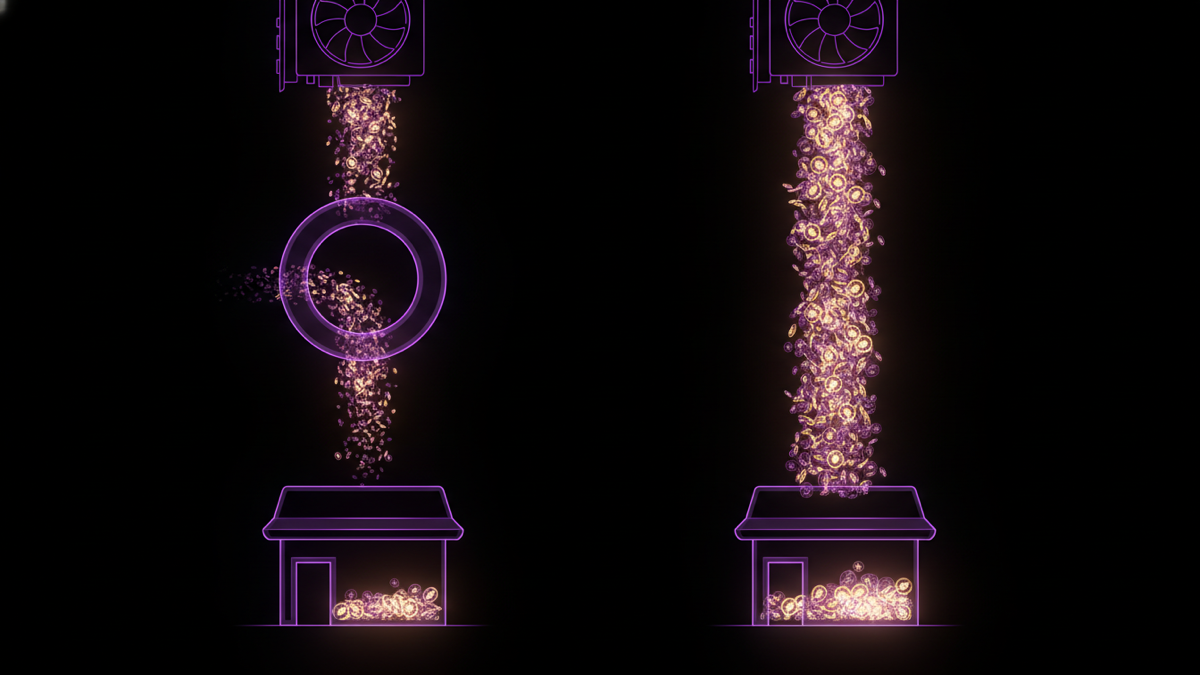
When an affiliate creator drives a sale, the GMV carries two costs: the platform's referral fee and the creator's commission. Commission rates vary by category and negotiation, but a typical affiliate rate sits in the mid-teens to low twenties as a percentage of GMV. (Our affiliate commission rates breakdown has the by-category ranges.)
When the same video is posted to your own brand page as shoppable content, the commission leg simply does not exist. There is no affiliate in the transaction. You pay the platform's referral fee and nothing else.
Run it at $50,000 of GMV. Routed through affiliates at an 18% commission, you have paid out $9,000 in commission on top of platform fees. Routed through your own shoppable brand-page video, that $9,000 stays in the business. Same creative. Same product. Same audience.
This is not an argument against affiliate — affiliate buys you reach and creator handles you do not own, and it is the engine of most TikTok Shop growth. It is an argument that the creative you already have rights to should be working on your own page first, because that is the only channel where incremental GMV carries no commission leg at all.
What transfers from Meta and what does not
Not everything ports. A rough rule from moving a lot of these:
- Transfers well: problem-solution UGC, demo-heavy content, testimonial-style pieces with a real face, anything shot vertically with native captions.
- Transfers badly: anything with a visible Meta-native CTA, anything with a text overlay referencing a Facebook or Instagram offer, polished brand-film aesthetics, and anything under about eight seconds.
- Needs a re-cut: creative where the hook is in the caption rather than in the first two seconds of video. Meta lets copy carry the hook. TikTok does not.
Budget an hour of editing per asset to re-cut hooks and strip platform-specific overlays. That is the entire production cost of a channel that would otherwise require a new shoot. Our content repurposing engine breaks down the re-cut patterns, and turning your own organic posts into Spark Ads covers what to do when one of these reposts starts to win.
Step 5: Rights Structure — Why Full Buyouts Destroy ROAS

Everything above depends on rights. And the default rights structure most brands walk in with is the one that quietly destroys the economics of the whole program.
The default is the full buyout: pay the creator a flat fee, take perpetual ownership of the content, use it however you want forever.
It feels safe. It is expensive in a way that does not show up on any single line item.
The 90% problem
Here is the arithmetic that changes minds.
Across a large archive of amplified affiliate creative, the proportion of assets that actually earn sustained paid spend is small. Most videos get tested, produce a mediocre first-week signal, and get switched off. A minority carry the account. That is not a failure of creator selection — it is the normal shape of creative testing on any platform, and it is why creative volume matters at all.
Now price a buyout against that distribution. A full buyout pays the same rate for every asset regardless of outcome. You are paying ownership prices for the large majority of content that will never earn a dollar of amplification, in order to secure ownership of the small minority that will. Your effective cost-per-winning-asset is the buyout rate multiplied by the inverse of your hit rate — and when your hit rate is one in ten, that multiplier is brutal. It is a fixed cost applied to a power-law outcome, which is the textbook way to make a ROAS number look terrible.
The structure we use instead
The creator retains ownership of their content. The brand licenses the proven performers for amplification.
Concretely:
- The creator keeps copyright and keeps the post on their handle.
- The base agreement grants the brand ad authorization for a defined window — enough to test the asset in paid.
- When an asset performs, the brand triggers a defined, pre-priced amplification license: extended term, broader placements, and an uplift fee that the creator earns because their content won.
- Assets that do not perform simply lapse. No ownership transferred, no fee paid beyond the original collaboration.
You are moving spend from the front of the funnel to the back — from paying for everything to paying for outcomes. Your creative budget concentrates on validated winners instead of spreading evenly across untested inventory.
It also gets signatures faster
The underrated benefit is contracting velocity.
A perpetual buyout is the single most negotiated clause in creator agreements. Creators push back on it, their managers push back harder, and a deal that could have closed in two days sits for two weeks while someone argues about "in perpetuity, in all media now known or hereafter devised." Every day of that is a day the content is not shot and not running.
Take ownership transfer off the table and the objection disappears. The creator is being asked for permission to amplify, not for surrender of their work — a materially easier yes, delivered materially faster, from a creator who now has upside if their video wins. At the volume real seeding programs run, that difference in signature speed is worth more than the theoretical flexibility a buyout would have given you.
Write it into the base agreement rather than negotiating it per asset. Our guides to must-have creator contract clauses and creator contract deal structure cover the surrounding terms.
The 14-Day Run Sheet

Compressed, because this is a two-week project, not a quarter-long initiative.
Days 1-2 — Inventory. Build the tracker. Every asset gets a row and seven fields. Split into runnable / needs-authorization / dead.
Days 3-4 — Ship the runnable pile. Post your top Meta performers to the brand page as shoppable video. Re-cut hooks, strip platform-specific overlays. This produces commission-free GMV inside the first week and buys you internal credibility for the rest of the program.
Days 5-7 — Build and launch the authorization wave. Pull the sample-recipient list, filter to creators who have posted, write the four-element message with screenshots, send in batches. Track authorization rate as its own metric.
Days 8-11 — Redeem and build. As codes come in, redeem them and build ad groups organized by hook type, not by creator. Start at test-level budget.
Days 12-14 — Read and license. Kill the losers fast. For the assets that clear your threshold, trigger the amplification license and extend the authorization window before it expires.
Run this against a live creator roster and it becomes a standing loop rather than a project — which is the point. Creator management at scale is where the loop lives.
What to Measure
Four numbers, and only four:
- Archive activation rate. Assets running / assets owned. Most brands start near zero. Getting to 40% in two weeks is a realistic target.
- Authorization rate. Codes received / creators messaged in the wave. This is the health metric for the wave itself. If it is low, your message is asking for too much or explaining too little.
- Commission-free GMV share. GMV from brand-page shoppable video as a percentage of total. This is the margin number, and it is the one to show your CFO.
- Cost per winning asset. Total creative and licensing spend divided by the number of assets that cleared your amplification threshold. This is the number that makes the buyout-versus-license argument concrete, and it is the one most brands have never calculated.
Pair these with the standard paid diagnostics — creative fatigue monitoring on the winners you scale, and the broader ROAS optimization levers once spend is meaningful.
Run This With a Team That Has Done It a Few Hundred Times

The folder is the easiest revenue in your business right now. It is already paid for. It requires no shoot, no new creators, and no new budget line — only inventory discipline, one well-sequenced message wave, and a rights structure that stops overpaying for content that will never run.
MomentIQ builds and runs this end to end: the archive audit, the tagging schema, the ad-authorization wave against your sampled creator base, the shoppable brand-page cadence, and the licensing framework that keeps your cost-per-winning-asset sane as volume grows. We have amplified thousands of affiliate assets, and the pattern above is what came out of it.
Book a strategy call and we will audit your existing archive on the call — asset count, activation rate, and the commission-free GMV you are currently leaving on the table. See our work first if you want the receipts, or start with our TikTok Ads, Affiliate Outreach, and Content Strategy pillars.