Why Your TikTok Shop Influencer Campaigns
Discover 13 hidden reasons your TikTok Shop influencer campaigns are failing and proven fixes to transform creator partnerships into explosive sales wins.
You've launched a TikTok Shop influencer campaign, found creators, sent products, and waited for sales to roll in. But if your TikTok Shop influencer campaign is not working, you're not alone. This guide reveals what top-performing brands are doing differently.
- Choose creators by purchase-intent signals like product link clicks and comments, not follower count — small creators often outperform large ones.
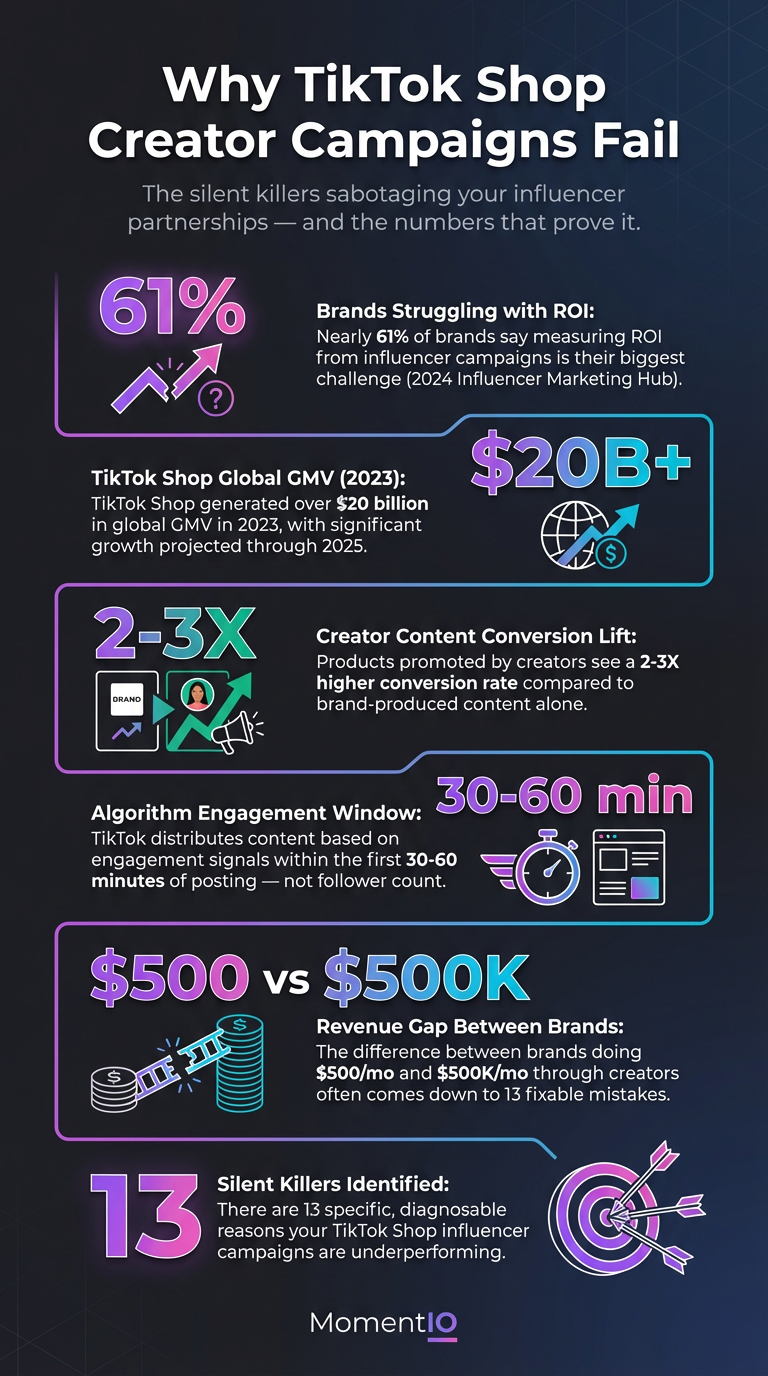
- Track early engagement within 30-60 minutes of posting, since TikTok's algorithm uses that window to determine content distribution.
- Don't abandon creator partnerships after one or two attempts — 61% of brands struggle with influencer ROI but quit too early.
- Leverage creator-driven content over brand-produced ads, as TikTok data shows creators deliver 2-3X higher conversion rates.
- Diagnose all 13 silent killers in your strategy systematically to bridge the gap between $500/month and $500K/month in creator-driven revenue.
And then… nothing. A trickle of views. A handful of clicks. Maybe one or two pity purchases from your own team. Your TikTok Shop influencer campaign didn't just underperform — it flatlined.
Here's the brutal truth: you're not alone. According to a 2024 Influencer Marketing Hub report, nearly 61% of brands say measuring ROI from influencer campaigns remains their biggest challenge. A significant portion of TikTok Shop sellers quietly abandon creator partnerships after just one or two failed attempts. They often assume influencer marketing doesn't work for their product, niche, or budget.
They're wrong. The problem isn't influencer marketing. The problem is *how* they're doing it. If your TikTok Shop influencer campaign is not working, there are specific, diagnosable reasons — silent killers hiding in your strategy, creator selection, tracking, and expectations. This post exposes all 13 of them. More importantly, it gives you the exact fixes to turn those losses into wins that actually move your revenue needle.
Why Influencer Marketing Fails on TikTok Shop: The Uncomfortable Reality

Before diving into the 13 silent killers, let's reset expectations with crucial context. TikTok Shop generated over $20 billion in global GMV in 2023, a number projected to grow significantly through 2025. Creator-driven content fuels this growth: TikTok's own data shows that products promoted by creators see a 2-3X higher conversion rate compared to brand-produced content alone.
So, influencer marketing on TikTok Shop *works*—spectacularly well. However, it operates under very specific conditions, which most brands unknowingly violate. The difference between a brand doing $500/month through creators and one doing $500K/month often comes down to avoiding the 13 mistakes below. Fix them, and you unlock a completely different trajectory.
Working with fixed-rate creator campaigns gives brands predictable costs while scaling content output.
Silent Killer #1: You're Choosing Creators Based on Follower Count Instead of Purchase Intent Signals
Why This Tanks Your TikTok Shop Creator Campaign Performance

This is the single most common reason a TikTok Shop influencer campaign fails. Brands often filter creators by follower count, pick the biggest names they can afford, and assume reach automatically equals revenue. It doesn't, especially not on TikTok Shop.
TikTok's algorithm doesn't distribute content based on follower count. Instead, it prioritizes engagement signals within the first 30-60 minutes of posting. A 15,000-follower creator whose audience actively clicks product links, saves videos, and comments purchase-intent phrases ("Link?" "How much?" "Need this!") will consistently outperform a 500,000-follower creator whose audience scrolls past shopping content.
The Fix
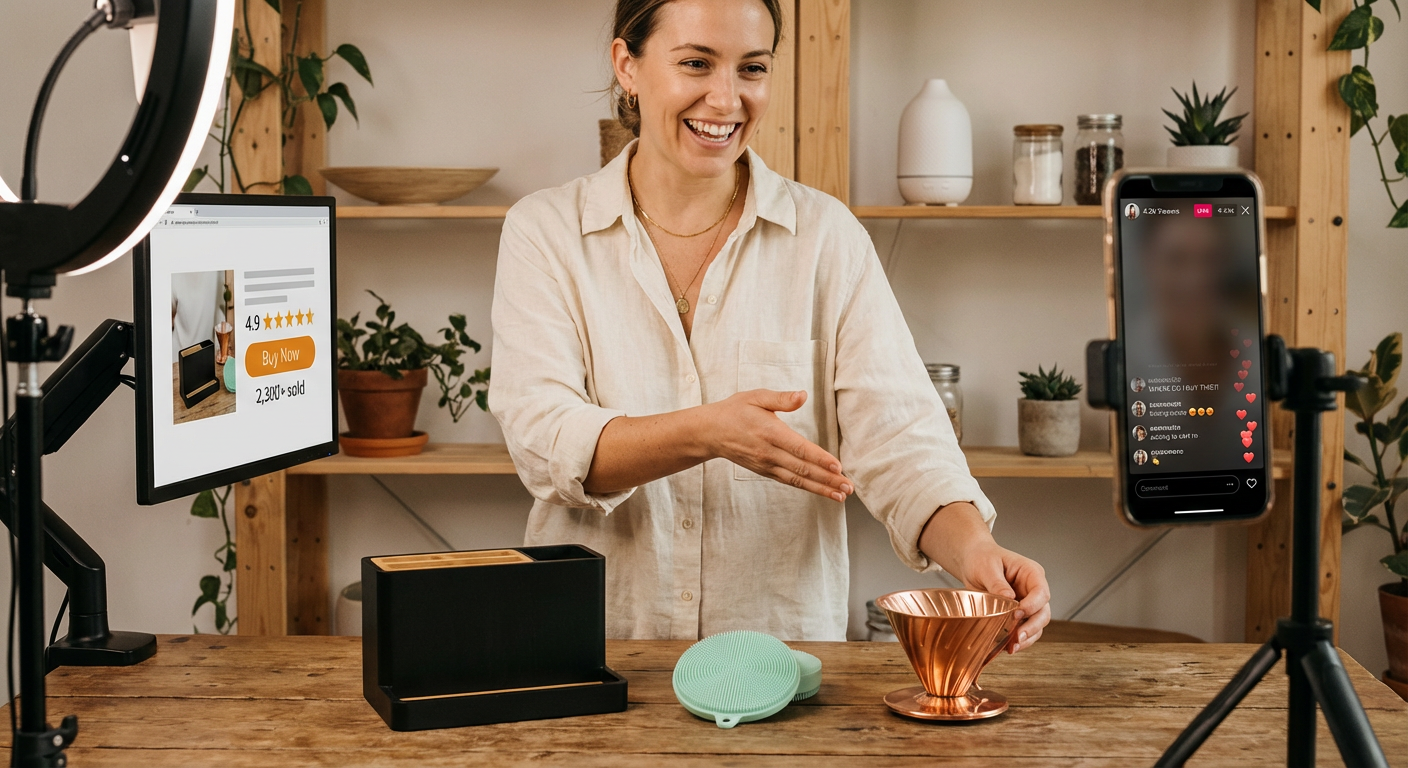
Stop sorting by follower count. Start evaluating creators on these crucial metrics:
- Average views-to-engagement ratio on product-related content (not just viral dance videos).
- Comment sentiment analysis — are followers asking buying questions or just dropping fire emojis?
- Previous TikTok Shop affiliate performance — have they actually driven sales for other brands?
- Content consistency — do they post shopping content regularly, or was that one product review an anomaly?
This is exactly the kind of algorithmic creator matching that MomentIQ specializes in. MomentIQ's platform identifies creators whose audiences demonstrate actual purchase behavior — matching brands with creators who convert, not just creators who look impressive on a spreadsheet.
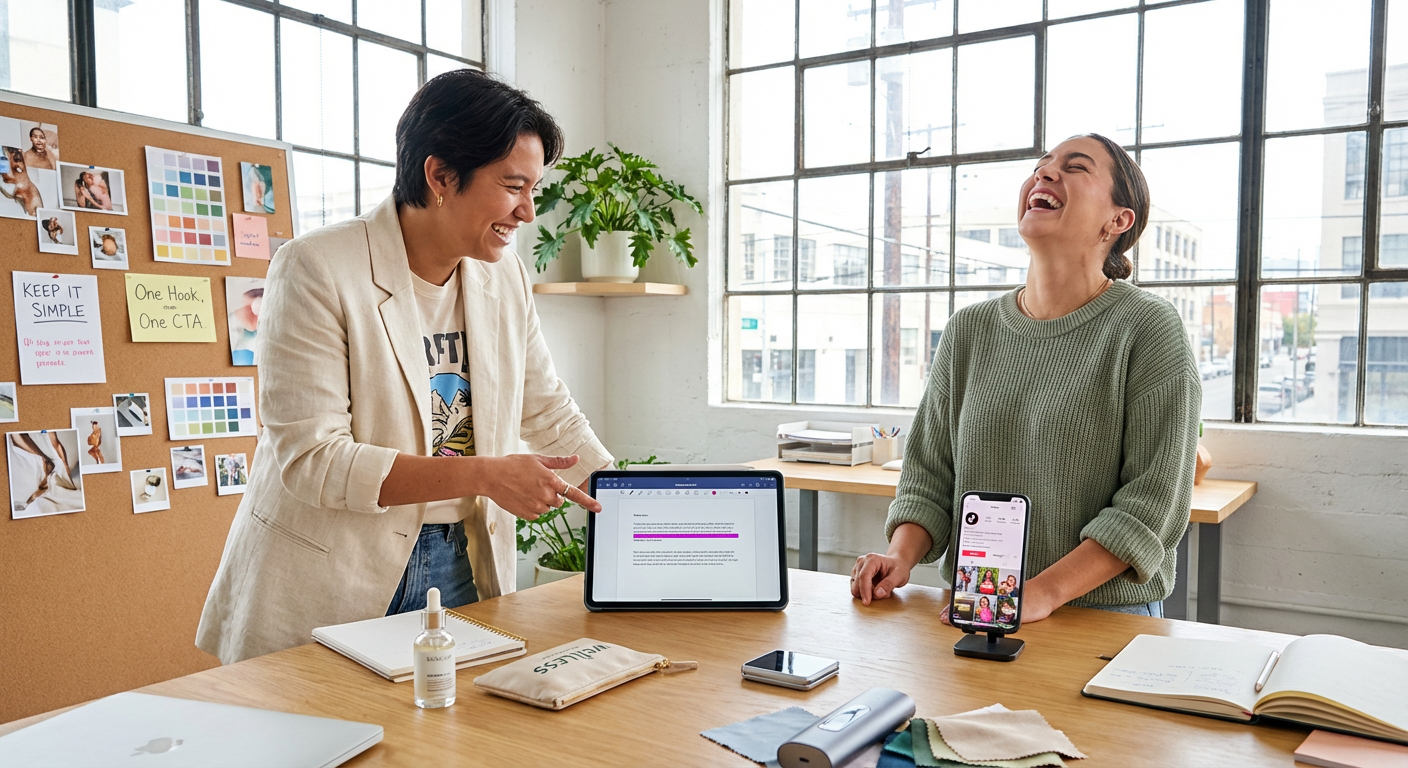
Silent Killer #2: Your Creator Brief Is Either a Novel or Nonexistent
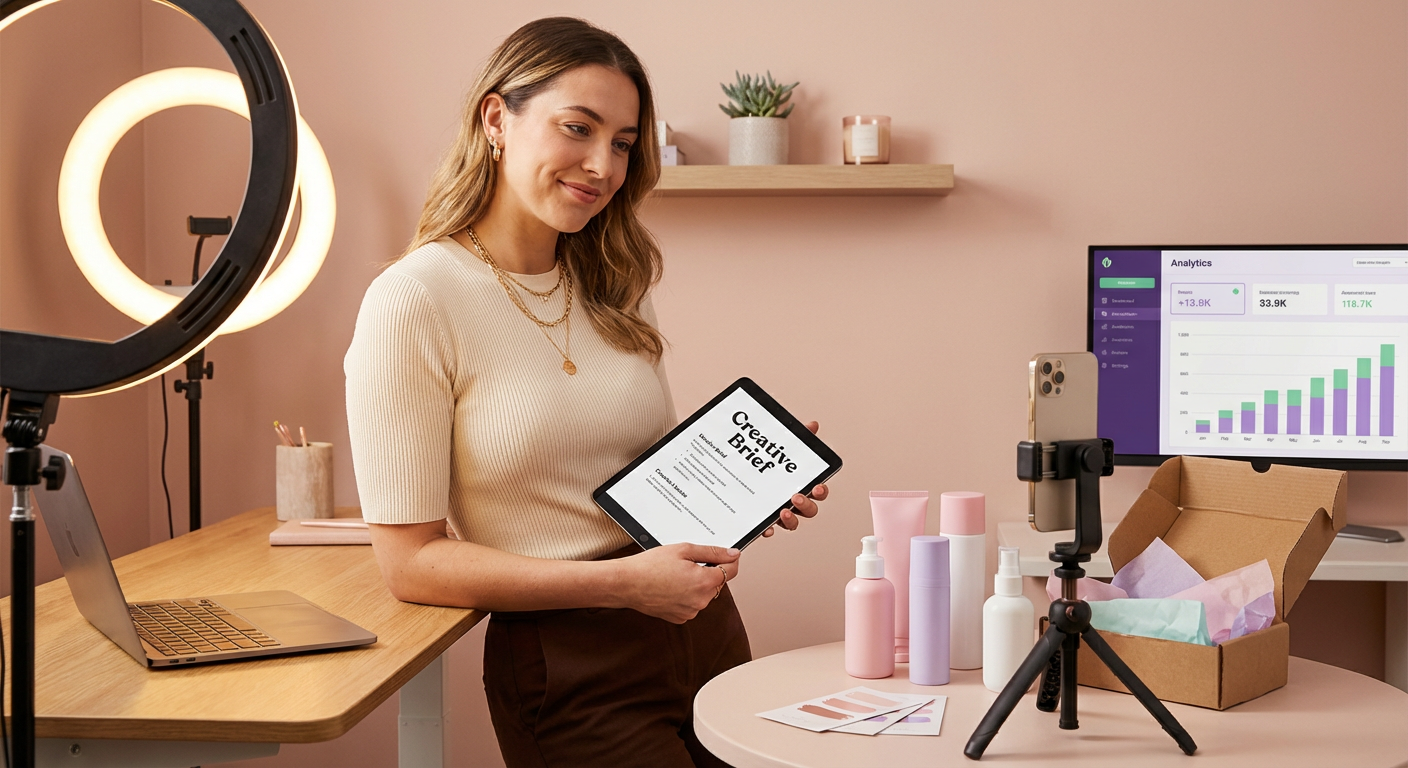
Brands often fall into two extremes: they either send creators an exhaustive 12-page PDF with rigid brand guidelines, shot lists, and mandatory talking points that stifle creativity, or they send nothing at all, hoping the creator "just gets it."
Both approaches lead to failure. Over-scripted content feels inauthentic, resembling an ad, and is often penalized by TikTok's algorithm. Conversely, an under-briefed creator might miss key selling points, failing to drive crucial clicks to your TikTok Shop listing.
The Fix
Create a concise one-page creator brief that clearly outlines:
- The single most important product benefit (focus on one, not five).
- Two or three key talking points the creator can naturally weave into their content.
- The specific Call to Action (CTA), such as "Click the product link" or "Check out my TikTok Shop showcase."
- What NOT to say (e.g., compliance restrictions, competitor mentions).
- Creative freedom boundaries — provide guardrails, then empower creators to innovate within them.
We've covered this in depth in our guide on How to Build a TikTok Shop Creator Brief That Actually Gets Great Content. The sweet spot is structured enough to protect your brand, yet loose enough to let the creator's authentic voice shine through.
Silent Killer #3: You're Sending Products to Creators Who've Never Sold Anything on TikTok Shop

Product seeding is a powerful strategy. However, if you're shipping valuable products to every creator who accepts your DM, you're likely burning cash on individuals with no proven track record of driving TikTok Shop sales.
There's a significant difference between a creator who *makes content* and one who *sells products*. Many creators have never even linked a TikTok Shop product in their bio. They might not understand the shopping flow, or their audience may not be accustomed to buying directly through TikTok.
The Fix
Before seeding product, verify that the creator:
- Has an active TikTok Shop affiliate account.
- Has posted at least 3-5 videos with product links in the past 60 days.
- Has generated measurable GMV (even small amounts signal capability).
- Understands how TikTok Shop's commission structure works.
Strategic product seeding — sending the right products to the right creators at the right time — is a core component of how MomentIQ drives results for brands. Every seeding decision is backed by data, not guesswork.
Silent Killer #4: Your Commission Structure Doesn't Motivate Anyone
Why Low Commissions Kill TikTok Shop Influencer Campaigns
If you're offering creators a 5% commission on a $15 product, the math is simple: that's $0.75 per sale. Even if a creator drives an exceptional 100 sales, they've earned just $75 for hours of content creation, filming, editing, and posting.
No serious creator will prioritize your brand at such a low rate. They'll likely post once, observe the minimal earnings, and never promote your product again.
The Fix
Benchmark your commission rates against the broader TikTok Shop marketplace:
- Beauty & skincare: 15-20% is competitive.
- Fashion & accessories: 12-18% is standard.
- Health & wellness: 15-25% for supplements and consumables.
- Home goods: 10-15% depending on the price point.
Consider tiered commission structures that reward volume: for example, a 15% base, increasing to 20% after 50 sales, and 25% after 200 sales. This creates a flywheel where your best creators are incentivized to keep pushing your products.
Also, consider flat-rate bonuses for hitting milestones. A $100 bonus for the first 50 sales costs you little relative to the revenue generated, but it signals to creators that you value their partnership.
Silent Killer #5: You're Running One-Off Campaigns Instead of Building Ongoing Relationships
One video from one creator isn't a strategy; it's a lottery ticket with similar odds. TikTok's algorithm rewards consistency. A creator who posts about your product once has a random shot at virality. However, a creator who posts about your product five times over six weeks has five opportunities, with each video compounding audience familiarity and building trust that converts to sales.
According to Nielsen research, consumers need an average of 5-7 brand touchpoints before making a purchase decision. A single TikTok video provides just one touchpoint. You need more to truly succeed.
The Fix
Shift from campaign-based thinking to partnership-based thinking. Structure creator deals with:
- A 3-video minimum over 30 days.
- Monthly retainer arrangements for top performers.
- Ambassador programs with exclusive perks and higher commission tiers.
We've written an entire playbook on How to Launch a TikTok Shop Creator Ambassador Program that turns one-time affiliates into long-term brand advocates. This is where the compounding magic happens.
Silent Killer #6: Your Product Listing Page Is Killing Conversions After the Click
This scenario plays out thousands of times daily: a creator produces an incredible video, viewers are hooked, and they click the product link. However, they land on your TikTok Shop listing to find blurry photos, a vague product title, no reviews, and a poorly written description.
They bounce. The creator's effort is wasted, and your campaign "fails" — not because the creator underperformed, but because your listing page failed to convert.
The Fix
Optimize your product listing page with these elements:
- Product images: Include a minimum of 5 high-quality images, featuring lifestyle shots, close-ups, and size/scale references.
- Title optimization: Incorporate primary keywords, product type, and a key benefit (see our guide on TikTok Shop SEO).
- Reviews: Aim for 50+ reviews before scaling creator campaigns. Social proof is non-negotiable.
- Price anchoring: Display the original price versus the TikTok Shop price to create perceived value.
- Description: Lead with benefits, not just features. Use bullet points for scannability.
A 1% improvement in listing conversion rate can translate to thousands of dollars in recovered revenue when you're driving significant creator traffic.
Silent Killer #7: You Have Zero Tracking Infrastructure
Why Poor Tracking Makes Your TikTok Shop Influencer Campaign Look Like It's Not Working
If you can't measure it, you can't improve it — and you certainly can't identify what's truly working. Many brands rely solely on TikTok Shop's native affiliate dashboard, which provides basic metrics but lacks the full picture.
Without robust tracking, you can't answer fundamental questions such as:
- Which creator drove the most *profitable* sales, not just the highest volume?
- What's the average order value from Creator A versus Creator B's traffic?
- How many customers acquired through creators made a repeat purchase?
- What's the true Customer Acquisition Cost (CAC) per creator, factoring in product seeding costs?
The Fix
Build a comprehensive tracking stack that includes:
- TikTok Shop's affiliate analytics as your baseline.
- UTM parameters where possible for cross-platform attribution.
- A creator performance spreadsheet or dashboard that tracks: GMV, units sold, commission paid, product cost, and net profit per creator.
- Content performance metrics — views, engagement rate, click-through rate, and conversion rate per video.
Review this data weekly. Cut underperformers at the 30-day mark and double down on winners with higher commissions, more product, and Spark Ads amplification.
For a deeper dive into reading your data effectively, check out our guide on TikTok Shop Content Analytics Decoded.
Silent Killer #8: You're Expecting Results in 48 Hours
This psychological trap is devastating. A brand sends products to 10 creators on Monday and checks sales by Wednesday. When nothing significant happens, the campaign is prematurely declared a failure.
Here's the reality: most creators require 5-14 days to create and post content after receiving a product. TikTok's algorithm can take 24-72 hours to fully distribute a video. Furthermore, the compounding effect of multiple creator posts typically takes 30-60 days to materialize.
According to data from Aspire's 2024 State of Influencer Marketing report, the average influencer campaign takes 60-90 days to show meaningful, attributable ROI.
The Fix
Set realistic timelines for your campaigns:
- Week 1-2: Product delivery and creator content creation.
- Week 2-4: First wave of content goes live; gather initial performance data.
- Week 4-6: Optimize — identify top performers, adjust briefs, and increase commissions for winners.
- Week 6-8: Scale — seed more product to proven creators, recruit similar creator profiles, and amplify top content with Spark Ads.
Judge your campaign at the 60-day mark, not the 48-hour mark.
For official resources, see FTC influencer disclosure guidelines and TikTok Creator Portal.
Silent Killer #9: You're Ignoring the Content Format That Actually Sells
Not all TikTok content formats convert equally well on TikTok Shop. While brand awareness skits, trending audio lip-syncs, and aesthetic "mood" videos might garner views, they rarely translate into product clicks and sales.
The content formats that consistently drive TikTok Shop sales include:
- "Get Ready With Me" (GRWM) videos featuring the product in use.
- Problem-solution demonstrations (e.g., "I had this problem → this product fixed it").
- Unboxing and first impressions with genuine reactions.
- Before-and-after transformations (particularly effective in beauty, fitness, and home niches).
- "Things I bought on TikTok Shop that are actually worth it" roundup videos.
The Fix
In your creator brief, suggest (but don't mandate) one of these proven formats. Share examples of high-performing TikTok Shop videos in your niche so creators understand what "good" looks like.
Ensure the first three seconds hook viewers immediately. We've compiled 37 Proven First-3-Second Hooks That Stop the Scroll — share relevant hooks with your creators to boost their content's initial retention rate.
Silent Killer #10: You're Not Amplifying Winning Content With Paid Media
Organic reach is powerful but inherently unpredictable. When a creator posts a video that begins performing exceptionally well — demonstrating a strong view-through rate, high click-through to your product page, and actual sales — most brands simply observe rather than capitalize.
This oversight leaves significant money on the table. TikTok's Spark Ads feature allows you to amplify a creator's organic post as a paid ad. This maintains all the valuable social proof (likes, comments, shares) while extending its reach to a much larger, targeted audience.
According to TikTok's own case study data, brands that combine organic creator content with Spark Ads amplification see 2-5X higher ROAS compared to running traditional brand-produced ads alone.
The Fix
Establish a clear amplification protocol:
- Monitor all creator content daily for the first 48 hours after posting.
- Flag any video that exceeds your baseline engagement rate by 2X or more.
- Request Spark Ads authorization from the creator (build this into your initial agreement).
- Allocate 20-30% of your TikTok ad budget specifically for amplifying top creator content.
- Start with a modest daily budget ($50-100/day) and scale based on ROAS.
We've written the complete playbook on this in TikTok Shop Creator Whitelisting and Spark Ads.
Silent Killer #11: Your Outreach Is Getting Ignored (Or Worse, Flagged as Spam)
You might have the perfect product, an attractive commission rate, and an ideal brief, but none of it matters if creators never respond to your initial outreach.
Most brands send generic, copy-paste DMs that instantly read as spam. Creators receive dozens of these daily and ignore them reflexively. Similarly, blasting hundreds of emails without personalization, research into the creator's content style, or a compelling reason for them to care is equally ineffective.
The Fix
Personalize your outreach at scale. Reference a specific video the creator made. Explain *why* your product fits their content style. Lead with what's in it for them — the commission rate, free product value, or potential for a long-term partnership.
For brands that need to reach hundreds or thousands of creators efficiently without sacrificing personalization, MomentIQ can automate outreach workflows while maintaining the personal touch that gets responses. Combined with the strategic creator matching that MomentIQ provides, you're not just sending more messages — you're sending the *right* messages to the *right* creators.
We've also shared 9 Proven Creator Outreach Templates That Get a 40%+ Response Rate — steal those frameworks and customize them for your brand.
Silent Killer #12: You're Not Diversifying Your Creator Portfolio
Why Relying on a Few Creators Destroys TikTok Shop Campaign Performance
Putting all your eggs in just a few creator baskets is a recipe for inconsistency. If your top creator takes a week off, gets sick, or has an off-month, your entire TikTok Shop revenue can dip significantly.
The most successful TikTok Shop brands adopt a portfolio approach, utilizing a mix of micro-creators (10K-50K followers), mid-tier creators (50K-250K), and a smaller number of macro creators (250K+). This diversification ensures a steady drumbeat of content, preventing boom-and-bust revenue spikes.
For instance, a beauty brand scaling on TikTok Shop might collaborate with 200+ micro-creators simultaneously. While most of these creators drive modest individual sales (perhaps $200-500 each per month), collectively, they can generate $50,000-100,000/month in GMV with remarkable consistency.
The Fix
Aim for this creator portfolio distribution:
- 70% micro-creators (10K-50K followers): Known for high engagement, lower cost, and high volume.
- 20% mid-tier creators (50K-250K): Offer a balanced mix of reach and authenticity.
- 10% macro creators (250K+): Provide brand awareness and a credibility halo effect.
Scaling from 10 creators to 1,000 requires robust systems, not just hustle. Our guide on How to Recruit TikTok Shop Creators in Bulk breaks down the exact playbook for building this kind of creator army.
Silent Killer #13: You're Treating TikTok Shop Like Every Other Marketing Channel
This is the meta-killer, underlying all the others. Brands that struggle on TikTok Shop often apply playbooks from Instagram, YouTube, or traditional influencer marketing. They think in terms of "campaigns" instead of commerce ecosystems, optimizing for impressions rather than transactions, and treating creators as media placements instead of sales partners.
TikTok Shop is fundamentally different. It's social commerce — where the content *is* the storefront, the creator *is* the sales associate, and the algorithm *is* the distribution engine. Every element of your strategy must be built around this unique reality.
The Fix
Adopt a TikTok Shop-native mindset:
- Creators are revenue partners, not just awareness vehicles. Compensate them accordingly.
- Content is commerce infrastructure, not merely marketing collateral. Optimize for clicks and conversions, not just views.
- Speed matters more than perfection. A slightly rough, authentic video posted today often outperforms a polished production posted next month.
- The algorithm rewards volume and consistency. One perfect video per month loses to ten good videos per month, every time.
- Data should drive every decision. Which creators convert? Which formats sell? Which products have the highest creator-driven margin? Let the numbers lead.
The Common Thread: Why Fixing These 13 Killers Requires a System, Not Just Effort
If you've read this far, you likely recognize your brand in at least a few of these silent killers. The uncomfortable reality is that fixing all 13 simultaneously — while also managing your business, inventory, customer service, and maintaining sanity — is nearly impossible for a solo operator or small team.
This is precisely why brands partner with MomentIQ. MomentIQ doesn't just help you find creators; it provides a full-funnel TikTok Shop growth system designed to address every single one of these failure points:
- Algorithmic creator matching that identifies creators based on purchase-intent signals, not vanity metrics (addressing Killers #1, #3, #12).
- Strategic product seeding that ensures your products reach creators who genuinely drive sales (addressing Killer #3).
- Data-driven campaign management with robust tracking and optimization (addressing Killers #7, #8).
- Live commerce strategy for brands ready to add another revenue stream (addressing Killer #13).
- Spark Ads amplification to scale winning creator content (addressing Killer #10).
- Creator relationship management that transforms one-off posts into long-term partnerships (addressing Killer #5).
The brands that will dominate TikTok Shop in 2025 aren't necessarily those with the biggest budgets, but rather those with the most effective systems.
Conclusion
Your TikTok Shop influencer campaigns aren't broken because influencer marketing doesn't work. They're struggling due to specific, fixable mistakes that are silently draining your budget and confidence. Now, you know exactly what those mistakes are and how to address them.
MomentIQ's fixed-rate creator program gives brands access to vetted creators at predictable costs.
Stop Guessing. Start Scaling.
The question now is: will you continue making these mistakes? Every week spent running campaigns the wrong way is a week your competitors spend getting it right. TikTok Shop is growing explosively; the opportunity window is wide open, but it won't stay that way forever.
If you're ready to stop flopping and start scaling, Talk to a Strategist. Our team will diagnose exactly which of these 13 killers are sabotaging your results and build a custom creator partnership strategy designed to turn your TikTok Shop into a revenue machine.
No fluff. No generic advice. Just a clear, data-backed plan to fix what's broken and scale what works.
The brands that will dominate TikTok Shop in 2025 are making their moves right now. Make yours.