TikTok Shop Ad Budget Planning for How to Allocate
Learn how to allocate your TikTok Shop ad budget across campaign types for maximum ROAS. Expert frameworks for $5K–$100K/month budgets in 2025.
You're staring at TikTok Ads Manager right now with a budget number in your head and absolutely no confidence that you're about to spend it correctly.
- Treat your TikTok creative as your targeting — allocate budget for high creative volume and testing since the algorithm uses content signals to find buyers.
- Use a combined paid, organic, and affiliate strategy to achieve up to 3.2x higher GMV versus relying on any single channel.
- Stop applying Facebook ad playbooks to TikTok Shop; budget must fuel discovery-first content, not just capture existing intent.
- Allocate a dedicated portion of your budget specifically to live commerce boosting — a unique TikTok campaign type no other platform offers.
- Leverage retargeting campaigns for 2.8x–4.5x ROAS and Spark Ads for up to 6.8x ROAS to maximize returns across your budget tiers.
Maybe you've been burning $200/day on prospecting ads that generate clicks but zero checkout completions. Maybe your Spark Ads are eating budget on content that looked great organically but dies the moment you put paid behind it. Or maybe you just got budget approval for Q3 and you're terrified of wasting it — because your CFO is already skeptical that TikTok Shop is "a real channel." burning budget on scaling errors
Here's the uncomfortable truth about TikTok Shop ad budget planning in 2025: most sellers are allocating their spend based on gut instinct, outdated Facebook playbooks, or whatever their last agency told them to do. And it's costing them thousands every month in wasted ad dollars and missed GMV.
This guide is different. We're giving you the exact TikTok ad budget allocation strategy frameworks that separate brands doing $10K/month from brands doing $500K/month — broken down by budget tier, campaign type, and seasonal scaling curve.
No theory.No fluff. Just the allocation math that actually works on TikTok Shop in 2025.
Already know your budget but need expert hands on the levers? Book a free TikTok Shop ad strategy audit with MomentIQ — our team will build you a custom allocation framework based on your category, margins, and growth targets.
Why TikTok Shop Ad Budget Allocation Is Nothing Like Meta or Google
Before we get into the numbers, let's kill the biggest mistake sellers make: treating TikTok Shop ads like Facebook ads with different creative.

TikTok's commerce ecosystem operates on fundamentally different mechanics:
- Discovery-first architecture. Users aren't searching for your product. The algorithm serves it based on engagement signals, content quality, and shop performance scores. Your ad budget needs to fuel discovery, not just capture intent.
- Content is the conversion engine. On Meta, you can get away with mediocre creative and strong targeting.On TikTok Shop, your creative IS your targeting. The algorithm uses content signals to find buyers, which means budget allocation must account for creative volume and testing.
- The affiliate-paid flywheel. TikTok Shop's unique affiliate ecosystem means your paid ads don't operate in isolation — they amplify (or cannibalize) your organic and affiliate-driven GMV.Budget planning must account for this interplay.
- Live commerce as a campaign type. No other platform has a native live shopping experience that you can boost with paid spend.Live boosting requires its own allocation logic.
According to TikTok's 2024 Commerce Report, sellers who use a combined paid + organic + affiliate strategy see 3.2x higher GMV than those relying on any single channel. live commerce boosting strategy eMarketer proj
ects TikTok's U.S. social commerce GMV will exceed $17.5 billion in 2025 — a 67% year-over-year increase.
The opportunity is massive. But only if you allocate correctly.
The Four TikTok Shop Campaign Types That Deserve Your Budget
shop-ad-budget-planning-for-2025-how-to-allocate-5k-100k-month-across-cam-team-celebrating-sold-notifications-on-a-b.jpg)

nth-across-cam-tiktok-shop-brand-team-celebrating-succe-a.jpg)
Before we break down allocation by budget tier, you need to understand the four core campaign types and what each one actually does for your business.
1. Prospecting Campaigns (Cold Traffic Acquisition)
Purpose: Introduce your product to new audiences who've never interacted with your brand.
Best formats: In-feed video ads, Video Shopping Ads (VSA), and
catalog-based Product Shopping Ads (PSA).
Key metric: Cost per initiated checkout (not just clicks or views).
Prospecting is where most of your budget goes — and where most of it gets wasted. The critical mistake? Running prospecting ads with content that wasn't designed for cold audiences. A product demo that converts your warm audience will bomb with cold traffic. Prospecting creative needs a hook-first structure: pattern interrupt → problem agitation → product reveal → social proof → CTA.
2.Retargeting Campaigns (Warm Traffic Conversion)
Purpose: Re-engage users who viewed your product, added to cart, or visited your TikTok Shop but didn't purchase.

Best formats: Dynamic Product Ads, Video Shopping Ads with retargeting audiences, and custom audience campaigns.
Key metric: ROAS and cost per completed purchase.
Retargeting on TikTok Shop is criminally underutilized. According to internal TikTok benchmarks shared at their 2024 Commerce Summit, retargeting campaigns deliver 2.8x–4.5x higher ROAS than prospecting campaigns, yet the average seller allocates less than 10% of budget here.
3.Spark Ads Amplification (Creator Content Boosting)
Purpose: Put paid spend behind top-performing creator or UGC content to scale what's already working organically.

**Best formats:** Spark Ads (boosting creator posts directly), whitelisted creator content.
Key metric: Blended ROAS across organic + paid performance of the same content.
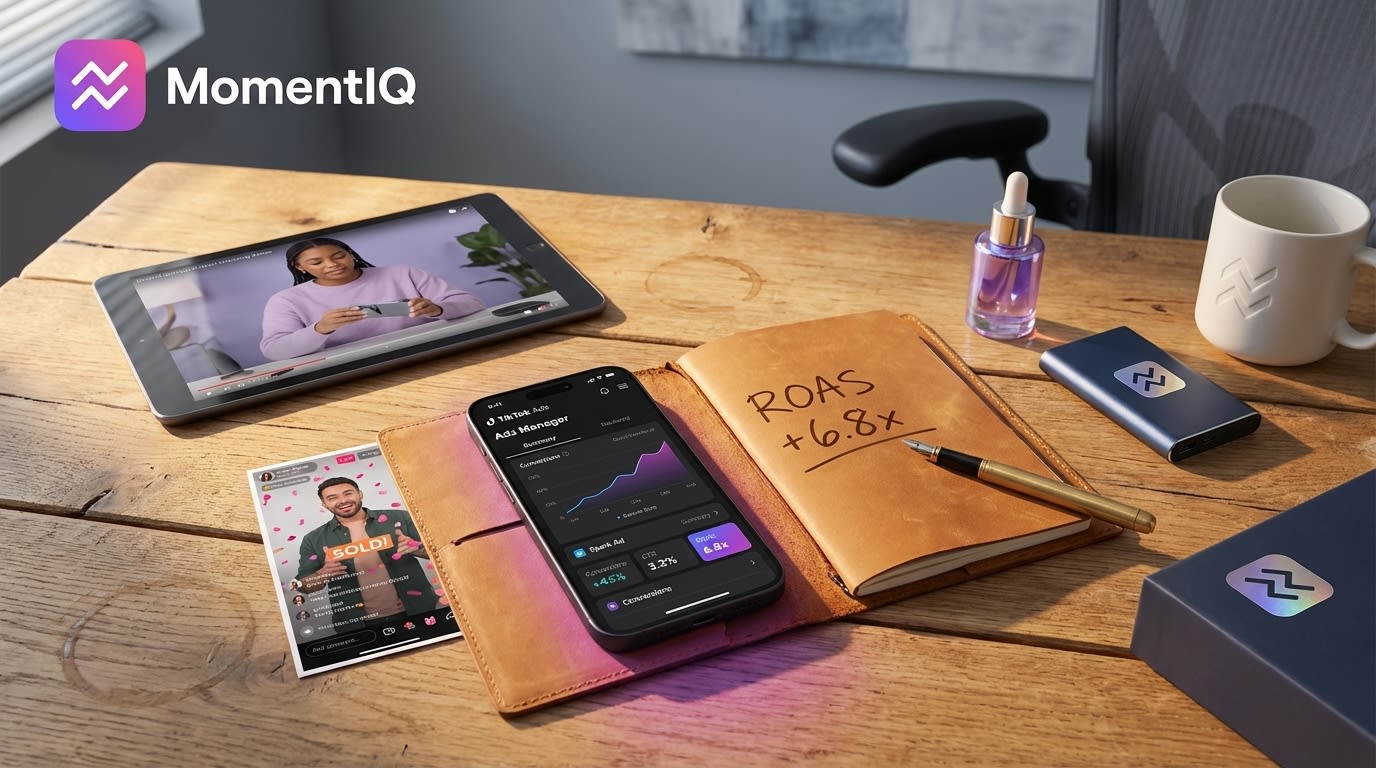
Spark Ads are TikTok Shop's secret weapon — and the campaign type that Talk to a Strategist clients consistently see the highest returns from. Why? Because you're not guessing what will work. You're amplifying content that the algorithm has already validated. One home goods brand we worked with scaled a single Spark Ad from $50/day to $2,500/day while maintaining a 6.8x ROAS over 21 days.
If you want to understand the full Spark Ads amplification playbook, our existing guide on TikTok Shop Creator Whitelisting & Spark Ads Amplification goes deep on the mechanics.
4. Live Commerce Boosting (Stream Traffic Amplification)
Purpose: Drive real-time viewers into your TikTok Shop live streams to increase engagement, watch time, and in-stream purchases.
Best formats: Live Shopping Ads, LIVE event promotion ads.
Key metric: Cost per live viewer, in-stream conversion rate, and live GMV per dollar spent.
Live boosting is the most misunderstood campaign type. Most sellers either ignore it entirely or throw budget at it without a live commerce strategy in place. The result? Expensive viewers who watch for 8 seconds and leave. Live boosting only works when your stream is already converting organic viewers — then paid amplification pours fuel on the fire.
TikTok Shop Ad Budget Allocation by Tier: The $5K–$100K/Month Framework
Here's where we get specific. These allocation frameworks are built from patterns we've observed across hundreds of TikTok Shop campaigns and refined based on what's actually driving profitable GMV in 2025.
Tier 1: The Starter ($5K–$15K/Month)
Who this is for: Brands launching on TikTok Shop, testing product-market fit, or scaling from organic-only to paid amplification.
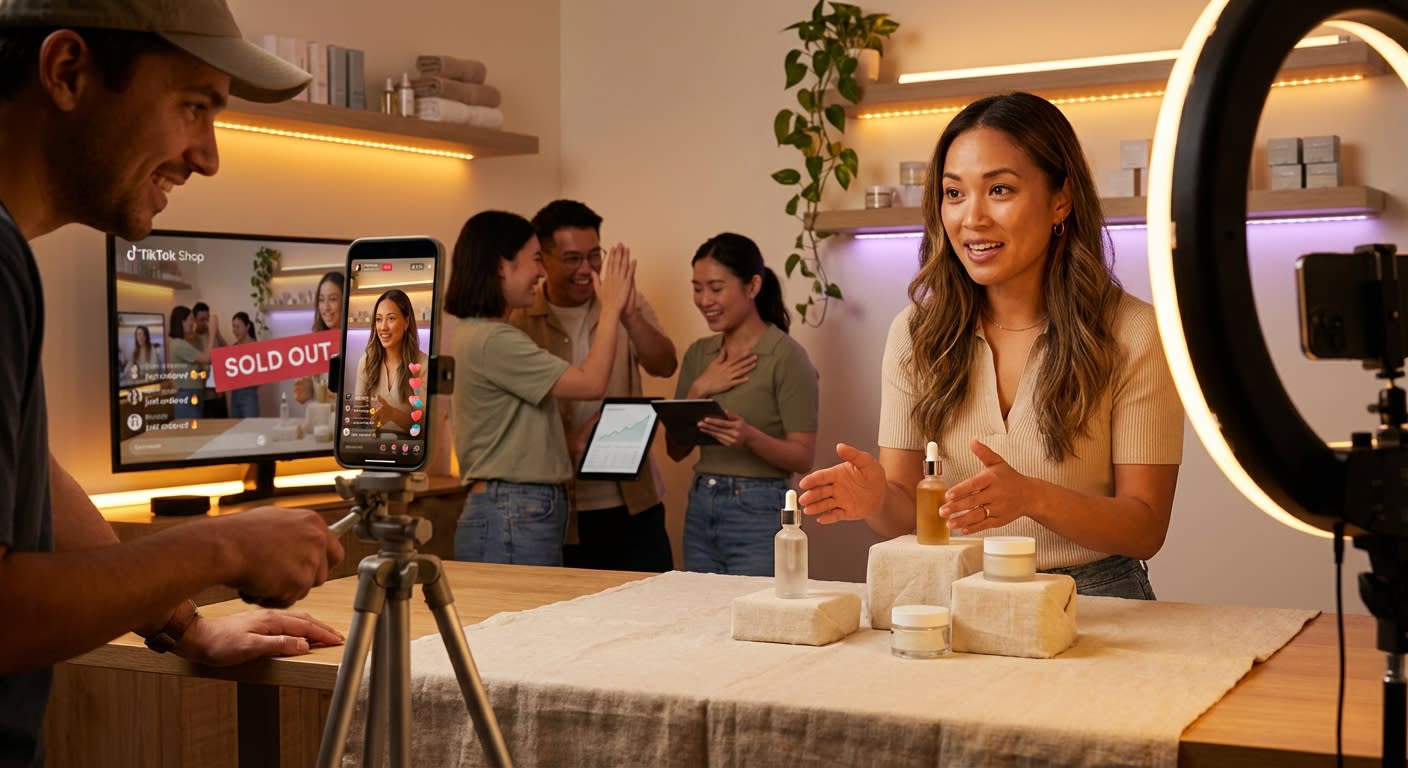
Recommended allocation:
| Campaign Type | % of Budget | Monthly Spend Range | Priority |
|---|---|---|---|
| Prospecting (VSA/PSA) | 50% | $2,500–$7,500 | High |
| Spark Ads Amplification | 30% | $1,500–$4,500 | High |
| Retargeting | 15% | $750–$2,250 | Medium |
| Live Boosting | 5% | $250–$750 | Low |
Why this split works at the starter level:
- You need data before you can optimize. Half your budget goes to prospecting because you're building pixel data, identifying winning audiences, and testing creative angles. Without this foundation, everything else is guesswork.
- Spark Ads are your efficiency play. At this budget, you can't afford to produce enough high-quality ad creative in-house. Spark Ads let you leverage creator content that's already proving itself organically. This is where every dollar works hardest.
- Retargeting pools are small but mighty. Even at $5K/month, you'll build retargeting audiences fast on TikTok. Allocating 15% ensures you're not leaving easy conversions on the table.
- Live boosting is experimental. Unless you're already running 3+ live streams per week with proven conversion rates, keep this allocation minimal.
Starter tier mistakes to avoid:
- Spreading budget across too many ad sets (you need $50–$100/day minimum per ad set for TikTok's algorithm to optimize)
- Running only one creative per ad set (test 3–5 variations minimum)
- Ignoring Spark Ads because you "don't have enough creators" (even 5–10 active affiliates generate testable content)
"We don't have the budget for an agency at this level." We hear this constantly. Here's the math: if you're spending $10K/month on ads and your ROAS is 1.5x because you're self-managing, you're generating $15K in revenue. A strategist who improves your ROAS to 3.5x on the same spend generates $35K — an incremental $20K/month. The agency doesn't cost money. Bad allocation costs money.
Tier 2: The Scaler ($15K–$50K/Month)
Who this is for: Brands with proven product-market fit on TikTok Shop, established affiliate programs, and consistent (but plateauing) GMV.

Recommended allocation:
| Campaign Type | % of Budget | Monthly Spend Range | Priority |
|---|---|---|---|
| Prospecting (VSA/PSA) | 40% | $6,000–$20,000 | High |
| Spark Ads Amplification | 30% | $4,500–$15,000 | Critical |
| Retargeting | 20% | $3,000–$10,000 | High |
| Live Boosting | 10% | $1,500–$5,000 | Medium |
What changes at the scaler level:
- Prospecting drops to 40%. You've built enough data to be more efficient. Your pixel is smarter. Your audiences are refined. You're spending less to acquire each new shopper.
- Spark Ads become critical infrastructure. At this budget, you should be running 10–20 Spark Ads simultaneously, testing different creator styles, hooks, and product angles. The brands scaling fastest on TikTok Shop in 2025 are treating Spark Ads as their primary paid creative source — not an afterthought.
- Retargeting scales to 20%. Your warm audience pools are now large enough to segment: product page viewers, cart abandoners, past purchasers (for cross-sell/upsell), and engaged video viewers. Each segment gets its own creative and bid strategy.
- Live boosting earns real budget. If you're running structured live streams 4–5 times per week, allocating 10% to live boosting can dramatically increase your cost-per-viewer efficiency and in-stream GMV.
The scaler tier is where most brands hit a wall. They know what works but can't scale it fast enough. Creator content dries up. Ad fatigue sets in every 5–7 days. Retargeting audiences cap out. GMV flatlines despite increasing spend.
This is the exact inflection point where Talk to a Strategist algorithmic creator matching changes the game. Instead of manually sourcing 10–15 creators per month, our system identifies and activates 50–200+ category-matched creators per week — giving you a continuous pipeline of fresh Spark Ads content that prevents fatigue and fuels scaling.
One supplement brand came to us stuck at $18K/month in GMV with a $25K ad budget and declining ROAS. Within 90 days, we scaled them to $420K/month by restructuring their allocation (shifting 35% of budget to Spark Ads from underperforming prospecting campaigns) and flooding their ad account with 150+ new creator videos through our managed seeding program.
Tier 3: The Enterprise ($50K–$100K+/Month)
Who this is for: Established brands treating TikTok Shop as a primary revenue channel, multi-SKU catalogs, dedicated live commerce teams, and aggressive growth targets.

Recommended allocation:
| Campaign Type | % of Budget | Monthly Spend Range | Priority |
|---|---|---|---|
| Prospecting (VSA/PSA) | 35% | $17,500–$35,000 | High |
| Spark Ads Amplification | 25% | $12,500–$25,000 | Critical |
| Retargeting | 25% | $12,500–$25,000 | Critical |
| Live Boosting | 15% | $7,500–$15,000 | High |
Enterprise-level allocation shifts:
- Prospecting becomes more surgical. At $35K+/month in prospecting alone, you're running broad, interest-based, lookalike, and behavioral targeting simultaneously. Each audience type gets its own budget and creative strategy.
- Retargeting becomes a profit center, not a support function. With 25% allocation, you're building sophisticated retargeting funnels: 1-day viewers → 7-day viewers → cart abandoners → past purchasers → lapsed buyers. Enterprise brands should see 5x–8x ROAS on retargeting — if they're not, their funnel structure is broken.
- Spark Ads require industrial-scale creator content. At $25K/month in Spark Ads spend, you need 30–50 new creator videos per week to prevent fatigue. This is impossible to manage manually. It requires either a massive in-house team or a partner like MomentIQ with the infrastructure to produce at this volume.
- Live boosting becomes a daily operation. Enterprise sellers running daily live streams can allocate $500–$1,000/day in live boosting to maintain viewer momentum and train the algorithm to surface their streams to high-intent shoppers.
"We can manage this in-house." At the enterprise level, managing TikTok Shop ads in-house requires a minimum of 3–4 dedicated team members: a media buyer, a creative strategist, a creator manager, and a data analyst. At average salaries, that's $350K–$500K/year in payroll — before tools, software, and overhead. An agency partnership at a fraction of that cost gives you an entire team of TikTok-native specialists who've already made (and learned from) every mistake across hundreds of accounts.
Seasonal Scaling Curves: When to Increase (and Decrease) Your TikTok Shop Ad Budget
Flat monthly budgets are leaving money on the table. The smartest TikTok Shop sellers scale their ad spend dynamically based on seasonal demand curves, platform promotional events, and competitive intensity.

Here's the seasonal scaling framework for 2025:
Q1 (January–March): The Reset
Budget modifier: 80–90% of baseline
- Post-holiday consumer fatigue means higher CPMs and lower conversion rates in January
- February sees a bump around Valentine's Day (especially beauty, wellness, and gifting categories)
- March is your testing month — use lower CPMs to test new creative, audiences, and product angles before Q2 ramps
Pro move: Shift 10–15% of Q1 budget from prospecting to Spark Ads testing. Build your creative library while costs are low.
Q2 (April–June): The Build
Budget modifier: 100–120% of baseline

- Mother's Day, Father's Day, and graduation season drive strong commerce intent
- TikTok typically runs Spring Sale and mid-year promotional events with boosted algorithmic support for participating shops
- This is when you should be scaling winning campaigns identified in Q1
Pro move: Increase retargeting budget by 30% during promotional events. Shoppers who browsed during TikTok's sale events but didn't purchase are the highest-converting retargeting audience of the year.
Q3 (July–September): The Acceleration
Budget modifier: 110–130% of baseline
- Back-to-school drives massive volume in apparel, electronics, and home categories
- August–September is your final window to test and optimize before Q4
- CPMs start climbing in September as holiday advertisers enter the auction. Lock in winning campaigns before costs spike.
Pro move: Begin building retargeting audiences in September that you'll convert in Q4. Every dollar spent on prospecting in September pays dividends in November.
Q4 (October–December): The Sprint
Budget modifier: 150–250% of baseline

This is where fortunes are made — and where poor allocation planning is most punishing.
- October: Scale to 130% of baseline. Mega Sale events, early holiday shopping, and Halloween drive volume.
- November: Scale to 200–250% of baseline. Black Friday, Cyber Monday, and TikTok's own promotional events create the highest-intent shopping environment of the year. According to TikTok's 2024 Holiday Commerce Report, sellers who increased ad spend by 200%+ during BFCM saw 4.7x higher GMV compared to those who maintained flat budgets.
- December: Scale to 150–180% of baseline. Gift-giving peaks in the first two weeks, then drops sharply after December 20 due to shipping cutoffs.
Critical Q4 allocation shift:
| Campaign Type | Normal Allocation | Q4 Peak Allocation |
|---|---|---|
| Prospecting | 35–50% | 30% |
| Spark Ads | 25–30% | 30% |
| Retargeting | 15–25% | 30% |
| Live Boosting | 5–15% | 10% |
Notice the shift: Retargeting gets a massive boost in Q4 because you've spent Q2–Q3 building warm audiences. Your retargeting pools in November should be 5–10x larger than in January. This is where your highest ROAS lives.
The Budget Metrics That Actually Matter (Stop Tracking the Wrong Numbers)
Most sellers obsess over vanity metrics that don't predict profitability. Here's what to track at each budget tier:
For Every Tier:
- Blended ROAS (total GMV ÷ total ad spend across all campaign types) — your north star metric

- Cost per initiated checkout — more predictive than CPC or CPM
- Creative fatigue rate — how quickly your top-performing ads decay (benchmark: 20–30% performance drop within 7–10 days)
- Spark Ads conversion lift — the delta between a creator's organic GMV and their GMV when amplified with paid spend
For Scalers and Enterprise:
- Incremental ROAS — does increasing spend by $1,000 generate proportionally more GMV, or are you hitting diminishing returns?

- New customer acquisition cost (nCAC) — separate from blended CAC, this tells you the true cost of growth
- Retargeting audience saturation — when your frequency exceeds 4–5x per week, you're burning budget on annoyed shoppers
- Live GMV per boosted dollar — the efficiency of your live commerce investment
Statista reports that the average TikTok Shop seller's CAC increased 23% year-over-year from 2023 to 2024 as competition intensified. Brands without a structured allocation strategy are feeling this inflation most acutely — because they're competing for the same broad audiences with undifferentiated creative.
How Much Should You Actually Spend on TikTok Shop Ads? The Margin-Based Framework
Forget arbitrary budget numbers. Your TikTok Shop ad budget should be reverse-engineered from your unit economics.

Here's the formula:
Maximum ad spend per unit = Product price – COGS – TikTok fees (typically 5–8%) – shipping – affiliate commission – target profit margin
Example for a $45 skincare product:
- COGS: $8
- TikTok fees: $3.15 (7%)
- Shipping: $4
- Affiliate commission: $6.75 (15%)
- Target profit margin: $9 (20%)
- Maximum ad spend per unit: $14.10
If your blended ROAS target is 3.2x, that means for every $1 in ad spend, you need $3.20 in GMV. At a $45 price point, that's $14.06 maximum ad cost per purchase — which aligns almost perfectly.
This is how you determine whether your budget is $5K or $100K: it's not about what you can afford. It's about how many units you can profitably sell at your target ROAS.
A beauty brand we partnered with was spending $8K/month on TikTok Shop ads with a 1.9x ROAS — barely breaking even. After restructuring their allocation (cutting underperforming prospecting campaigns, shifting 40% of budget to Spark Ads from their top 12 creators, and building a 3-tier retargeting funnel), their ROAS jumped to 4.2x within 60 days. Same budget. Completely different result. They then confidently scaled to $45K/month knowing every dollar was profitable.
"We've Tried Agencies Before" — Why TikTok Shop Requires TikTok-Native Expertise
Let's address this directly because we hear it in almost every discovery call.

You hired a digital marketing agency. They "added TikTok" to your media mix. They ran the same creative frameworks they use on Meta. They treated TikTok Shop like another DTC checkout flow. And it didn't work.
That's not a failure of agencies. It's a failure of fit.
TikTok Shop is not a media buying channel. It's a full-stack commerce ecosystem with its own algorithm, creator economy, live commerce mechanics, shop scoring system, and promotional calendar. Generic agencies don't understand:
- How Shop Score affects your ad delivery and organic visibility
- Why Video Shopping Ads outperform standard in-feed ads by 2–3x on conversion rate
- How to structure Spark Ads permissions with affiliates at scale
- The relationship between affiliate GMV and paid ad efficiency
- When to boost a live stream vs. when boosting will actually hurt your stream's organic reach
Talk to a Strategist is a TikTok Shop Partner of the Year and TikTok Marketing Partner — not a generalist agency that added TikTok to a slide deck. Our team manages ad budgets exclusively within the TikTok commerce ecosystem, and our proprietary data analytics platform identifies allocation inefficiencies that generic tools miss.
The difference? A generic agency optimizes your ads. We optimize your entire TikTok commerce engine — because ad performance is inseparable from creator strategy, content velocity, shop optimization, and live commerce execution.
The 30-Day Budget Audit: How to Know If Your Current Allocation Is Working
Before you restructure everything, run this diagnostic on your current TikTok Shop ad spend:

Week 1: Campaign-Level ROAS Analysis
- Pull ROAS for each campaign type (prospecting, retargeting, Spark Ads, live boosting)
- Identify which campaign type delivers the highest ROAS and which delivers the lowest
- If your best-performing campaign type has the smallest budget allocation, you have an immediate optimization opportunity
Week 2: Creative Performance Decay
- Identify your top 10 performing ad creatives by ROAS
- Chart their daily performance over the past 30 days
- If more than 50% show significant decay (30%+ ROAS decline), you have a creative velocity problem — you're not producing enough new content to replace fatigued winners
Week 3: Audience Saturation Check
- Review frequency metrics for all retargeting campaigns
- Check audience overlap between ad sets
- If any retargeting audience has a frequency above 5x/week, you're over-saturating and need to either expand the audience or reduce spend
Week 4: Incremental Spend Analysis
- Compare your GMV growth rate to your ad spend growth rate
- If ad spend grew 40% but GMV only grew 15%, you're hitting diminishing returns and need to reallocate, not increase budget
The Cost of Waiting: Why 2025 Is the Year to Lock In Your TikTok Shop Ad Strategy
Here's what's happening right now that most sellers aren't paying attention to:
- TikTok Shop's U.S. seller base grew 340% in 2024 (source: FastMoss industry report). More sellers means more competition in the ad auction, which means higher CPMs.
- Average CPMs on TikTok increased 18% from Q1 to Q4 2024. This trend will accelerate in 2025 as more brands shift budget to the platform.
- Early movers are building algorithmic advantages that compound over time. The brands spending efficiently today are training their pixels, building retargeting pools, and establishing creator relationships that latecomers will have to pay a premium to replicate.
Every month you delay optimizing your TikTok Shop ad allocation, your competitors are getting cheaper traffic, better data, and stronger creator networks. The window for cost-efficient customer acquisition on TikTok Shop is still open — but it's narrowing faster than most sellers realize.
Brands that built structured ad allocation frameworks in early 2024 are now operating at 30–50% lower CAC than brands entering the auction today. That gap will only widen.
Your Next Move: From Budget Guessing to Budget Engineering
Let's recap the framework:
- $5K–$15K/month: 50% prospecting, 30% Spark Ads, 15% retargeting, 5% live boosting
- $15K–$50K/month: 40% prospecting, 30% Spark Ads, 20% retargeting, 10% live boosting
- $50K–$100K+/month: 35% prospecting, 25% Spark Ads, 25% retargeting, 15% live boosting
- Scale dynamically with seasonal curves: 80–90% in Q1, 100–120% in Q2, 110–130% in Q3, 150–250% in Q4
- Reverse-engineer budget from unit economics, not arbitrary spending limits
- Track blended ROAS, creative fatigue rate, and incremental ROAS — not vanity metrics
But here's what a blog post can't do: it can't analyze your specific product margins, category competition, creator content pipeline, and Shop Score to build a custom allocation that maximizes YOUR profitability.
That's what Talk to a Strategist strategy team does every day. As TikTok's Shop Partner of the Year, we've built and managed ad allocation frameworks for brands across every major TikTok Shop category — from beauty and supplements to home goods and apparel.
Book your free TikTok Shop ad strategy audit at bemomentiq.com and get a custom budget allocation framework built for your brand's margins, growth targets, and competitive landscape. Our strategists will show you exactly where your current spend is leaking — and how to reallocate for maximum ROAS.
The brands winning on TikTok Shop in 2025 aren't spending more. They're spending smarter. And they started yesterday.
Your move.