Your Affiliate Program Isn't Broken. Your Shop Score Is.
A dead TikTok Shop affiliate channel is often a platform gate, not a recruiting problem. Diagnose a sub-3.5 shop score and work the recovery ladder.
A brand emails us some version of this every few weeks: "Our affiliate channel died. Creators stopped accepting invites, GMV from affiliate went to zero, and we don't know what changed. We think we need a better commission structure."
- A dead affiliate channel is frequently a platform gate, not a recruiting problem. Check the score before you touch the commission plan.
- Drop below roughly 3.5 on seller performance and the entire affiliate program can be blocked outright — one score gate switching off one whole acquisition channel.
- The chain is short and unglamorous: one product's late approval → a fulfillment or CX metric slips → the composite score crosses the line → creator features go dark.
- Recovery has an order. Stop the bleed, fix the highest-weight subscore, appeal with evidence, then rebuild the creator channel. Skipping to step four wastes the month.
- Brand response time is the most fixable input. One beauty brand moved its customer service subscore from 2.0 to 3.9 in a single reporting cycle by enabling auto-return and auto-approving refunds under a dollar threshold.
Then we open Seller Center and the commission structure is fine. The samples are fine. The creator list is fine.
The seller performance score is 3.2.
That's the whole story. Below the threshold, the affiliate program isn't underperforming — it is switched off at the platform level. No creators, no invites, no Target Collaboration, no recovery until you appeal. You can rewrite your outreach templates for a month and it will change nothing, because the templates were never the constraint.
This post walks the causal chain from one late listing approval to a dark creator channel, then gives the recovery ladder in the order it actually has to happen. The highest-leverage rung is also the least discussed: brand response time. We'll show a measured 168 hours against a 39-hour target, and the three toggles that closed it.
The Misdiagnosis Costs You a Quarter
Brands are pattern-matched to read channel silence as a demand problem. Affiliate revenue drops, so the assumption is that creators lost interest, competitors outbid you, or the product got stale. Those are all real failure modes — and if creators are actively posting but not selling, the problem genuinely is creators who are live but not converting, which is a different post and a different fix.
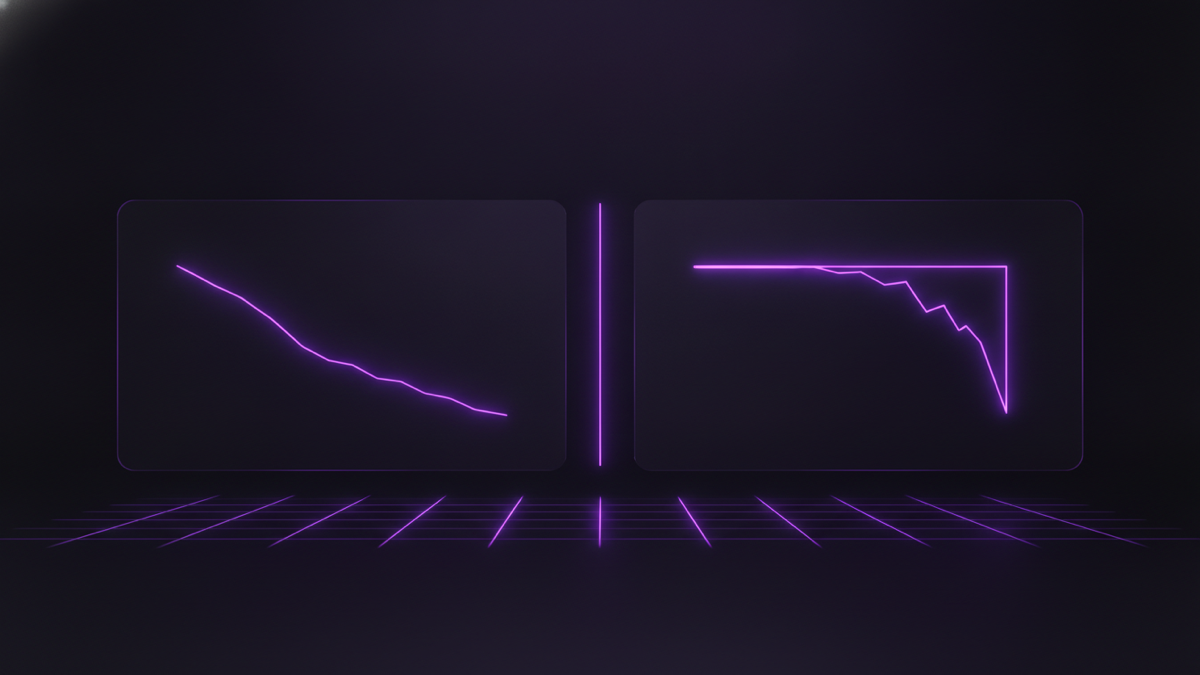
But there is a distinct signature that separates a gate from a slump. A slump decays. A gate is a cliff.
If your affiliate GMV declined 15% a month for three months, that's a demand or content problem. If it went from normal to near-zero inside one reporting cycle, and new creator invites stopped producing acceptances entirely rather than producing fewer, you are almost certainly looking at a platform action rather than a market signal.
The tell most brands miss: the creators who were already linked often keep selling for a while. So partial revenue continues, which masks the gate and pushes the diagnosis toward "recruiting slowed down" instead of "recruiting is impossible."
What the Seller Performance Score Actually Gates

TikTok Shop maintains a composite seller performance score, visible in Seller Center under account health. It rolls up several subscores — typically fulfillment, customer service and experience, product/listing quality, and violation history. The exact weighting and thresholds shift by market and over time, so verify yours in Seller Center rather than trusting any blog post, including this one.
What does not shift is the shape of the consequence. This is not a soft ranking penalty. Below the threshold, features get removed.
In the case that prompted this post — a skincare brand we reviewed in mid-July 2026 — the score sat under 3.5 and the affiliate program was blocked entirely. Not throttled. Blocked. The brand could not send invites, could not run open collaborations, and creators browsing the marketplace could not find the products to self-enroll.
That is the blast radius worth internalizing: one composite number, computed largely from operational hygiene, controls whether your single best acquisition channel exists at all. Your Affiliate Center program is a tenant on that score, not a peer to it.
The Subscores That Move the Composite
- Fulfillment. Late dispatch rate is the classic offender — orders that miss the dispatch window, cancellations you initiate, tracking that never updates.
- Customer service and experience. Response time to buyer messages, refund and return handling speed, negative-review volume and how you handle it.
- Product and listing quality. Listing rejections, restricted-claim edits, and the listing hygiene issues that force re-approval loops.
- Violation history. The accumulating points behind the violation-point system, which sits underneath everything else.
The Causal Chain: One Late Listing Approval to a Dark Channel

Here is what actually happened at the skincare brand, root-caused step by step. It is worth reading slowly, because the origin event is so small that nobody flagged it.
Step 1 — A single product's listing sits in auto-approval limbo. One SKU, submitted with a claim that needed review. It cleared eventually, but late.
Step 2 — Orders route to a SKU that isn't cleanly live. Inventory and fulfillment logic get confused. Some orders age. A handful miss dispatch windows.
Step 3 — Buyers message about it. "Where is my order." The support queue, already thin, takes those messages alongside everything else.
Step 4 — Response time balloons and refunds queue. Nobody is watching a response-time clock because nobody has ever been told it feeds a score.
Step 5 — The customer service subscore craters, dragging the composite under 3.5.
Step 6 — The affiliate program is blocked. Creator acquisition stops. Nobody connects it to step one, because step one was six weeks ago and involved one SKU.
Notice that at no point did anything dramatic happen. There was no ban, no policy violation, no bad-faith behavior. A composite score is a machine for converting small operational neglect into large channel-level consequences, and it does that conversion quietly.
Diagnose It in Twenty Minutes
Before you spend anything on recovery, confirm the diagnosis. Three screens:
- Seller Center → account health / performance. Read the composite score and, critically, each subscore separately. The composite tells you whether you're gated. The subscores tell you what to fix.
- Affiliate Center → the invite flow. Try to send one invite to one creator. If the feature is absent, disabled, or errors, that's your confirmation. A working feature that produces no acceptances is a different problem.
- Your own message queue. Pull the actual median and 90th-percentile response time to buyer messages over the last 30 days. Do not trust your impression of it. Measure it.
If the score is above threshold and invites work, stop reading this and go work on offer and creator fit instead. If the score is below, continue.
The Recovery Ladder, In Order

Order matters more than effort here. Brands routinely start at rung five, burn a month, and end up exactly where they started.
| Rung | Action | Why this position |
|---|---|---|
| 1 | Stop the bleed | Every new late order or unanswered message re-poisons the next cycle's score |
| 2 | Fix the highest-weight failing subscore | The composite only moves when its worst component moves |
| 3 | Clear the origin defect | If the listing/SKU issue is still live, rungs 1–2 are treading water |
| 4 | Appeal and escalate | Appeals succeed on evidence of remediation, not on apology |
| 5 | Rebuild the creator channel | Only meaningful once the gate lifts |
Rung 1: Stop the Bleed
Freeze anything generating new negative signal. If a SKU has a fulfillment problem, pause it rather than keep selling it. If your dispatch SLA is being missed on a specific carrier or warehouse lane, pull it. A gated shop that keeps accumulating late orders will fail its appeal, because the reviewer looks at the current trend, not your intentions.
Rung 2: Fix the Highest-Weight Failing Subscore
Pull the subscores side by side and attack the lowest one first. In most gated shops we review, it is customer service or fulfillment, in that order. Fulfillment fixes are structural and slow — you tighten dispatch SLAs, change carriers, or change warehouses, and you wait for the metric window to roll. Customer service fixes can land in days, which is why the next section exists.
Rung 3: Clear the Origin Defect
Go find the actual first cause. In the skincare case it was one product's late auto-approval. If that listing is still in a weird state, fix it before appealing, because the reviewer can see it.
Rung 4: Appeal, Then Escalate
Two channels, used in sequence:
In-platform appeal. Submit through Seller Center with a remediation narrative, not a defense. Structure it: here is the root cause, here is what we changed, here is the metric moving in the right direction with dates. Attach evidence. Reviewers are evaluating whether the problem will recur.
Account manager escalation. If you have a TikTok account manager or partner manager, this is what they are for. In the skincare case, the appeal path that produced movement ran through the account manager, not the generic form. If you don't have one, your agency or partner likely does — that relationship is a real asset and it is the single most common reason brands hire out this work. For enforcement one tier more severe than a score gate, work the full suspension recovery playbook instead.
Expect the appeal to take at least one full reporting cycle to reflect. Scores update on the platform's clock, not yours.
Rung 5: Rebuild the Creator Channel
Once the gate lifts, restart the recruitment funnel and rebuild the offer creators actually want. One tactical note: while affiliate invites are blocked, fixed-rate creator deals generally are not, because they don't route through the affiliate program. That is the bridge that keeps content flowing during the dark weeks — most gated brands don't realize it's available.
The Fix Nobody Talks About: Brand Response Time
This is the highest-leverage input on the whole score and it is nearly absent from the seller-education material, so here is the measured version.
168 Hours Against a 39-Hour Target
At the skincare brand, we measured actual brand response time to buyer messages at 168 hours against a platform target of 39 hours. That is 4.3x over. Seven days to answer a customer, against a target of under two.
Nobody at the brand was being negligent. There was simply no owner, no alert, and no awareness that the clock was scored at all. The queue was checked when someone remembered.
Here is what makes this rung so valuable: response time is one of the only score inputs you can fix with configuration rather than with operations. You cannot make a warehouse faster in a week. You can change a setting in an afternoon.
The Three Toggles
At a separate beauty brand, we closed the same gap with three changes:
- Auto-return on. Let qualifying return requests process automatically instead of waiting in a human queue. Every hour a return sits unactioned is scored against you.
- Auto-approve refunds under a dollar threshold. Set a value where the cost of a human reviewing the refund exceeds the refund. Below the line, approve instantly and automatically.
- Escalate only above the threshold. Humans handle the cases that are actually worth human judgment. This is the part that makes the first two safe — you are not abandoning review, you are routing it.
The result: the customer service subscore moved from 2.0 to 3.9 in a single reporting cycle. One cycle, from three configuration changes.
Two honest caveats. First, auto-approving refunds is a margin decision — set the threshold against your actual unit economics, not a round number someone suggested. Second, auto-approving returns is not the same as attacking the return rate itself; it buys back your score while you fix the underlying cause. Pair it with a buyer-friendly return policy and with real customer service automation workflows so the human queue stays short. And keep responding to negative reviews — that's a separate CX input and automation doesn't cover it.
The Cadence That Prevents a Repeat
Neither of these effect sizes would have been visible without weekly score tracking. That is the actual moat: most brands look at their seller performance score when something breaks, which means they see the cliff from the bottom.
The operating cadence we run across the portfolio:
- Weekly: log the composite and every subscore. Not the composite alone — the composite is a lagging blend and it hides which component is moving.
- Weekly: log median and p90 buyer response time, and compare against the target shown in Seller Center. Own it by name.
- On any subscore decline two weeks running: treat it as an incident and root-cause it, even if the composite is still comfortable. The skincare brand's composite looked fine for weeks while one subscore fell.
- Set a floor alarm well above the gate. If the threshold is 3.5, your internal alarm is 4.0. You want runway, not a warning shot.
That discipline sits alongside the metrics that actually separate operators, and it's a core part of how we run TikTok Shop management for brands.
Get a Second Pair of Eyes on Your Score
If your affiliate channel went quiet and you're not certain whether you're gated, that's a twenty-minute answer — and a wrong guess costs a quarter.
MomentIQ runs weekly seller performance tracking across a portfolio of TikTok Shop brands, which is the only reason we can tell you what a single configuration change is worth. We handle the diagnosis, the subscore remediation, the appeal and account-manager escalation, and the creator-channel rebuild on the other side.
Book a free shop-score triage — we'll read your subscores with you, tell you whether you're gated, and give you the specific rung to start on. No obligation, and if your score is healthy we'll say so and point you at the real problem instead.