TikTok Shop UGC Strategy
Learn how to generate 500+ authentic UGC pieces monthly for your TikTok Shop without a production team. Proven 2025 strategies for scaling creator content.
Your TikTok Shop is live. Your product listings are optimized. Your affiliate program is set up. But every week, the same brutal reality hits: you're starving for fresh content.
- Aim to produce 300–700+ unique UGC assets monthly, as brands scaling past $100K/month on TikTok Shop consistently hit that content volume.
- Treat UGC as always-on infrastructure across affiliates, Spark Ads, product listings, and live commerce — not a one-time campaign.
- Leverage UGC-style ad creative to achieve 2.4x higher completion rates and 1.7x higher conversion rates versus traditional brand-produced content.
- Embed customer videos in your TikTok Shop product listings to boost add-to-cart rates by up to 40%.
- Build a repeatable five-pillar UGC system now to establish algorithmic authority before TikTok Shop's projected $17.5B U.S. GMV surge in 2025.
You know that TikTok's algorithm rewards volume and authenticity. You know that the brands dominating your category are flooding the feed with hundreds of creator videos, unboxing clips, and real-customer testimonials.And you know that your in-house team — no matter how talented — cannot produce content at the velocity TikTok Shop demands.
Here's the uncomfortable math: brands scaling past $100K/month on TikTok Shop are publishing 300–700+ unique content assets every single month. Not polished studio shoots. Not repurposed Instagram Reels. Raw, authentic, user-generated content that converts browsers into buyers.
If you're manually DMing creators, hoping customers post organically, or relying on a single videographer to keep up, you're not just falling behind — you're handing market share to competitors who've already built the system you need.
This guide breaks down the exact TikTok Shop UGC strategy that high-growth brands use to generate 500+ pieces of authentic content monthly — without hiring a production team, without burning through creative budgets, and without the chaos of managing it all yourself.
Already know you need help building this system? Talk to a Strategist and see exactly how many content assets your category requires to win.
Why User-Generated Content Is the #1 Growth Lever for TikTok Shop in 2025
Let's get the data out of the way first, because the case for TikTok Shop user generated content isn't theoretical — it's mathematical.
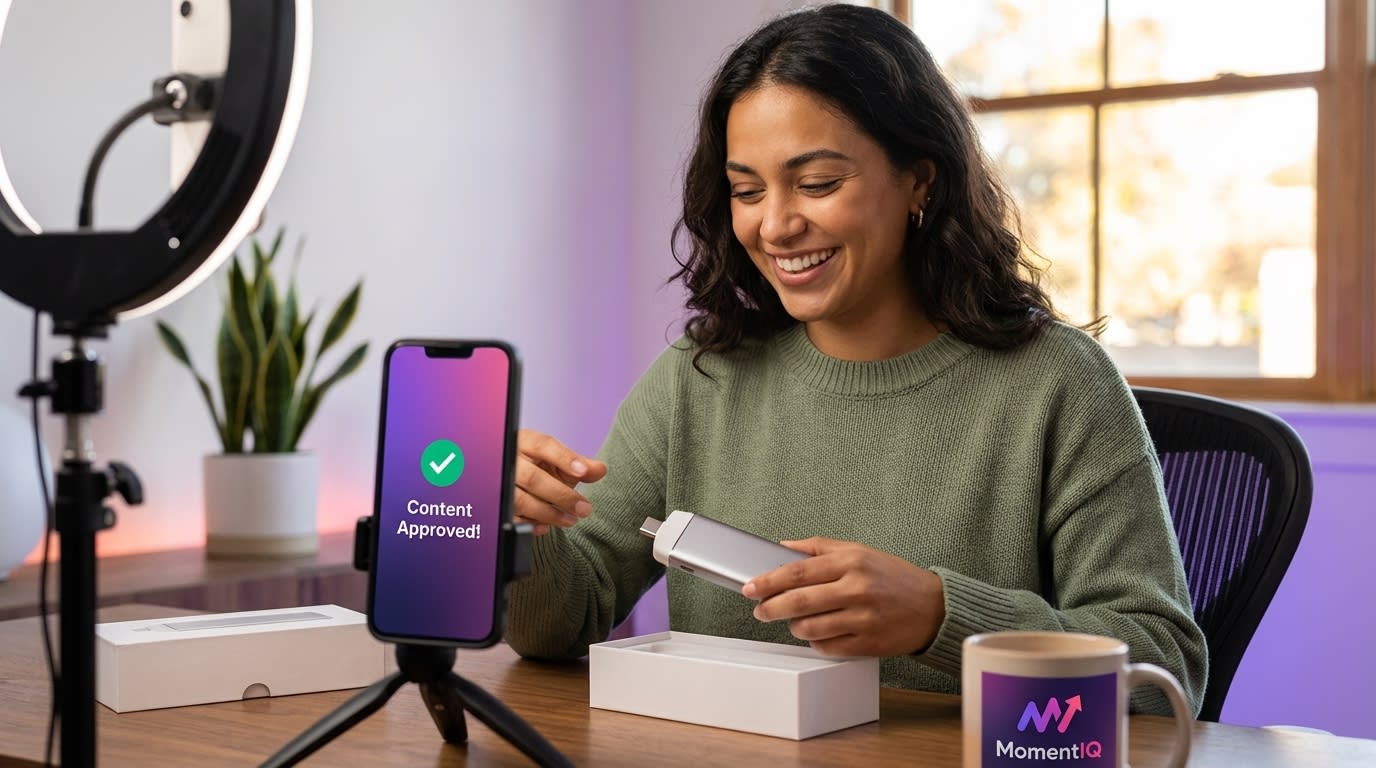
According to TikTok's own Commerce reports, ads featuring UGC-style content see 2.4x higher completion rates and 1.7x higher conversion rates compared to traditional brand-produced creative. A 2024 Statista study found that 79% of consumers say UGC significantly impacts their purchasing decisions — and that number climbs to 87% among Gen Z and millennial shoppers, TikTok's core demographic.
But here's what most sellers miss: on TikTok Shop specifically, UGC doesn't just perform better in ads. It powers every revenue channel simultaneously.
- Affiliate content: Creators posting authentic reviews drive direct shop sales through affiliate links Spark Ads fuel for paid campaigns
- Spark Ads fuel: UGC becomes the raw material for your highest-performing paid campaigns highest-performing paid campaigns
- Product listing assets: Customer videos embedded in your shop listings increase add-to-cart rates by up to 40%
- Live commerce B-roll: UGC clips used during live streams boost viewer retention and trust boost viewer retention during live streams
- Organic discovery: Every piece of UGC is another lottery ticket in TikTok's algorithmic feed another lottery ticket in TikTok's algorithmic feed
The brands crushing it on TikTok Shop don't treat UGC as a nice-to-have. They treat it as infrastructure — a system that runs continuously, generating hundreds of assets that compound across every sales channel.
And here's the urgency: eMarketer projects that TikTok Shop's U.S.GMV will exceed $17.5 billion in 2025, up from roughly $9 billion in 2024. The brands building content engines right now are establishing the algorithmic authority and creator relationships that latecomers simply cannot replicate.
The 5-Pillar TikTok Shop UGC Engine
Most brands approach UGC like a campaign — a one-time push that generates a burst of content before fading out. The brands generating 500+ assets monthly approach it as a **system with five interconnected pillars**, each feeding the others.
Let's break down each one.
Pillar 1: Insert Card Campaigns That Turn Customers Into Content Creators
This is the most underutilized UGC channel in all of e-commerce, and on TikTok Shop, it's practically free money.
Every package you ship is a content opportunity. An insert card — a small printed card included in the order — can convert 3–8% of customers into content creators when designed correctly. For a brand shipping 5,000 units per month, that's 150–400 organic content pieces from people who already love your product.
Here's what most sellers get wrong: they include a generic "Leave us a review!" card with a QR code to their website. That's not a TikTok Shop UGC strategy. That's a missed opportunity.
High-converting insert cards include:
- A specific content prompt: "Show us your first reaction when you open this" or "Film your before-and-after in 15 seconds" — not vague requests, but clear creative direction
- A branded hashtag: Something short, memorable, and trackable (more on this in Pillar 3) branded hashtag strategy
- A tangible incentive: 15% off their next order, entry into a monthly giveaway, or a chance to be featured on your brand's TikTok page a chance to be featured on your brand's TikTok page
- A QR code linking directly to TikTok's camera: Reduce friction to near zero — scan, film, post
- Visual examples: Show 2–3 thumbnail screenshots of the type of content you want
One home goods brand implemented this system and went from receiving 12 organic customer videos per month to over 280 — in just six weeks. The content wasn't polished. It was better than polished. It was real.
The key insight: these customers aren't creators. They're not optimizing for views. They're genuinely excited about a product they bought, and that authenticity is exactly what TikTok's algorithm and your potential customers respond to.
Pillar 2: Post-Purchase Email and SMS Flows That Systematize Content Collection
Insert cards catch the unboxing moment. But the real content goldmine comes 3–7 days later, when customers have actually used your product and can speak to results.
Your post-purchase flow should include a dedicated UGC request sequence:
Day 1 (delivery confirmation): A simple thank-you with a soft content ask — "We'd love to see how you style it! Tag us on TikTok."
Day 3–5 (usage window): The primary UGC request. This is where you get specific. Include:
- A 30-second example video showing exactly what you want
- 2–3 talking points they can use ("Tell us what surprised you most" or "Show us the difference after one week")
- The incentive (discount code, loyalty points, giveaway entry)
- A direct link to post on TikTok with your branded hashtag pre-loaded
Day 10–14 (results window): For products with visible results (skincare, supplements, fitness gear), this is where before-and-after content lives. This content is gold for Spark Ads and product listing pages.
Day 21 (replenishment window): "Still loving your [product]? Share your honest review and get 20% off your next order."
The brands that build this system see a 4–6% content submission rate from their customer base. That might sound small until you do the math: 10,000 monthly orders × 5% submission rate = 500 unique content pieces per month. From customers. Without paying a single creator fee.
"But we don't have 10,000 monthly orders yet."
That's exactly why this system needs to be built now — before you scale. Every order you ship without a UGC capture system is content you'll never get back. And as your TikTok Shop GMV grows (which it will, if you're reading this), the content flywheel accelerates automatically.
Pillar 3: Branded Hashtag Challenges That Create Content Momentum
Insert cards and email flows are pull strategies — you're asking individuals to create content. Branded hashtag challenges are push strategies — they create social momentum that makes people want to participate.
The difference between a hashtag challenge that generates 50 videos and one that generates 5,000 comes down to three factors:
1. The challenge must be dead-simple to replicate.
If it takes more than 10 seconds to understand and 60 seconds to film, participation drops by 80%. The best TikTok Shop challenges involve a single, clear action: an unboxing reveal, a transformation, a reaction, a comparison.
2. The challenge must have a built-in "wow" moment.
TikTok's algorithm promotes content that holds attention. Your challenge needs a visual hook — a color change, a surprising result, a satisfying texture, an unexpected use case. The product itself should be the star of the content.
3. The challenge must be seeded by creators first.
Organic hashtag challenges don't start organically. They start with 20–50 creators posting within a 48-hour window, creating the appearance of virality that triggers genuine organic participation.
This is where most brands hit a wall. Coordinating 20–50 creators to post within a tight window requires infrastructure that in-house teams simply don't have. It requires knowing which creators will actually follow through, which ones have audiences that engage with challenges, and which ones produce content that triggers the algorithm's distribution signals.
This is exactly the kind of orchestration that MomentIQ specializes in. Using algorithmic creator matching — not manual outreach — MomentIQ identifies and activates the right creators at the right time, at scale. One supplement brand used this approach to seed a hashtag challenge that generated over 2,800 organic UGC videos in 30 days, driving $340K in attributed TikTok Shop revenue.
Pillar 4: Creator Briefs That Produce Reusable, Multi-Format Content Assets
Here's where we need to talk about the difference between content for views and content as an asset.
Most creator briefs are designed to produce a single TikTok video. The creator posts it, it gets some views, and that's the end of its useful life. That's an expensive, inefficient model.
A strategic TikTok Shop UGC brief is designed to produce 5–8 usable assets from a single creator session:
- The full-length TikTok video (60–90 seconds)
- A 15-second cut optimized for Spark Ads
- A 6-second hook clip for ad testing
- Raw B-roll footage (product close-ups, texture shots, application sequences)
- A still image pulled from the video for product listing use
- An audio testimonial clip for live commerce overlays
- A "talking head" segment that can be repurposed across multiple ad variations
The brief itself should include:
- 3 mandatory talking points (not a script — talking points preserve authenticity)
- 1 required product demonstration (showing the product in use, not just holding it)
- Specific filming requirements: natural lighting, vertical format, no filters that obscure the product, clean audio
- A "golden moment" instruction: the single most important 3-second clip you need (the reveal, the reaction, the result)
- Rights and usage terms: clearly stated, signed before product ships
When you structure briefs this way, 100 creator partnerships don't produce 100 videos. They produce 500–800 unique content assets — each one optimized for a different channel, format, or ad variation.
This is the systems-level thinking that separates brands doing $20K/month from brands doing $200K/month on TikTok Shop.
"We can manage creator briefs ourselves — we don't need an agency for that."
You can manage 10 creators yourself. Maybe 25 if you have a dedicated team member. But here's what happens at scale: at 100+ creators per month, the logistics of briefing, shipping product, following up on deliverables, reviewing content, requesting revisions, and managing rights becomes a full-time operation for 3–4 people. The math rarely works out. One missed deadline cascades into a failed campaign window. One rights dispute can pull content from your best-performing ad set overnight.
This is precisely why brands partner with MomentIQ — not because they can't do it, but because doing it at the scale TikTok Shop rewards requires infrastructure that doesn't make sense to build in-house. MomentIQ manages the entire pipeline: creator identification, product seeding, brief distribution, content QA, rights management, and performance tracking — all powered by proprietary data that identifies which creators produce content that actually converts, not just content that entertains.
Pillar 5: Rights Management and Content Licensing at Scale
This is the pillar that nobody talks about until it becomes a crisis.
You've generated 500 pieces of UGC. You're running Spark Ads with the best-performing clips. A customer video is embedded on your product listing page. Then you get a message: "I never gave you permission to use my video in ads. Take it down or I'm filing a complaint."
Suddenly, your highest-converting ad set goes dark. Your product listing loses its best social proof. And you're scrambling to find replacement content while your ROAS craters.
Rights management isn't a legal afterthought — it's a core component of any scalable TikTok Shop UGC strategy.
Here's the system high-volume brands use:
For creator-produced content:
- Rights terms are included in the creator brief and signed before product ships
- Usage rights specify: platforms (TikTok, Meta, website), formats (organic, paid, product listings), and duration (typically 6–12 months with renewal options)
- A centralized content library tags each asset with its rights status, expiration date, and approved usage channels
For customer-generated content:
- Insert cards and email flows include clear language: "By posting with #[YourHashtag], you grant [Brand] permission to repost and feature your content"
- For any content you want to use in paid ads, you must get explicit written permission — a simple DM exchange with a screenshot isn't sufficient for TikTok's ad policies
- Build a template DM/email that makes it easy for customers to grant rights: "We love your video! Can we feature it? Reply YES and we'll send you a $25 gift card as a thank-you"
For hashtag challenge content:
- Challenge terms and conditions (linked in your bio or challenge description) should include content usage rights
- Any content selected for paid amplification requires individual creator permission
The brands that skip this step don't save time — they create time bombs. A single rights dispute can cost you more in lost ad performance than an entire month of content production.
How to Get UGC for TikTok Shop: The Monthly Content Calendar
Now let's put all five pillars together into a repeatable monthly system. Here's what a 500+ asset month looks like in practice:
| Content Source | Monthly Volume | Cost Per Asset | Conversion Quality |
|---|---|---|---|
| Insert card campaigns | 150–300 | $0.50–$2.00 (incentive cost) | High (real customers) |
| Post-purchase email/SMS flows | 100–200 | $1.00–$3.00 (incentive cost) | Very high (usage-based) |
| Branded hashtag challenges | 50–500+ (variable) | $0.10–$1.00 (seeding cost amortized) | Medium (awareness-focused) |
| Creator brief content (multi-asset) | 200–400 assets from 50–80 creators | $15–$50 per asset (including product cost) | Highest (strategically directed) |
| Organic reposts/mentions | 20–50 | $0 | Medium |
Total: 520–1,450 content assets per month.
Even at the low end, this system produces more authentic content in a single month than most brands create in a year.
The 3 Biggest Mistakes Brands Make With TikTok Shop UGC
Before you start building, let's address the traps that sink most UGC programs:
Mistake #1: Over-Scripting Creator Content
TikTok's algorithm can detect inauthenticity — and so can users. When every creator video sounds like it's reading from the same script, completion rates plummet and the algorithm buries the content. Your brief should provide guardrails, not a teleprompter. Three talking points. One required product demo. Everything else should be the creator's authentic voice.
Mistake #2: Treating All UGC Equally
Not every piece of content serves the same purpose. A raw unboxing video is perfect for top-of-funnel awareness but terrible for a retargeting ad. A detailed before-and-after testimonial is gold for conversion campaigns but too long for a Spark Ad hook.
Tag every asset by funnel stage:
- Awareness: Unboxings, first impressions, challenge content
- Consideration: Detailed reviews, comparisons, day-in-my-life integrations
- Conversion: Before/after results, testimonials, "why I repurchased" videos
- Retention: Routine videos, tips and tricks, community features
Mistake #3: Not Feeding UGC Back Into Paid Amplification
The biggest ROI from UGC doesn't come from organic reach — it comes from identifying your top 5–10% of content and amplifying it through Spark Ads and Product Shopping Ads. According to TikTok's internal benchmarks, Spark Ads using authentic UGC deliver 43% higher conversion rates and 30% lower CPA compared to brand-produced creative.
But you need volume to find winners. This is why the 500+ asset system matters — it gives you enough creative variations to test, iterate, and scale the content that actually moves product.
Why In-House Teams Hit a UGC Ceiling (And What to Do About It)
Let's be honest about the limitations of building this system internally.
A single content manager can effectively manage relationships with 15–25 creators. Beyond that, response times slow, quality control slips, product seeding logistics break down, and the entire system becomes reactive instead of proactive.
To run a 500+ asset UGC engine in-house, you'd need:
- 1 UGC program manager ($65K–$90K/year)
- 1–2 creator outreach coordinators ($45K–$60K/year each)
- 1 content QA and rights manager ($50K–$70K/year)
- Product seeding costs ($5K–$15K/month)
- Software and tools ($500–$2,000/month)
Total in-house cost: $180K–$300K/year — before you've produced a single piece of content.
And here's the real kicker: even with that investment, in-house teams lack the data advantage that determines which creators, formats, and hooks actually drive TikTok Shop conversions. They're optimizing blind.
"We've tried agencies before and they didn't deliver."
Most agencies that claim to "do TikTok" are repurposing Instagram influencer playbooks for a fundamentally different platform. They optimize for reach and engagement metrics that have zero correlation with TikTok Shop GMV. They don't understand TikTok's commerce algorithm, they don't have relationships with TikTok's commerce team, and they don't have the data infrastructure to connect content performance to actual sales.
MomentIQ is different because TikTok Shop is all we do. As TikTok's Shop Partner of the Year and a certified TikTok Marketing Partner, MomentIQ has proprietary access to commerce performance data that generic agencies simply don't have. Our algorithmic creator matching system — powered by the Reacher platform — analyzes conversion data, not vanity metrics, to identify which creators will drive actual revenue for your specific product category.
One beauty brand came to MomentIQ after burning through two agencies that delivered "awareness" but zero sales. Within 90 days, MomentIQ's system generated over 600 unique content assets, activated 120+ converting creators, and scaled the brand from $18K to $420K/month in TikTok Shop GMV. That's not a branding win. That's a business transformation.
Ready to see what a custom UGC engine would look like for your brand? Talk to a Strategist and get your personalized content scaling roadmap.
Advanced TikTok Shop UGC Tactics for 2025
Once your foundational system is running, these advanced tactics can 2–3x your content output and conversion rates:
Leverage TikTok's Creator Marketplace + Algorithmic Matching Together
TikTok's Creator Marketplace gives you access to opt-in creators, but the discovery tools are limited. Layering algorithmic matching on top — analyzing a creator's historical conversion rate, audience purchase behavior, and content style compatibility with your product — turns a marketplace of millions into a shortlist of hundreds who will actually drive sales.
This is the core technology behind MomentIQ's approach, and it's why our creator acceptance rates are 3–5x higher than brands doing manual outreach.
Build a "Content Flywheel" With Product Seeding at Scale
Product seeding — sending free products to creators in exchange for content — is the most cost-effective UGC acquisition channel when done at scale. But "at scale" means 200–500+ shipments per month, each tracked, followed up on, and quality-controlled.
The flywheel works like this:
- Seed product to 200 creators using algorithmic matching
- 50–70% create content (industry average is 30–40%; MomentIQ's matching pushes this to 65–75%)
- Top 10% of content gets amplified through Spark Ads
- Spark Ad performance data feeds back into the matching algorithm
- Next month's seeding list is smarter, more targeted, and higher-converting
Each cycle produces more content, better content, and more efficient spend. After 3–4 months, the system essentially runs itself — with each dollar of product seeding generating $8–$15 in attributed GMV.
Repurpose UGC Across Your Entire TikTok Shop Ecosystem
Don't silo your content. A single high-performing UGC video should appear in:
- Your product listing page (as a video review)
- Your Spark Ads (as a paid creative)
- Your live commerce streams (as social proof B-roll)
- Your affiliate resource hub (as an example for new affiliates to model)
- Your organic TikTok feed (as a repost/stitch)
One piece of content, five revenue channels. Multiply that by 500 assets per month, and you begin to see why UGC isn't just a content strategy — it's a business strategy.
The Cost of Waiting: Why Your TikTok Shop UGC Strategy Can't Wait Until Q3
Every month you delay building this system, three things happen:
- Your competitors accumulate more content, more creator relationships, and more algorithmic authority — advantages that compound and become harder to overcome
- Creator costs increase as demand for TikTok Shop creators outpaces supply — early movers lock in relationships at lower rates
- TikTok's algorithm rewards consistency — brands with 6+ months of content history receive preferential distribution over new entrants
According to a 2024 Insider Intelligence report, the number of brands actively selling on TikTok Shop increased 240% year-over-year. The window where you could win with mediocre content and minimal creator relationships is closing fast.
The brands that will dominate TikTok Shop in 2025 and beyond are the ones building their content engines today — not the ones who plan to "figure it out next quarter."
Your Next Step: Build the UGC Engine That Scales With You
Let's recap the system:
✅ Insert cards that convert 3–8% of customers into content creators
✅ Post-purchase flows that capture usage-based testimonials at scale
✅ Branded hashtag challenges seeded by strategically matched creators
✅ Multi-asset creator briefs that produce 5–8 usable pieces per partnership
✅ Rights management infrastructure that protects your content investments
This isn't a content strategy. It's a content machine — one that produces 500+ authentic assets every month, feeds every revenue channel in your TikTok Shop ecosystem, and compounds in effectiveness over time.
Building it yourself is possible. Building it at the speed and scale that TikTok Shop rewards is where most brands stall.
Talk to a Strategist and let our team show you exactly how many content assets your category requires, which creator segments will drive the highest conversion rates, and how quickly you can build a UGC engine that puts you ahead of 95% of your competitors.
The brands that build now will own the content advantage. The brands that wait will spend the next two years trying to catch up.
The choice is yours — but the clock isn't waiting.