Scale TikTok Shop: Data-Driven Playbook to Hit $500K/Mo
Learn the data-driven playbook to scale your TikTok Shop past $100K/month in 2025. Proven strategies for creator outreach, GMV tracking, and consistent growth.
You've gotten your TikTok Shop to $30K, $50K, maybe $80K per month. You did it with hustle — manually DMing creators, negotiating commissions one by one, running lives when you could find a host.
- Stop manual creator outreach past $50K/month GMV — it yields only 5–12% DM response rates and burns ~$6,000/month in hidden opportunity costs.
- Build a scalable affiliate engine that continuously refreshes your creator pipeline and tests adjacent niches without requiring 20+ hours/week of your time.
- Audit your commission structure for ROI visibility — most brands blindly pay creators 15–25% with no data on whether their audiences actually convert.
- Reclaim 15–25 hours per week by automating outreach and reinvesting that time into product strategy, inventory planning, and financial forecasting.
- Fix your GMV attribution before scaling spend — know exactly whether lives, affiliates, or viral videos drive revenue so you can double down with confidence.
Now growth has flatlined. You're spending 20+ hours a week on creator outreach. Half of them ghost. The ones who post drive inconsistent results. Your GMV tracker is a mess of estimates, and you can't confidently tell your co-founder whether it was the lives, the affiliates, or one lucky viral video that drove last month's revenue.
This is the scaling wall. Almost every TikTok Shop brand doing $10K–$500K/month hits it.
This guide breaks down exactly what separates brands that stall at this stage from the ones that push through to $100K, $250K, and beyond — with the data, infrastructure, and strategy behind each move.
Table of Contents

- The Three Pillars of TikTok Shop Growth
- Pillar 1: Building an Affiliate Engine That Runs Without You
- Pillar 2: Brand Lives — The Math Most Brands Get Wrong
- Pillar 3: Attribution and the GMV Clarity Problem
- TikTok Shop Strategy vs. TikTok Shop Infrastructure
- The Scaling Checklist: What to Fix Before You Spend More
- Next Steps
Why Manual Outreach Breaks at Scale
At $15K/month in GMV, manual creator outreach is viable. You know your top five affiliates by name. You can track commissions in a spreadsheet. You're messaging 20–30 creators a week and it feels manageable.

At $50K–$80K/month, the same approach becomes the bottleneck.
Here's what happens:
- Creator volume requirements increase exponentially. To sustain growth, you need a consistent pipeline of new creators posting purchase-driving content. The organic affiliate pool you've been tapping gets exhausted. You need to refresh it and test adjacent niches — but that requires outreach at a scale that's no longer possible manually.
- Response rates drop. The more creators you message, the lower your response rate per message. Brands we work with at MomentIQ report that manual DM outreach yields a 5–12% response rate. Of those, only 30–40% actually post. Of those, a fraction drive meaningful sales.
- Commission governance becomes chaotic. You're paying creators 15–25% commission with no visibility into whether their audience actually buys. Tools like TikTok's Creator Commission Max exist, but most brands don't know how to configure or optimize them.- Time cost compounds. Every hour you spend messaging creators is an hour you're not spending on product strategy, inventory planning, or financial forecasting.
The math is simple: if you're spending 20 hours/week on outreach that produces inconsistent results, that's 80+ hours/month of founder or growth lead time. At even a modest $75/hour opportunity cost, you're burning $6,000/month in invisible overhead — before a single creator posts.
This is the inflection point where brands either build infrastructure or stall.
The Three Pillars of TikTok Shop Growth
Every brand that scales past the $100K/month mark on TikTok Shop has three things dialed in simultaneously:

- A systematized affiliate and creator engine — not a spreadsheet of DMs
- Brand lives with proven unit economics — not "we do lives because everyone says to"
3.Clear, real-time performance attribution — not "I think the affiliates are working"
Most brands have one of these partially working.Almost none have all three. Let's break each one down.
Pillar 1: Building an Affiliate Engine That Runs Without You
The Problem With "Finding Influencers"
The TikTok Shop affiliate program is the single highest-leverage growth channel on the platform. But the way most brands approach it is fundamentally broken.


Typical approach:
- Search TikTok for creators in your niche
- DM them or email them
- Negotiate a commission rate
4.Send samples - Hope they post
- Hope their audience buys
Steps 5 and 6 are where the money is lost. You're selecting creators based on follower count, aesthetic, or niche relevance — none of which correlate reliably with purchase-driving ability.
What Actually Predicts Sales
The brands scaling fastest on TikTok Shop select creators based on purchase-driving track records, not vanity metrics. This means evaluating:

- Historical GMV generated per creator across previous campaigns
- Conversion rate from video views to product page clicks to completed purchases (CTR → CTOR)
- Audience purchase behavior — does this creator's audience actually buy through TikTok Shop, or do they just watch?
- Content format performance — does this creator's style of content (review, unboxing, GRWM, comparison) drive higher AOV in your category?
This data exists. But it's fragmented across TikTok's seller center, scattered analytics dashboards, and individual campaign reports.Manually compiling it for even 50 creators would take days.
This is exactly the problem MomentIQ's algorithmic creator matching was built to solve. The platform's proprietary data engine connects brands with micro-influencers who have proven track records of driving purchases — not just engagement — in specific product categories. Instead of guessing which creators will convert, you're working with data that shows which ones already have.
Scaling Outreach Without Scaling Headcount
Once you've identified the right creators, you still need to reach them at volume.This is where most brands resort to hiring VAs or spending founder time on repetitive outreach.

A smarter approach: automate the outreach pipeline. enable cold email automation with smart sequencing, A/B testing, and CRM integration — so you can contact hundreds of vetted creators per week with personalized sequences, track response rates, and follow up automatically.
The combination — algorithmic identification (MomentIQ) + automated outreach () — replaces the manual process entirely. Brands using this infrastructure report reclaiming 15–25 hours/week while improving creator response rates by 2–3x compared to manual DMs.
Commission Structure That Protects Margins
As you scale your affiliate program, commission governance becomes critical. Common mistakes:

- Flat-rate commissions for all creators regardless of performance
- No commission caps leading to margin erosion on high-volume creators
- No tiered incentive structures that reward top performers and phase out underperformers
Best practice: implement a tiered commission model. Start new affiliates at a base rate (10–15%), escalate to higher commissions (18–25%) for creators who hit GMV thresholds, and use tools like Creator Commission Max to cap payouts on products with thin margins.
MomentIQ's real-time performance analytics make this operationally simple — you can see which creators are driving revenue at which commission tiers and adjust dynamically, rather than waiting for month-end reports.
Pillar 2: Brand Lives — The Math Most Brands Get Wrong
Brand live streaming on TikTok Shop is one of the most powerful — and most misunderstood — revenue channels available.

Here's what most brands see: other shops doing hours of daily lives and racking up massive GMV. So they jump in, hire a host, and start streaming.
Then they see the costs:
- Retainer fees for live hosts or agencies ($2K–$10K/month)
- Per-hour costs that may or may not include commission
- Ad spend to drive traffic to lives ($200–$500/day for meaningful reach)
- Giveaway costs to maintain viewer engagement
- Production overhead — equipment, setup, product staging
And the revenue per hour often barely covers it.
The GMV-Per-Hour Equation
The single most important metric for brand lives is GMV per hour vs. break-even cost per hour.

Break-even = (host retainer ÷ monthly hours) + ad spend per hour + giveaway costs per hour + commission on live sales
If your break-even is $300/hour and your GMV per hour is $280, you're losing money on every additional hour you stream. Scaling hours makes it worse, not better.
The brands that make lives profitable do three things:
Optimize the content-to-conversion funnel. They use preheat videos to drive profile follows before going live, boosting initial viewer counts. They track CTR → CTOR conversion during lives and adjust product presentation, pricing, and giveaway timing in real time.
Test time slots and host combinations systematically. Afternoon vs. evening, one long stream vs. two shorter sessions, different hosts for different product categories. Each variable gets isolated and measured against GMV per hour.
Leverage platform subsidies. TikTok regularly runs subsidized coupon events and promotional placements for lives. Brands that are plugged into the platform's ecosystem — through verified brand status or agency relationships — get access to these opportunities first.
At MomentIQ, live stream optimization is a core service line. The team manages everything from host coordination and giveaway strategy to ad budget allocation and real-time GMV tracking — with the explicit goal of proving unit economics before scaling hours. Clients receive GMV-per-hour vs. break-even data on every stream, so scaling decisions are based on math, not momentum.
When to Scale Lives (And When to Wait)
Scale when:

- GMV per hour consistently exceeds break-even by 30%+ over a 2-week sample
- You have sufficient inventory depth to support increased velocity
- You've identified at least 2 hosts who perform at or above your benchmark
Wait when:
- You're within ±10% of break-even (optimize first)
- Inventory is constrained (especially around Chinese New Year or production delays)
- You haven't tested enough variables to know what drives performance
Pillar 3: Attribution and the GMV Clarity Problem
Here's a question most TikTok Shop owners doing $30K–$100K/month cannot confidently answer:
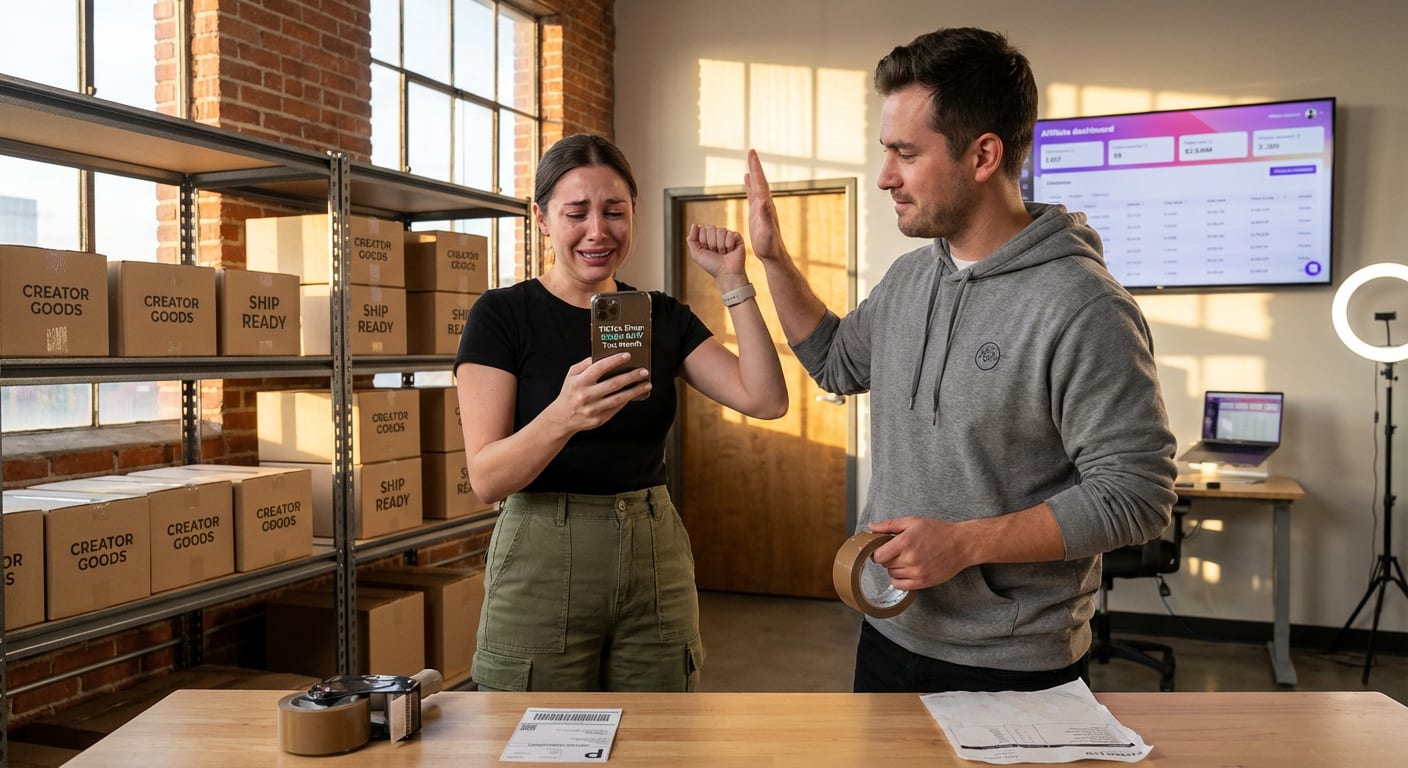
"Of your total GMV last month, what percentage came from organic affiliates, paid affiliates, brand lives, and ads — and what was the ROAS on each?"
If you can't answer that, you can't make informed budget decisions. And you're almost certainly over-investing in one channel and under-investing in another.
Why TikTok Shop Attribution Is Hard
- Multiple touchpoints. A customer might see a creator's video, visit your shop, then come back during a live and purchase. Who gets credit?

- Fragmented dashboards. TikTok's seller center provides data, but it's not designed for multi-channel attribution across affiliates, lives, and paid promotion simultaneously.
- Delayed reporting. Commission and GMV data often lags by 24–48 hours, making real-time optimization difficult during campaigns.
- Multiple brands/SKUs. If you're managing more than one product line or brand, the complexity multiplies. Budget allocation, billing, and commission tracking per brand become an operational burden.
What Clear Attribution Looks Like
Brands that scale efficiently maintain a unified GMV and spend tracker that shows:

- Actualized monthly GMV by channel (organic affiliate, paid affiliate, brand live, ads, organic shop)
- Spend by channel (creator commissions, ad budget, live retainer, giveaways, samples)
- ROAS by channel (GMV ÷ total spend per channel)
- Forecasted GMV for the coming month based on pipeline data (scheduled creator posts, planned live hours, confirmed ad budgets)
This isn't optional infrastructure for brands doing $50K+ monthly — it's the difference between scaling profitably and scaling blindly.
MomentIQ provides this as a core capability: a global GMV and spend tracker that's updated with actualized numbers monthly and revised forecasts based on campaign pipeline. Clients see exactly what's driving revenue, what's costing money, and where the next dollar should go.
TikTok Shop Strategy vs. TikTok Shop Infrastructure
This is the distinction most brands miss — and it's the reason many stall after their first growth phase.
Strategy is knowing what to do: run affiliates, do lives, optimize commissions.
Infrastructure is having the systems that execute it at scale without breaking: algorithmic creator matching, automated outreach, real-time analytics, campaign optimization that runs continuously — not just when you remember to check the dashboard.
Most TikTok Shop agencies offer strategy. They'll build you a plan, maybe manage some creators, run some lives. But when you want to go from 20 affiliates to 200, from 5 live hours/week to 25, from one brand to three — strategy without infrastructure collapses.
This is why MomentIQ positions itself as the infrastructure layer for TikTok Shop commerce — not another agency. The platform combines:
- Algorithmic creator matching based on purchase-driving data, not follower counts
- Real-time performance analytics across affiliates, lives, and paid promotion
- Automated campaign optimization that adjusts creator pools, commission structures, and ad spend dynamically
- Operational support — virtual bundle creation, sample logistics coordination, billing clarity across brands
Combined for scalable creator outreach automation, this infrastructure replaces the manual processes that worked at $15K/month but break at $50K+.
The Scaling Checklist: What to Fix Before You Spend More
Before you increase your ad budget, hire more hosts, or onboard more creators, audit these fundamentals:
✅ Creator Selection
- Are you selecting creators based on purchase-driving track records or just niche relevance?
- Do you have data on creator-level GMV, CTR → CTOR, and audience purchase behavior?
- Are you refreshing your affiliate pool and testing adjacent niches to avoid saturation?
✅ Outreach Efficiency
- How many hours/week are you spending on manual creator outreach?
- What's your outreach-to-post conversion rate? (Messages sent → creators who actually post)
- Are you using automated sequencing with A/B testing, or sending one-off DMs?
✅ Commission Governance
- Do you have a tiered commission structure based on performance?
- Are you using commission caps on thin-margin products?
- Can you identify and phase out underperforming affiliates within 30 days?
✅ Brand Live Economics
- Do you know your GMV per hour vs. break-even cost per hour?
- Have you tested at least 3 variables (time of day, host, product mix) with isolated data?
- Are you leveraging preheat videos and subsidized coupon events?
✅ Attribution and Tracking
- Can you attribute GMV by channel with confidence?
- Is your spend tracker actualized monthly with forward-looking forecasts?
- Are your invoices and billing clean across all brands, services, and commission structures?
If you checked fewer than half of these, you don't have a spending problem — you have an infrastructure problem. And spending more will amplify the inefficiency, not fix it.
Next Steps
If you're a TikTok Shop brand doing $10K–$500K/month and you recognize these challenges, here's the most efficient next move:
Book a free TikTok Shop strategy call with MomentIQ.
This isn't a generic sales pitch. On the call, a MomentIQ strategist will:
- Review your current TikTok Shop setup — affiliates, lives, ads, and attribution
- Identify your 3 biggest revenue opportunities based on data from similar brands in your vertical
- Give you a clear roadmap — whether you work with MomentIQ or not
Brands in personal care, beauty, supplements, consumer tech, and CPG can see case studies from comparable brands that scaled from early stages to high GMV.
MomentIQ is the infrastructure layer for TikTok Shop commerce. We help brands scale with algorithmic creator matching, real-time performance analytics, and automated campaign optimization — replacing manual processes with data-driven systems. powers scalable creator outreach automation with smart sequencing, A/B testing, and CRM integration.