TikTok Shop Affiliate Commission Strategy
Learn how to structure tiered TikTok Shop affiliate commission rates that boost creator motivation and maximize profits. Includes real P&L math and proven strat
You're offering 15% commission across the board. Every creator gets the same rate. Your top performer who drives $80K in monthly GMV earns the same percentage as the creator who posted once and ghosted.
- Replace flat commission rates with tiered structures since 72% of affiliates rank commission structure as their #1 factor when choosing brands to promote.
- Reward top creators proportionally — paying your $80K/month performer the same rate as a ghost creator accelerates churn to competitors.
- Structure three tiers: Entry Rate (10-15%), Momentum Rate (17-20%), and Elite Rate (22-28%) tied to specific GMV thresholds.
- Recognize that affiliate-driven content accounts for over 60% of total TikTok Shop GMV in mature accounts, making commission architecture your core growth lever.
- Use bonus thresholds, limited-time rate bumps, and exclusive product drops alongside tiered rates to create psychological stickiness and reduce creator switching.
And you wonder why your best affiliates are quietly switching to your competitor's program.
Here's the uncomfortable truth most TikTok Shop sellers refuse to confront: a flat commission structure doesn't just leave money on the table — it actively punishes your highest-value creators and rewards mediocrity. It's the single biggest reason affiliate programs plateau, creator churn accelerates, and GMV stays frustratingly inconsistent month after month.
According to TikTok's 2024 Commerce report, affiliate-driven content now accounts for over 60% of total TikTok Shop GMV in mature seller accounts. That means your commission structure isn't a line item — it's the engine of your entire revenue model. Get it wrong, and everything downstream breaks.
This guide goes deep into the exact TikTok Shop affiliate commission structure frameworks that top-performing brands use to create escalating motivation, lock in elite creators, and build a self-reinforcing flywheel of content and conversions. We're talking tiered rates, bonus thresholds, limited-time rate bumps, exclusive product drops, and the P&L math that proves it all pencils out.
Let's build the commission architecture your competitors haven't figured out yet.
Why Flat Commission Rates Are Silently Killing Your TikTok Shop Growth
'Top Performer Bonus Unlocked!' notification from a TikTok Shop brand.](https://res.cloudinary.com/dyj6g3mtf/image/upload/f_auto,q_auto/v1773187856/momentiq/blog/tiktok-shop-affiliate-commission-strategy-how-to-structure-tiered-rates-that-sky-excited-creator-jumping-celebrating-top--b.jpg)

g/tiktok-shop-affiliate-commission-strategy-how-to-structure-tiered-rates-that-sky-diverse-brand-strategists-confidently-di-b.jpg)
ismatic-host-presenting-products-on--a.jpg)
Let's start with why the default approach fails.
Most brands launch their TikTok Shop affiliate program with a single commission rate — usually somewhere between 10% and 20% depending on category margins.It feels simple. It feels fair. And it's a growth ceiling disguised as a strategy.
Here's what actually happens with flat rates:
- Top creators feel undervalued. A creator driving $50K/month in sales gets the same 15% as someone who d
rove $200 last quarter. There's zero recognition, zero incentive to push harder, and zero switching cost when a competitor offers 18%.
- Mid-tier creators have no reason to level up. Without visible milestones or escalating rewards, there's no behavioral trigger to go from one video per week to three.The effort-to-reward ratio stays flat, so effort stays flat.
- Your program becomes commodity. When every brand in your category offers the same flat rate, creators choose based on product appeal alone — a factor you can't always control.Commission structure becomes your only defensible moat, and you've surrendered it.
A 2024 Statista survey of social commerce creators found that 72% of affiliates rank "commission structure and earning potential" as the #1 factor when choosing which brands to promote — ahead of product quality, brand recognition, and content support.
You're not just competing for attention on TikTok. You're competing for creator commitment. And flat rates don't win commitment.
If your affiliate program feels interchangeable, your creators will treat it that way. The brands dominating TikTok Shop right now have engineered their commission structures to be psychologically sticky — and financially irresistible at scale.
The Tiered Commission Framework: Anatomy of a High-Performance TikTok Shop Affiliate Structure
The best commission rates for TikTok affiliates aren't a single number — they're a system. A well-designed tiered structure transforms your commission from a cost center into a behavioral engineering tool.

Here's the framework that top-performing brands deploy:
Tier 1: The Entry Rate (Activation Threshold)
Commission: 10-15% | GMV Target: $0 - $2,500/month
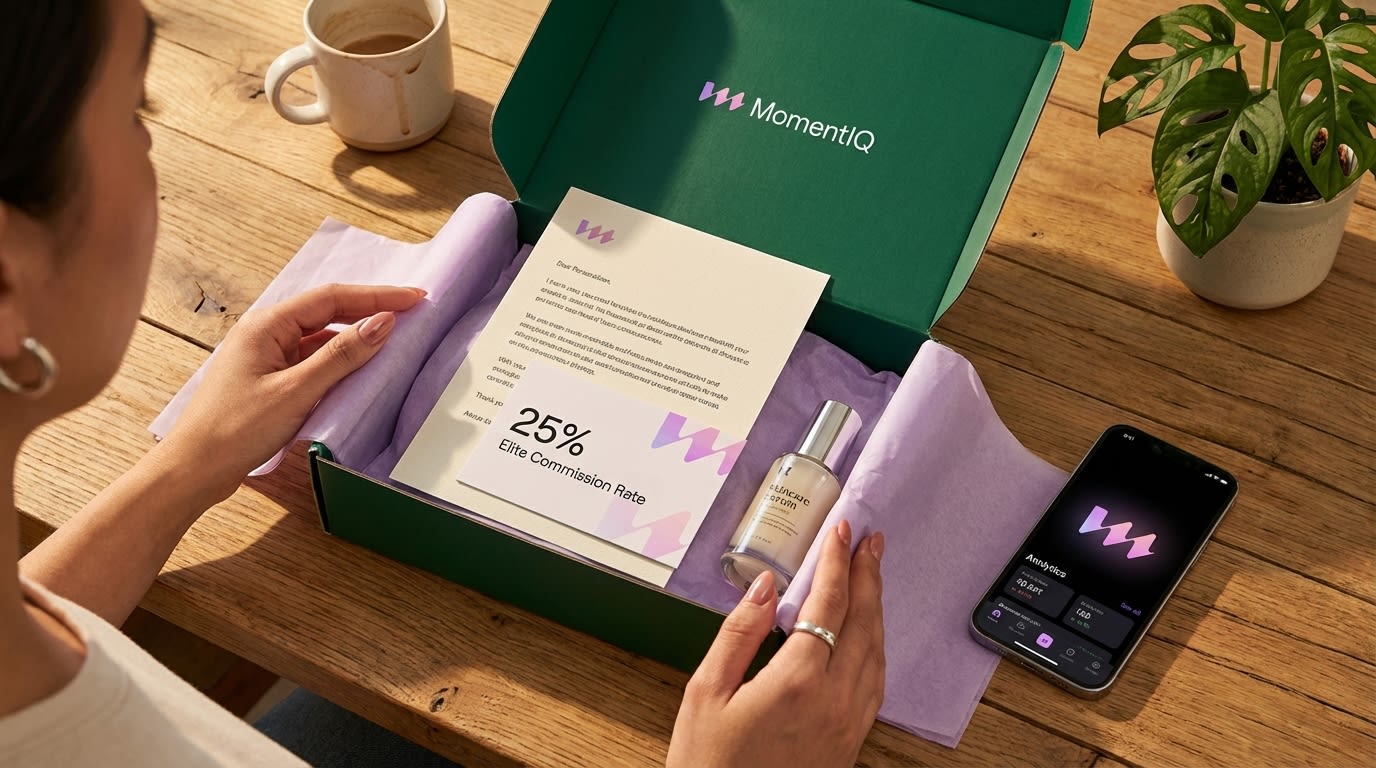
This is your baseline — the rate every new affiliate receives when they join your program. It should be competitive enough to attract applications but intentionally lower than your ceiling rate.
The psychology: Creators see the entry rate and immediately notice the higher tiers above it. This creates an "aspirational gap" — the space between where they are and where they could be. That gap is your motivation engine.
Pro tip: Make your Tier 1 rate match or slightly exceed your category average. If competitors offer 12% flat, offer 13% as your floor. Creators join for the competitive base rate and stay for the escalation potential.
Tier 2: The Momentum Rate (Engagement Lock-In)
Commission: 17-20% | GMV Target: $2,500 - $10,000/month

This is where the magic starts. A creator who crosses the $2,500 threshold isn't just earning more per sale — they're psychologically invested.They've proven the product converts for their audience, and the higher rate validates their effort.
The psychology: Behavioral economists call this the "endowed progress effect." Once someone has made visible progress toward a goal, they're significantly more likely to continue. Tier 2 is your progress marker.
Critical design choice: Make the jump from Tier 1 to Tier 2 feel substantial — at least a 4-5 percentage point increase. A move from 13% to 14% doesn't trigger behavior change. A move from 13% to 18% does.
Tier 3: The Elite Rate (Retention Fortress)
Commission: 22-28% | GMV Target: $10,000+/month

Your top-performing creators — the ones driving five and six figures in monthly GMV — deserve a rate that makes leaving your program feel economically irrational. This tier isn't about generosity; it's about retention math.
The psychology: At this level, creators are earning $2,200-$2,800+ per $10K in sales. Switching to a competitor's flat 15% rate would cost them $700-$1,300 per $10K in lost commissions.You've created a golden handcuff.
Here's the P&L math that makes this work (we'll go deeper below): If your product has 65% gross margins and your blended commission rate across all tiers averages 16-17%, you're still operating at healthier unit economics than paid acquisition through TikTok Spark Ads, where CPAs have risen 34% year-over-year according to eMarketer's 2024 social commerce benchmarks.
The P&L Math: Why Higher Tiered Rates Actually Improve Your Bottom Line
This is where most brand managers get nervous. "If I'm paying 25% commission to top creators, how do I make money?"

Let's run the numbers on a real scenario.
Scenario: A Skincare Brand With $45 Average Order Value
| Metric | Flat 15% Structure | Tiered Structure (13/18/25%) |

|---|---|---|
| Monthly affiliate GMV | $85,000 | $165,000 |
| Total commission paid | $12,750 | $28,050 |
| Blended commission rate | 15.0% | 17.0% |
| Gross margin after commission | 50.0% | 48.0% |
| Net gross profit | $42,500 | $79,200 |
The tiered structure costs 2% more in blended commission rate but generates $36,700 more in monthly gross profit. Why? Because the tiered system motivates higher output from your best creators, attracts more serious affiliates, and reduces the churn that forces you to constantly recruit replacements.
Here's the metric most sellers miss: creator recruitment cost. Every time a productive affiliate churns and you need to find, vet, onboard, seed product to, and activate a replacement, you're spending $150-$400 in operational cost and 2-4 weeks of lost revenue. A tiered structure that retains your top 20% of creators can reduce annual recruitment costs by 40-60%.
The brands scaling fastest on TikTok Shop aren't minimizing commission — they're maximizing creator lifetime value. That requires a structure that rewards performance, not one that treats every creator as interchangeable.
If you're looking at these numbers and thinking, "I need help modeling this for my specific margins and category," that's exactly the kind of analysis MomentIQ's strategists build during a free TikTok Shop growth audit. Book your custom commission modeling session at bemomentiq.com and get a P&L-backed tiered structure designed for your unit economics — before your competitors lock in the creators you need.
Beyond Tiers: 4 Advanced Commission Tactics That Create Obsessive Creator Loyalty
Tiered rates are the foundation. But the brands truly dominating TikTok Shop affiliate programs layer additional incentive mechanics on top. These are the tactics that transform a "good" program into one creators actively recruit other creators into.
1. Limited-Time Rate Bumps (The Sprint Mechanic)
Structure: Offer a temporary 3-5% commission increase for a defined period — typically 7-14 days — tied to a product launch, seasonal moment, or inventory push.

Example: "This week only: earn 28% commission (up from 22%) on our new summer collection. Top 5 creators by GMV also receive the full collection gifted."
Why it works: Limited-time bumps create urgency without permanently raising your cost structure. They give creators a reason to prioritize your product this week over the 30 other brands in their affiliate dashboard. According to TikTok's internal seller data shared at their 2024 Commerce Summit, brands using promotional commission bumps saw 3.2x more affiliate content published during bump periods compared to baseline weeks.
P&L protection: Because bumps are temporary, they typically increase your blended monthly commission by only 1-2% while generating 20-40% more GMV during the promotional window.
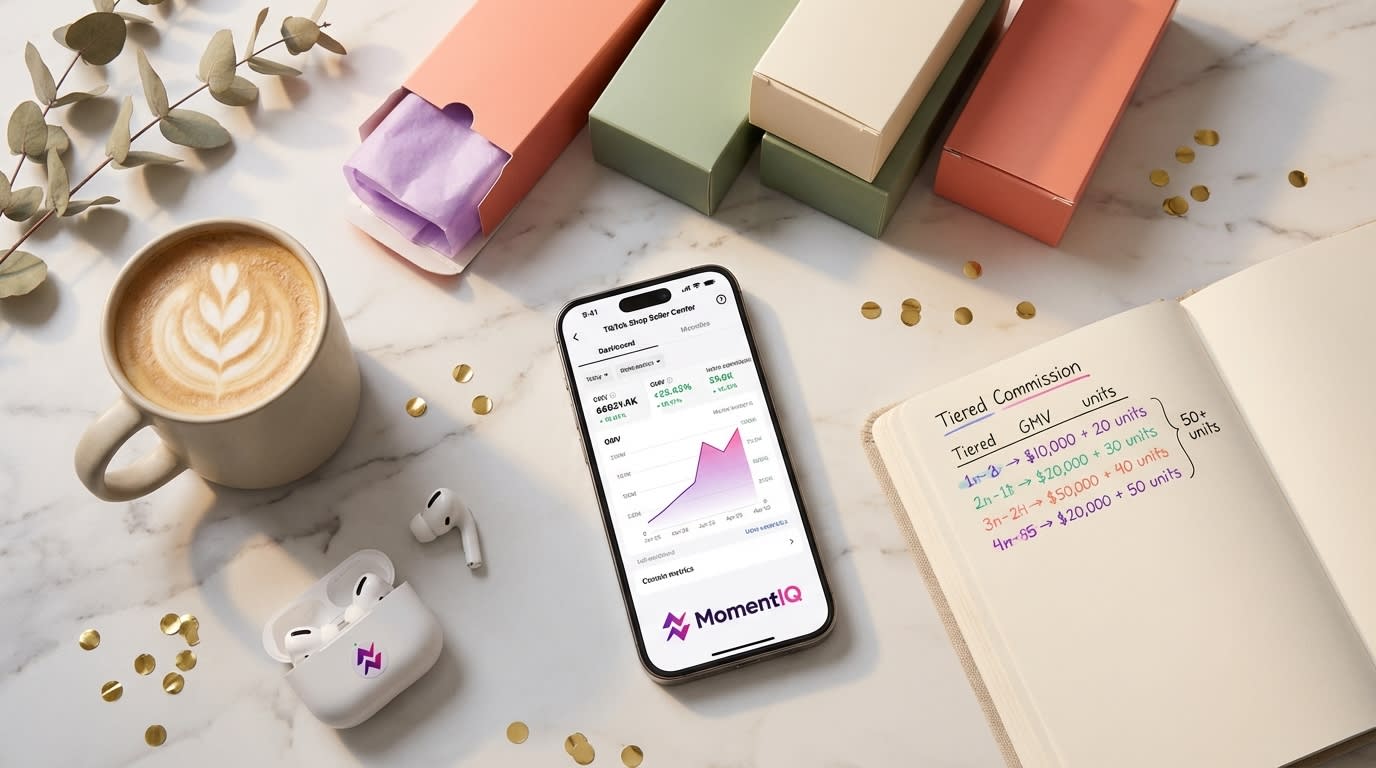
2. Bonus Thresholds (The Milestone Mechanic)
Structure: Offer lump-sum cash bonuses when creators hit specific cumulative GMV milestones within a defined period.
Example tiered bonus structure:
- $5,000 GMV in 30 days → $250 bonus
- $15,000 GMV in 30 days → $1,000 bonus
- $50,000 GMV in 30 days → $4,000 bonus + VIP product access
Why it works: Bonuses create "finish line" psychology. A creator at $4,200 in GMV with 5 days left in the month will push harder to hit $5,000 because the bonus is right there. This is the same mechanic that makes video game achievement systems addictive — and it works just as powerfully in commerce.
The compounding effect: Creators who hit a bonus threshold once are 2-3x more likely to attempt the next tier the following month. You're building habit loops, not just transactions.
3. Exclusive Product Drops (The Status Mechanic)
Structure: Give top-tier affiliates early or exclusive access to new products, limited editions, or bundles that aren't available to lower-tier creators.

Why it works: This isn't about the product cost — it's about status signaling. When a creator can tell their audience "I got early access because I'm a top partner," it reinforces their relationship with your brand and creates content that performs better because exclusivity drives viewer curiosity.
Bonus effect: Exclusive drops give top creators a content advantage. Their video is the first review. Their audience sees it before anyone else's. This drives higher view velocity, which triggers TikTok's algorithm to push the content harder. You're not just rewarding creators — you're engineering algorithmic advantage.
4. Retroactive Rate Unlocks (The Surprise Mechanic)
Structure: When a creator crosses a tier threshold mid-month, retroactively apply the higher rate to all sales that month — not just sales after the threshold.

Example: A creator hits $10,000 GMV on the 20th of the month. Instead of earning 13% on the first $2,500, 18% on the next $7,500, and 25% going forward, they earn 25% on the entire $10,000.
Why it works: This is the most psychologically powerful tactic on this list. The unexpected windfall creates an emotional high that creators associate with your brand. It also eliminates the perverse incentive to "save" big posts for next month to maximize tier placement. You want maximum effort now, and retroactive unlocks deliver exactly that.
Cost consideration: Yes, this costs more. But brands using retroactive unlocks report 45-60% lower creator churn rates in their top tier, which more than offsets the additional commission through sustained output.
How to Set Your TikTok Shop Tiered Affiliate Rates by Category
Not every category supports the same commission ceiling. Your tiered structure must align with your gross margins, AOV, and competitive landscape.
Here's a category-by-category framework for TikTok Shop tiered affiliate rates:
Beauty & Skincare (Typical Gross Margin: 65-80%)
- Tier 1: 15% (up to $2,500 GMV)
- Tier 2: 20% ($2,500 - $15,000 GMV)
- Tier 3: 25-30% ($15,000+ GMV)
- Rationale: High margins support aggressive top-tier rates. Beauty is the most competitive TikTok Shop category — your commission structure is your primary differentiator.
Supplements & Wellness (Typical Gross Margin: 60-75%)
- Tier 1: 12% (up to $3,000 GMV)

- Tier 2: 18% ($3,000 - $12,000 GMV)
- Tier 3: 22-25% ($12,000+ GMV)
- Rationale: Higher AOV means creators earn more per sale even at slightly lower percentages. Compliance-sensitive content also requires more creator effort, justifying premium rates at scale.
Fashion & Apparel (Typical Gross Margin: 55-70%)
- Tier 1: 12% (up to $2,000 GMV)

- Tier 2: 17% ($2,000 - $10,000 GMV)
- Tier 3: 20-24% ($10,000+ GMV)
- Rationale: Higher return rates in fashion (often 15-25%) mean your effective margin is lower than sticker price. Build return rate assumptions into your tier math.
Home & Kitchen (Typical Gross Margin: 45-60%)
- Tier 1: 10% (up to $2,000 GMV)
- Tier 2: 14% ($2,000 - $8,000 GMV)
- Tier 3: 18-20% ($8,000+ GMV)
- Rationale: Lower margins require tighter ceilings, but you can compensate with higher-value bonus thresholds and exclusive product access.
Consumer Electronics & Gadgets (Typical Gross Margin: 35-50%)
- Tier 1: 8% (up to $3,000 GMV)

- Tier 2: 12% ($3,000 - $15,000 GMV)
- Tier 3: 15-18% ($15,000+ GMV)
- Rationale: Higher AOV compensates for lower percentages. A creator earning 15% on a $120 gadget takes home $18 per sale — often more per conversion than a beauty creator earning 25% on a $35 serum.
Critical note: These are starting frameworks, not gospel. Your optimal structure depends on your specific COGS, fulfillment costs, return rates, and competitive positioning. Running the wrong rates can either bleed margin or starve creator motivation.
The 5 Mistakes That Sabotage Even Well-Designed Commission Structures
Getting the tiers right is necessary but not sufficient. Here are the execution failures that undermine even brilliant commission architectures:
Mistake #1: Invisible Tiers
The problem: You've built a beautiful tiered structure, but creators can't easily see their progress, current tier, or how close they are to the next level.
The fix: Create a simple dashboard or monthly email showing each creator their current GMV, current tier, next tier threshold, and the additional earnings they'd unlock by reaching it. Make the gap visible and the reward tangible.
Mistake #2: Monthly Resets Without Grace Periods
The problem: A creator who drove $18,000 last month starts back at Tier 1 rates on the first of the new month. The psychological deflation is real — and it drives churn.
The fix: Use rolling 30-day windows instead of calendar months, or offer a one-month "tier lock" where creators maintain their achieved tier for at least the following period. This prevents the emotional crash of starting over.
Mistake #3: No Communication of Rate Changes
The problem: You update your commission structure, and creators discover it through a notification they barely read. Top performers feel blindsided.
The fix: Personally message your top 20% of creators before any structure change. Frame increases as rewards for their performance. Frame decreases (if unavoidable) with advance notice and alternative value adds.
Mistake #4: Ignoring Content Quality in Tier Placement
The problem: A creator gaming the system with low-quality, high-volume content hits Tier 3 rates while producing videos that damage your brand perception.
The fix: Add a content quality qualifier to upper tiers. Require minimum engagement rates, product accuracy standards, or content review approval. This protects your brand while rewarding creators who drive quality conversions.
Mistake #5: Setting It and Forgetting It
The problem: You launched your tiered structure six months ago and haven't adjusted. Meanwhile, your category's competitive landscape has shifted, new sellers are offering higher rates, and your top creators are getting poached.
The fix: Review and adjust your commission structure quarterly. Analyze creator retention rates, tier distribution, and competitive intelligence. Your commission structure is a living system, not a set-and-forget policy.
Why Managing Tiered Commissions at Scale Requires More Than a Spreadsheet
Here's where most brands hit the wall.
Designing a tiered commission structure is a strategy exercise. Operating one across 200, 500, or 1,000+ affiliates is an operational nightmare — unless you have the infrastructure to support it.
Consider what's required:
- Real-time GMV tracking per creator to determine tier placement
- Automated tier notifications so creators know when they level up
- Dynamic rate application in TikTok Shop's affiliate system
- Bonus calculation and payment outside of TikTok's standard commission flow
- Performance analytics to identify which creators are approaching thresholds and might need a nudge
- Competitive monitoring to ensure your rates stay attractive
"We can manage this ourselves" is the most expensive sentence in TikTok Shop scaling. One supplement brand we worked with spent 60+ hours per month manually tracking creator tiers, sending update emails, and calculating bonus payments — time their founder could have spent on product development and brand strategy.
And that was with only 150 active affiliates. At 500+ creators, manual management doesn't just become inefficient — it becomes impossible without errors that erode creator trust.
This is precisely why brands partner with MomentIQ. Our proprietary algorithmic systems don't just match you with the right creators — they manage the entire commission architecture at scale, from automated tier tracking to performance-triggered rate adjustments to bonus fulfillment. As TikTok Shop's Partner of the Year, we've built the infrastructure that turns complex tiered structures from operational headaches into competitive weapons.
Talk to a Strategist to see how MomentIQ's full-stack affiliate management can implement and optimize a tiered commission structure for your brand — without adding a single headcount to your team.
Case Studies: Tiered Commission Structures in Action
The theory is compelling. The results are undeniable.
Case Study 1: Supplement Brand — From Flat to Tiered
Before: A supplement brand running a flat 15% commission across 180 affiliates. Monthly affiliate GMV averaged $18,000 with high creator churn and inconsistent content output.
After implementing a 12/18/25% tiered structure with $500 and $2,000 bonus thresholds: Within 90 days, monthly affiliate GMV scaled to $420,000. Creator retention in the top tier improved by 68%. The blended commission rate increased to 17.2%, but gross profit from the affiliate channel grew by over 20x.
Case Study 2: Beauty Brand — Rate Bumps During Product Launch
Strategy: A beauty brand used a 7-day commission bump (from standard tiers to a flat 30% for all affiliates) during a new product launch, combined with exclusive early access for Tier 3 creators.
Result: The launch generated $340,000 in GMV in the first week — 4.7x their average weekly affiliate revenue. The temporary rate bump cost an additional $18,000 in commission versus standard rates but generated $215,000 in incremental revenue. Tier 3 creators who received early access produced content that averaged 2.3x higher conversion rates than content from creators who received the product on launch day.
Case Study 3: Home Goods Brand — Retroactive Unlocks
Strategy: A home goods brand implemented retroactive tier unlocks, where crossing a threshold applied the new rate to all sales that month.
Result: Creator churn dropped by 52% quarter-over-quarter. Average monthly content output per creator increased by 34%. The additional commission cost from retroactive application was approximately $4,200/month — offset by $31,000 in additional GMV from retained creators who would have otherwise churned.
The Window Is Closing: Why Your Commission Structure Matters More Now Than Ever
TikTok Shop's affiliate ecosystem is maturing fast. According to TikTok's 2024 year-end commerce data, the number of active TikTok Shop sellers in the US grew by 280% year-over-year, while the creator pool grew by only 85%. The math is simple: more brands are competing for the same creators.
Brands building sophisticated commission structures now are locking in creator loyalty that will be exponentially more expensive to acquire in 12 months.
Consider the trajectory:
- Q1 2024: A top beauty creator might promote 3-4 brands. Competition for their attention was moderate.
- Q1 2025: That same creator is fielding offers from 15-20 brands. Commission structure, support quality, and program sophistication are the deciding factors.
- Q1 2026 (projected): Creator management platforms, AI-driven content tools, and agency networks will make it even easier for brands to compete — meaning only the most compelling programs will retain elite talent.
The brands that wait will face a creator marketplace where loyalty has already been claimed, tier structures have already been optimized by competitors, and the cost of attracting top affiliates has doubled or tripled.
This is not a "nice to have" optimization. This is the foundational infrastructure that determines whether your TikTok Shop affiliate program scales or stalls.
eMarketer projects TikTok Shop will reach $17.5 billion in US GMV by 2025, up from $9 billion in 2024. The brands capturing disproportionate share of that growth aren't the ones with the best products — they're the ones with the best creator programs. And the commission structure is the backbone of every great creator program.
How MomentIQ Engineers Commission Structures That Scale
At MomentIQ, we don't just advise on commission rates — we build, implement, and continuously optimize the entire affiliate commission architecture.
Here's what makes our approach different from generic agencies or DIY management:
- Algorithmic Creator Matching: Our proprietary systems identify creators whose audience demographics, content style, and engagement patterns align with your product — ensuring the creators entering your tiered program are predisposed to succeed (and ascend tiers).
- Data-Driven Tier Design: We model your optimal tier thresholds based on your specific margins, AOV, return rates, and competitive landscape — not generic category benchmarks.
- Managed Product Seeding at Scale: Through our platform and processes, we handle the logistics of getting product into creator hands efficiently, so your tiered structure activates quickly across hundreds of affiliates.
- Performance-Triggered Optimization: We monitor creator performance in real-time and adjust commission strategies based on what's actually driving behavior — not what worked six months ago.
- TikTok Shop Partner of the Year Credentials: As TikTok's most recognized commerce partner and FastMoss Visionary Award winner, we have platform-level insights and relationships that independent sellers and generic agencies simply cannot access.
The difference between a commission structure that looks good on paper and one that actually transforms creator behavior at scale is execution infrastructure. That's what we build.
"We've tried agencies before" is something we hear often. And we get it — most agencies offer surface-level strategy without the operational depth to implement it. MomentIQ is different because we're not an influencer agency that bolted on TikTok Shop as a service line. We're TikTok Shop-native, built from the ground up to manage the full commerce stack from creator acquisition to commission optimization to conversion analytics.
Your Next Move: From Flat Rates to a Commission Engine
If you've read this far, you already know your current commission structure is leaving growth on the table. The question isn't whether to implement tiered rates — it's how fast you can get the right structure in place before your competitors do.
Here's your action plan:
- Audit your current commission structure against the frameworks in this guide. Where are the gaps?
- Model your P&L at different tier levels to find the ceiling your margins support.
- Identify your top 20% of creators and calculate what a retention-focused tier would cost versus the revenue they generate.
- Layer in at least one advanced tactic — rate bumps, bonuses, exclusive drops, or retroactive unlocks — to differentiate your program.
- Build the operational infrastructure to manage tiers at scale — or partner with a team that already has it.
Ready to stop guessing and start engineering? MomentIQ builds custom tiered commission architectures backed by P&L modeling, algorithmic creator matching, and full-stack affiliate management. Talk to a Strategist and get a custom commission strategy designed for your margins, your category, and your growth targets — before the creator window closes.
The brands that build the best affiliate programs today will own the creator relationships that drive TikTok Shop revenue for years. The ones that wait will spend 3x more to get 3x less.
Your commission structure isn't a spreadsheet. It's your most powerful growth lever. Start treating it like one.