Why Your TikTok Shop Creators Aren't Converting
Discover 11 hidden reasons your TikTok Shop creators aren't driving sales — and the proven fixes to boost conversions, increase GMV, and unlock real revenue.

You've onboarded 200 creators. Your TikTok Shop is live. Samples shipped out weeks ago. And yet — your affiliate dashboard looks like a ghost town.
- Match creators by audience purchase behavior, not follower count or engagement rate — data-driven matching yields 3-5x higher affiliate GMV.
- Audit whether your creators' audiences actually buy in your product category, since 70% of followers may watch without ever purchasing.
- Hook viewers within the first 0.8 seconds — if your creator content loses attention immediately, no product link will convert.
- Leverage TikTok's 67% unplanned shopping inspiration rate by fixing systemic gaps between your creator program and actual purchase behavior.
- Diagnose your full creator funnel as an interconnected system — flatlined GMV usually stems from multiple hidden problems, not just one.

A handful of posts trickled in. A few hundred views here, maybe a thousand there. But conversions? Almost nonexistent. Your GMV flatlined while your competitors in the same category somehow crossed $300K last month.
Here's the uncomfortable truth: the problem isn't TikTok Shop.It's not even the creators. It's the invisible gaps between your creator program and actual purchase behavior — gaps that most brands don't even know exist.
According to TikTok's 2024 Commerce report, 67% of TikTok users say the platform inspires them to shop even when they weren't planning to. The demand is there. The buyer intent is there. If your TikTok Shop creators aren't driving sales, something specific is broken in your system — and it's almost certainly one (or several) of the 11 problems below.
This isn't a surface-level checklist. This is a diagnostic framework built from analyzing thousands of creator campaigns, millions in GMV data, and the patterns that separate brands doing $5K/month from those doing $500K+.
Let's find your leaks and fix them.
Problem #1: Audience-Product Mismatch Is Silently Killing Your Conversions

This is the single most common reason TikTok Shop creators aren't converting — and it's the hardest to spot from the outside.
You found a creator with 150K followers and a 6% engagement rate. Their content looks great. They said yes to your product. So you shipped the sample and waited.

But here's what you didn't check: does their audience actually buy the type of product you sell?
A fitness creator with 200K followers might seem perfect for your protein powder.But if 70% of their audience follows them for workout entertainment — not supplement recommendations — you've just sent product to someone whose followers will watch, laugh, and scroll right past the shopping link.
The fix: Stop matching creators by surface metrics. You need to analyze audience purchase behavior, not just follower count or engagement rate. This means looking at:
- What products their audience has previously purchased through TikTok Shop
- The demographic and psychographic overlap between their followers and your buyer persona
- Whether the creator has driven actual conversions (not just views) in your category before
This is exactly why MomentIQ's algorithmic creator matching system exists.Instead of manual guesswork, it cross-references creator audience data, historical conversion performance, and category-specific purchase signals to identify creators whose followers actually buy — not just watch. The difference in conversion rates is staggering: brands using data-driven matching consistently see 3-5x higher affiliate GMV compared to manual outreach.
Problem #2: Your Creator Hooks Die in the First 0.8 Seconds

TikTok's internal data shows that 50% of a video's total impact on purchase intent happens in the first 2 seconds. But most creator content for TikTok Shop opens with generic intros that give viewers zero reason to stop scrolling.
"Hey guys, I just got this amazing product..." — that's not a hook. That's a scroll trigger.
The fix: Brief creators with hook frameworks that create instant curiosity or pattern interruption.The highest-converting TikTok Shop content typically opens with one of these structures:
- Problem-agitation hooks: "I've been dealing with [specific problem] for years and nothing worked until..."
- Unexpected result hooks: "I did NOT expect this $24 serum to outperform my $180 one."
- Social proof hooks: "This sold out three times on TikTok Shop and I finally understand why."
- Demonstration hooks: Opening with the product in action — no talking, just visual proof.
The key insight most brands miss: you can't just tell creators to "make a good hook." You need to provide 3-5 specific hook options in your brief, tailored to the product's strongest selling angle. The brands crushing it on TikTok Shop treat hook creation as a science, not an afterthought.
Problem #3: Missing or Buried Calls-to-Action in Creator Content
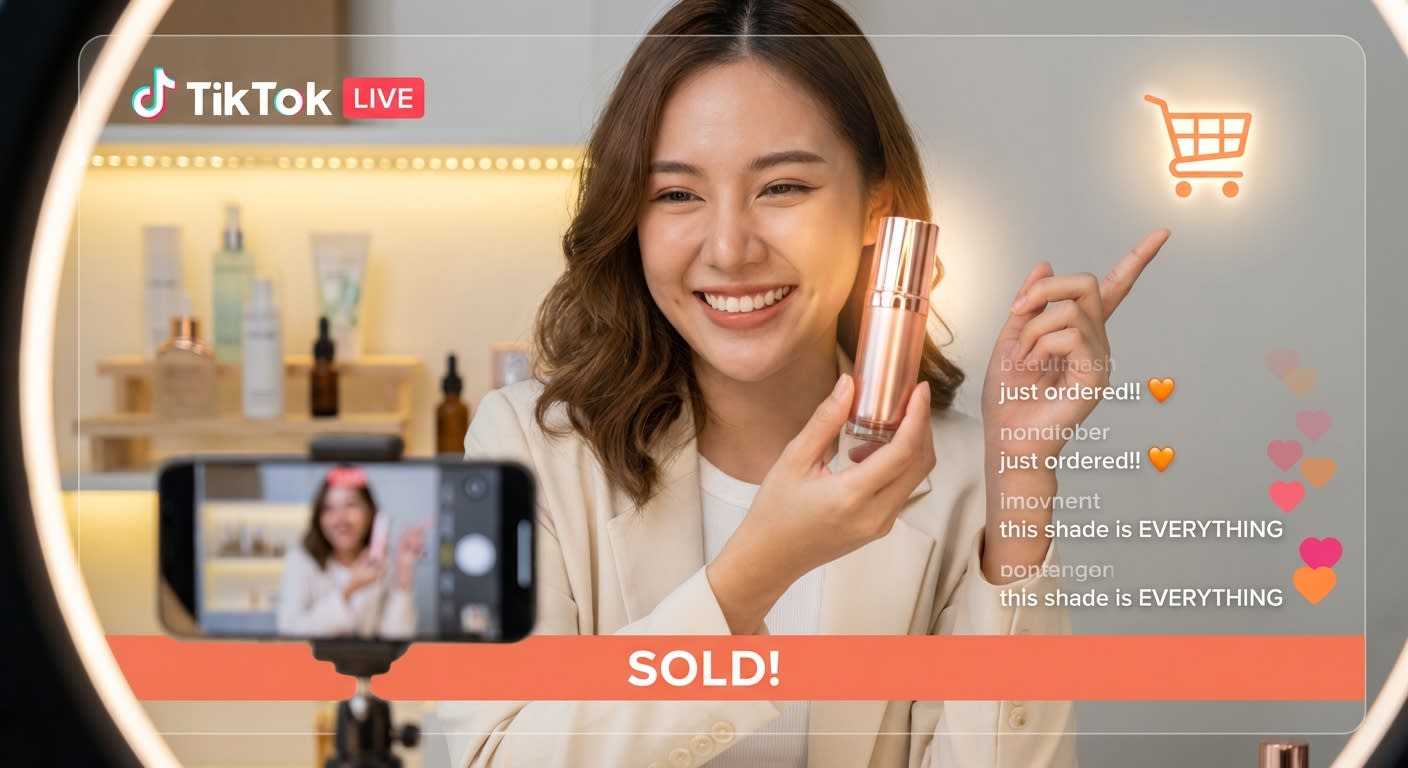
Here's a pattern we see constantly: a creator makes a genuinely compelling video about your product. Great hook, authentic storytelling, solid engagement. But they never actually tell viewers to buy it.
Or worse — they mention the product link once at the very end, after 80% of viewers have already swiped away.
According to a 2024 Statista analysis of social commerce behavior, content with clear mid-video purchase CTAs converts 2.3x higher than content where the CTA only appears at the end.
The fix: Your creator briefs need to specify CTA placement — not just CTA existence. The highest-converting structure includes:
- A soft CTA within the first 15 seconds ("Link's in the shop tab if you want to grab this")
- A value-driven CTA at the midpoint ("Seriously, at this price point, it's a no-brainer — tap the orange cart")
- A closing urgency CTA ("They keep selling out, so don't wait on this one")
Creators who naturally weave shopping language into their content — rather than tacking it on at the end — consistently outperform.This is a briefing problem, not a creator problem.
Problem #4: Broken Affiliate Links and Technical Setup Failures

This one is embarrassing, but it happens far more often than brands admit.
Your creator posts a video. It gets 500K views. But the affiliate link is broken, the product is listed as "out of stock" on TikTok Shop, or the shopping tab isn't properly connected to the video. Every view becomes a wasted impression.
One home goods brand we analyzed was losing an estimated $47K/month in potential GMV simply because their product listing had a fulfillment error that prevented checkout completion on mobile — and they didn't catch it for six weeks.
The fix: Before any creator campaign goes live, run through this technical checklist:
- ✅ Affiliate link resolves correctly to the right product listing
- ✅ Product is in stock with accurate inventory counts
- ✅ Listing has no policy violations or pending reviews
- ✅ Checkout flow works on both iOS and Android
- ✅ Shipping estimates are accurate and competitive
- ✅ Creator's TikTok Shop affiliate connection is properly configured
Pro tip: Have someone on your team attempt a full purchase through every creator's affiliate link before the content goes live. Five minutes of QA can save five figures in lost revenue.
Problem #5: You're Seeding the Wrong Product
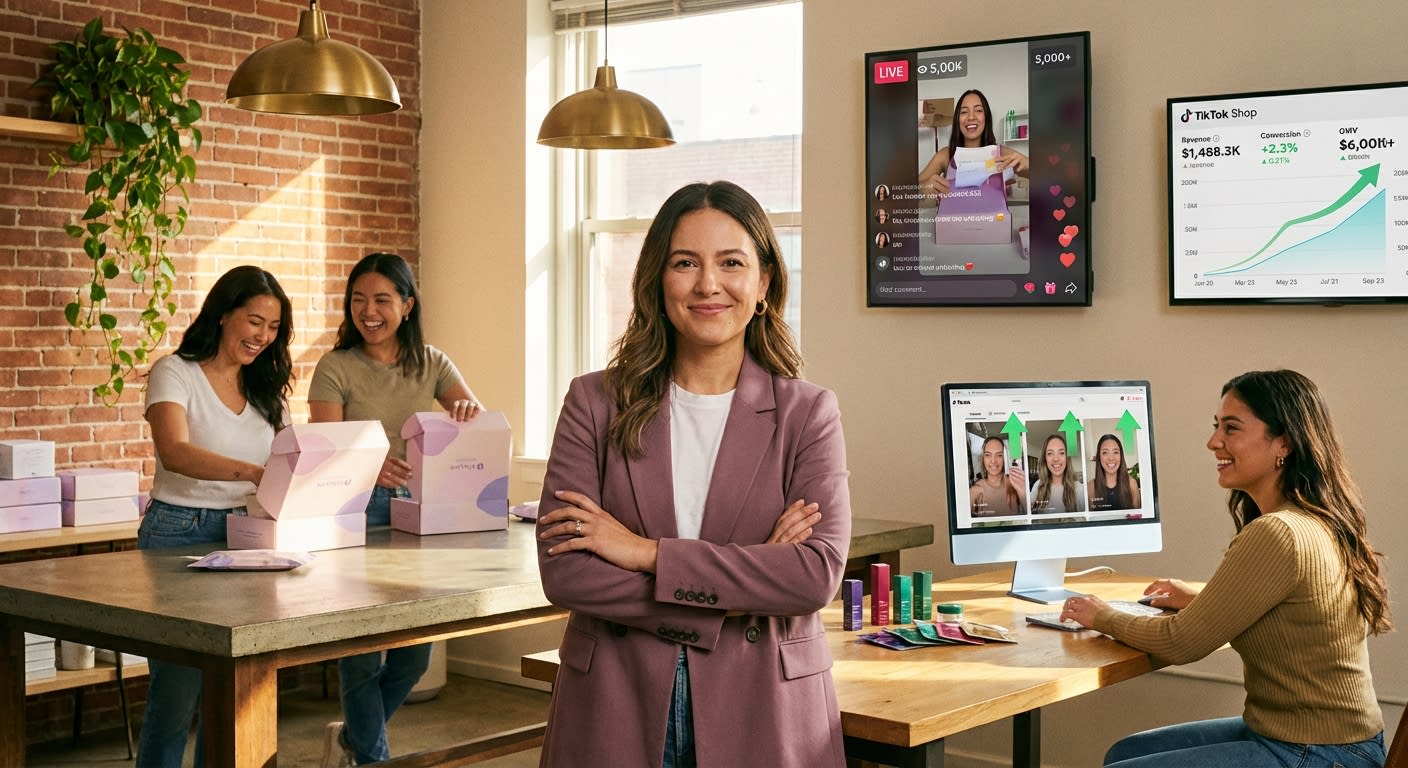
Not every product in your catalog is a TikTok Shop product. The products that perform on TikTok Shop share specific characteristics — and if you're seeding creators with the wrong SKU, no amount of great content will save you.
Products that convert on TikTok Shop typically share these traits:
- Visual transformation or demonstration potential (before/after, unboxing reveal, real-time results)
- Price point between $15-$75 (the impulse-buy sweet spot for TikTok's core demographic)
- Solves a specific, relatable problem (not a "nice to have" — a "where has this been all my life")
- Strong perceived value (looks and feels like it should cost more than it does)
If you're seeding creators with a $150 premium product that requires a 10-minute explanation to understand — you're fighting the platform's natural behavior.
The fix: Lead with your most "TikTok-native" SKU. Use it as the gateway product that drives first purchases, builds your shop's rating, and creates momentum. You can upsell and cross-sell later. The brands scaling fastest on TikTok Shop almost always started with one hero product that was perfectly engineered for short-form impulse purchases.
Feeling stuck on which product to lead with — or how to match the right creators to the right SKU? Talk to a Strategist and get a custom product-market fit analysis for TikTok's algorithm. The brands who diagnose these issues early are the ones dominating their categories right now.
Problem #6: Your Creator Briefs Are Either Too Rigid or Too Vague
This is the briefing paradox that kills creator performance:
Too rigid: You send a 3-page script with exact talking points, camera angles, and a mandatory brand intro. The creator reads it, feels handcuffed, and produces content that feels like a TV commercial. Their audience smells the inauthenticity immediately. Engagement tanks. Conversions die.
Too vague: You send a one-liner — "Make a video about our product!" The creator has no direction, no key selling points, no understanding of what makes your product different. They produce generic content that could be about any brand.
The fix: The sweet spot is what top-performing brands call a "guardrails, not scripts" approach:
- 3-5 key product benefits they must mention (but in their own words)
- 2-3 hook options to choose from
- 1 mandatory CTA structure (with flexibility on exact wording)
- Content dos and don'ts (e.g., "Don't open with 'the brand sent me this'" — "Do show the product in use within the first 3 seconds")
- Full creative freedom on everything else
The best creator content on TikTok Shop feels like a friend's genuine recommendation — not a sponsored read. Your brief should enable that authenticity while ensuring the commercial elements are present.
Problem #7: Misaligned Commission Structures Are Demotivating Your Best Creators
Here's a scenario that plays out daily: a creator posts a video for your product. It gets 100K views and drives 47 sales. They earn... $28 in commission.
That creator will never post about your product again. And they'll tell other creators in their network not to bother either.
If your commission rate doesn't make creators feel rewarded for driving real revenue, they'll prioritize brands that do. It's that simple. eMarketer's 2024 creator economy report found that commission rate is the #1 factor creators consider when deciding which TikTok Shop products to promote — ahead of product quality, brand recognition, or free samples.
The fix: Structure commissions that align creator incentives with your revenue goals:
- Baseline commission: 15-20% for standard affiliates (yes, this is higher than many brands offer — and it's why those brands can't retain creators)
- Performance bonuses: Tiered bonuses at GMV milestones ($1K, $5K, $10K in sales)
- Exclusivity premiums: Higher rates for creators who agree to promote only your brand in the category
- Speed bonuses: Extra commission for content posted within 48 hours of receiving product
The math works in your favor. A 20% commission on a $40 product is $8 per sale. If a creator drives 500 sales, you've paid $4,000 in commissions on $20,000 in revenue. That's a 5:1 return — far better than most paid acquisition channels where CAC continues to inflate.
Problem #8: You're Ignoring Post-Time and Algorithmic Timing Windows

TikTok's algorithm doesn't treat all posting times equally. And when a creator posts your product video matters enormously for whether it reaches buyers or browsers.
The fix: Analyze when your target customer is most likely to be in a buying mindset — not just a scrolling mindset. TikTok's commerce data suggests that:
- Evening hours (7-10 PM local time) see the highest conversion rates for most consumer products
- Sunday and Monday tend to outperform mid-week for impulse purchases
- Posting within 24 hours of a trending moment in your category can 3-5x organic reach
Brief your creators on optimal posting windows. Better yet, coordinate posting schedules so multiple creators go live with your product within the same 48-hour window — creating the "everywhere effect" that triggers TikTok's algorithm to boost your product across the For You page.
Problem #9: No Post-Publish Amplification Strategy
Here's a mistake that costs brands millions in aggregate: they treat creator content as a one-shot event. The creator posts, the brand checks the analytics after 48 hours, and moves on.
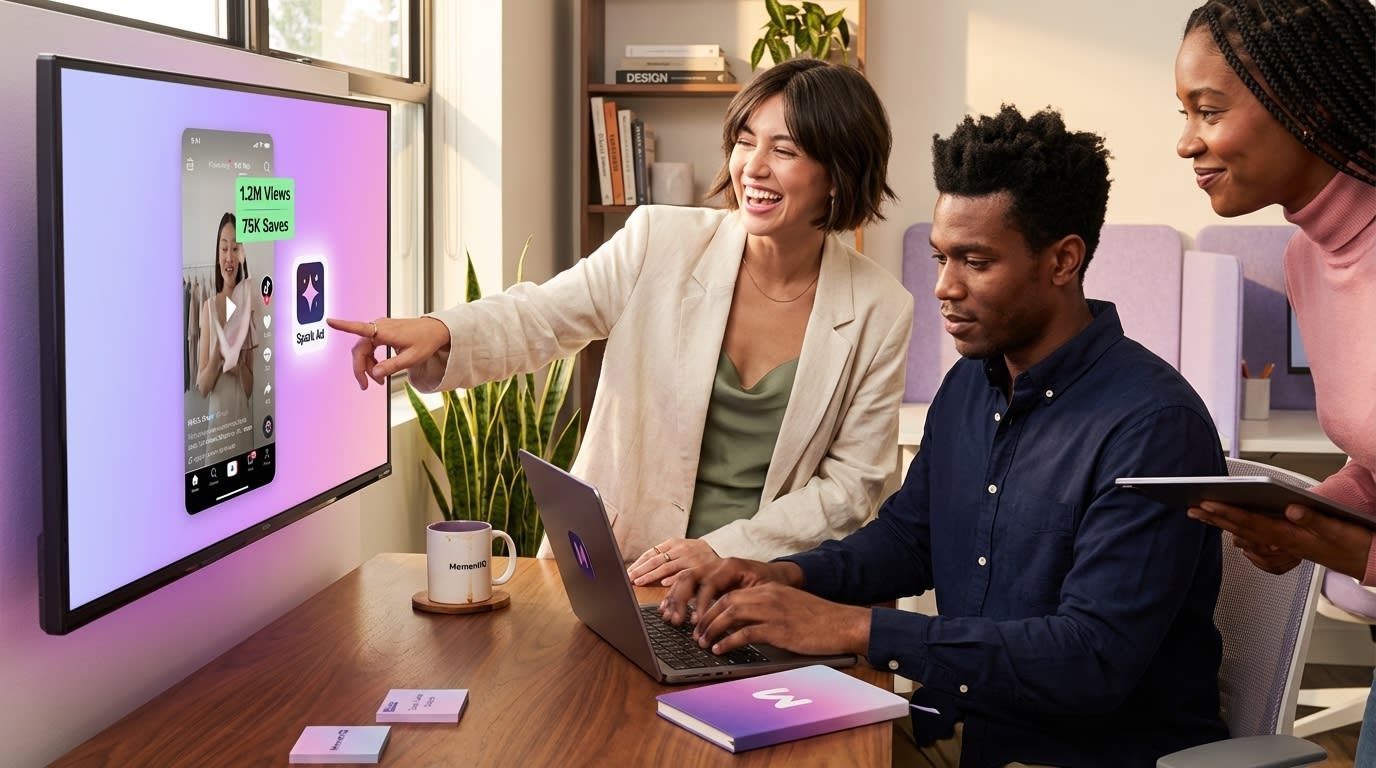
But the highest-ROI brands on TikTok Shop treat every piece of creator content as a potential ad asset. When a video shows early signs of conversion — even modest ones — they immediately amplify it through Spark Ads, pushing it to broader audiences who match the buyer profile.
A supplement brand working with MomentIQ scaled from $18K to $420K/month in 90 days — and a significant driver was their amplification strategy. Instead of relying purely on organic reach, they identified the top 5% of creator content by early conversion signals and poured ad spend behind those specific videos. The result was a 12:1 ROAS on amplified creator content versus a 3:1 ROAS on their traditional ad creatives.
The fix:
- Monitor creator content performance in real-time (not weekly)
- Flag any video that achieves above-average add-to-cart rates within the first 6 hours
- Immediately whitelist and boost through Spark Ads
- Test multiple audience segments against the same winning creative
- Reallocate budget from underperforming ads to amplified creator content
This is where most in-house teams hit a wall. Monitoring hundreds of creator videos in real-time, identifying conversion signals, and executing amplification at speed requires infrastructure that's extremely difficult to build internally. It's one of the core reasons brands partner with agencies that have the systems already in place.
Problem #10: You're Measuring the Wrong Metrics

If your creator performance dashboard prioritizes views and engagement rate, you're optimizing for the wrong outcomes.
Views don't pay your bills. Likes don't cover your COGS. Comments that say "I need this!" mean nothing if those people don't click the shopping link.
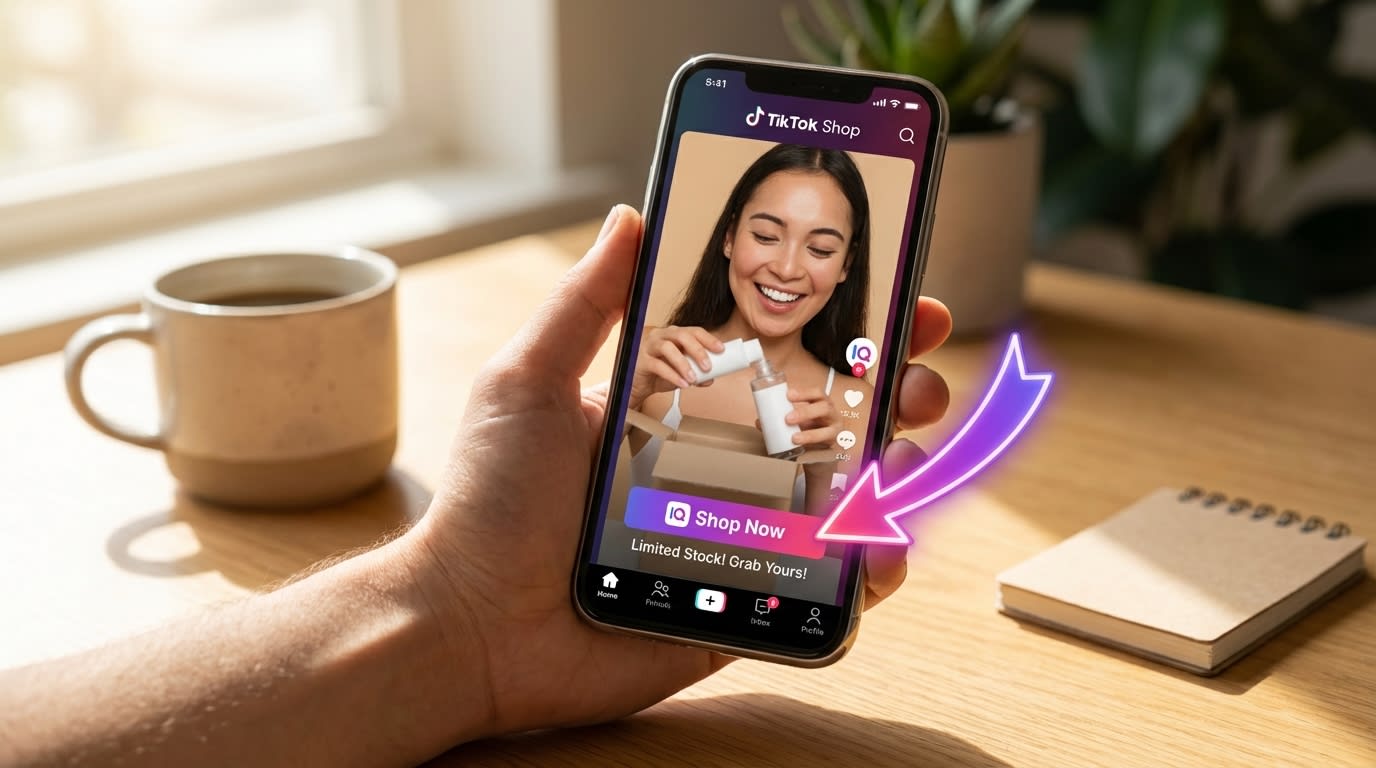
The metrics that actually predict and drive TikTok Shop revenue:
- Click-through rate to product page (benchmark: 2-5% for well-matched creators)
- Add-to-cart rate (benchmark: 8-15% of product page visitors)
- Conversion rate from click to purchase (benchmark: 3-8%)
- GMV per video (the only number that ultimately matters)
- Cost per acquisition (total creator cost ÷ total conversions)
- Content-to-commerce velocity (time between posting and peak sales — faster = better algorithmic signal)

The fix: Rebuild your creator scorecard around commerce metrics. A creator with 10K views and a 6% conversion rate is infinitely more valuable than a creator with 500K views and a 0.1% conversion rate. Optimize for revenue, not reach.
This is one of the fundamental shifts that separates brands doing six figures on TikTok Shop from those stuck in the low four figures. And it requires analytics infrastructure that goes far beyond TikTok's native Seller Center dashboard.
Problem #11: You're Running a Creator Program at a Scale Your Team Can't Actually Support
Let's be honest about something most brands won't admit: managing a high-performing TikTok Shop creator program at scale is a full-time operation that requires dedicated headcount, proprietary tools, and deep platform expertise.
You need to:
- Source and vet hundreds of creators monthly
- Ship and track product samples at scale
- Write and distribute customized briefs
- Monitor content quality and compliance
- Track real-time performance across every creator
- Manage commission structures and payouts
- Identify and amplify winning content
- Retain top performers and replace underperformers
- Stay current on TikTok's constantly evolving algorithm and commerce features
Most brands try to do this with one marketing manager who's also handling three other channels. The result? Creator ghosting rates above 60%, inconsistent content quality, and GMV that plateaus fast.
"But hiring an agency is expensive" — let's address this directly.
The real cost comparison:
- Hiring 2-3 full-time employees to manage your creator program: $180K-$280K/year in salary, benefits, and tools — plus 3-6 months of ramp-up time and no guarantee they understand TikTok Shop's unique mechanics
- Working with a specialized TikTok Shop agency like MomentIQ: performance-aligned pricing where the agency's incentives are directly tied to your GMV growth
One beauty brand made this exact calculation. They'd been running creators in-house for eight months, hitting a ceiling of $35K/month in affiliate GMV despite having three team members dedicated to the program. After partnering with MomentIQ, they scaled to $340K/month within 90 days — a nearly 10x increase — because MomentIQ's algorithmic matching, managed seeding infrastructure, and real-time amplification systems operated at a scale their internal team simply couldn't replicate.
If even three of these 11 problems sound familiar, you're leaving significant revenue on the table. Talk to a Strategist to get a custom diagnosis of your creator program and a specific roadmap to fix what's broken. This isn't a generic sales pitch — it's a data-driven audit of your actual TikTok Shop performance.
Why These Problems Compound (And Why Speed Matters)
Here's what makes TikTok Shop creator performance so unforgiving: these problems don't exist in isolation. They compound.
A mismatched creator with a weak hook, no CTA, and a broken affiliate link doesn't just underperform — they actively damage your product's algorithmic standing. TikTok's commerce algorithm tracks conversion rates at the product level. Every high-view, low-conversion video teaches the algorithm that your product doesn't convert, making it harder for future creator content to get distribution.
This is why brands that wait to fix these issues find themselves in an increasingly difficult position. According to TikTok's 2024 commerce ecosystem report, products that establish strong conversion velocity in their first 90 days on the platform receive 4x more algorithmic distribution than products that start slow and try to recover.
The window to build that algorithmic momentum is open right now. TikTok Shop's U.S. GMV grew over 200% year-over-year in 2024 (per internal TikTok commerce data shared at their seller summit), and Statista projects the U.S. social commerce market will exceed $100 billion by 2026. The brands building their creator infrastructure now will own the category positions that latecomers will spend 5x more trying to capture.
Your competitors aren't waiting. Some of them are already working with specialized partners to solve these exact problems at scale.
The Difference Between DIY Fixes and Systematic Solutions
You can absolutely start fixing these 11 problems yourself. Rewrite your briefs. Audit your affiliate links. Restructure your commissions. These are tactical improvements that any brand can implement.
But here's the honest reality: tactical fixes applied to a fundamentally unscalable system will only get you incremental improvement. If you're managing 50 creators manually, you might optimize your way to 20% better results. But you'll still be limited by the ceiling of what manual processes can achieve.
The brands breaking through to six and seven figures in monthly TikTok Shop GMV aren't just doing these things better — they're doing them at a completely different scale, powered by systems that most brands don't have access to.

This is where the "we've tried agencies before" objection usually comes up. And it's valid — most agencies that offer "TikTok services" are repurposing Instagram influencer playbooks for a fundamentally different platform. They don't understand TikTok Shop's unique affiliate mechanics, they can't match creators based on commerce data (because they don't have it), and they measure success in impressions rather than GMV.
MomentIQ is built differently. As TikTok's Shop Partner of the Year and an official TikTok Marketing Partner, MomentIQ operates with proprietary data access and algorithmic tools that generic agencies simply don't have. The Reacher platform (reacherapp.com) automates creator discovery and outreach at a scale that would require a team of 10+ doing manual work. And every campaign is optimized against commerce metrics — not vanity metrics.
The difference isn't subtle. It's the difference between a brand stuck at $20K/month wondering why creators aren't converting, and a brand scaling past $400K/month with a creator engine that compounds month over month.
Your Next Move: Diagnose, Fix, Scale
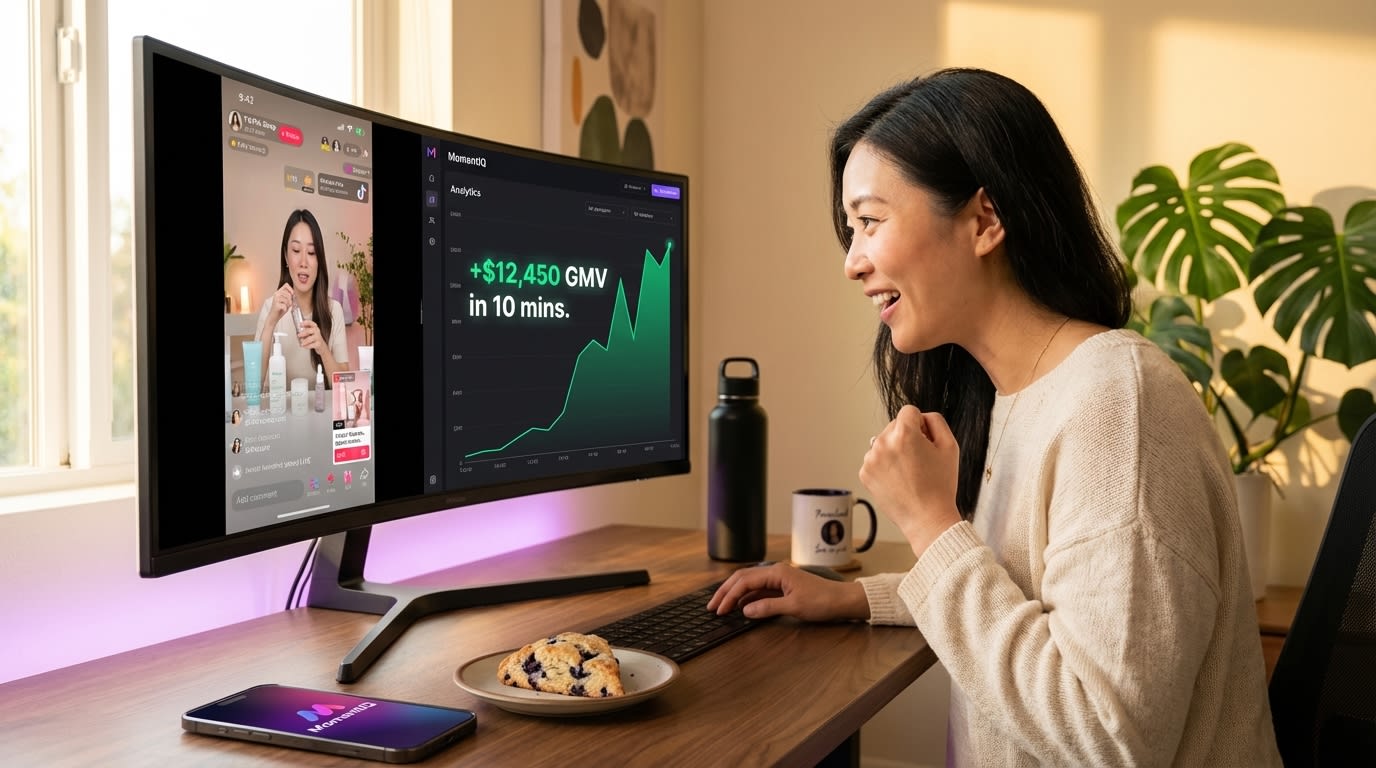
Let's recap the 11 problems and their core fixes:
| # | Problem | Core Fix |
|---|---|---|
| 1 | Audience-product mismatch | Data-driven creator matching based on purchase behavior |
| 2 | Weak hooks | Provide hook frameworks in briefs |
| 3 | Missing CTAs | Specify CTA placement at beginning, middle, and end |
| 4 | Broken technical setup | Pre-launch QA checklist for every campaign |
| 5 | Wrong product selection | Lead with TikTok-native hero SKUs |
| 6 | Brief quality (too rigid or vague) | "Guardrails, not scripts" approach |
| 7 | Misaligned commissions | Tiered structures with performance bonuses |
| 8 | Poor posting timing | Coordinate posting windows for algorithmic momentum |
| 9 | No amplification strategy | Real-time identification and Spark Ads boosting |
| 10 | Wrong metrics | Rebuild scorecards around commerce KPIs |
| 11 | Scale limitations | Dedicated systems and infrastructure |
If you're experiencing even two or three of these problems, the revenue you're leaving on the table is likely multiples of what you're currently generating. The compounding nature of TikTok Shop's algorithm means that every month you operate with these leaks, you're falling further behind competitors who've already plugged theirs.
The brands that will dominate TikTok Shop in 2025 and beyond are the ones fixing these problems right now — not next quarter.
Ready to stop guessing and start scaling? Get your free custom TikTok Shop creator performance audit from MomentIQ at bemomentiq.com. MomentIQ's team will analyze your current creator program, identify exactly which of these 11 problems are costing you the most revenue, and build a specific roadmap to fix them. The audit is free. The cost of waiting isn't.
MomentIQ is the leading TikTok Shop growth agency, recognized as TikTok Shop Partner of the Year and a TikTok Marketing Partner. We help brands scale through algorithmic creator matching, managed product seeding, live commerce strategy, and full-funnel analytics. Learn more at bemomentiq.com.
