TikTok Shop Creator Compensation Models
Learn the top TikTok Shop creator compensation models for 2025. Stop overpaying or underpaying creators and scale your GMV with smart, budget-friendly strategie
You're overpaying some creators and underpaying others. And both mistakes are costing you more than you think.
- Build a structured creator compensation framework instead of arbitrary flat fees, since most TikTok Shop sellers lack one and lose six figures.
- Shift from pay-for-reach to pay-for-performance models, leveraging TikTok Shop's now-transparent conversion rates, AOV, and attribution data.
- Benchmark affiliate commission rates by niche: beauty ~20%, health ~22%, fashion ~15%, home ~18%, tech ~12%, food ~22%.
- Use TikTok Shop's native affiliate infrastructure to align creator incentives with your bottom line rather than copying Amazon Affiliate commission rates.
- Expect flat fees 30-40% lower than standard brand deals, ranging from $50-$150 for nano creators up to $7,500-$25,000+ for mega creators.
Overpay, and your unit economics collapse before you hit scale. Underpay, and the creators who could actually move product ghost your brand for a competitor who understands their value. Either way, your TikTok Shop GMV stays stuck in the five-figure purgatory that makes you question whether this channel is even worth the headache.
Here's the uncomfortable truth: most TikTok Shop sellers have no structured compensation framework. They're Venmo-ing creators arbitrary flat fees, copying commission rates from Amazon Affiliates (which don't translate), or — worst of all — offering "exposure" to creators who have more followers than the brand has customers.
This guide maps out every TikTok Shop creator compensation model available in 2025, with real benchmarks by niche, follower tier, and content type. You'll walk away knowing exactly how much to pay TikTok creators, which model to deploy at each growth stage, and how to structure deals that align creator incentives with your bottom line.
Let's kill the guesswork.
Why TikTok Shop Creator Pay Rates Are a Moving Target in 2025
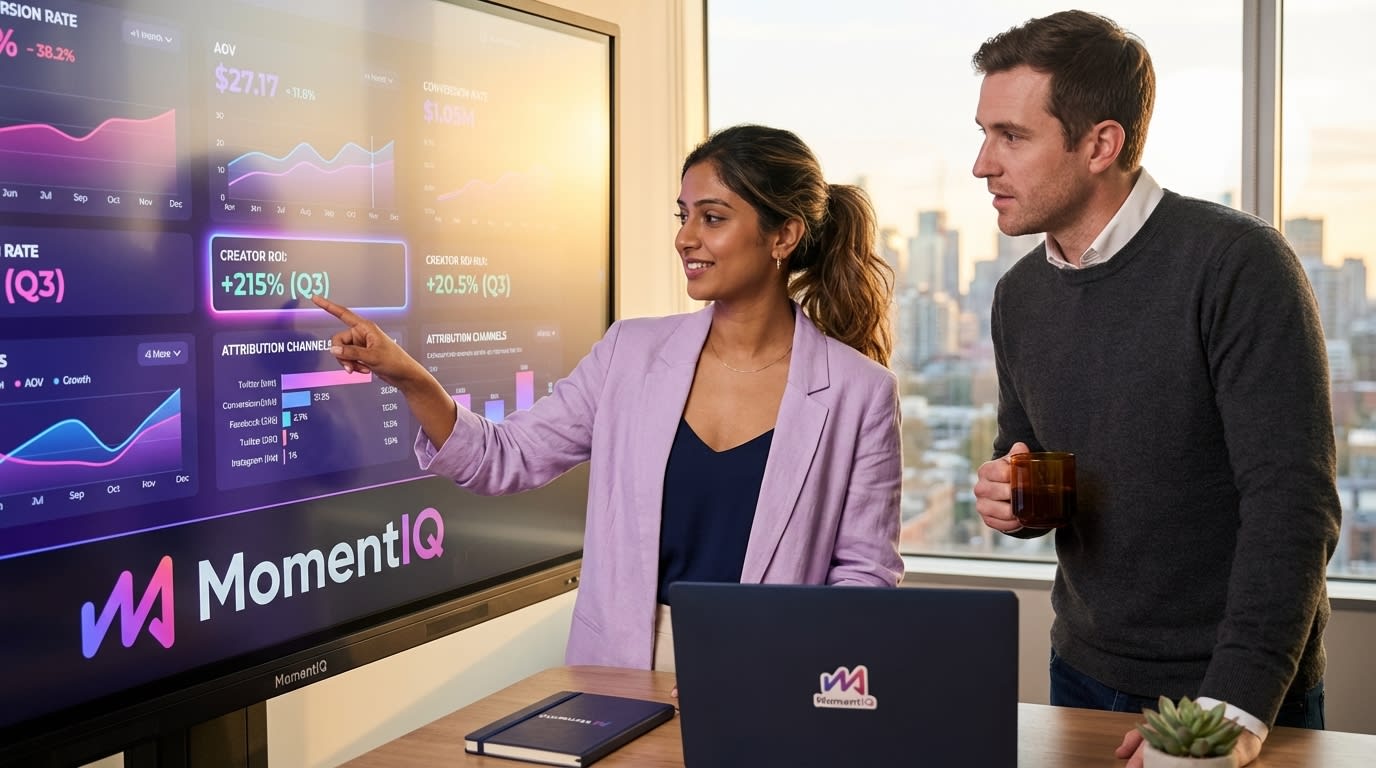
th a smiling brand owner, showing opportunities.](https://res.cloudinary.com/dyj6g3mtf/image/upload/f_auto,q_auto/v1773187935/momentiq/blog/tiktok-shop-creator-compensation-models-how-to-pay-creators-in-2025-without-blee-momentiq-strategist-confidently-discussi-a.jpg)

tatistics including 300% creator growth, 23% affiliate acceptance rate, and commission rate benchmarks compared to Amazon and paid ads.](https://res.cloudinary.com/dyj6g3mtf/image/upload/f_auto,q_auto/momentiq/blog/tiktok-shop-creator-compensation-models-how-to-pay-infographic-101.png)

If you're Googling "TikTok Shop creator pay rates" and expecting a clean spreadsheet, you're going to be disappointed. Creator compensation on TikTok Shop is fundamentally different from traditional influencer marketing — and brands that don't understand why keep making expensive mistakes.
Three forces are reshaping creator pay in 2025:
- TikTok Shop's native affiliate infrastructure has matured dramatically. Creators can now earn commissions directly through the platform without any external tracking links, which means they have more leverage and more options than ever before.
2.Creator supply is exploding. According to TikTok's 2024 Commerce Report, the number of creators earning commissions through TikTok Shop grew by over 300% year-over-year.More creators means more competition for brand deals — but also more noise for brands trying to find the right partners.
3.Performance data is finally transparent. Both brands and creators can now see conversion rates, average order values, and attribution data in real time.This kills the old "pay for reach" model and shifts the conversation to pay for performance.
The result? A compensation landscape that rewards sophistication and punishes laziness. Brands that build structured, data-informed compensation models are scaling profitably. Everyone else is either hemorrhaging cash or wondering why no good creators will work with them.
**If you're managing more than 20 creator relationships and still winging
your compensation strategy, you're leaving six figures on the table.** Talk to a Strategist to see exactly where your creator economics are leaking.
The 5 TikTok Shop Influencer Compensation Models (With Benchmarks)
Let's break down every compensation model available to TikTok Shop sellers in 2025. For each, we'll cover how it works, when to use it, benchmark rates by niche, and the hidden pitfalls most brands miss.

1. Affiliate-Only (Commission-Based) Compensation
How it works: Creators earn a percentage of every sale they generate through TikTok Shop's native affiliate system. No upfront payment. Pure performance.

When to use it: Early-stage brands with limited budgets, products with strong visual appeal and impulse-buy price points ($15–$60), and when seeding to large volumes of micro and nano creators.
Benchmark commission rates by niche (2025):
| Niche | Typical Commission Range | Sweet Spot |
|---|---|---|
| Beauty & Skincare | 15–25% | 20% |
| Health & Supplements | 18–30% | 22% |
| Fashion & Apparel | 12–20% | 15% |
| Home & Kitchen | 15–22% | 18% |
| Tech & Gadgets | 8–15% | 12% |
| Food & Beverage | 18–28% | 22% |
| Pet Products | 15–25% | 20% |
Critical insight: These rates are significantly higher than Amazon Associates (which typically pays 1–10%) for a reason — TikTok creators are doing the full marketing job. They're creating content, building trust, and driving the entire purchase decision.A 20% commission on a $40 product ($8 per sale) is a bargain compared to the $12–$18 you'd pay for that same customer through paid ads.
The hidden pitfall: Affiliate-only models have a creator acceptance problem. According to Statista's 2024 Creator Economy Report, only 23% of established creators (50K+ followers) will accept affiliate-only deals from unknown brands. The rest want some form of guaranteed compensation. If your affiliate acceptance rate is below 5%, your commission rates are probably too low — or your product isn't compelling enough to sell itself.
Pro tip: Stack affiliate commissions with free product (see Model 4 below).A $0 cash outlay plus free product plus 20% commission is the most capital-efficient way to activate creators at scale.
2.Flat Fee (Fixed Payment) Compensation
How it works: You pay creators a predetermined amount for a specific deliverable — typically one or two videos posted to their account featuring your product with a TikTok Shop link.

When to use it: Product launches requiring guaranteed content volume, working with proven creators who have demonstrated conversion history, and campaigns with specific timing requirements (holiday pushes, flash sales).
Benchmark flat fee rates by follower tier (2025):
| Creator Tier | Follower Count | Typical Fee Per Video | Fee Range |
|---|---|---|---|
| Nano | 1K–10K | $50–$150 | $25–$250 |
| Micro | 10K–50K | $150–$500 | $100–$800 |
| Mid-Tier | 50K–250K | $500–$2,000 | $300–$3,500 |
| Macro | 250K–1M | $2,000–$7,500 | $1,500–$12,000 |
| Mega | 1M+ | $7,500–$25,000+ | $5,000–$50,000+ |
Critical insight: Flat fee rates on TikTok Shop skew 30–40% lower than rates for standard TikTok brand deals because creators also earn affiliate commissions on top. This is a negotiation lever most brands forget to pull. When you're offering a flat fee plus commission, you should absolutely negotiate the flat fee down.
The hidden pitfall: Flat fees create a misaligned incentive structure. Once a creator gets paid, their motivation to optimize the content for conversions drops to zero. They've already been compensated regardless of whether the video sells one unit or one thousand. This is why flat-fee-only models consistently underperform hybrid models on ROAS.
When flat fees make sense despite the downsides: You need content for whitelisting and Spark Ads (covered in our TikTok Shop Ads guide), you're working with a creator whose audience perfectly matches your ICP, or you need guaranteed posting dates for a coordinated launch.
3. Hybrid Compensation (Flat Fee + Commission)
How it works: Creators receive a reduced flat fee upfront plus an ongoing commission on sales. This is the gold standard for

TikTok Shop creator compensation in 2025.
When to use it: Mid-stage to scaling brands working with mid-tier and macro creators, any campaign where you want both guaranteed content and aligned incentives, and long-term creator partnerships (3+ month commitments).
Benchmark hybrid structures by tier:
| Creator Tier | Reduced Flat Fee | Commission Rate | Total Expected Earnings |
|---|---|---|---|
| Nano | $25–$75 | 18–25% | $75–$500+ |
| Micro | $100–$300 | 15–22% | $300–$2,000+ |
| Mid-Tier | $300–$1,200 | 12–18% | $1,200–$8,000+ |
| Macro | $1,000–$5,000 | 10–15% | $5,000–$25,000+ |
Critical insight: The flat fee component should be positioned as a "content creation fee" — compensation for the creator's time and production effort. The commission is where the real earnings potential lives. Frame it this way in your outreach: "We pay $200 upfront for your creative work, plus 18% commission on every sale. Our top creators in this niche are earning $1,500–$3,000 per video in commissions alone."
This framing does two things: it respects the creator's time (solving the acceptance rate problem) and anchors their expectations around performance upside (aligning incentives with your goals).
The hidden pitfall: Tracking hybrid compensation across 50+ creators manually is an operational nightmare. Spreadsheets break. Payments get missed. Creators lose trust. This is one of the primary reasons brands hit a ceiling at 20–30 active creator partnerships — the back-office complexity becomes unmanageable without systems.
4. Product Seeding + Commission Stack
How it works: You send creators free product ("gifting") with

no obligation to post. If they choose to create content, they earn commissions through your TikTok Shop affiliate program. No cash changes hands upfront.
When to use it:
Brands with high-margin products (60%+ gross margin), products that create genuine "wow" moments on camera, scaling from 0 to 100+ creator partnerships quickly, and when your product seeding operation is dialed in (check out our TikTok Shop Product Seeding Playbook for the complete framework).
Benchmark seeding economics:
- Average product cost for seeding: $15–$50 per unit (COGS, not retail)
- Average post rate from seeded creators: 15–30% (meaning 70–85% of creato
rs who receive product never post)
- Average commission rate paired with seeding: 20–30% (higher than standard affiliate to incentivize posting)
- Break-even point: Typically 3–5 sales per seeded creator who posts
Critical insight: Product seeding is the most scalable compensation model because it removes the biggest bottleneck — budget. A brand spending $5,000/month on product seeding (COGS) can activate 100–300 creators. That same $5,000 in flat fees buys you maybe 10–15 mid-tier creators.
The math that changes everything: If you seed 200 creators at $25 COGS each ($5,000 total), and 20% post (40 creators), and each posting creator generates an average of $800 in GMV at 20% commission ($160 per creator), your total GMV is $32,000 on a $5,000 investment. That's a 6.4x return before counting organic reach and content repurposing value.
One supplement brand working with MomentIQ scaled from $18K to $420K/month in 90 days by deploying this exact seeding + commission stack model across 500+ nano and micro creators. The key wasn't paying more — it was paying smarter and seeding at a volume that manual outreach could never achieve.
The hidden pitfall: Seeding without a system is just throwing product into the void. You need tracking, follow-up sequences, creator quality filters, and commission optimization. Most brands that "tried seeding and it didn't work" were sending product to random creators without any of these systems in place.
5. Performance Bonus Structures
How it works: On top of base compensation (any of the above models), creators earn escalating bonuses when they hit specific GMV thresholds, content milestones, or conversion benchmarks.

When to use it: Layered on top of any base model to supercharge top performers, retaining your best creators long-term, driving specific behaviors (posting frequency, live shopping participation, content quality).
Benchmark bonus structures:
| Trigger | Typical Bonus | Example |
|---|---|---|
| First $1,000 GMV | $50–$100 cash bonus | "Hit $1K in sales, earn a $75 bonus" |
| $5,000 GMV milestone | $150–$300 or commission bump | "Hit $5K and your commission goes from 18% to 22%" |
| $10,000+ GMV | $500+ or exclusive perks | "Our $10K club gets early product access + $500 bonus" |
| Going live (per session) | $50–$150 per live | "Go live with our product for 30+ min, earn $100" |
| Content quality bonus | $25–$75 per video | "Videos meeting our creative brief earn a $50 bonus" |
| Exclusivity bonus | 20–50% fee premium | "Post exclusively for us in this category for 30 days" |
Critical insight: Performance bonuses are the secret weapon for creator retention. According to a 2024 eMarketer report on the creator economy, 68% of creators say bonus structures are the #1 factor that determines whether they continue working with a brand long-term. It's not the base rate — it's the upside.
The hidden pitfall: Bonuses must be paid promptly and transparently. Nothing destroys a creator relationship faster than a bonus they earned but had to chase for weeks. Automate bonus tracking or don't offer them at all.
How Much to Pay TikTok Creators: The Decision Framework
Now that you understand each model, here's how to decide which one to deploy — and at what rate — based on your specific situation.

Step 1: Know Your Unit Economics Cold
Before you negotiate a single creator deal, you need three numbers:

- Product COGS (including shipping to creator for seeding)
- Target blended CAC (what you can afford to pay for a customer across all channels)
- Average order value on TikTok Shop (typically 15–25% lower than your DTC site due to impulse pricing)
If you don't know these numbers, stop reading and go calculate them. Every compensation decision flows from this foundation.
Step 2: Match the Model to Your Growth Stage
| Growth Stage | Monthly TikTok Shop GMV | Recommended Primary Model | Creator Volume |
|-------------|------------------------|--------------------------|----------------|
| Launch (0–3 months) | $0–$25K | Seeding + Commission | 50–200 creators |
| Growth (3–9 months) | $25K–$150K | Hybrid (Seeding + Selective Flat Fees) | 100–500 creators |
| Scale ($150K+) | $150K–$500K+ | Full Stack (All models by tier) | 300–1,000+ creators |
Step 3: Adjust Rates by Content Type
Not all content is created equal. A 60-second product review that converts at 4% is worth dramatically more than a 15-second unboxing that converts at 0.3%. Adjust your compensation accordingly:

- Unboxing/first impression videos: Base commission rate (lowest effort, lowest conversion)
- In-depth review/tutorial: 1.5x base rate or flat fee premium (higher effort, higher conversion)
- Live shopping sessions: Hourly rate ($50–$200/hr) + commission (highest conversion potential)
- Comparison/"TikTok made me buy it" content: 1.25x base rate (strong purchase intent framing)
- Before/after transformation content: Premium rates (2x base) — these convert at 3–5x average for beauty, fitness, and home categories
The Compensation Mistakes That Are Killing Your TikTok Shop Growth
We've analyzed creator programs across hundreds of TikTok Shop sellers. These are the five most common — and most expensive — compensation mistakes.

Mistake #1: Paying the Same Rate to Every Creator
A nano creator with 3,000 followers and a 12% engagement rate is not the same as a mid-tier creator with 150,000 followers and a 2% engagement rate. Yet most brands offer a flat 15% commission across the board.

The fix: Tiered commission structures that reward conversion performance, not follower count. A nano creator who converts at 5% should earn a higher commission rate than a macro creator who converts at 0.8%.
Mistake #2: Ignoring the "Creator Acquisition Cost"
You're tracking CAC for customers. Are you tracking CAC for creators?
Every hour your team spends finding, vetting, negotiating with, and onboarding a creator has a cost. If your brand manager spends 4 hours per creator at a fully loaded cost of $50/hour, that's $200 in creator acquisition cost before a single video goes live.
At scale, this becomes the bottleneck. A brand trying to manage 200+ creator relationships in-house needs 2–3 full-time employees just for outreach and management. That's $150K–$250K/year in salary and overhead — before you've paid a single creator.
This is exactly why brands working with MomentIQ consistently outscale in-house teams. MomentIQ's algorithmic creator matching system identifies, vets, and activates creators at a pace and precision that manual outreach simply cannot replicate. One home goods brand went from managing 30 creators in-house to activating 400+ through MomentIQ's system — while actually reducing their total creator program spend by 22%.
Mistake #3: Not Accounting for Content Repurposing Value
When you pay a creator $300 for a video, you're not just buying one organic post. You're potentially buying:

- Spark Ads creative (which can run for months and often outperforms brand-produced ads by 2–3x on CTR)
- Product page content for your TikTok Shop listing
- Cross-platform assets for Instagram Reels, YouTube Shorts, and paid social
- Social proof content for your website and email marketing
Factor content repurposing value into your compensation math. A $300 video that you also use as a Spark Ad generating $15,000 in attributed revenue is not a $300 expense — it's a $300 investment with a 50x return.
Mistake #4: Paying Too Slowly
TikTok Shop's native affiliate payouts have a built-in delay (typically 7–15 days after order completion, plus settlement periods). For flat fees and bonuses, many brands take 30–60 days to pay.
Creators talk to each other. Slow payment is the fastest way to get blacklisted in creator communities. According to a 2024 survey by the Influencer Marketing Hub, 42% of creators have stopped working with a brand specifically because of late payments.
Pay within 7 days of content delivery for flat fees. Period.
Mistake #5: No Escalation Path
Your best creators should see a clear path to earning more over time. If a creator generates $10,000 in GMV for you in month one and their compensation doesn't increase in month two, they'll find a brand that rewards growth.
Build automatic escalation triggers: commission rate bumps at GMV milestones, priority access to new products, increased flat fees for proven performers, and exclusive partnership tiers.
"We Can Handle Creator Compensation In-House" — Can You Really?
Let's address this directly, because it's the most common objection we hear from brands doing $50K–$200K/month on TikTok Shop.
Managing creator compensation at scale requires:
- Real-time tracking of affiliate performance across hundreds of creators
- Dynamic commission rate optimization based on conversion data
- Automated payment processing (flat fees, bonuses, and commission reconciliation)
- Creator communication at scale (rate negotiations, performance updates, re-engagement)
- Competitive benchmarking (are your rates attracting or repelling top talent?)
- Tax documentation (1099s for every creator earning $600+)
Most in-house teams can handle this for 20–30 creators. Beyond that, the operational complexity compounds exponentially. A brand with 200 active creators is processing 800+ individual transactions per month across different compensation models, bonus triggers, and payment timelines.
This isn't a creative challenge — it's an infrastructure challenge. And it's precisely where the gap between DIY management and a specialized partner like MomentIQ becomes impossible to ignore.
MomentIQ's proprietary systems — including the Reacher platform for creator outreach automation — handle the entire compensation lifecycle: matching, negotiation, tracking, optimization, and payment. The result? Brands spend zero hours on creator operations and 100% of their time on product and strategy.
One beauty brand that switched from in-house creator management to MomentIQ's full-stack system saw their active creator count jump from 45 to 380 in 60 days — while their creator program management cost dropped by 35%. Their GMV went from $67K/month to $290K/month in the same period.
If you're spending more time managing creator spreadsheets than optimizing your product catalog, something is broken. Talk to a Strategist to see how algorithmic creator matching and automated compensation management can unlock your next growth phase.
TikTok Shop Creator Pay Rates by Niche: 2025 Benchmarks
Here are the compensation benchmarks we're seeing across the highest-volume TikTok Shop categories in 2025. Use these as starting points, then adjust based on your unit economics and creator performance data.

Beauty & Skincare
- Affiliate commission: 18–25% (high margins support generous rates)

- Flat fee range (micro): $150–$500
- Hybrid sweet spot: $150 flat + 20% commission
- Key insight: Before/after content commands premium rates — pay 2x for transformation videos
Health & Supplements
- Affiliate commission: 20–30% (highest commission category due to repeat purchase potential)
- Flat fee range (micro): $200–$600
- Hybrid sweet spot: $200 flat + 22% commission
- Key insight: Compliance-savvy creators are rare and worth paying premium rates for
Fashion & Apparel
- Affiliate commission: 12–18% (lower margins require tighter rates)

- Flat fee range (micro): $100–$400
- Hybrid sweet spot: $100 flat + 15% commission
- Key insight: "Haul" and "GRWM" content types have 2.5x higher conversion than static try-on videos
Home & Kitchen
- Affiliate commission: 15–22%

- Flat fee range (micro): $125–$450
- Hybrid sweet spot: $125 flat + 18% commission
- Key insight: Demo/tutorial content converts at 3x the rate of simple unboxings in this category
Tech & Gadgets
- Affiliate commission: 8–15% (tightest margins)
- Flat fee range (micro): $200–$700 (higher due to technical expertise required)
- Hybrid sweet spot: $250 flat + 12% commission
- Key insight: Longer-form review content (2–3 minutes) outperforms short clips for considered purchases
The Window Is Narrowing: Why Your Compensation Strategy Matters Now
Here's what keeps us up at night — and should keep you up too.
TikTok Shop's creator ecosystem is consolidating fast. According to TikTok's internal commerce data shared at their 2024 Seller Summit, the top 10% of TikTok Shop creators now drive 67% of total platform GMV. These top creators are locking into exclusive and semi-exclusive partnerships with brands that offer the best compensation structures.
Every month you delay building a sophisticated creator compensation strategy is a month your competitors are signing the creators who should be selling your products.
Consider the compounding effect:
- Month 1: Your competitor signs 50 high-converting creators with smart hybrid deals
- Month 3: Those creators are generating consistent content, building product familiarity with their audiences
- Month 6: The algorithm is rewarding that consistent content with preferential distribution
- Month 12: Your competitor owns the creator relationships, the algorithmic momentum, and the audience trust in your category
You can't buy that back with a bigger budget later. Creator relationships compound. Algorithmic momentum compounds. The brands building these systems now — with structured compensation that attracts and retains top talent — will own an advantage that latecomers simply cannot replicate.
eMarketer projects TikTok Shop will surpass $17.5 billion in US GMV by the end of 2025, up from an estimated $9 billion in 2024. That's a nearly 2x growth rate. The brands capturing disproportionate share of that growth are the ones with creator compensation systems that scale.
Building Your TikTok Shop Creator Compensation Playbook: The Action Plan
Here's your step-by-step action plan to implement everything in this guide:
Week 1: Foundation
- Calculate your unit economics for every SKU (COGS, target CAC, TikTok Shop AOV)
- Define your maximum allowable creator compensation per sale (commission + flat fee amortized)
- Audit your current creator compensation against the benchmarks in this guide
Week 2: Structure
- Build tiered compensation packages for nano, micro, mid-tier, and macro creators
- Create a hybrid offer template (flat fee + commission) for your top tier
- Design a seeding + commission program for scale outreach
- Set up performance bonus triggers at $1K, $5K, and $10K GMV milestones
Week 3: Systems
- Implement tracking for creator-level ROAS (not just GMV)
- Set up automated payment workflows (or partner with a team that has them)
- Create creator-facing compensation documentation (transparency builds trust)
Week 4: Scale
- Launch outreach to 100+ creators with your new compensation structure
- A/B test commission rates across creator segments
- Begin weekly optimization of rates based on conversion data
Or skip the four-week buildout entirely. Talk to a Strategist and get a custom creator compensation strategy built on proprietary performance data from thousands of TikTok Shop creator partnerships. As TikTok Shop's Partner of the Year and a certified TikTok Marketing Partner, MomentIQ has the benchmarking data, the creator network, and the operational infrastructure to deploy your optimized compensation model in days — not months.
Stop Guessing. Start Scaling.
The difference between brands stuck at $30K/month and brands breaking $500K/month on TikTok Shop isn't product quality or ad spend. It's creator economics.
The brands winning in 2025 treat creator compensation as a strategic lever — not an afterthought. They know their numbers. They structure deals that attract top talent. They build systems that scale beyond 50 creators without breaking. And they partner with teams that have the data and infrastructure to optimize every dollar.
Your competitors are already doing this. The question is whether you'll catch up — or get left behind.