TikTok Shop Creator Contracts
Master TikTok Shop creator contracts in 2025 with this legal playbook. Protect your brand with proven deal structures, FTC compliance tips, and clauses that pre
You've found the creators. You've negotiated the rates. You've shipped the product.
- Replace DM-and-handshake deals with commerce-specific contracts covering affiliate commissions, content ownership, and live shopping obligations to avoid six-figure losses.
- Include explicit content-to-commerce attribution clauses defining who can boost creator videos and for how long when a single video drives $50K+ in GMV.
- Structure hybrid compensation with 10-20% affiliate commissions plus GMV-based bonus tiers, which data shows yields a 2.3x GMV multiplier over flat-fee deals.
- Add dual compliance language covering both FTC disclosure requirements and TikTok's commerce policies to prevent brand-damaging violations.
- Build product seeding terms—usage rights, return expectations, and resale prohibitions—into every contract when scaling beyond 200+ creators per month.
Then one of three things happens: the creator ghosts you after posting one lukewarm video, repurposes your product footage for a competitor's campaign, or — worst case — publishes content that violates FTC guidelines with your brand name front and center.
And you have no legal recourse because your "contract" was a DM thread and a handshake.
Here's the uncomfortable truth most TikTok Shop sellers don't want to hear: the contract is the most neglected, highest-leverage asset in your entire creator program. Not the content brief. Not the commission rate. The contract.
This playbook covers the exact TikTok Shop creator contract template clauses, hybrid compensation structures, FTC-compliant disclosure language, and performance-based deal frameworks that brands scaling past six figures need in 2025. We'll also break down the real red flags from botched deals — and how MomentIQ helps brands standardize creator agreements at scale so legal headaches never slow down growth.
If you're managing more than a handful of creators manually and still relying on informal agreements creator scaling playbook, this is the post that saves you from a six-figure mistake.
Why Generic Influencer Agreements Fail on TikTok Shop
Let's be direct: the standard influencer contract template you downloaded from a marketing blog in 2022 was not built for TikTok Shop.
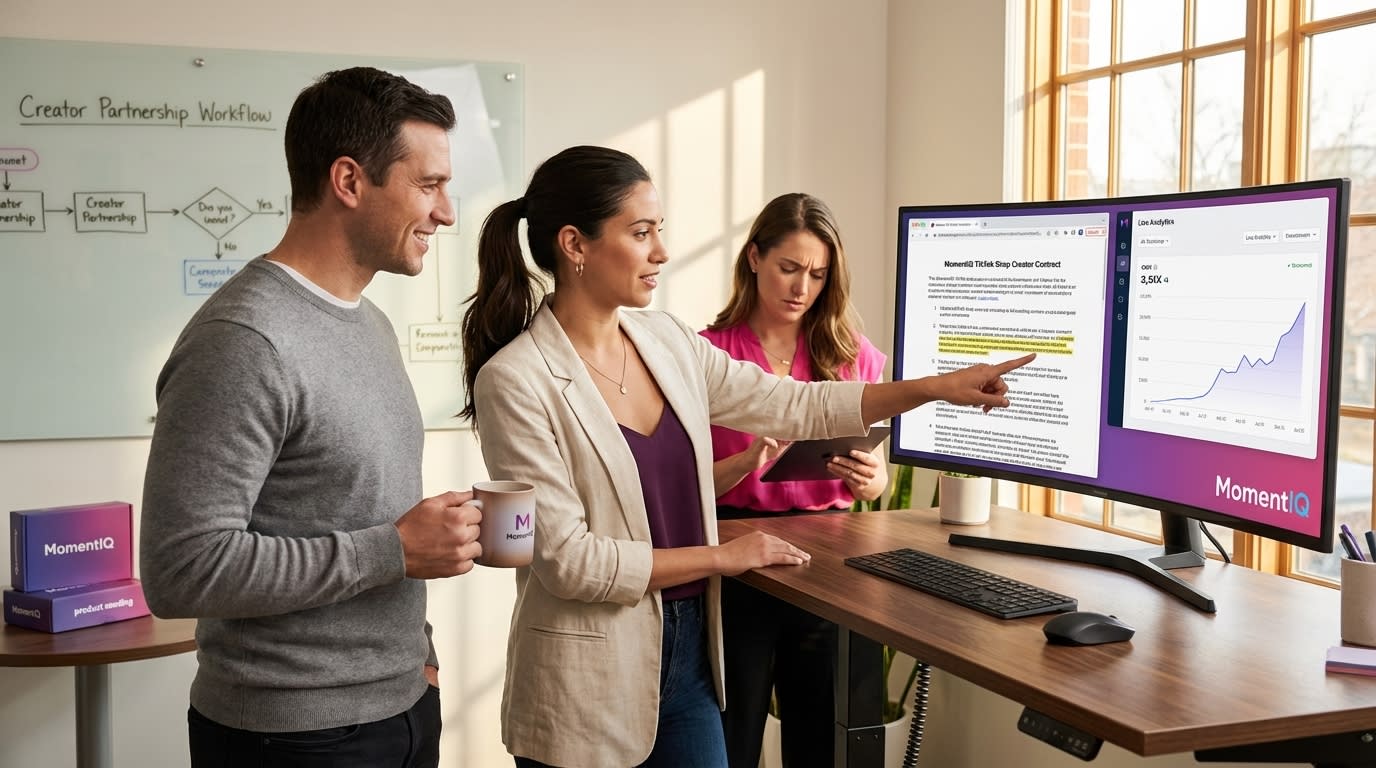
TikTok Shop isn't a brand awareness play with vanity metrics. It's a closed-loop commerce ecosystem where creators drive direct transactions, earn affiliate commissions in real time, and interact with your product listings, pricing, and inventory data.That changes everything about how contracts need to be structured.
Here's what traditional influencer agreements miss:
- Affiliate commission mechanics — TikTok Shop's native affiliate system creates a direct financial relationship between creator and seller that generic contracts don't address
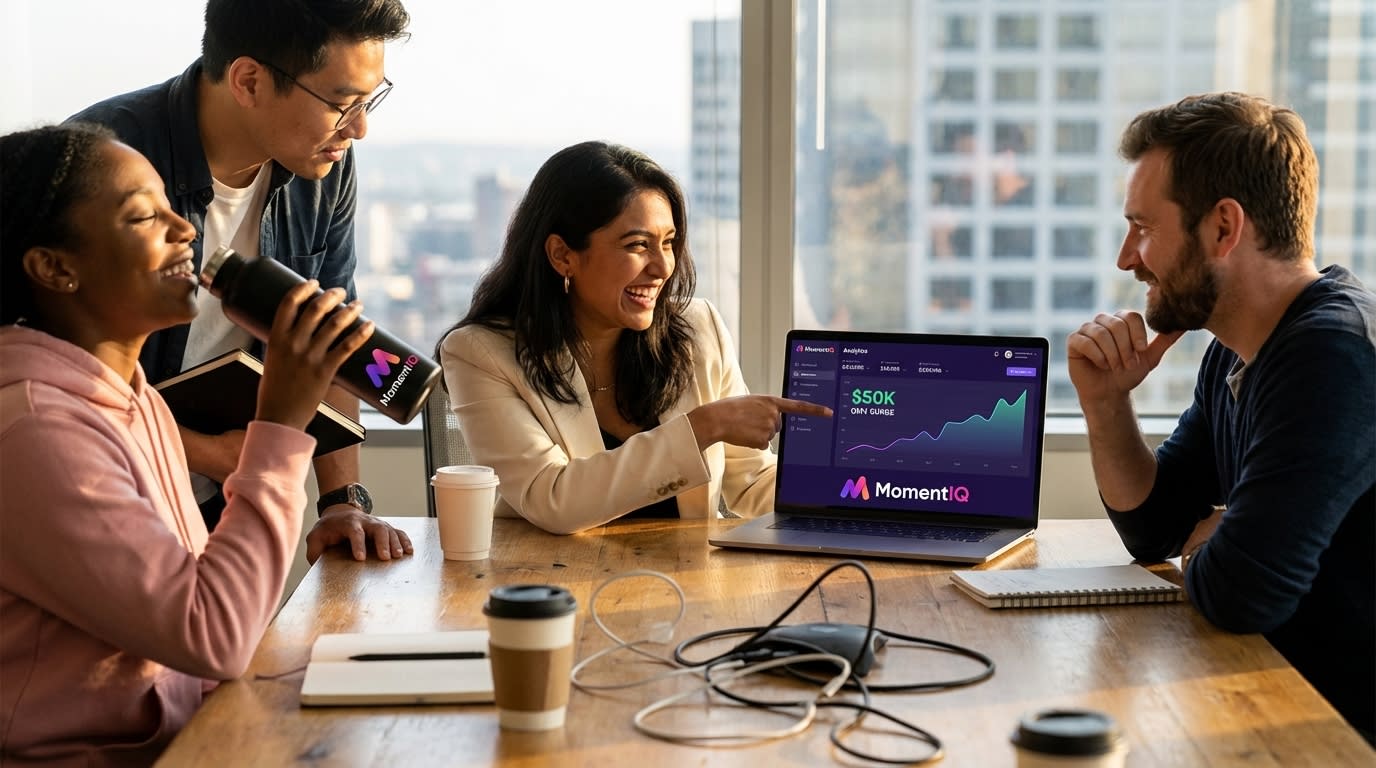
- Content-to-commerce attribution — when a creator's video drives $50K in GMV, who owns that content? Who can boost it? For how long?- Live shopping obligations — if your deal includes TikTok Shop LIVE sessions live shopping obligations, the deliverables, timing windows, and minimum stream durations need explicit terms
- Platform-specific compliance — TikTok's commerce policies (covered in our TikTok Shop Policies guide) layer on top of FTC requirements, creating dual compliance obligations
- Product seeding and inventory terms — when you're seeding product to 200+ creators per month, you need clear terms around product usage, return expectations, and resale prohibitions
According to a 2024 Statista report, the U.S. social commerce market is projected to exceed $80 billion by 2025, with TikTok Shop capturing an increasingly dominant share. The stakes are too high for informal agreements.
The brands winning on TikTok Shop aren't just finding better creators — they're structuring better deals. And that starts with contracts built for commerce, not clout.
The 9 Non-Negotiable Clauses in Every TikTok Shop Creator Contract Template
Whether you're onboarding your tenth creator or your thousandth, these are the clauses that separate protected brands from exposed ones.

1. Scope of Work and Deliverables
This sounds obvious, but vague deliverables are the #1 source of creator disputes on TikTok Shop.

Your contract needs to specify:
- Exact number of videos (e.g., 3 short-form videos, minimum 30 seconds each)
- Content format — product showcase, unboxing, tutorial, review, or TikTok Shop LIVE session
- Posting timeline — specific dates or windows, not "within a reasonable timeframe"
- Product tagging requirements — creator must tag the specific TikTok Shop product listing, not just mention the brand creator brief template
- Revision rounds — how many rounds of feedback before the creator posts
Red flag from the field: One home goods brand we've studied lost over $30K in seeded product because their agreements said "create content featuring the product" without specifying platform, format, or tagging. Half the creators posted on Instagram Stories instead of TikTok — generating zero TikTok Shop GMV.
2. Compensation Structure: The Hybrid Model That Actually Works
The days of flat-fee-only creator deals on TikTok Shop are numbered. The most effective TikTok Shop influencer agreement in 2025 uses a hybrid compensation model that aligns incentives between brand and creator.
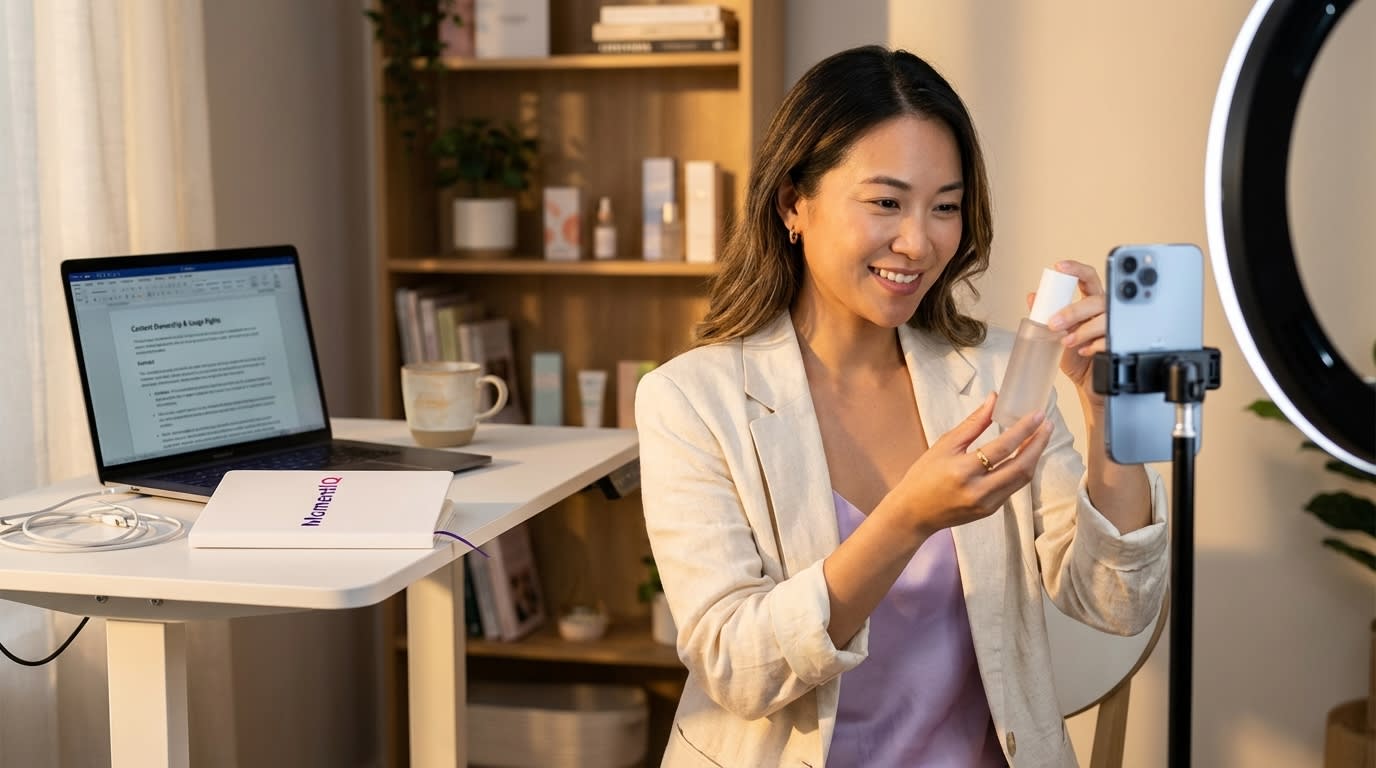
Here's the structure top-performing brands are using:
- Base fee — covers the creator's time and production costs (typically 30-50% of total potential compensation)
- Affiliate commission — standard TikTok Shop affiliate rate, typically 10-20% depending on category affiliate rates breakdown (see our affiliate rates breakdown for benchmarks)
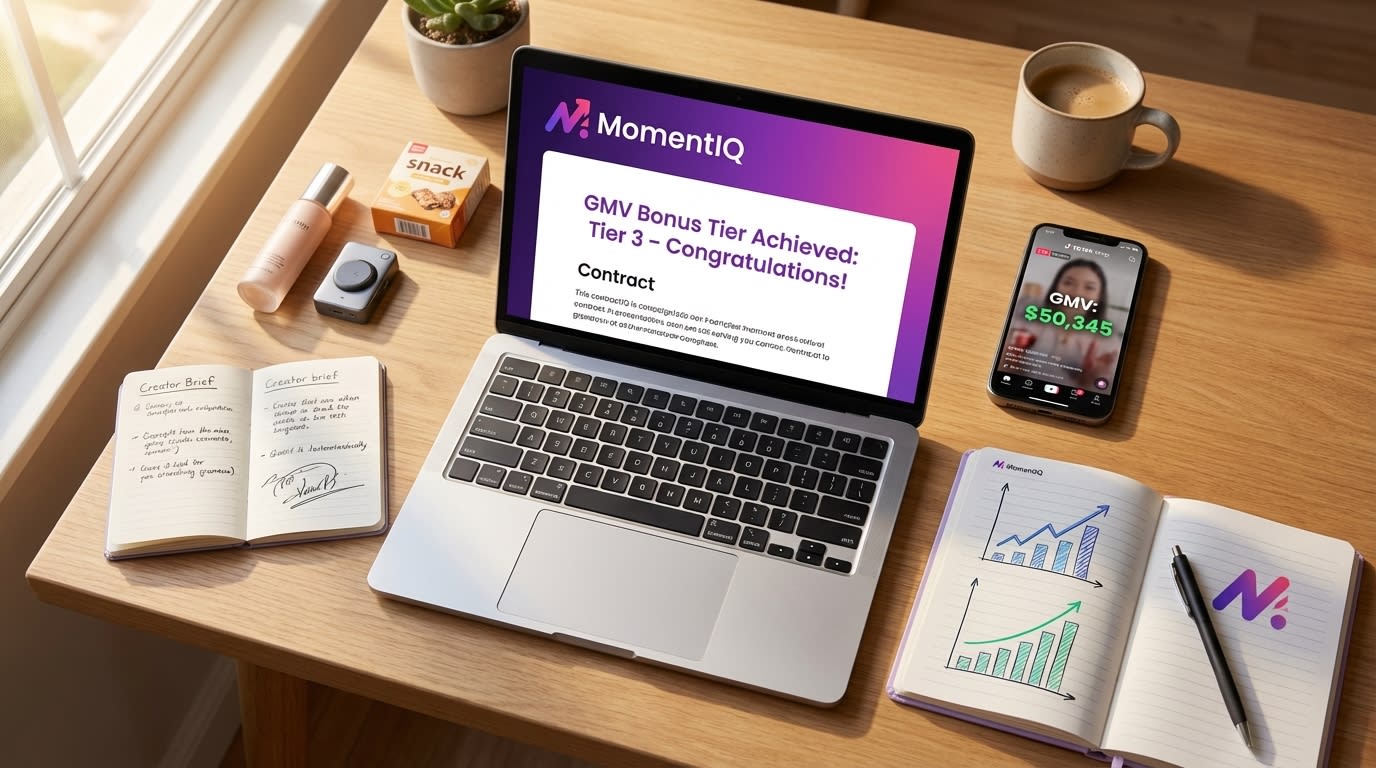
- Performance bonus tiers — escalating bonuses triggered at specific GMV thresholds
Example bonus tier structure:
| GMV Threshold | Bonus Payment |
|---|---|
| $5,000 | $250 |
| $15,000 | $750 |
| $50,000 | $2,500 |
| $100,000+ | $5,000 + renegotiation trigger |
Why this works: Creators have skin in the game. They don't just post and disappear — they optimize, reshoot, and actively push sales because their upside is uncapped. According to TikTok's 2024 Commerce Insights report, creators with performance-based compensation structures generate 2.3x more GMV per video than those on flat-fee deals.
Want to see how hybrid deal structures could transform your affiliate program's ROI? Talk to a Strategist — we'll model the exact compensation framework for your category and margin structure.
3. Content Ownership and Usage Rights
This is where brands get burned the most — and where the most money is at stake.

Your contract must explicitly address:
- Who owns the raw footage and final content — in most TikTok Shop deals, the creator retains ownership but grants the brand a license
- Usage license scope — can you use the content in Spark Ads? On your website? In email marketing? In retail displays? Each channel should be named
- License duration — 30 days? 90 days? In perpetuity? Longer licenses cost more but deliver dramatically better ROI when content performs
- Exclusivity window — can the creator promote competing products during or after the campaign?
- Right to boost/amplify — explicitly state that the brand can use the content as a Spark Ad or in Product Shopping Ads without additional approval
Critical nuance for TikTok Shop: When you boost a creator's organic video as a Spark Ad, you're spending real ad dollars amplifying their content. If you don't have written usage rights, the creator can revoke Spark Ad authorization at any time — killing your best-performing ad mid-flight.
A skincare brand working with MomentIQ discovered this the hard way before partnering with us: their top-performing Spark Ad (driving $8K/day in GMV) was pulled by the creator mid-campaign because the original agreement didn't include paid amplification rights. That single clause gap cost them an estimated $120K in lost revenue over the remaining campaign window.
4. FTC-Compliant Disclosure Language
The FTC updated its endorsement guidelines in 2023, and enforcement is accelerating. Your TikTok Shop creator contract must include specific disclosure requirements — not just a vague "comply with all applicable laws" clause.

Your contract should mandate:
- #ad or #sponsored must appear in the video caption — not buried in hashtags
- Verbal disclosure within the first 10 seconds of the video ("I partnered with [Brand] on this" or equivalent)
- No misleading claims — creators cannot make health, safety, or efficacy claims not supported by the brand
- TikTok's built-in branded content toggle must be activated when applicable
The penalty for non-compliance isn't just an FTC fine — it's TikTok Shop account suspension. TikTok's commerce policies are increasingly strict about undisclosed partnerships, and a single violation from one creator can trigger a review of your entire seller account.
5. Performance Clawback Triggers
This is the clause most brands are afraid to include — and the one that separates amateur programs from professional ones.
Performance clawbacks protect your investment when creators don't deliver. They're not punitive — they're accountability mechanisms that serious creators actually respect.
Common clawback triggers include:
- Non-posting — creator accepts product and payment but never publishes content (more common than you'd think — industry estimates suggest 15-25% of seeded creators never post)
- Late posting — content published outside the agreed window, missing a product launch or promotional event
- Deleted content — creator removes the video within the agreed display period (typically 90 days minimum)
- Fake engagement — if post-campaign analysis reveals bot activity or purchased views
- Unapproved content modifications — creator edits the video after brand approval, removing product tags or changing messaging
Structure the clawback as a tiered response:
- First violation → written notice and opportunity to cure within 48 hours
- Second violation → partial fee recovery (typically 50%)
- Material breach → full fee recovery plus product return
6. Exclusivity and Non-Compete Windows
If you're paying a creator to promote your vitamin C serum, you don't want them posting about a competitor's vitamin C serum three days later.

Your TikTok Shop influencer agreement should include:
- Category exclusivity window — typically 14-30 days before and after your campaign
- Clear category definition — "skincare" is too broad; "vitamin C facial serums sold on TikTok Shop" is enforceable
- Compensation for exclusivity — longer windows require higher fees; build this into your hybrid model
7. Indemnification and Liability
Your contract needs a mutual indemnification clause that protects both parties:

- Creator indemnifies brand against claims arising from the creator's own statements, actions, or content that deviates from approved messaging
- Brand indemnifies creator against claims arising from product defects, safety issues, or misleading product information provided by the brand
This isn't just legal boilerplate — it's essential risk management when creators are making direct product claims to millions of viewers.
8. Termination Clauses
Both parties need clear exit ramps:
- Termination for cause — material breach, brand safety violation, platform ban
- Termination for convenience — either party can exit with 7-14 days written notice
- Post-termination obligations — what happens to content already posted? What about unused product?
- Payment for completed work — if termination occurs mid-campaign, how is partial compensation calculated?
9. Dispute Resolution
Skip the litigation clause. For creator contracts under $50K, mandatory arbitration with a 30-day informal resolution period is faster, cheaper, and more practical.
Specify governing law (typically the brand's home state) and keep the resolution process simple enough that it's actually usable.
How to Structure TikTok Shop Creator Deals by Creator Tier
Not every creator gets the same contract. Your deal structure should scale with the creator's reach, track record, and strategic value.
Nano and Micro Creators (1K–50K followers)
- Compensation: Product seeding + affiliate commission only (no base fee)

- Contract complexity: Simplified 2-3 page agreement
- Usage rights: Perpetual license for organic and paid amplification
- Exclusivity: None or minimal (7 days)
- Best for: Volume-based product seeding campaigns
Mid-Tier Creators (50K–500K followers)
- Compensation: Small base fee ($200-$1,000) + affiliate commission + performance bonuses
- Contract complexity: Full agreement with all 9 clauses
- Usage rights: 90-day paid amplification license with renewal option
- Exclusivity: 14-21 day category exclusivity
- Best for: Consistent GMV drivers and Spark Ad content sourcing
Macro and Mega Creators (500K+ followers)
- Compensation: Significant base fee ($2,000-$15,000+) + enhanced affiliate rate + aggressive bonus tiers
- Contract complexity: Full agreement with additional negotiated terms, often reviewed by creator's management
- Usage rights: Negotiated per-channel, per-duration basis
- Exclusivity: 30+ day category exclusivity with compensation
- Best for: Tentpole launches, brand awareness + commerce hybrid campaigns
Here's the problem most brands hit: When you're scaling from 10 creators to 500+, managing three tiers of contracts manually becomes a full-time legal operation. This is exactly why brands partner with MomentIQ — our team has standardized contract frameworks for every creator tier, pre-negotiated at scale, so you can onboard hundreds of creators per month without your legal team becoming a bottleneck.
Red Flags: 5 Contract Mistakes That Cost TikTok Shop Brands Real Money
These aren't hypothetical scenarios. These are patterns we see repeatedly across the TikTok Shop ecosystem.

Red Flag #1: No Content Approval Process
What happens: Creator posts content with incorrect product claims, wrong pricing, or off-brand messaging. The video goes viral — with misinformation attached to your brand.
The fix: Include a mandatory pre-publication review window (24-48 hours) with clear approval/revision workflows.
Red Flag #2: Verbal-Only Agreements with Creator Managers
What happens: You negotiate terms with a creator's manager over a call. The manager agrees to 3 videos, 15% commission, and 60-day exclusivity. None of it is documented. The creator posts once and promotes a competitor the following week.
The fix: Every term discussed must be memorialized in the written agreement. Verbal modifications should be explicitly void unless confirmed in writing.
Red Flag #3: No Minimum Performance Standards
What happens: You pay a $5,000 base fee. The creator posts a 12-second video with no product tag, no hook, and no call to action. Technically, they "delivered" the content.
The fix: Define minimum quality standards — minimum video length, required elements (product tag, verbal CTA, product demonstration), and minimum display period.
Red Flag #4: Unlimited Usage Rights Without Compensation
What happens: Your contract claims perpetual, unlimited, worldwide usage rights for a $300 deal. The creator's manager flags it, negotiations stall, and you lose 3 weeks of campaign momentum.
The fix: Match usage rights to compensation. Nano creators will grant broad rights for product + commission. Macro creators will negotiate — and that's reasonable. Build usage right tiers into your standard templates so negotiations don't derail timelines.
Red Flag #5: No IP Protection for Your Brand Assets
What happens: You send a creator your brand guidelines, logo files, and product photography for reference. They use your logo in unauthorized contexts or share assets with other brands.
The fix: Include a brand asset license clause that restricts use to the specific campaign, requires deletion of all brand materials post-campaign, and prohibits sharing with third parties.
The Scale Problem: Why DIY Contract Management Breaks at 50+ Creators
Let's address the elephant in the room.
"We can handle contracts ourselves. We don't need an agency for legal stuff."
At 10 creators? Absolutely. Your marketing coordinator can manage the relationships, customize agreements, and track deliverables in a spreadsheet.
At 50 creators? It's strained but survivable.
At 200+ creators — the scale required to consistently generate six-figure monthly GMV on TikTok Shop — DIY contract management collapses. Here's why:
- Negotiation bottlenecks: Each mid-tier and macro creator negotiates different terms. Without standardized frameworks, every deal is a custom project.
- Compliance tracking: With 200 active creators, who's monitoring FTC disclosure compliance across hundreds of videos per month?
- Renewal management: Creator contracts expire, performance bonuses trigger, exclusivity windows close. Missing these deadlines costs money.
- Dispute resolution: Even a 5% dispute rate means 10 active disputes at any given time — each requiring documentation review and communication.
According to eMarketer's 2024 Creator Economy report, brands managing more than 100 creator relationships in-house spend an average of 22 hours per week on administrative tasks — time that should be spent on strategy and optimization.
This is the operational reality that drives brands to MomentIQ. As a TikTok Shop Partner of the Year, MomentIQ doesn't just find creators — we manage the entire contractual infrastructure at scale. Our proprietary algorithmic creator matching system identifies the right creators, and our standardized agreement frameworks get them onboarded and posting in days, not weeks.
One supplement brand partnered with MomentIQ and scaled from $18K to $420K in monthly GMV within 90 days — in part because eliminating contract bottlenecks allowed them to onboard 15x more creators per month than their previous in-house process.
Still think you can manage 200+ creator contracts with a spreadsheet? Talk to a Strategist and see how our managed creator infrastructure eliminates the operational drag that's capping your growth.
Hybrid Compensation Deep Dive: The Math Behind Performance-Aligned Deals
Let's run the numbers on why hybrid compensation structures outperform flat-fee deals on TikTok Shop.
Scenario A: Flat-Fee Deal
- Payment: $2,000 for 3 videos
- Creator posts 3 adequate videos, collects payment, moves on
- Average GMV per video: $1,800
- Total GMV: $5,400
- Effective cost per dollar of GMV: $0.37
Scenario B: Hybrid Deal (MomentIQ Framework)
- Base fee: $800 (40% of flat-fee equivalent)
- Affiliate commission: 15% on all attributed sales
- Performance bonus: $500 at $10K GMV, $1,500 at $25K GMV
- Creator optimizes content, reposts top performers, actively engages with comments to drive conversions
- Average GMV per video: $4,200 (2.3x improvement — consistent with TikTok Commerce data)
- Total GMV: $12,600
- Total creator compensation: $800 base + $1,890 commission + $500 bonus = $3,190
- Effective cost per dollar of GMV: $0.25
The hybrid model costs 60% more in total creator compensation but generates 133% more GMV — resulting in a 32% lower cost per dollar of revenue.
This is why the hybrid model is becoming the industry standard for serious TikTok Shop sellers. And it's why your contracts need to be structured to support it — with clear bonus trigger definitions, attribution methodology, and payment timing.
FTC Compliance in 2025: What Your TikTok Shop Creator Contract Must Include
The FTC issued 700+ warning letters to creators and brands in 2023-2024 for inadequate disclosure. Enforcement is not theoretical — it's active and accelerating.
Your TikTok Shop influencer agreement needs these specific compliance provisions:
- Clear and conspicuous disclosure — the word "ad" or "sponsored" must be unavoidable to viewers, not buried below the fold or hidden in a hashtag string
- Platform-native tools — creators must use TikTok's branded content toggle when available
- No deceptive formats — creators cannot present sponsored content as organic discovery ("I randomly found this product")
- Substantiation requirements — any product claims must be pre-approved by the brand and supported by evidence
- Record retention — brand must retain copies of all sponsored content and disclosure documentation for a minimum of 3 years
- Creator acknowledgment — the contract should include a section where the creator acknowledges they understand and will comply with FTC guidelines, with a brief summary of key requirements
Pro tip: Include the exact disclosure language you want creators to use as an appendix to the contract. Don't leave it to interpretation. Provide 3-4 approved disclosure phrases they can choose from.
Why "We've Tried Agencies Before" Doesn't Apply to MomentIQ
We hear this objection constantly. And honestly? It's usually valid.
Most agencies that claim to manage TikTok Shop creator programs are actually Instagram influencer agencies that bolted on TikTok as a line item. They don't understand TikTok Shop's affiliate mechanics, they don't have relationships with commerce-focused creators, and they definitely don't have standardized contract frameworks built for TikTok Shop's unique requirements.
Here's what makes MomentIQ fundamentally different:
- TikTok-native from day one — we're not an Instagram agency that added TikTok. We're a TikTok Shop growth agency, period.
- TikTok Shop Partner of the Year and TikTok Marketing Partner — these aren't self-awarded titles. They're official recognitions from TikTok based on performance data.
- Algorithmic creator matching — our proprietary system matches your brand with creators based on conversion data, not follower counts. We analyze audience purchase behavior, content-to-commerce rates, and category affinity.
- Standardized contract infrastructure — we've processed thousands of creator agreements. Our templates are battle-tested, legally reviewed, and optimized for every creator tier and deal structure.
- Full-stack commerce support — from product seeding logistics to content strategy to paid amplification to contract management. One partner, zero gaps.
A pet care brand came to MomentIQ after cycling through two agencies that delivered impressive view counts but negligible GMV. Within 60 days of switching, their TikTok Shop revenue increased 340% — not because we found "better" creators, but because we structured deals that incentivized commerce, not content.
Your Contract Standardization Checklist for 2025
Before you onboard another creator, audit your current agreements against this checklist:
- Scope of work specifies exact deliverables, formats, and posting dates
- Hybrid compensation includes base fee, affiliate commission, and performance bonus tiers
- Content ownership clearly defines who owns what and for how long
- Usage rights explicitly cover Spark Ads, Product Shopping Ads, and all paid amplification
- FTC disclosure requirements are specific, not generic
- Performance clawbacks protect against non-delivery and content deletion
- Exclusivity windows are defined by specific product category, not broad industry
- Indemnification is mutual and reasonable
- Termination clauses include clear exit ramps and post-termination obligations
- Dispute resolution uses arbitration, not litigation
- Brand asset protection restricts use and requires post-campaign deletion
- Minimum quality standards define what "acceptable content" actually means
If you checked fewer than 10 of these boxes, your creator program has significant legal exposure. And as you scale, that exposure compounds.
The Window Is Closing: Why Contract Infrastructure Matters Now
TikTok Shop is projected to facilitate over $17.5 billion in U.S. GMV by the end of 2025, according to industry forecasts. The brands building scalable creator programs now — with proper legal infrastructure — are the ones who will own this channel for years.
Here's what's happening right now:
- Creator expectations are professionalizing. Top TikTok Shop creators increasingly have managers and lawyers reviewing agreements. Brands with sloppy contracts lose access to the best talent.
- FTC enforcement is intensifying. The cost of non-compliance is rising from warning letters to actual fines and platform penalties.
- Competition for creators is exploding. According to TikTok's own data, the number of sellers on TikTok Shop grew over 200% in 2024. Every one of them is competing for the same creator pool.
- Your competitors are already scaling. While you're manually negotiating one contract at a time, brands working with partners like MomentIQ are onboarding 50-100 creators per week with standardized agreements.
The compounding cost of delay isn't just lost revenue — it's lost creator relationships, lost algorithmic advantage, and lost market position that becomes exponentially harder to recover.
Stop Letting Legal Bottlenecks Cap Your TikTok Shop Growth
You didn't start selling on TikTok Shop to become a contract negotiation specialist. You started because the commerce opportunity is massive — and it is.
But the brands that capture that opportunity at scale are the ones who treat creator contracts as growth infrastructure, not administrative afterthought.
Here's your next step: Talk to a Strategist. Our strategists will review your current creator program, identify contract gaps that are costing you money, and show you exactly how our standardized agreement frameworks and algorithmic creator matching can help you scale from wherever you are now to consistent six-figure monthly GMV — without the legal headaches.
The brands building their contract infrastructure today will dominate TikTok Shop tomorrow. The only question is whether you'll be one of them.
See your custom TikTok Shop scaling roadmap → bemomentiq.com