TikTok Shop Return & Refund Policy Playbook How to Craft
Learn how to craft buyer-friendly TikTok Shop return & refund policies in 2025 that cut disputes by 60%, build trust, and drive repeat purchases.
Here's a stat that should keep every TikTok Shop seller up at night: 72% of consumers check a return policy before making their first purchase, according to a 2024 National Retail Federation report. On TikTok Shop — where impulse buying drives the majority of transactions — that number might actually be higher.
- Treat your return policy as a conversion lever, not a cost center — top shops cut chargebacks by 60% and boosted repeat purchases by 35%.
- Keep your return process simple and visible, since 72% of consumers check the return policy before making their first purchase.
- Reduce your dispute rate below 2% to avoid TikTok's algorithmic penalties that limit your visibility in For You feeds and Shop tab.
- Process standard returns quickly instead of forcing disputes, which cost 3-5x more when factoring in penalties, lost inventory, and buyer replacement.
- Design policies specifically for impulse buyers — 67% of TikTok users buy unplanned items, making buyer's remorse a built-in business reality.
Yet most sellers treat their TikTok Shop return policy like an afterthought. They copy-paste a generic template, bury it in fine print, and then wonder why their dispute rate is climbing, their shop health score is tanking, and buyers never come back for a second order.
Here's what the top-performing shops understand that you probably don't: your return and refund policy isn't a cost center — it's a conversion lever. The brands crushing it on TikTok Shop in 2025 are using strategic return and refund frameworks to reduce chargebacks by up to 60%, increase repeat purchase rates by 35%, and build the kind of buyer trust that compounds into six- and seven-figure monthly GMV.
This playbook reverse-engineers exactly how they do it. And if you want a team that's already built these frameworks for hundreds of brands, Talk to a Strategist — we'll show you exactly where your current policies are leaking revenue.
Why Your TikTok Shop Return Policy Is Quietly Killing Your Growth

Let's be blunt: TikTok Shop is not Amazon.The buyer psychology is fundamentally different, and your return and refund policies need to reflect that.
TikTok Shop purchases are overwhelmingly impulse-driven. A 2024 TikTok Commerce report found that 67% of TikTok users have purchased something they weren't planning to buy after seeing it in their feed. That's the magic of the platform — but it also means buyer's remorse is built into the business model.
When a customer impulse-buys a $34 serum because a creator made it look life-changing, and the product arrives looking different than expected, one of three things happens:
- Best case: They return it through your smooth, clear process, get a fast refund, and think, "That brand was easy to deal with — I'll buy from them again."
- Bad case: They can't figure out your return process, open a dispute, and your shop health score takes a hit.
- Worst case: They file a chargeback with their bank, you lose the product AND the revenue, and TikTok flags your account.
Most sellers are stuck in scenarios two and three. And they don't even realize it's their policy — not their product — that's the problem.
The Hidden Cost of Poor Return Policies on TikTok Shop

The numbers tell a brutal story:
- Dispute resolution costs the average TikTok Shop seller 3-5x more than processing a standard return, factoring in platform penalties, lost inventory, and customer acquisition costs to replace that buyer.- Shops with dispute rates above 2% face reduced algorithmic visibility, meaning your products show up less in For You feeds and Shop tab recommendations.- According to Statista, 84% of online shoppers won't return to a store after a poor return experience — and on TikTok Shop, where brand loyalty is still forming, that number is even more punishing.
Your TikTok Shop refund policy isn't just about handling problems. It's about preventing them — and turning the ones that do happen into repeat-purchase opportunities.
TikTok Shop's 2025 Return & Refund Framework: What You Need to Know

Before we get into strategy, let's ground ourselves in TikTok Shop's current platform requirements.Getting this wrong doesn't just hurt conversions — it can get your shop suspended.
TikTok Shop's Baseline Requirements
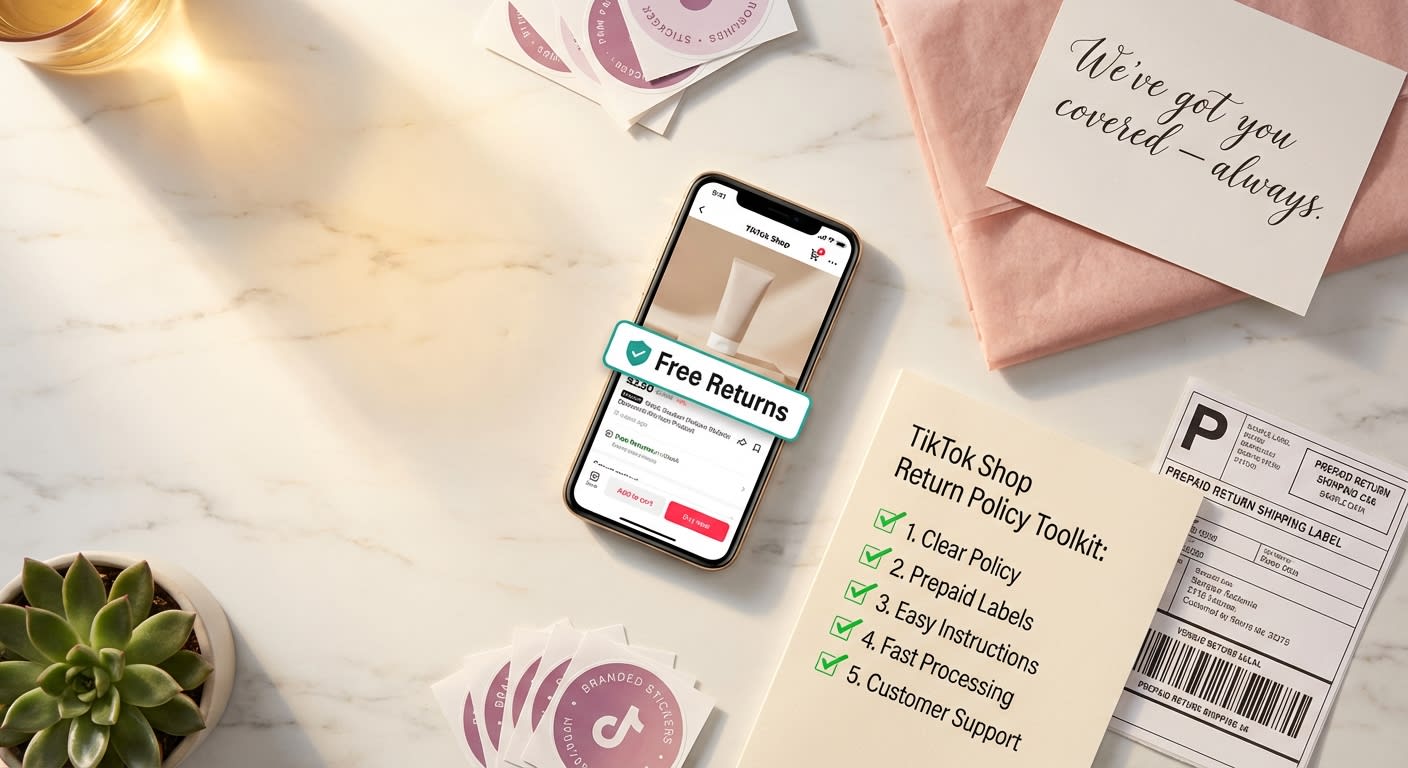
As of 2025, TikTok Shop mandates:
- Minimum 15-day return window for most product categories
- "Free returns" badge eligibility for shops that offer prepaid return labels (this badge increases conversion rates by an estimated 18-24%, per TikTok's internal commerce data)
- 72-hour refund processing requirement after receiving returned items
- Automatic refund triggers if sellers don't respond to return requests within 48 hours
- Mandatory acceptance of returns for items that arrive damaged, defective, or significantly different from the listing
Here's where most sellers go wrong: they treat these as the ceiling instead of the floor. Meeting TikTok's minimum requirements keeps you compliant. Exceeding them is what builds the trust that drives repeat purchases and higher AOV.

The Compliance vs. Conversion Gap

TikTok's platform requirements exist to protect buyers. Your strategy should exist to turn those protections into competitive advantages.
For example, TikTok requires a 15-day return window. But our data at MomentIQ shows that shops offering 30-day return windows see 22% higher conversion rates and only a 3% increase in actual return volume. The psychology is simple: a longer window reduces purchase anxiety without meaningfully increasing returns, because the urgency to return fades as customers live with the product.
This is the kind of counterintuitive insight that separates brands doing $20K/month from brands doing $200K/month.

The 5-Layer Return Policy Framework That Top Shops Use

After analyzing return and refund data across hundreds of TikTok Shop accounts, we've identified a five-layer framework that consistently reduces disputes by 40-60% while increasing repeat purchase rates.
Layer 1: Pre-Purchase Clarity (The Dispute Prevention Engine)

The best return policy is one that never gets used — because the customer knew exactly what they were buying.
Actionable steps:
- Add return policy highlights directly to your product listing copy. Don't make buyers hunt for it. A simple line like "30-day hassle-free returns • Free return shipping • Full refund guaranteed" near your buy button can increase conversion by 12-18%.
- Use your product videos to set accurate expectations. Show true-to-life colors, real sizing on different body types, and honest demonstrations. Overpromising in content is the #1 driver of returns on TikTok Shop.
- Create a pinned FAQ video on your TikTok profile addressing the top 3 reasons customers return your specific product category.
Why this matters for your bottom line: According to eMarketer, 30% of all products ordered online are returned, compared to just 8.89% in brick-and-mortar stores. The gap is almost entirely driven by expectation mismatches. Close the gap, and you close the return rate.

Layer 2: Frictionless Return Initiation

When a customer decides to return something, every second of friction increases the likelihood they'll skip the return process entirely and go straight to a dispute or chargeback.
Best practices from top-performing shops:
- Enable one-click return requests through TikTok Shop's built-in return system
- Provide prepaid return labels (yes, it costs money — but it costs less than a dispute)
- Send a proactive message within 2 hours of a return request acknowledging it and outlining next steps
- Offer a "keep it" threshold for items under a certain value (typically $10-15) where the refund cost exceeds the return shipping cost
That last point is a game-changer. One health and wellness brand we worked with implemented a $12 "keep it" threshold and saw their dispute rate drop by 47% in 30 days — because customers who would have filed disputes out of frustration with the return process simply got their refund and moved on. Many of them reordered within 60 days.

Layer 3: Strategic Refund Options (Refund ≠ Revenue Loss)
Here's where most sellers think too small. A refund doesn't have to mean lost revenue. It can mean redirected revenue.
The refund option hierarchy that maximizes retention:
- Store credit + bonus (first offer): "We'll refund 110% of your purchase as store credit." This feels generous, keeps the money in your ecosystem, and costs you only 10% more than a full cash refund — while retaining the customer.
- Exchange for a different product/size/color (second offer): Reduces return shipping costs and keeps the sale alive.
- Full cash refund (always available): Never make this hard to find. Hiding it destroys trust and triggers disputes.
The data backs this up: Shops that offer store credit with a bonus as the first refund option see 28% of return-initiating customers choose store credit over cash refund, effectively retaining revenue that would have been lost entirely.

Layer 4: Post-Return Recovery Sequences
The return is processed. The refund is issued. Most sellers stop here. Top sellers are just getting started.
- Send a follow-up message 24 hours after refund thanking the customer and asking for feedback on why they returned
- Use that feedback to improve listings (this is free market research — don't waste it)
- Trigger a personalized re-engagement offer 7-14 days later based on their return reason
- If they returned for sizing, send a sizing guide with a 15% discount on a re-order
- If they returned for quality concerns, send a video showing your quality process with a goodwill credit
This post-return recovery sequence is where lifetime value is built. Brands that implement structured post-return sequences see 19-24% of return customers make a second purchase within 90 days, compared to less than 5% for brands with no follow-up.

Layer 5: Data-Driven Policy Optimization
Your return policy should never be static. It should evolve monthly based on actual data.
Key metrics to track:
- Return rate by product (identify problem SKUs before they tank your shop score)
- Return rate by creator (some creator content sets unrealistic expectations — this data tells you which ones)
- Return reason distribution (sizing? quality? expectation mismatch? each requires a different fix)
- Time-to-return (if most returns happen within 48 hours, your listing is the problem; if they happen at day 12-15, your product might be)
- Dispute-to-return ratio (this is your "policy friction" score — high ratio means your return process is too hard)
This is exactly the kind of granular analytics that MomentIQ's proprietary data platform surfaces for our partner brands. We don't just help you scale GMV — we help you keep it by identifying the return and dispute patterns that silently erode your margins.
How Return Policy Quality Directly Impacts Your TikTok Shop Algorithm Performance

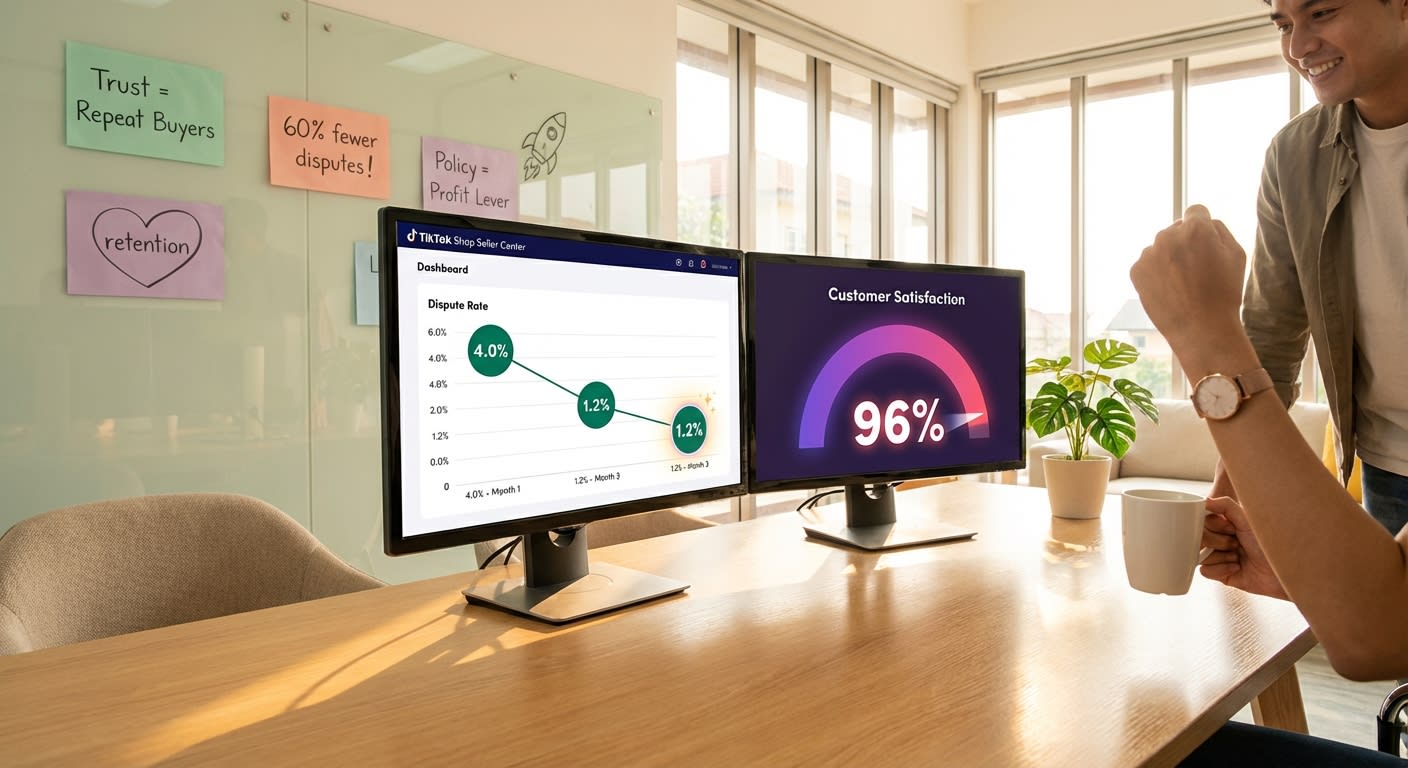
Here's something most sellers don't realize: TikTok Shop's algorithm factors your shop health score — including dispute rates and return satisfaction — into your product visibility.
This means a poor return policy doesn't just cost you money on individual transactions. It systematically reduces how many eyeballs see your products across the entire platform.

The Algorithmic Feedback Loop
- Poor return policy → Higher dispute rate → Lower shop health score
- Lower shop health score → Reduced product visibility in For You feed and Shop tab
- Reduced visibility → Lower GMV → Higher CAC to compensate
- Higher CAC → Tighter margins → Even less investment in return experience
This is the death spiral that kills TikTok Shop brands. And it starts with something as "boring" as your refund policy.
The reverse is equally powerful: Shops with dispute rates below 0.5% and return satisfaction scores above 90% receive what amounts to free algorithmic distribution — their products surface more frequently, their creators' content gets boosted, and their cost per acquisition drops.
One home goods brand we partnered with saw their organic product impressions increase by 340% within 60 days of overhauling their return policy and bringing their dispute rate from 3.2% down to 0.4%. They didn't change their ad spend. They didn't change their products. They changed their return policy.

Category-Specific Return Policy Strategies for TikTok Shop
Not all products are created equal when it comes to returns. Here's how to tailor your TikTok Shop refund policy best practices by category:
Beauty & Skincare
- Offer a "try it" guarantee (14-day trial period for opened products)
- Provide partial refunds for opened items rather than refusing returns entirely
- Include shade-matching guides and skin type quizzes in your listing to prevent color/formula mismatches
- Return rate benchmark: 8-12% (if you're above this, your content is overpromising)
Apparel & Fashion
- Size exchange should be free and automatic — this is the #1 return reason and the easiest to solve
- Include detailed sizing charts with model measurements in every listing
- Consider a "fit guarantee" that covers exchange shipping both ways
- Return rate benchmark: 15-20% (industry standard for online apparel; focus on exchanges over refunds)

Electronics & Gadgets
- Extend your return window to 30 days — buyers need time to test functionality
- Offer video troubleshooting before accepting returns (many "defective" returns are user error)
- Clearly distinguish between refund-eligible issues and warranty claims
- Return rate benchmark: 5-8%
Health & Supplements
- "Empty bottle" guarantees build massive trust — offer a full refund even if the product is used
- This sounds insane, but the math works: fewer than 4% of customers actually use this, and the conversion lift from advertising it far exceeds the cost
- Return rate benchmark: 3-6%
"We Can Handle This Ourselves" — Why DIY Return Management Breaks at Scale
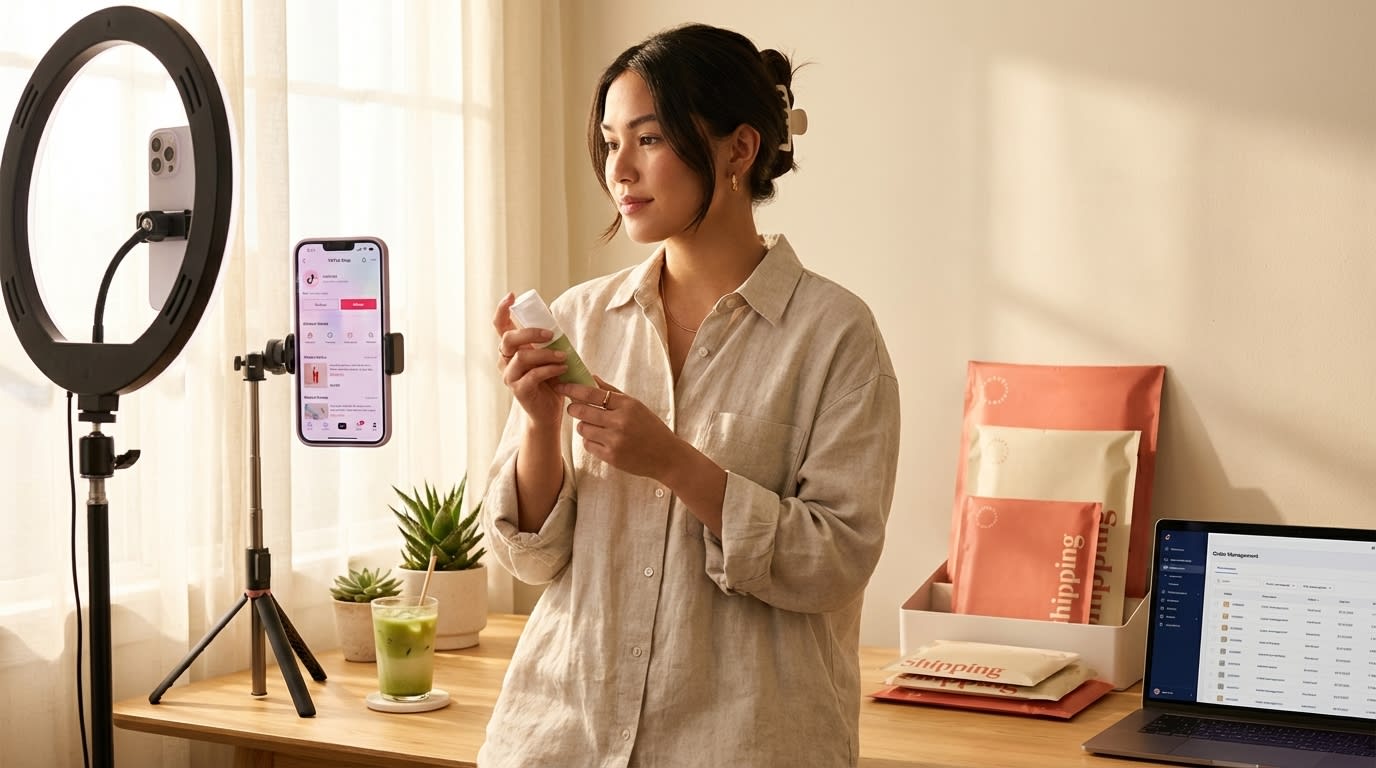
If you're doing $10K-$20K/month on TikTok Shop, you can probably manage returns manually. You're handling maybe 50-100 return requests per month. It's annoying but manageable.
But here's what happens when you start scaling — and if your TikTok Shop strategy is working, scaling happens fast:
- At $50K/month: You're processing 200-400 returns. Response times start slipping. Disputes increase.
- At $100K/month: You need a dedicated person just for returns. That's $4,000-$6,000/month in labor, plus the cost of mistakes.
- At $250K+/month: You need systems, automation, and data analysis to identify patterns. Manual management becomes a liability that threatens your shop health score.

This is where "we don't have the budget for an agency" stops making sense. The cost of not having expert systems in place — in disputes, chargebacks, lost customers, and algorithmic penalties — far exceeds the investment in getting it right.
One supplement brand came to MomentIQ with a 4.1% dispute rate that was actively suppressing their product visibility. Within 90 days, we helped them overhaul their return framework, optimize their creator content to set better expectations, and implement automated post-return recovery sequences. Their dispute rate dropped to 0.6%, their repeat purchase rate increased by 31%, and they scaled from $18K to $420K/month — not despite their return policy investment, but because of it.
Want to see what that kind of transformation looks like for your brand? Talk to a Strategist and we'll audit your current return and dispute data for free.
The Return-Creator Connection: How Your Policy Affects Affiliate Performance
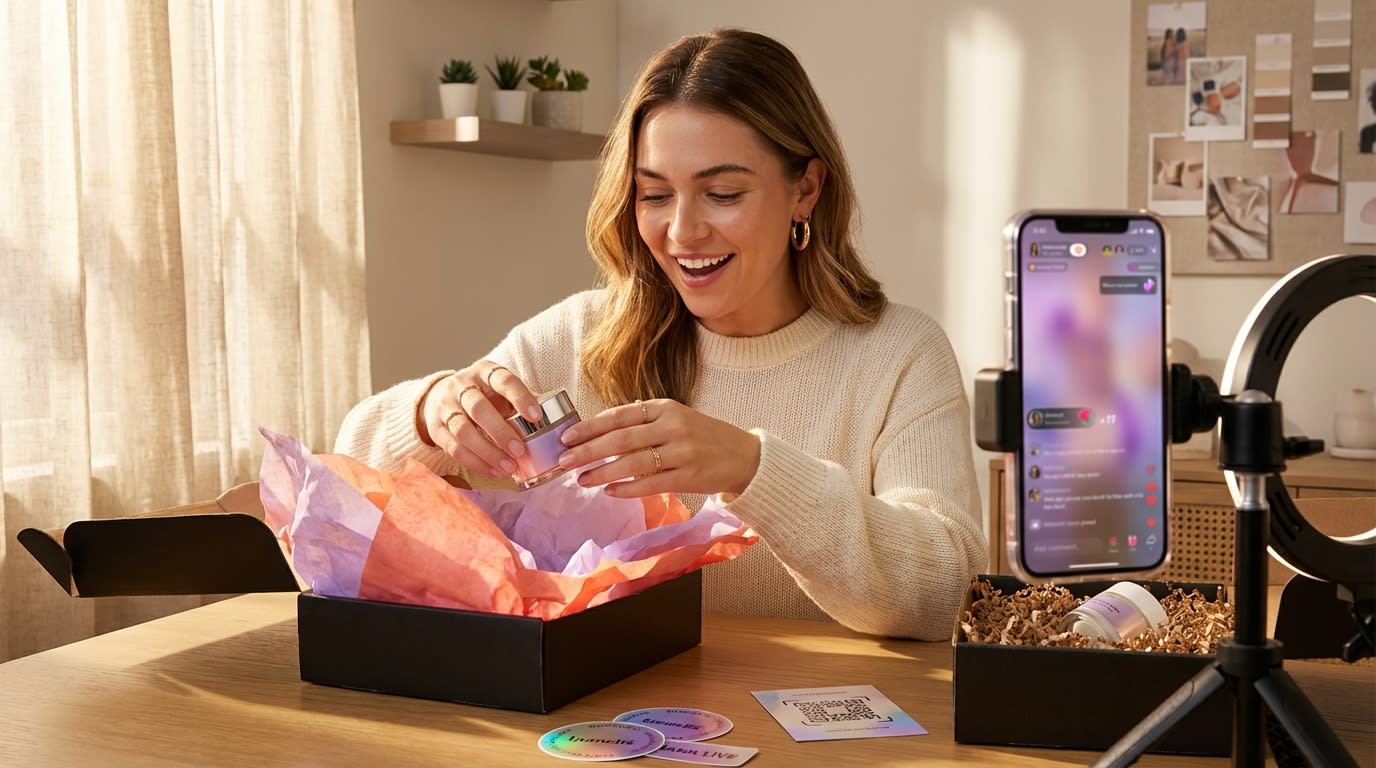
Here's an angle almost no one talks about: your return policy directly impacts your ability to recruit and retain top-performing TikTok Shop creators.
Think about it from the creator's perspective. They earn commissions on completed sales. If your return rate is high, their effective commission rate drops. If buyers are leaving negative reviews because of return friction, creators don't want their name associated with your brand.
Top-tier creators actively check a brand's return policy and shop rating before accepting affiliate partnerships. A shop with a 4.8-star rating and a "hassle-free returns" badge will attract 3x more creator applications than a shop with a 4.2-star rating and buried return terms.

This creates another compounding loop:
- Great return policy → Higher shop rating → Better creators apply → Better content → Higher conversion → More GMV
- Poor return policy → Lower shop rating → Creators avoid you → Mediocre content → Lower conversion → Stagnant GMV
If you've been struggling with low affiliate acceptance rates or creator ghosting, your return policy might be the root cause you've never considered.
This is precisely why MomentIQ's approach to TikTok Shop growth is full-funnel. We don't just match you with creators through our proprietary algorithmic system — we ensure every touchpoint of the buyer experience, including returns, is optimized to keep those creators performing and those customers coming back.
Your TikTok Shop Return Policy Audit Checklist

Use this checklist to score your current policy. If you can't check at least 8 of these 12 boxes, your return policy is actively costing you revenue:
- Return window is 30 days or longer
- Return policy highlights are visible on product listing pages
- Free return shipping is offered (or prepaid labels provided)
- Return requests can be initiated in 2 clicks or fewer
- All return requests receive a response within 2 hours
- Store credit with a bonus is offered as the first refund option
- A "keep it" threshold exists for low-value items
- Refunds are processed within 48 hours of receiving returned items
- A post-return follow-up sequence is automated
- Return data is analyzed weekly by product, creator, and reason
- Creator content is reviewed quarterly for expectation-setting accuracy
- Dispute rate is below 1%
Scored below 8? That's not a failure — it's an opportunity. The brands that fix these gaps now will own the algorithmic advantage that latecomers can't replicate. TikTok Shop is still in its growth phase, and the trust signals you build today compound into the market position you hold tomorrow.
The Window Is Closing: Why 2025 Is the Year to Get This Right

TikTok Shop generated an estimated $33.8 billion in global GMV in 2024, according to industry reports, with projections showing 50%+ growth in 2025. The platform is actively investing in commerce infrastructure, buyer protections, and seller tools.
But here's the thing about fast-growing platforms: the rules tighten as the market matures. TikTok is already raising the bar on seller performance metrics. Dispute rate thresholds are getting stricter. Shop health score requirements for premium placement are increasing. The "Free Returns" badge — once a nice-to-have — is becoming a de facto requirement for competitive visibility.
Brands building bulletproof return frameworks now are locking in advantages that will be table stakes within 12 months. The question isn't whether you need a strategic return policy — it's whether you'll build one proactively or be forced to scramble when TikTok tightens enforcement.
Your competitors aren't waiting. According to TikTok's 2024 Commerce Report, shops that earned the "Excellent" shop health rating grew GMV 4.2x faster than shops rated "Good" or below. Return and dispute metrics are the fastest lever you can pull to move from "Good" to "Excellent."

Why MomentIQ's Approach to TikTok Shop Growth Includes Return Strategy
Most agencies will help you find creators and run ads. That's the easy part.
The hard part — the part that separates brands doing $50K/month from brands doing $500K/month — is building the operational infrastructure that sustains growth. Return policies. Dispute management. Creator content quality control. Post-purchase experience optimization.
This is what makes MomentIQ different from every generic influencer agency pitching TikTok Shop services:

- We're a TikTok Shop Partner of the Year and TikTok Marketing Partner — not a social media agency that added TikTok to their service page last quarter.
- Our proprietary algorithmic creator matching doesn't just find creators who drive views — it identifies creators whose content sets accurate product expectations, directly reducing return rates.
- Our full-funnel commerce support includes return policy optimization, shop health score management, and post-purchase experience design — because GMV means nothing if 20% of it walks back out the door.
- Our data analytics platform surfaces return patterns by SKU, creator, and content type so you can fix problems before they become crises.
If you've tried agencies before and been burned — if they promised scale and delivered spreadsheets — we get it. That's exactly why we built a model where our success is tied to your GMV growth, not just your ad spend.
How to Handle TikTok Shop Returns and Refunds in 2025: The Action Plan
Let's distill everything into a 30-day action plan you can start implementing today:
Week 1: Audit & Baseline
- Pull your current return rate, dispute rate, and return reason data from TikTok Seller Center
- Score yourself against the 12-point checklist above
- Identify your top 3 most-returned products and analyze why
Week 2: Policy Overhaul
- Extend your return window to 30 days
- Implement a store credit + 10% bonus as the default refund option
- Set up a "keep it" threshold for items under $12-15
- Add return policy highlights to all product listings
Week 3: Process Optimization
- Set up automated return request acknowledgment (within 2 hours)
- Create prepaid return label system
- Build a post-return follow-up sequence (thank you → feedback request → re-engagement offer)
Week 4: Creator & Content Alignment
- Review your top creators' content for expectation-setting accuracy
- Flag any content that overpromises on results, sizing, or appearance
- Provide creators with updated product talking points that reduce return triggers
- Begin weekly return data reviews
This four-week sprint can reduce your dispute rate by 40-60% and set the foundation for sustainable, scalable growth. But if you want to accelerate the timeline — and have a team of TikTok Shop experts handle the heavy lifting while you focus on product and growth — Talk to a Strategist.
We'll analyze your current shop health data, identify the specific return and dispute patterns costing you money, and build a custom roadmap to turn your return policy from a cost center into a growth engine.
The Bottom Line: Your Return Policy Is Your Growth Policy
Every TikTok Shop seller obsesses over the top of the funnel — more creators, more views, more add-to-carts. And that matters.
But the brands building seven-figure TikTok Shop businesses in 2025 are equally obsessed with what happens after the sale. They understand that a strategic return and refund policy doesn't just reduce costs — it builds the trust that turns one-time impulse buyers into repeat customers, attracts better creators, improves algorithmic visibility, and compounds into a moat that competitors can't easily replicate.
Stop treating your TikTok Shop return policy as a legal checkbox. Start treating it as the conversion and retention lever it actually is.
The brands that get this right now will own the next phase of TikTok commerce. The ones that don't will keep wondering why their GMV plateaus every time they try to scale.
Don't be the second kind. Talk to MomentIQ today and see your custom scaling roadmap — including the return and dispute optimizations that most sellers never think about until it's too late.