TikTok Shop Shipping & Delivery Optimization
Discover 14 proven TikTok Shop fulfillment hacks to slash shipping costs by 40% and achieve 2-day delivery. Boost your shop score and stop bleeding profits.
Here's a brutal truth most TikTok Shop sellers learn the hard way: you can have the most viral product video on the platform, the highest-converting affiliate army highest-converting affiliate army, and a flawless live commerce strategy live commerce strategy — and still bleed money because your fulfillment is broken.
- Audit your full cost-per-order breakdown — including surcharges, return costs, and TikTok penalties — before changing any fulfillment processes.
- Prioritize 2-day delivery consistently, since TikTok data shows it drives 34% higher repeat purchases and 27% better algorithmic visibility.
- Build fulfillment infrastructure that absorbs 10x order surges overnight, as viral TikTok content creates unpredictable demand spikes most 3PLs can't handle.
- Treat fulfillment as a growth lever, not back-office overhead — shipping costs consume 15–25% of gross revenue for average TikTok Shop sellers.
- Meet 3-day delivery expectations or risk losing buyers, since 41% of social commerce customers won't repurchase after a late delivery.
Shipping costs eat 15–25% of gross revenue for the average TikTok Shop seller. Late deliveries tank your shop score. And TikTok's increasingly aggressive delivery speed requirements mean that the fulfillment setup that "worked fine" six months ago is now actively sabotaging your growth.
According to TikTok's own Commerce Performance Reports, sellers who consistently hit 2-day delivery see 34% higher repeat purchase rates and 27% better product visibility in the algorithm compared to sellers averaging 5+ day delivery windows. That's not a marginal difference — that's the gap between scaling to six figures and stagnating at $20K/month.
This guide breaks down the 14 specific TikTok Shop shipping optimization strategies that top sellers use to slash fulfillment costs by up to 40% while meeting — and exceeding — TikTok's delivery speed benchmarks. Whether you're self-fulfilling from a garage, juggling multiple 3PLs, or evaluating Fulfilled by TikTok (FBT), these are the exact configurations that separate sellers who scale from sellers who stall.
And if you're already running a strong affiliate program and live commerce strategy but watching margins erode with every shipment, Talk to a Strategist — because fulfillment optimization is the missing multiplier that turns GMV growth into actual profit.
Why TikTok Shop Fulfillment Is Different (and Why Most Sellers Get It Wrong)
If you're applying Amazon FBA logic or traditional DTC shipping strategies to TikTok Shop, you're already behind.
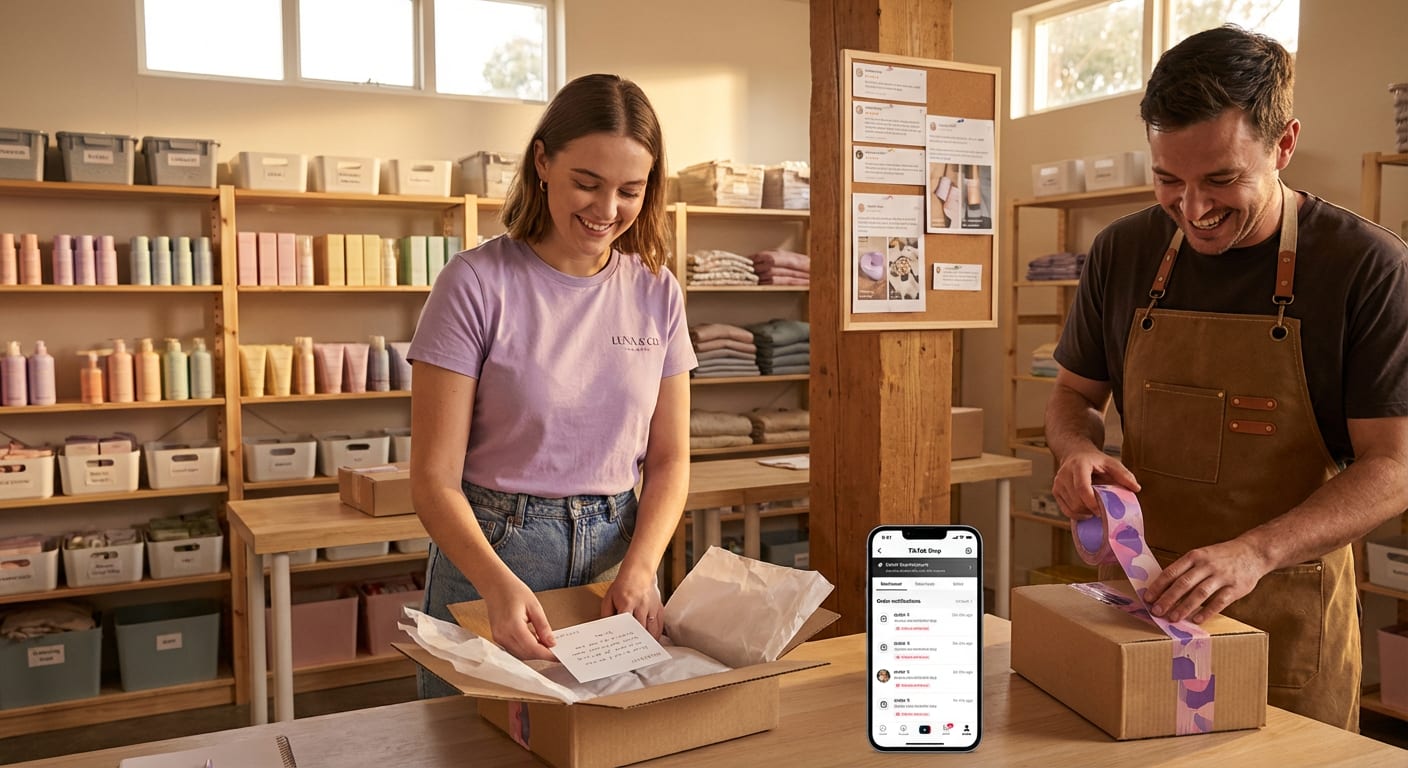
TikTok Shop's fulfillment ecosystem operates on fundamentally different mechanics:
- Algorithmic shop scoring directly ties delivery speed and shipping reliability to product visibility. Miss TikTok's delivery benchmarks consistently, and your products get suppressed in the For You feed and Shop tab — no matter how good your content is.- Impulse-driven purchases mean customer expectations are sky-high. A Statista survey found that 62% of social commerce buyers expect delivery within 3 days, and 41% say a late delivery makes them unlikely to repurchase from the same seller.
- Volatile demand spikes from viral content mean your fulfillment network needs to absorb 10x order surges overnight — something most traditional 3PL setups simply can't handle.- TikTok's performance metrics penalize sellers for late shipments, cancellations, and tracking upload delays far more aggressively than marketplaces like Amazon or Shopify storefronts.
The sellers crushing it on TikTok Shop treat fulfillment as a growth lever, not a back-office function. They've engineered their shipping networks specifically for TikTok's unique demand patterns, scoring systems, and customer expectations.
Let's break down exactly how they do it.
Hack #1: Audit Your Shipping Cost Stack Before Changing Anything
Before you optimize, you need to know where the money is actually going. Most sellers have never done a true cost-per-order breakdown for their TikTok Shop fulfillment.
Map every cost component:
- Pick and pack labor (or 3PL per-unit fees)
- Packaging materials
- Carrier base rates
- Dimensional weight surcharges
- Residential delivery surcharges
- Zone-based rate differentials
- Return processing costs TikTok Shop return processing costs
- TikTok shipping subsidies or penalties
One home goods brand we've seen went through this exercise and discovered that 43% of their shipping costs came from dimensional weight surcharges — they were using boxes two sizes too large for 70% of their SKUs. A simple packaging redesign cut their average shipping cost by $2.80 per order.
Start with data, not assumptions. Pull your last 90 days of TikTok Shop orders and calculate yourby zone, by carrier, and by product category.
Hack #2: Leverage Fulfilled by TikTok (FBT) Strategically — Not Blindly
Fulfilled by TikTok (FBT) is TikTok's answer to Amazon FBA, and it's evolving fast. As of 2024, FBT offers sellers access to TikTok's fulfillment network with guaranteed 2-day delivery badging, priority algorithmic placement, and simplified logistics management.
But here's what most sellers get wrong: FBT isn't an all-or-nothing decision.
The top-performing sellers use FBT selectively:
- High-velocity, small-format SKUs → FBT (maximizes the delivery speed badge and algorithmic boost)
- Bulky, heavy, or low-margin items → Self-fulfilled or 3PL (avoids FBT's dimensional weight pricing that can destroy margins)
- New product launches → Self-fulfilled initially (until you validate demand and avoid FBT storage fees on slow movers)
Pro tip: FBT-eligible products receive a "Ships Fast" badge that, according to TikTok's internal seller data, increases conversion rates by 18–24% compared to standard shipping listings. For your top 20% of SKUs by volume, the math almost always favors FBT.
But don't send your entire catalog. Run the numbers on each SKU's margin after FBT fees — including storage, pick/pack, and shipping — before committing inventory.
Hack #3: Build a Multi-Node Fulfillment Network to Kill Zone Pricing
This is the single biggest TikTok Shop fulfillment tip that separates six-figure sellers from seven-figure sellers: geographic distribution of inventory.
Carrier pricing is zone-based. Shipping a 1-lb package from a single warehouse in Los Angeles to a customer in New York costs 2–3x more than shipping from a warehouse in Pennsylvania to the same customer.
The math is simple but powerful:
- Single-warehouse sellers average Zone 5–7 shipments for 60%+ of orders
- Two-node sellers (East + West Coast) drop their average to Zone 2–4
- Three-node sellers (adding a central hub) can achieve Zone 1–3 for 80%+ of orders
According to Shippo's 2024 Shipping Report, moving from an average Zone 6 to Zone 3 reduces ground shipping costs by 35–42% depending on carrier and package weight.
For most TikTok Shop sellers doing $50K+/month in GMV, the cost of adding a second fulfillment node pays for itself within 60 days through shipping savings alone — before you factor in the delivery speed improvements that boost your TikTok Shop score.
Hack #4: Negotiate Carrier Rates Using TikTok Shop Volume as Leverage
Here's something most sellers don't realize: your TikTok Shop shipping volume is negotiating currency, even if you're not a massive enterprise shipper.
Carriers like UPS, FedEx, and USPS all offer volume-based discounts, but you don't need to ship 10,000 packages a month to negotiate. Sellers shipping as few as 500 orders/month can often secure:
- 15–25% discounts on published ground rates
- Waived residential delivery surcharges (which add $4–6 per package)
- Reduced dimensional weight divisors (huge for lightweight but bulky products)
- Free pickup scheduling instead of drop-off requirements
The key is to get quotes from all three major carriers simultaneously and let each know you're comparison shopping. Regional carriers like OnTrac (West Coast), LSO (Southwest), and Spee-Dee (Midwest) can also undercut national carriers by 20–30% in their coverage zones.
One supplement brand we observed renegotiated their carrier contracts after scaling to 2,000 TikTok Shop orders/month and reduced their average shipping cost from $7.40 to $4.90 per package — a savings of over $5,000/month.
Hack #5: Optimize Packaging to Eliminate Dimensional Weight Penalties
Dimensional weight pricing is the silent killer of TikTok Shop margins. If your package dimensions result in a DIM weight higher than the actual weight, you're paying for air.
Actionable steps:
- Audit your top 10 SKUs and measure the actual product dimensions vs. the box you're shipping them in
- Switch to poly mailers for any product that doesn't require rigid protection (apparel, accessories, beauty products)
- Use right-sized boxes — invest in 4–5 box sizes instead of using 1–2 standard sizes for everything
- Consider custom packaging for your highest-volume SKU — even a $0.15/unit custom box that eliminates $2+ in DIM weight charges is a massive win
Bold move: Some top sellers have redesigned their actual product packaging (not just shipping packaging) to be more compact, reducing both shipping costs and the need for void fill. A skincare brand reduced their box height by 1.5 inches across their product line and saved $1.20 per shipment in DIM weight charges — adding up to $36,000/year in savings.
Hack #6: Implement Same-Day Shipping Cutoffs to Hit 2-Day Windows
TikTok measures delivery speed from the moment an order is placed to the moment tracking shows delivered. Every hour between order placement and carrier pickup is time you're burning.
Top sellers structure their operations around aggressive shipping cutoffs:
- Orders placed by 12 PM local time → shipped same day
- Orders placed after 12 PM → shipped by 10 AM next business day
- Weekend orders → shipped Monday morning (or use a 3PL with Saturday processing)
The difference between shipping same-day vs. next-day is often the difference between hitting a 2-day delivery window and missing it — which directly impacts your TikTok Shop performance score.
Automation is critical here. Use order management systems that auto-route orders to the nearest fulfillment node, auto-generate labels, and auto-upload tracking numbers to TikTok Shop. Manual tracking uploads are one of the most common reasons sellers get flagged for late shipment metrics.
Hack #7: Use Regional Carriers for Last-Mile Speed and Savings
National carriers aren't always the fastest or cheapest option for last-mile delivery. Regional carriers often deliver 1 day faster within their zones at 15–30% lower cost.
Key regional carriers to evaluate:
- OnTrac — West Coast coverage, often delivers next-day within California, Oregon, Washington
- LSO (Lone Star Overnight) — Texas, Oklahoma, Louisiana coverage
- Spee-Dee Delivery — Upper Midwest coverage
- Eastern Connection — Northeast corridor
- GLS US — Growing national alternative with competitive rates
The play: Use a multi-carrier shipping platform (like ShipStation, Shippo, or EasyPost) to auto-route each order to the cheapest/fastest carrier based on destination zip code. This "carrier blending" approach can reduce average delivery time by 0.8 days while cutting costs by 18–22% compared to single-carrier strategies.
Hack #8: Pre-Position Inventory Before Viral Content Drops
This is where TikTok Shop fulfillment optimization intersects with your content and creator strategy — and it's where MomentIQ sees sellers leave the most money on the table.
The problem: A creator posts a viral video. Orders spike 10–20x overnight. Your single warehouse gets overwhelmed. Shipping delays cascade. Your TikTok Shop score drops. Product visibility decreases. The viral momentum dies.
This isn't hypothetical — it happens to sellers every single week.
The solution: When you know a major content push is coming (a mega creator collaboration, a live shopping event, a product launch), pre-position inventory at multiple fulfillment nodes 7–10 days in advance.
This means:
- Splitting inventory across 2–3 warehouse locations
- Pre-printing shipping labels for anticipated volume
- Confirming carrier pickup capacity for surge days
- Ensuring your 3PL has staffed for the expected spike
One fitness equipment brand coordinated inventory pre-positioning with a planned creator seeding campaign and maintained 98.5% on-time delivery during a 15x order surge — while competitors running similar campaigns saw delivery times balloon to 7+ days and watched their shop scores crater.
This is exactly the kind of full-funnel coordination that separates brands working with a TikTok-native agency from brands trying to manage everything in-house. If you're scaling creator campaigns but haven't stress-tested your fulfillment for viral demand, Talk to a Strategist before your next big push.
Hack #9: Automate Tracking Upload to Avoid TikTok's Late Shipment Penalties
TikTok Shop's seller performance metrics include tracking upload timeliness as a key scoring factor. Sellers are expected to upload valid tracking numbers within 24–48 hours of order placement (depending on your seller tier and region).
Miss this window consistently, and TikTok will:
- Reduce your product visibility in search and recommendations
- Flag your shop with performance warnings
- In severe cases, suspend your selling privileges
The fix is straightforward but critical: automate tracking upload through a direct API integration between your shipping platform and TikTok Shop.
Most major shipping platforms (ShipStation, ShipBob, Deliverr) offer native TikTok Shop integrations. If you're using a smaller 3PL, confirm they can push tracking data to TikTok's API in real-time — not in daily batches.
The benchmark: Top-performing TikTok Shop sellers upload tracking within 4 hours of label creation, not 24. This small operational detail compounds into a significant scoring advantage over time.
Hack #10: Implement a Returns Strategy That Protects Margins
Returns are the fulfillment cost that nobody wants to talk about. According to the National Retail Federation, the average return rate for online purchases is 17.6%, and social commerce returns tend to run even higher due to impulse purchasing behavior.
For TikTok Shop sellers, an unoptimized returns process can erase 5–8% of gross margin.
Cost-cutting returns strategies:
- Offer "Keep It" refunds for items under $15 — the cost of return shipping + processing + restocking often exceeds the product value. According to Optoro research, processing a return costs retailers an average of $10–15 per item.
- Use returnless refund thresholds strategically based on product cost and condition likelihood
- Implement QC photography at your 3PL for returned items to reduce fraud and identify products that can be resold
- Create a secondary sales channel for returned/opened items rather than writing them off entirely
- Provide detailed sizing guides, ingredient lists, and product videos to reduce "not as described" returns — which are the most expensive type because they often trigger TikTok Shop buyer protection claims
Hack #11: Choose 3PL Partners with TikTok Shop Integration Experience
Not all 3PLs are created equal when it comes to TikTok Shop fulfillment. Many traditional 3PLs were built for steady-state DTC or Amazon FBA overflow — they're not designed for TikTok's demand volatility.
When evaluating 3PL partners for TikTok Shop, prioritize:
- Native TikTok Shop API integration (not manual CSV uploads)
- Surge capacity — can they 5x throughput within 48 hours?
- Multi-node network — do they have facilities in at least 2 geographic regions?
- Same-day shipping cutoffs of 2 PM or later
- Transparent per-order pricing (avoid 3PLs with complex fee structures that obscure true costs)
- Real-time inventory visibility across all nodes
Red flags to watch for:
- 3PLs that charge setup fees exceeding $500 (the market has moved past this)
- Minimum monthly order commitments that penalize slow months
- No experience with social commerce demand patterns
- Manual tracking upload processes
A well-matched 3PL partnership can reduce your per-order fulfillment cost by 25–35% compared to self-fulfillment once you're shipping 1,000+ orders/month, while simultaneously improving delivery speed and reliability.
Hack #12: Use TikTok's Shipping Subsidies and Seller Incentives
TikTok regularly offers shipping subsidies, free shipping promotions, and seller incentives that can dramatically reduce your effective shipping costs — but most sellers don't take full advantage because they don't know the programs exist or how to qualify.
As of late 2024, TikTok Shop has offered:
- Free shipping vouchers funded by TikTok for orders above certain thresholds
- Shipping cost subsidies for sellers enrolled in FBT
- Performance-based shipping credits for sellers maintaining high shop scores
- Promotional shipping support during major sales events (like TikTok Shop's Super Brand Days)
Action step: Check your TikTok Shop Seller Center regularly for available incentive programs. Set a weekly calendar reminder. These programs change frequently, and the sellers who capture them first gain a pricing advantage that directly improves conversion rates.
According to eMarketer, free shipping is the #1 factor influencing purchase decisions for 73% of online shoppers. On TikTok Shop, where purchases are already impulse-driven, eliminating the shipping cost friction can increase conversion rates by 20–30%.
Hack #13: Build a Fulfillment Contingency Plan for Platform-Specific Risks
TikTok Shop sellers face unique fulfillment risks that traditional ecommerce sellers don't:
- Sudden viral demand that overwhelms capacity
- Platform policy changes that alter shipping requirements overnight
- Seasonal surge events (TikTok Shop's own promotional calendars)
- Inventory holds or disputes within FBT warehouses
Your contingency plan should include:
- A backup 3PL that can activate within 72 hours
- Pre-negotiated overflow carrier rates for surge periods
- Safety stock calculations based on your highest viral spike (not average demand)
- A communication template for customers when delays occur (proactive communication reduces negative reviews by up to 40%)
- Diversified fulfillment — never put 100% of inventory in FBT without a self-fulfillment backup
The brands that scale sustainably on TikTok Shop aren't the ones that never have fulfillment problems — they're the ones who recover from problems fastest.
Hack #14: Align Fulfillment Strategy with Your Creator and Affiliate Campaigns
This is the hack that ties everything together — and it's the one that most sellers completely ignore.
Your fulfillment strategy should be informed by your content calendar. Period.
When you're planning a major creator seeding campaign, a live shopping event, or a paid media push, your fulfillment team needs to know:
- Expected order volume (use historical data from similar campaigns)
- Geographic distribution of expected orders (based on creator audience demographics)
- Peak order timing (live events create concentrated demand windows)
- Product mix (which SKUs will be featured and need priority stocking)
This is where the full-funnel approach matters. Brands that silo their marketing and operations teams end up with viral content that drives orders they can't fulfill — which is worse than not going viral at all, because the TikTok Shop score penalties compound.
At MomentIQ, this integrated approach is core to how we help brands scale. Our algorithmic creator matching system doesn't just identify the right creators — it forecasts demand impact so brands can prepare their fulfillment operations before the content goes live. Combined with our proprietary data analytics, we help brands coordinate the entire chain from creator content to customer delivery.
One beauty brand working with MomentIQ scaled from $15K to $380K/month in TikTok Shop GMV over 90 days. A critical factor in sustaining that growth? Their fulfillment capacity scaled in lockstep with their creator campaign rollout, preventing the delivery score drops that derail most sellers during rapid growth phases.
The Real Cost of Ignoring TikTok Shop Shipping Optimization
Let's do some quick math that should make every TikTok Shop seller uncomfortable.
Seller A (unoptimized fulfillment):
- 3,000 orders/month
- Average shipping cost: $8.50/order
- Average delivery time: 4.5 days
- Shop score: declining due to delivery speed
- Monthly shipping spend: $25,500
Seller B (optimized with the 14 hacks above):
- 3,000 orders/month
- Average shipping cost: $5.10/order (40% reduction)
- Average delivery time: 2.1 days
- Shop score: improving, boosting product visibility
- Monthly shipping spend: $15,300
The difference: $10,200/month — or $122,400/year — in shipping savings alone. And that doesn't account for the revenue increase from better product visibility, higher conversion rates from fast-shipping badges, and improved repeat purchase rates from satisfied customers.
Now multiply that by the algorithmic compound effect. Seller B's better shop score leads to more visibility, which leads to more orders, which leads to better carrier rates, which leads to even lower per-order costs. The fulfillment flywheel is real, and it accelerates over time.
"We Can Handle Fulfillment Ourselves" — Can You Really?
Let's address this directly, because it's the most common objection we hear from sellers doing $30K–$100K/month on TikTok Shop.
Yes, you can manage fulfillment in-house at small scale. But here's what breaks:
- At 100+ orders/day, manual processes become error-prone and slow
- At 500+ orders/day, you need dedicated warehouse staff, systems, and carrier relationships you probably don't have
- During viral spikes, your garage/office/small warehouse physically cannot process 10x normal volume
- Across multiple SKUs, inventory management complexity grows exponentially
The brands that try to "figure out fulfillment later" while scaling their TikTok Shop presence almost always hit a wall where delivery failures undo their marketing wins. We've seen sellers lose months of shop score progress in a single week because a viral video outpaced their fulfillment capacity.
This is why the most successful TikTok Shop brands treat fulfillment optimization with the same strategic seriousness as their creator partnerships and content strategy. It's not a back-office problem — it's a growth constraint.
Why TikTok Shop Fulfillment Is a Growth Lever, Not Just a Cost Center
Here's the mindset shift that separates brands scaling past $500K/month from brands stuck in the $20K–$50K range:
Fulfillment isn't something you spend money on. It's something you invest in to unlock growth.
Every dollar you save on shipping is a dollar you can reinvest into:
- Higher affiliate commission rates (attracting better creators)
- More aggressive product seeding campaigns
- Paid media amplification of top-performing content
- New product development and inventory expansion
And every delivery speed improvement compounds through TikTok's algorithm into more visibility, more orders, and more revenue.
The window for building these operational advantages on TikTok Shop is right now. According to eMarketer, TikTok Shop's US GMV is projected to exceed $17.5 billion by 2025, and the sellers who build efficient fulfillment infrastructure today will have cost advantages that latecomers simply can't replicate overnight.
Brands building their fulfillment flywheel now will own the operational moat that separates scalable businesses from flash-in-the-pan sellers.
Your Next Step: Stop Leaving Money on the Shipping Table
If you've read this far, you already know that your current fulfillment setup is probably costing you more than it should — in direct shipping costs, in delivery speed penalties, and in lost algorithmic visibility.
The 14 hacks in this guide can get you started. But implementing them in coordination with a scaling creator strategy, live commerce calendar, and paid media plan requires the kind of full-funnel TikTok Shop expertise that most brands don't have in-house.
That's exactly what MomentIQ was built for.
As TikTok's Shop Partner of the Year and a certified TikTok Marketing Partner, MomentIQ helps brands orchestrate every element of TikTok Shop growth — from algorithmic creator matching and product seeding at scale to the operational strategy that ensures your fulfillment keeps pace with your content's performance.
We've helped brands across beauty, supplements, home goods, and fitness scale from five-figure to six-figure monthly GMV — and the ones who win are always the ones who align their operations with their marketing.
Talk to a Strategist and get a custom roadmap that connects your creator strategy, content performance, and fulfillment optimization into a single scaling engine.
The brands that figure out TikTok Shop fulfillment now won't just save money. They'll build the operational infrastructure that makes sustainable, profitable scale possible — while their competitors are still shipping from a single warehouse and wondering why their shop score keeps dropping.
The clock is ticking. The algorithm rewards speed — in content and in delivery.