TikTok Shop vs Etsy
TikTok Shop vs Etsy in 2025: Discover which platform is best for handmade & small-batch brands. Compare fees, traffic, and growth potential to make the right mo
You've built something real. Maybe it's hand-poured candles, small-batch ceramics, custom jewelry, or artisan skincare made from ingredients you actually source yourself.You've grown a loyal following on Etsy, figured out the SEO game, optimized your listings, and carved out a niche.
- Shift from Etsy's search-driven model to TikTok Shop's discovery-driven algorithm, which finds buyers for you through compelling short-form video content.
- Recognize that Etsy's 9 million sellers competing for a stagnant 92 million buyers means your organic visibility is shrinking — diversify now.
- Leverage TikTok's 67% impulse shopping rate by creating visually engaging process videos like soap cutting or candle pouring to drive sales.
- Prioritize creator partnerships over keyword optimization — one viral 30-second TikTok can outsell a month of Etsy ad spend.
- Use TikTok Shop's projected $17 billion GMV growth trajectory as your signal to establish presence before the platform saturates like Etsy.
But lately, something feels off.
Your Etsy traffic is plateauing. Ad costs keep climbing. And every time you open your dashboard, there are three new competitors selling suspiciously similar products at half your price.
Meanwhile, you keep seeing handmade brands blow up on TikTok handmade brands blow up on TikTok — a soap maker going viral with a cutting video, a jewelry designer selling out inventory from a single creator post, a small-batch hot sauce brand generating more revenue in one TikTok Shop livestream than in a month on Etsy.
So you're asking the question every smart small-batch brand owner is asking in 2025: Should I sell handmade products on TikTok Shop, stick with Etsy, or go all-in on both? This guide breaks down the TikTok Shop vs Etsy comparison through the lens that matters most to you — a maker, artisan, or small-batch brand founder who needs real answers, not generic platform overviews.We'll cover discovery mechanics, fee structures, audience behavior, scaling potential, and the specific strategies that are helping handmade brands thrive on TikTok Shop right now.
And if you're already feeling the pull toward TikTok Shop but don't know where to start, book a free TikTok Shop growth audit with MomentIQ's strategists at bemomentiq.com — they've helped hundreds of brands navigate this exact transition.
Let's get into it.
The Fundamental Shift: Search-Driven vs. Discovery-Driven Commerce
Before we compare fees, audiences, or features, you need to understand the philosophical difference between these two platforms.It changes everything.
How Etsy's Search Model Works (and Where It's Breaking Down)
Etsy is a search-driven marketplace. Buyers come to Etsy with intent — they type "handmade lavender soy candle" and browse results. Your success depends on:
- Keyword optimization in titles, tags, and descriptions
- Review velocity and star ratings
- Etsy Ads spend to appear above organic results
- Listing freshness and renewal strategies
This model worked beautifully for years. But here's what's changed in 2025:
Etsy's marketplace is saturated. According to Statista, Etsy had over 9 million active sellers as of late 2024, up from 7.5 million in 2022. That's a 20% increase in competition in just two years. Meanwhile, active buyer growth has stagnated — hovering around 92 million since 2022.
More sellers. Same buyers. The math doesn't favor you.
Etsy's own data shows that average seller revenue per active seller has declined year-over-year, and the platform's increasing reliance on Etsy Ads means organic visibility is shrinking. If you're not paying to play, you're increasingly invisible.
How TikTok Shop's Discovery Model Changes the Game
TikTok Shop operates on a fundamentally different principle: discovery-driven commerce.
Buyers don't search for your product. The algorithm finds your buyers for you.
When a creator makes a video featuring your handmade product, TikTok's recommendation engine pushes that content to users based on behavioral signals — watch time, engagement patterns, purchase history, and interest graphs. Your hand-poured candle doesn't need to compete for the keyword "soy candle." It needs one compelling 30-second video that makes someone stop scrolling.
TikTok Shop's U.S.GMV exceeded $9 billion in 2024, according to industry reports, with some analysts projecting it will surpass $17 billion by the end of 2025. That's not a niche experiment — it's a full-blown commerce revolution.
And here's the part that should make every Etsy seller pay attention: TikTok's algorithm doesn't care how long you've been on the platform. A brand-new seller with a great product and the right creator partnership can outperform established players overnight.On Etsy, you're fighting for ranking. On TikTok Shop, you're fighting for attention — and the algorithm is designed to give newcomers a fair shot.
TikTok Shop vs Etsy: A Head-to-Head Comparison for Handmade Brands
Let's break this down across the dimensions that actually matter to small-batch sellers.
Fee Structures and Profit Margins

Etsy's fee stack has become increasingly complex:
6.5% transaction fee
$0.20 listing fee per item
3% + $0.25 payment processing fee
15% Offsite Ads fee (mandatory once you hit $10K in annual sales)
Optional Etsy Ads (CPC-based, increasingly expensive) All in, many Etsy sellers report effective fee rates of 20-30% when factoring in advertising costs needed to maintain visibility.
TikTok Shop's fee structure is simpler:Referral fee ranging from 2% to 8% depending on category (most handmade categories fall in the 5-6% range) - Affiliate commission you set yourself (typically 10-20%)
No listing fees
No mandatory advertising fees
The key difference: On TikTok Shop, your biggest "cost" is affiliate commission — but that's a performance-based expense.You only pay when a creator actually drives a sale. Compare that to Etsy Ads, where you pay per click regardless of conversion.
For a handmade brand with $10,000 in monthly revenue, the difference can be $1,000-$2,000 more in your pocket each month on TikTok Shop versus Etsy, depending on your affiliate rates and Etsy ad spend.
Audience Demographics and Purchase Behavior

Etsy's audience skews toward intentional shoppers — people who already know they want something handmade, unique, or personalized. This is valuable, but it's a ceiling. You're only reaching people who are already in the "handmade" mindset.
TikTok's audience is broader and younger. Over 150 million monthly active users in the U.S. alone, with the fastest-growing demographic being users aged 25-44 — prime spending years. According to TikTok's own commerce reports, 67% of TikTok users say the platform inspires them to shop even when they weren't planning to.
This is the critical insight for handmade brands: TikTok doesn't just reach people looking for handmade products. It creates demand for handmade products among people who didn't know they wanted them.
A customer might never search "artisan ceramic mug" on Etsy. But when they see a creator unboxing one on TikTok, watching the glaze catch the light, hearing the story behind the maker — that's a conversion moment Etsy's search bar can never create.
Content and Storytelling Potential
This is where handmade brands have an unfair advantage on TikTok Shop.
Here's what most sellers get wrong: they think TikTok is only for mass-market, cheap, impulse-buy products. The reality is the opposite. TikTok's algorithm rewards authenticity, process, and story — exactly what handmade brands have in abundance.
The types of content that perform best on TikTok Shop are:
- Process videos ("Watch me hand-pour 100 candles")
- Behind-the-scenes content (sourcing materials, studio tours)
- Maker stories (why you started, what makes your process unique)
- Satisfying reveals (before/after, unboxing, first-use reactions)
- "Small business check" trends (packing orders, day-in-the-life)
On Etsy, your story is buried in an "About" section most buyers never read. On TikTok, your story IS the selling mechanism.
One handmade soap brand we've seen scaled from $8K to $185K in monthly GMV within 120 days by leveraging creator partnerships that focused entirely on the soap-cutting and process content — no hard sells, no discount codes, just mesmerizing content that happened to have a TikTok Shop link attached.
Why Etsy Sellers Struggle to Make the Jump (and How to Fix It)
If TikTok Shop sounds promising, why aren't more Etsy sellers already there? Because the transition comes with real challenges that most sellers underestimate.
The Creator Partnership Problem

On Etsy, you control your listings, your photos, your SEO. On TikTok Shop, your success depends on creators making content about your product.
This is where most handmade brands hit a wall:
- Low affiliate acceptance rates. You list your product in TikTok Shop's affiliate marketplace and... crickets. Top creators get hundreds of collaboration requests daily. Your small-batch lavender body butter is competing for attention against brands with massive budgets.
- Creator ghosting. You send free product samples to 50 creators. Maybe 10 post. Maybe 3 posts actually drive sales. That's a lot of wasted inventory and shipping costs for a small brand.
- Content quality inconsistency. When creators do post, the content doesn't always capture what makes your product special. A generic "haul" video doesn't tell your handmade story.
This is exactly the problem MomentIQ was built to solve. Their algorithmic creator matching system doesn't just find creators with big followings — it identifies creators whose audience demographics, content style, and engagement patterns align specifically with your product category and price point. For handmade brands, that means matching with creators who have audiences that value craftsmanship, authenticity, and uniqueness — not just the cheapest option.
The Scale Paradox for Small-Batch Brands

Here's the tension every handmade brand feels: TikTok Shop rewards volume, but your entire brand identity is built on being small-batch.
A viral video can generate 500 orders overnight. If you're hand-making each product, that's either a dream or a nightmare.
Smart brands solve this by:
- Staggering creator content to avoid inventory spikes
- Using "limited drop" positioning to turn scarcity into a selling point
- Building waitlists that create anticipation and FOMO
- Scaling specific SKUs while keeping others exclusive
This requires strategic planning that most solo sellers don't have bandwidth for — which is why working with a TikTok Shop-native partner like MomentIQ makes such a difference. They've managed product seeding campaigns at scale for brands across dozens of categories, coordinating creator timelines with inventory availability so you never oversell or underwhelm.
If you're an Etsy seller wondering how to manage this transition without burning out, Talk to a Strategist to see a custom scaling roadmap built for your production capacity.
The Data Case: Why 2025 Is the Year to Move

Let's talk numbers, because the window of opportunity here is real — and it's narrowing.
TikTok Shop's Growth Trajectory

- TikTok Shop U.S. GMV grew over 200% year-over-year in 2024, making it the fastest-growing e-commerce channel in the country (source: industry analyst reports)
- Average order value on TikTok Shop increased 35% in 2024, disproving the myth that it's only for cheap products
- The number of TikTok Shop sellers in the U.S. grew 4x between early 2024 and early 2025 — but creator supply still outpaces seller demand in most categories
- According to eMarketer, U.S. social commerce sales are projected to exceed $100 billion by 2026, with TikTok capturing the largest share of growth
Etsy's Headwinds
- Etsy's gross merchandise sales declined 1.2% in 2024 after years of post-pandemic normalization
- Seller satisfaction scores have dropped, with increasing complaints about fee hikes and algorithm changes favoring paid placement
- The platform's push toward "mass-produced" sellers has diluted the handmade brand promise that attracted artisan sellers in the first place
The brands building their TikTok Shop presence now will own the algorithmic advantage that latecomers can't replicate. TikTok's recommendation engine learns from your sales history, creator partnerships, and content performance. Every month you wait, your competitors are training the algorithm in their favor.
"But I Don't Have the Budget for an Agency"
Let's address this head-on, because it's the most common objection we hear from small-batch brands — and it's based on a misunderstanding of how the math works.
The Real Cost of Going It Alone
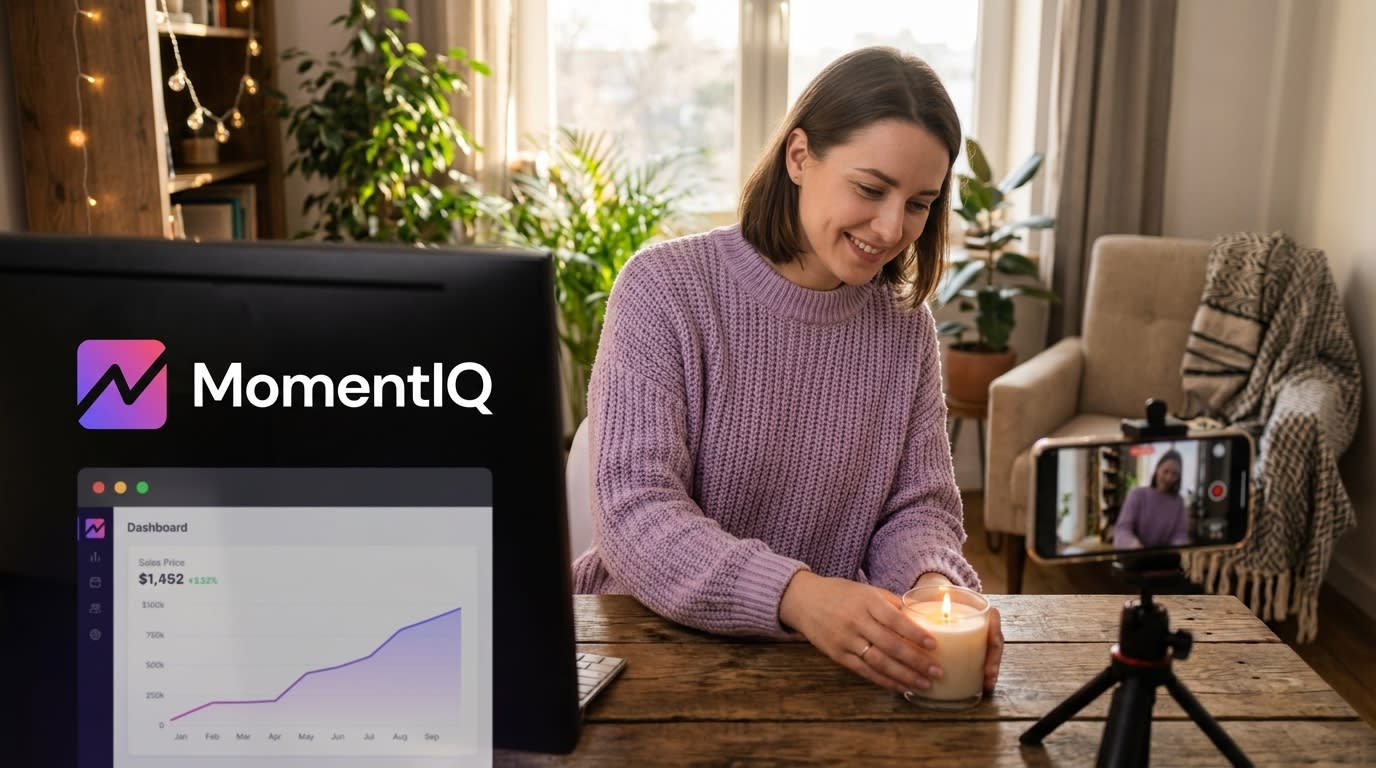
Most Etsy sellers who try TikTok Shop on their own spend:
- 40-60 hours/month on creator outreach (mostly getting ignored)
- $2,000-$5,000 on product seeding to creators who never post
- Countless hours learning TikTok Shop's backend, policies, and ad system through trial and error
- Opportunity cost of not focusing on product development and fulfillment
A handmade jewelry brand that tried managing TikTok Shop in-house for six months reported spending over $15,000 in product samples and time — generating less than $4,000 in GMV. After partnering with MomentIQ, they scaled to $67,000/month in GMV within 90 days using targeted creator matching and managed product seeding.
The question isn't "can I afford an agency?" It's "can I afford to keep wasting product samples on creators who will never post?"
Why Generic Influencer Agencies Don't Work for TikTok Shop
If you've been burned by agencies before, here's what probably happened: you hired a general influencer marketing agency that treated TikTok Shop like Instagram sponsorships. They found creators with big followings, negotiated flat fees, and delivered content that got views but didn't convert.
TikTok Shop is a completely different animal. Success requires understanding:
- Affiliate mechanics (commission structures, sample requests, open vs. targeted plans)
- TikTok's commerce algorithm (which is separate from the content algorithm)
- Shop policies and compliance requirements that can get your store suspended
- Live commerce strategy that drives real-time conversions
- Product listing optimization specific to TikTok's search and recommendation systems
MomentIQ isn't a generic influencer agency. They're a TikTok Shop Partner of the Year and official TikTok Marketing Partner — meaning they have direct access to platform resources, beta features, and support channels that no in-house team or generalist agency can match. Their proprietary data analytics identify which creators actually drive purchases (not just views), and their algorithmic matching system connects your products with creators at a scale that manual outreach simply can't achieve.
The Hybrid Strategy: Why Smart Brands Are Running Both Platforms
Here's the nuanced take that most "TikTok Shop vs Etsy" articles miss: the smartest handmade brands aren't choosing one platform. They're using them differently.
Use Etsy For:

- Custom and personalized orders (Etsy's customization request system is still unmatched)
- High-ticket, one-of-a-kind pieces where buyers need detailed photos and descriptions
- SEO-driven evergreen sales for products with established search demand
- International orders (Etsy's global infrastructure is more mature)
Use TikTok Shop For:

- New product launches that benefit from discovery and virality
- Hero SKUs that are visually compelling and easy to demonstrate
- Scaling volume on products you can produce consistently
- Building brand awareness that drives traffic back to your Etsy shop and DTC site
- Reaching new demographics who would never find you through Etsy search
The Flywheel Effect

Here's what's powerful about this hybrid approach: TikTok Shop success feeds Etsy growth.
When a creator video goes viral featuring your handmade product, a percentage of viewers will search your brand name on Google and Etsy. Your Etsy shop benefits from the brand awareness TikTok generates, even if the initial sale happens on TikTok Shop.
One artisan skincare brand reported that after launching on TikTok Shop, their Etsy organic traffic increased 45% within 60 days — without changing anything about their Etsy strategy. TikTok was creating the demand; Etsy was capturing the overflow.
How to Launch on TikTok Shop as a Handmade Brand: A Practical Roadmap
If you're ready to test TikTok Shop, here's the approach that works for small-batch brands:
Step 1: Choose Your Hero SKU
Don't launch your entire Etsy catalog on TikTok Shop. Pick 1-3 products that are:
- Visually compelling on video
- Priced between $15-$75 (the sweet spot for TikTok Shop impulse purchases)
- Producible at moderate scale without sacrificing quality
- Easy to demonstrate or unbox in under 60 seconds
Step 2: Optimize Your Product Listings

TikTok Shop listings are NOT Etsy listings. You need:
- Short, benefit-driven titles (not keyword-stuffed Etsy titles)
- Video-first product images (lifestyle shots outperform flat lays)
- Concise bullet points focused on what makes it handmade/unique
- Competitive pricing that accounts for affiliate commissions
Step 3: Build Your Creator Strategy

This is the make-or-break step. You need creators who:
- Have audiences that value handmade and artisan products
- Create content styles that showcase process and craftsmanship
- Have proven conversion rates (not just follower counts)
- Are willing to work on affiliate commission (not flat fees)
Finding these creators manually is like finding a needle in a haystack of 2 million+ TikTok Shop affiliates. This is where MomentIQ's algorithmic creator matching and their Reacher platform (reacherapp.com) become invaluable — they can identify and activate the right creators for your specific product category, price point, and brand story at a scale that would take a solo seller months to replicate.
Step 4: Seed Product Strategically
Product seeding — sending free samples to creators — is essential on TikTok Shop. But doing it wrong burns inventory and budget fast.
Effective seeding requires:
- Targeting creators with high post-through rates (the percentage who actually create content after receiving product)
- Including creative briefs that guide content without being overly prescriptive
- Tracking which creators drive actual sales vs. just views
- Scaling spend toward top performers and cutting non-performers quickly
Step 5: Layer in Live Commerce
TikTok Shop Live is where handmade brands can truly differentiate. Imagine showing your actual crafting process live while viewers can purchase in real-time. No other platform offers this combination of authenticity and instant commerce.
Brands running consistent live streams on TikTok Shop report 3-5x higher conversion rates compared to static product listings alone.
What Happens If You Wait?
Let's be direct about the cost of delay.
Right now, TikTok Shop is in its growth phase for handmade and artisan categories. Creator supply exceeds seller demand in most niches, meaning affiliate acceptance rates are higher and commission expectations are lower than they will be in 12 months.
Every quarter you wait:
- More competitors enter your category and establish creator relationships
- Top creators in your niche get locked into exclusive partnerships with other brands
- The algorithm accumulates data for your competitors, not for you
- Early-mover brands build review counts and shop ratings you'll have to compete against
- Affiliate commission expectations rise as creators gain more leverage
A supplement brand that partnered with MomentIQ early in TikTok Shop's U.S. rollout scaled from $18K to $420K/month in 90 days through their creator matching system. That kind of explosive growth is still possible in underserved categories — but the window is closing as more sellers flood the platform.
The brands that move now won't just win on TikTok Shop. They'll build the algorithmic moat that makes it exponentially harder for latecomers to compete.
The Bottom Line: TikTok Shop vs Etsy for Handmade Brands
Here's the honest answer to the TikTok Shop vs Etsy question:
Etsy is still valuable for handmade brands — but it's a maturing, increasingly competitive marketplace where organic growth is stalling and fees are rising. It rewards optimization and patience.
TikTok Shop is the growth engine — a discovery-driven platform where handmade brands have a natural content advantage, where the algorithm rewards authenticity over ad spend, and where the right creator partnership can generate more revenue in a week than months of Etsy SEO.
The winning strategy in 2025 isn't choosing one or the other. It's using Etsy as your foundation and TikTok Shop as your growth accelerator.
But — and this is the critical caveat — TikTok Shop success for small brands requires strategic creator partnerships, managed product seeding, and platform expertise that most solo sellers don't have time to develop.
That's not a sales pitch. That's the reality of a platform where the difference between $2K/month and $200K/month often comes down to which creators are showing your product, how your content is structured, and whether your operations can handle the scale.
Ready to Bring Your Handmade Brand to TikTok Shop?
MomentIQ is the TikTok Shop Partner of the Year for a reason. They've helped brands across every category — from beauty to home goods to artisan food — navigate the transition from traditional marketplaces to TikTok Shop's discovery-driven commerce model.
What makes them different:
- Algorithmic creator matching that identifies the right affiliates for your specific product and audience — not manual outreach that wastes your time and inventory
- Managed product seeding at scale with tracking and optimization built in
- Full-stack commerce support from listing optimization to live strategy to retargeting
- Proprietary analytics that show you exactly which creators, content types, and strategies are driving actual revenue
- TikTok-native expertise as an official TikTok Marketing Partner with access to platform resources no generalist agency can offer
Whether you're doing $5K/month on Etsy or $50K/month, the question isn't whether TikTok Shop is right for your handmade brand. The question is how fast you can get there before your competitors do.
Talk to a Strategist and see exactly what a custom scaling roadmap looks like for your brand, your products, and your production capacity.
The makers who move now will own the next era of e-commerce. The ones who wait will wonder what happened.