TikTok Shop Ad Trends 17 Emerging Shifts That Will
Discover 17 TikTok Shop ad trends reshaping 2025. Learn the emerging shifts separating winners from losers — and how to act before competitors catch up.

The TikTok Shop advertising landscape is shifting faster than most sellers can keep up with. And that's exactly the point.
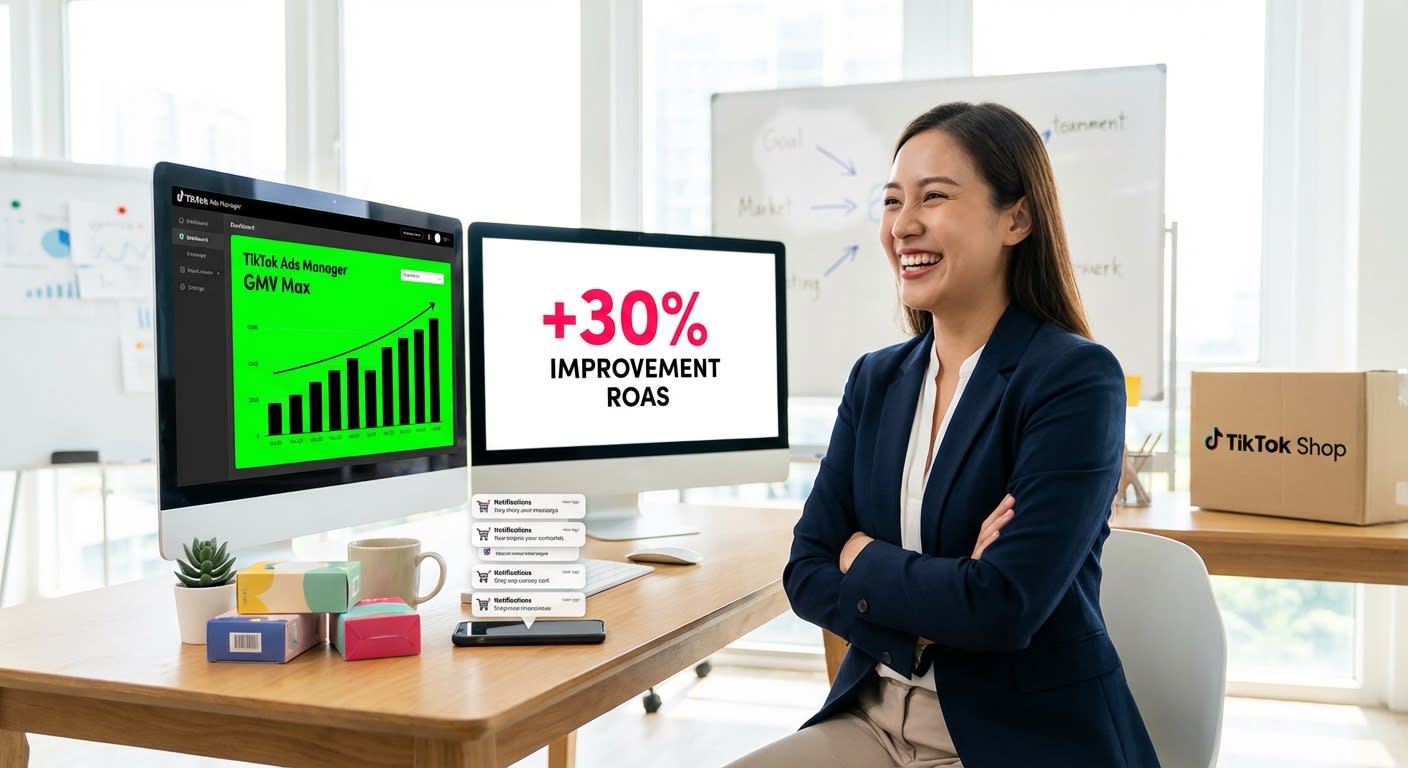
- Test GMV Max on your top 3-5 SKUs now — early adopters report 20-30% ROAS improvements over manually managed campaigns.
- Shift from manual bidding to automated campaign types like GMV Max and Smart+ before rising auction density (up 40% YoY) erodes your margins.
- Treat TikTok Shop's structural shifts as a brief competitive window — act within weeks, not months, to build compounding data advantages.
- Allocate budget expecting CPM increases of 15-25%, and offset rising costs by leveraging TikTok's AI-driven optimization tools.
- Feed Smart+ campaigns diverse creative assets so the algorithm can auto-optimize targeting, bidding, and creative selection simultaneously.
Every major platform shift creates a brief window where the brands paying attention pull ahead — and everyone else scrambles to catch up six months later. We saw it with Facebook's Lookalike Audiences in 2016, with Amazon's Sponsored Brands in 2019, and now we're watching it unfold in real time on TikTok Shop in 2025.
Here's the uncomfortable truth: the TikTok Shop ad trends 2025 is bringing aren't incremental tweaks. They're structural shifts in how the platform's auction works, how creative gets produced, how budgets get allocated, and how conversions get attributed. Sellers who understand these 17 emerging shifts will build compounding advantages. Those who don't will watch their CAC climb while competitors scale past them.
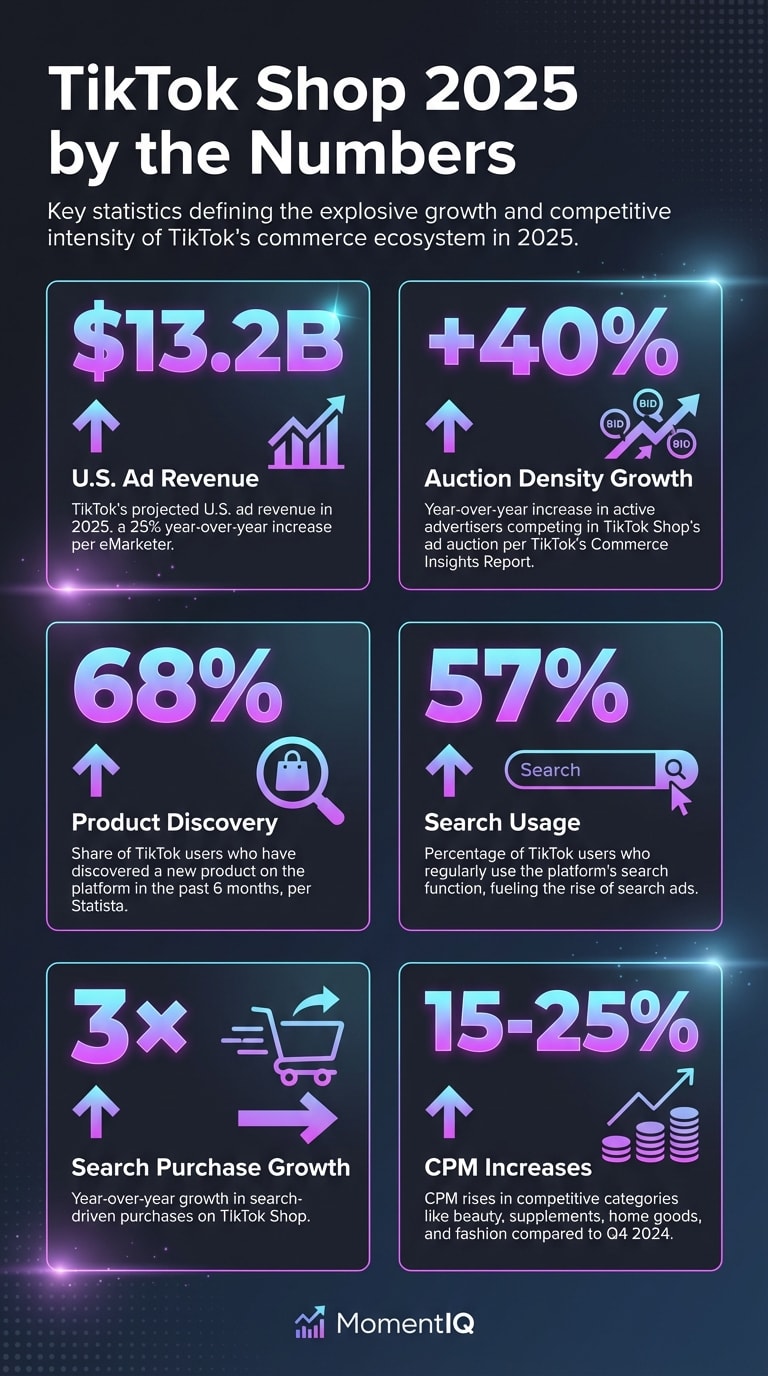
According to eMarketer, TikTok's U.S. ad revenue is projected to surpass $13.2 billion in 2025, a 25% year-over-year increase.That money is flooding into an ecosystem that's simultaneously getting smarter (AI-driven optimization), more competitive (auction density is up 40% year-over-year per TikTok's Commerce Insights Report), and more rewarding for sellers who play by the platform's evolving rules.
Whether you're spending $5K or $100K per month on TikTok Shop ads, these 17 trends will directly impact your ROAS, your GMV, and your ability to scale profitably.
Let's break down every single one — and what to do about it.
Trend 1: GMV Max Becomes the Default Campaign Type — and Manual Bidding Fades
If you're still manually setting bids and toggling between campaign objectives, you're fighting the platform instead of working with it.
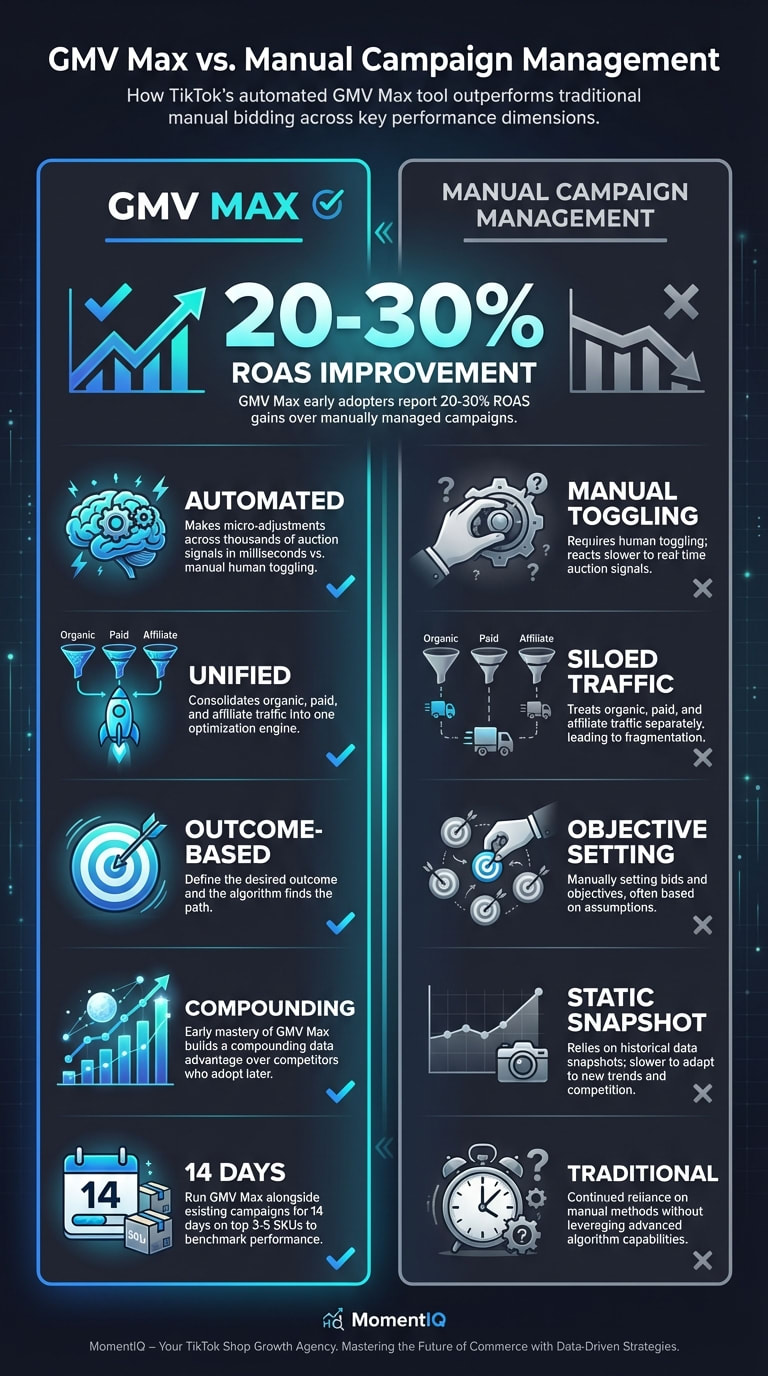
GMV Max, TikTok's automated campaign optimization tool, is rapidly becoming the centerpiece of TikTok Shop advertising in 2025. It consolidates organic traffic, paid traffic, and affiliate-driven traffic into a single optimization engine. Instead of telling TikTok how to spend your budget, you tell it what outcome you want — and the algorithm figures out the most efficient path.
Early adopters are reporting 20-30% improvements in ROAS compared to manually managed campaigns. Why? Because GMV Max can make micro-adjustments across thousands of auction signals in milliseconds — something no human media buyer can replicate.
Your prep step: Start testing GMV Max on your top 3-5 SKUs immediately. Run it alongside your existing campaign structure for 14 days, then compare. The brands that master this tool early will have a data advantage that compounds over time.
Trend 2: Smart+ Campaigns Rewrite the Rules of TikTok Ad Automation
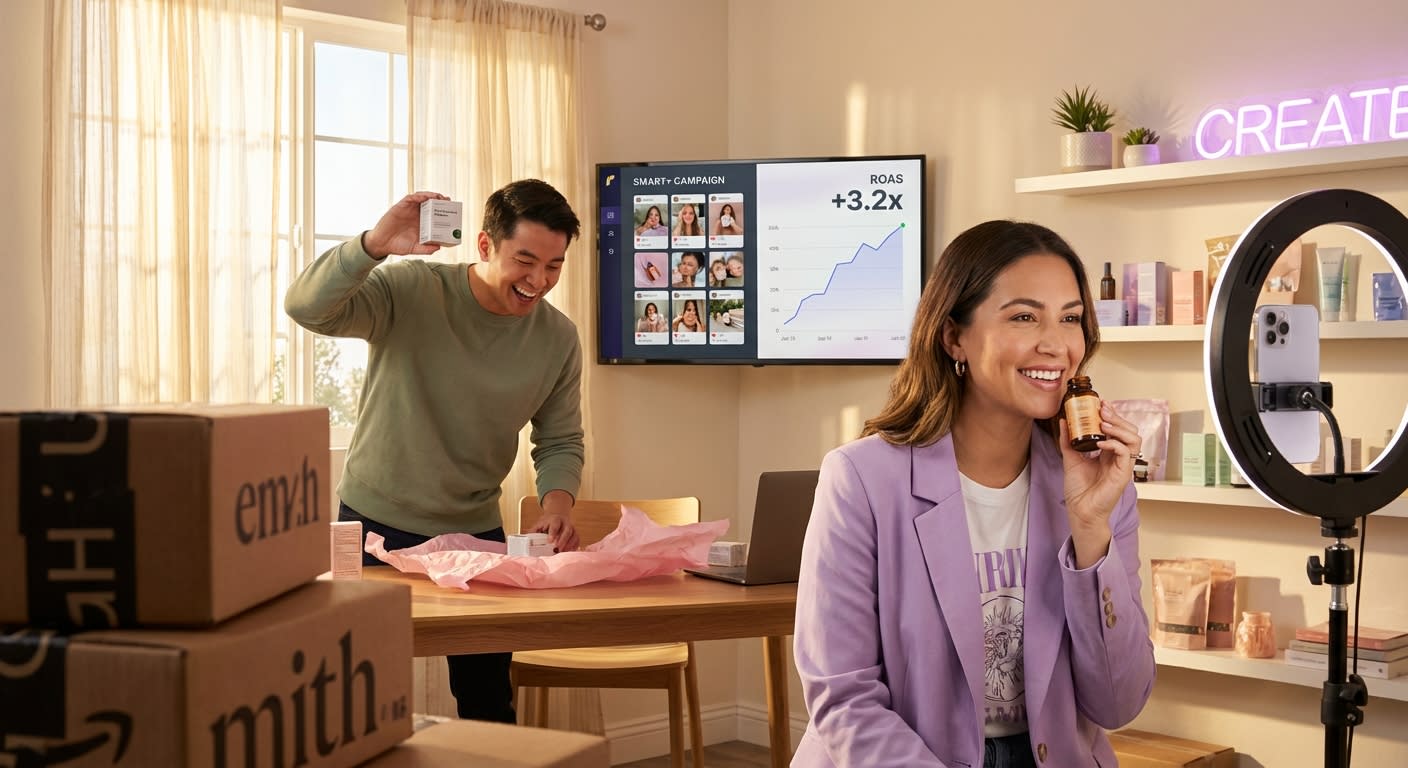
Smart+ is TikTok's answer to Meta's Advantage+ — and it's arguably more powerful because of TikTok Shop's closed-loop commerce data.
Smart+ campaigns automate targeting, bidding, and creative selection simultaneously. You feed the system creative assets and a budget, and it handles everything else. The key difference from previous automation tools: Smart+ has access to in-app purchase data, not just click data. That means it optimizes for actual buyers, not just engagers.
Statista reports that 68% of TikTok users have discovered a new product on the platform in the past 6 months, and Smart+ is designed to find those high-intent discovery moments at scale.
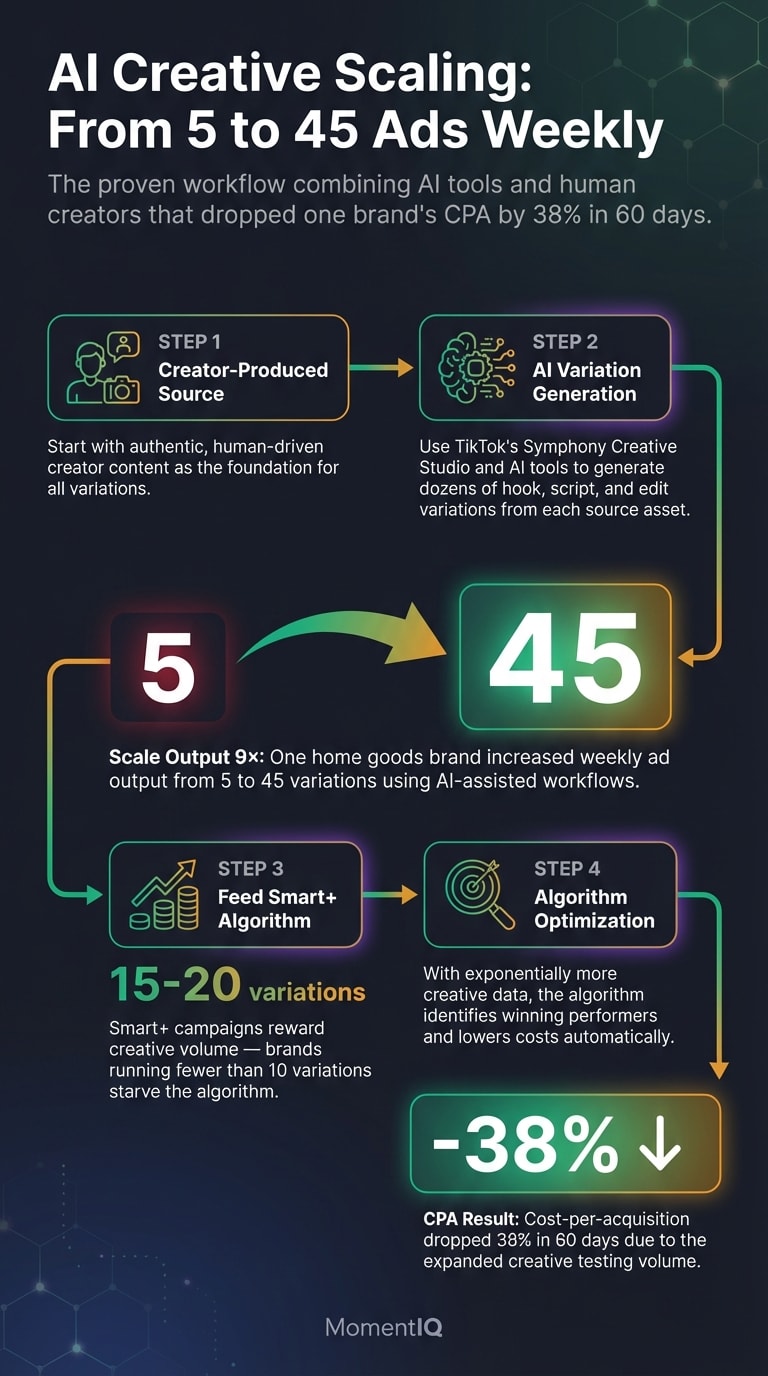
The catch? Smart+ rewards creative volume. The more unique assets you feed it, the faster it learns. Brands running fewer than 10 creative variations are essentially starving the algorithm.
Your prep step: Build a creative pipeline that produces 15-20 new ad variations per week. This is where MomentIQ's algorithmic creator matching becomes a force multiplier — instead of manually sourcing and briefing creators, you're systematically generating diverse, high-performing creative at a pace Smart+ demands.
Trend 3: The Shop Tab Is Becoming Prime Real Estate — and Ads Are Moving In
TikTok's Shop Tab is no longer a secondary feature buried in the app. It's becoming a full-fledged shopping destination, and TikTok is introducing ad placements directly within it.
This matters because Shop Tab users have fundamentally different intent than For You Page scrollers. They're browsing to buy. Early data from TikTok's Commerce team suggests Shop Tab ad placements convert at 2-3x the rate of standard in-feed placements for product-focused campaigns.
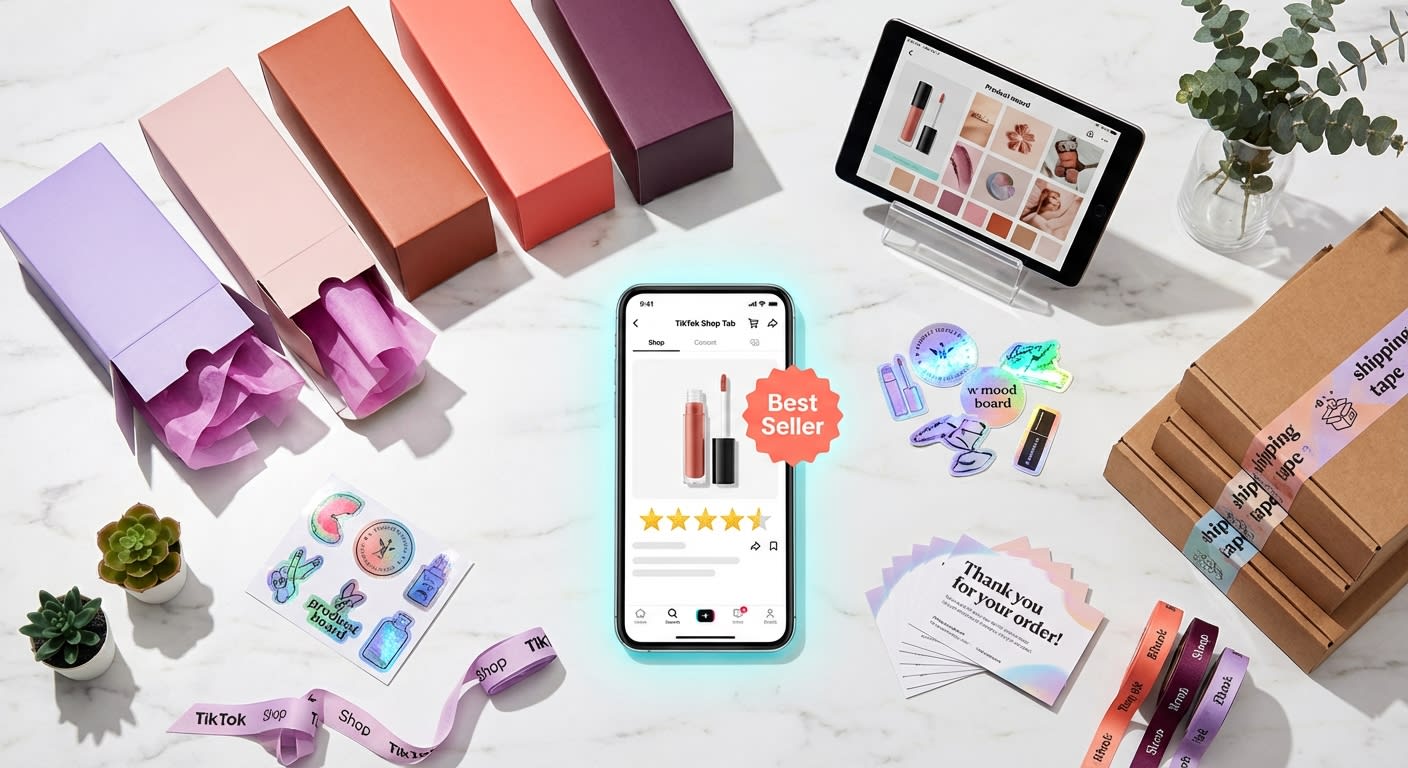
Your prep step: Ensure your product listings, images, and reviews are optimized before you start buying Shop Tab placements. A mediocre product detail page will waste premium ad spend. Think of this like Amazon — you wouldn't run Sponsored Products to a listing with 2 reviews and blurry photos.
Trend 4: Search Ads on TikTok Shop Emerge as a High-Intent Goldmine
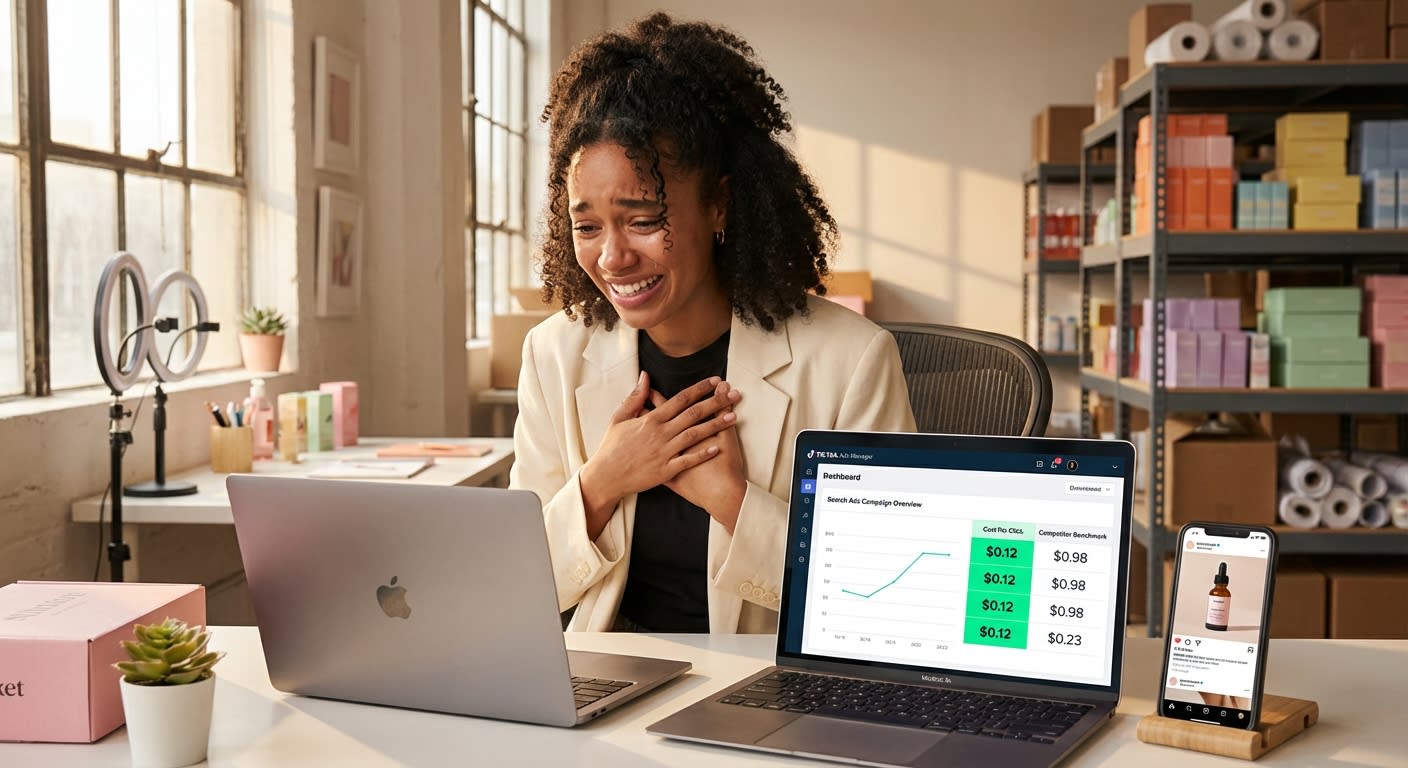
Here's a TikTok advertising trend most sellers are sleeping on: TikTok search volume is exploding, and search ads are becoming a viable campaign type.
According to TikTok's internal data shared at their 2024 Commerce Summit, over 57% of TikTok users use the search function regularly, and search-driven purchases have grown 3x year-over-year.TikTok is now rolling out keyword-targeted ad placements within search results — essentially creating a Google Ads-style auction layer on top of a social commerce platform.
The implications are massive. For the first time, you can capture demand at the moment of highest intent on TikTok, not just create demand through discovery.
Your prep step: Start building keyword lists now. Identify the 50-100 search terms most relevant to your products and begin testing search ad placements as they become available in your market. First movers in TikTok search ads will enjoy the same low-CPCs that early Google Ads adopters did in the mid-2000s.
Trend 5: AI Creative Tools Go From Novelty to Necessity
TikTok's AI creative suite — including Symphony Creative Studio, AI-generated scripts, and automated video editing — is no longer experimental. It's becoming table stakes for competitive ad production.
Here's what most sellers get wrong: they see AI creative tools as a shortcut to replace human creativity. The winners are using them as a force multiplier — generating dozens of variations from a single concept, testing hooks at scale, and iterating on winning formats faster than any manual process allows.
One home goods brand used AI-assisted creative workflows to increase their weekly ad output from 5 to 45 variations. Their cost-per-acquisition dropped 38% in 60 days because the algorithm had exponentially more data to optimize against.
Your prep step: Integrate AI tools into your creative workflow, but don't abandon human-driven creator content. The sweet spot is AI-generated variations of creator-produced source material. This is exactly the approach MomentIQ uses — combining algorithmic creator matching with scalable creative systems to keep the content pipeline full without sacrificing authenticity.
Feeling the pressure of these shifts? You're not alone. Most TikTok Shop sellers we talk to are running campaigns built for 2024's landscape while 2025's rules have already changed. Talk to a Strategist to see exactly where your ad strategy has gaps — and what to fix first.
Trend 6: Auction Density Is Spiking — and Lazy Creative Gets Punished
More advertisers are entering TikTok Shop's auction every month. TikTok's Commerce Insights Report shows a 40% increase in active advertisers year-over-year, and that number is accelerating.
What does this mean practically? CPMs are rising in competitive categories. Beauty, supplements, home goods, and fashion are seeing 15-25% CPM increases compared to Q4 2024.
But here's the nuance most sellers miss: TikTok's auction doesn't just reward the highest bidder. It rewards the highest-quality creative. Ads with strong engagement signals (watch time, shares, comments) get preferential auction treatment — effectively lowering your CPM even as competition increases.
The brands getting crushed by rising costs are the ones running the same 3-4 ad creatives for months. The brands thriving are refreshing creative weekly and letting the algorithm reward their best performers.
Your prep step: Audit your creative refresh rate. If you're not introducing at least 5-10 new creatives per week, you're falling behind. Build a system — whether in-house, through an agency, or through a hybrid approach — that sustains this pace.
Trend 7: Video Shopping Ads Get Smarter Attribution
TikTok is overhauling how Video Shopping Ads (VSAs) attribute conversions, and the changes favor sellers who understand the full funnel.
New attribution windows, view-through conversion tracking, and cross-session purchase attribution mean that VSAs will start showing more accurate (and often higher) ROAS numbers than before. Sellers who previously paused VSAs because "the numbers didn't work" may want to re-test with updated attribution.
This connects directly to a pain point we hear constantly from TikTok Shop sellers: GMV inconsistency. One week your ads crush it, the next week performance falls off a cliff. Often, the issue isn't the ads — it's the attribution model missing conversions that happen 24-48 hours after initial exposure.
Your prep step: Re-evaluate any campaigns you paused in Q4 2024 under the new attribution framework. You may find that "underperforming" campaigns were actually driving significant downstream revenue.
Trend 8: Product-Level Bidding Replaces Campaign-Level Thinking
The smartest TikTok Shop advertisers in 2025 aren't thinking in terms of campaigns. They're thinking in terms of SKU-level economics.
TikTok's ad platform is increasingly allowing granular, product-level bid adjustments within GMV Max and Smart+ frameworks. This means you can allocate more budget to high-margin products and pull back on low-margin ones — automatically.
Your prep step: Build a SKU-level profitability model that accounts for product cost, shipping, affiliate commissions, and target ROAS. Feed this into your campaign structure so the algorithm optimizes for profit, not just revenue.
Trend 9: Live Shopping Ads Become a Standalone Ad Format
TikTok is separating Live Shopping Ads into their own campaign objective with dedicated optimization signals. Previously, promoting a live stream meant boosting it through generic traffic objectives. Now, you can optimize specifically for live room purchases, live room retention, and live room engagement.
This is a game-changer for brands running daily or weekly live streams. One supplement brand reported a 47% increase in live room GMV after switching to the dedicated Live Shopping Ads objective.
Your prep step: If you're running live streams, test the dedicated Live Shopping Ads objective with a small budget before scaling. The optimization signals are fundamentally different from standard VSAs.
Trend 10: Retargeting Gets Richer With In-App Commerce Data
Forget pixel-based retargeting. TikTok Shop's closed-loop commerce ecosystem gives advertisers access to retargeting signals that don't exist on any other platform:
- Users who added your product to cart but didn't purchase
- Users who visited your TikTok Shop but bounced
- Users who watched a creator's video about your product for 15+ seconds
- Users who engaged with your live stream but didn't buy
- Users who purchased a complementary product from another seller
This level of intent data makes TikTok retargeting potentially more powerful than Meta's — especially post-iOS 14.
Your prep step: Build dedicated retargeting campaigns for each of these audience segments. The CPAs on warm audiences are typically 40-60% lower than prospecting campaigns.
Trend 11: Spark Ads Evolve Into a Full Commerce Format
Spark Ads — which let you boost organic creator content as paid ads — are getting commerce-specific upgrades. New Spark Ad variations allow direct product linking, in-ad checkout, and real-time inventory display.
This blurs the line between organic creator content and paid advertising in exactly the way TikTok's algorithm rewards. Users can't tell the difference between a creator's organic post and a Spark Ad, which means engagement rates stay high and ad fatigue stays low.
Your prep step: Negotiate Spark Ad authorization into every creator partnership. If you're working with 50+ creators (which you should be), this gives you a massive library of authentic content to amplify through paid.
Trend 12: Creative Fatigue Windows Are Shrinking Dramatically
The average lifespan of a winning TikTok ad creative has dropped from 14 days to 5-7 days in competitive categories. This is the single biggest operational challenge facing TikTok Shop advertisers in 2025.
If you're managing creators yourself, you know the pain: by the time you brief a creator, review the content, request revisions, and launch the ad, the trend window has already closed. This is where most DIY approaches break down. Managing 10 creators is feasible. Managing 100+ creators with the velocity needed to keep creative fresh? That requires systems most brands don't have.
This is precisely the problem MomentIQ solves. Through algorithmic creator matching and managed product seeding at scale, MomentIQ clients maintain a constant pipeline of fresh, high-converting creative without the operational bottleneck of manual creator management. One beauty brand scaled from $12K to $340K/month in 90 days after plugging into MomentIQ's creator ecosystem — largely because they went from producing 4 new creatives per week to 40+.
Your prep step: Calculate your current creative production velocity. If it's below 10 new variations per week, you have a structural problem that will only get worse as auction competition increases.
Trend 13: Catalog Ads Gain Algorithmic Muscle
TikTok's Catalog Ads — which dynamically serve product images and videos based on user behavior — are getting significant algorithmic upgrades in 2025. New machine learning models can predict which product from your catalog a specific user is most likely to purchase, serving personalized ads at scale.
For sellers with 50+ SKUs, this is transformative. Instead of creating individual campaigns for each product, you feed the catalog and let the algorithm match products to buyers.
Your prep step: Ensure your TikTok Shop product catalog has high-quality images, accurate descriptions, and competitive pricing. The algorithm can only work with what you give it.
Trend 14: Cross-Format Attribution Connects Organic, Affiliate, and Paid
One of the most significant TikTok Shop advertising predictions for 2025: TikTok will increasingly unify attribution across organic content, affiliate creator content, and paid ads.
This means you'll finally be able to see how a creator's organic video drove awareness that was later converted by a paid retargeting ad. Or how a live stream warmed up an audience that your VSA closed.
This shift fundamentally changes how smart brands allocate budget. Instead of siloing organic, affiliate, and paid into separate P&Ls, the winners will optimize across all three as a unified commerce engine.
Your prep step: Start tracking cross-channel metrics now, even if TikTok's native tools aren't fully there yet. Build a unified dashboard that connects affiliate GMV, organic traffic, and paid ROAS.
Trend 15: Cost-Per-Acquisition Floors Are Rising — But Not for Everyone
Here's the trend that keeps TikTok Shop sellers up at night: average CPAs across the platform are rising 15-20% year-over-year as more advertisers enter the auction.
But averages are misleading. Top-performing advertisers are actually seeing CPAs decrease because they're leveraging the new tools (GMV Max, Smart+, AI creative) more effectively than the median advertiser.
The gap between the best and the rest is widening. According to TikTok's own benchmarking data, the top 10% of advertisers achieve CPAs that are 3-4x lower than the platform median. The difference isn't budget — it's operational sophistication.
This is where the "we can manage it ourselves" objection falls apart. Yes, you can manage TikTok Shop ads in-house. But can you operate in the top 10% of advertisers without dedicated systems, proprietary data, and platform-level relationships? For most brands, the honest answer is no — and the cost of operating at the median is far higher than the cost of working with a specialized partner.
Your prep step: Benchmark your current CPAs against category averages. If you're above the median, you have a structural efficiency problem that more budget won't solve.
Not sure where you stand? Talk to a Strategist and get a custom benchmarking analysis that shows exactly how your TikTok Shop ad performance compares to top performers in your category — plus a roadmap to close the gap.
Trend 16: TikTok's Algorithm Increasingly Rewards Commerce Signals
This is the meta-trend underneath everything else: TikTok's algorithm is being retrained to prioritize commerce outcomes. Content that drives purchases, add-to-carts, and shop visits is getting amplified organically — not just through paid distribution.
What does this mean for advertisers? Your paid strategy and your organic/affiliate strategy are no longer separate. A strong affiliate program with hundreds of creators posting product content sends commerce signals that improve your paid ad performance. And strong paid campaigns drive traffic that improves your organic shop ranking.
This flywheel effect is why brands working with full-stack TikTok Shop partners are outperforming brands that treat paid ads as a standalone channel. The compounding advantage is real — and it's widening every month.
Your prep step: Stop thinking about TikTok Shop ads in isolation. Build an integrated strategy that connects creator content, organic shop optimization, live commerce, and paid amplification into a single growth engine.
Trend 17: The "Agency Skepticism" Tax Is Real — and It's Costing You
Let's address the elephant in the room. Many TikTok Shop sellers have been burned by agencies before. Generic influencer agencies that don't understand TikTok Shop's unique mechanics. Social media agencies that treat TikTok like "Instagram but vertical." Performance marketing agencies that know Meta inside-out but can't navigate TikTok's creator-commerce ecosystem.
That skepticism is valid. But letting it prevent you from getting specialized help is its own form of risk.
The math is straightforward. If your current TikTok Shop operation is generating $50K/month in GMV with a 15% net margin, that's $7,500 in monthly profit. If a specialized TikTok Shop partner can scale you to $200K/month at the same margin — even after their fees — you're netting $22,500+. The question isn't "can we afford an agency?" It's "can we afford to leave $15,000/month on the table?"
One fitness equipment brand came to MomentIQ after cycling through two generic agencies that produced zero measurable GMV growth. Within 90 days of implementing MomentIQ's full-stack approach — algorithmic creator matching, managed product seeding, and integrated paid amplification — they scaled from $22K to $310K/month in GMV. The difference wasn't budget. It was TikTok-native expertise.
What makes a TikTok Shop-specific partner different from a generic agency?
- Algorithmic creator matching instead of manual outreach (finding the right 200 creators out of millions, not guessing)
- TikTok Shop Partner of the Year credentials that come with platform-level insights, beta access, and direct support channels
- Proprietary commerce data from managing millions in GMV across categories, not just vanity engagement metrics
- Full-stack support from creator recruitment to content production to paid amplification to conversion optimization
Your prep step: If you've been burned before, ask harder questions. Does the agency specialize in TikTok Shop specifically (not just TikTok)? Do they have platform partner credentials? Can they show category-specific benchmarks? Do they have systems for creator matching at scale, or are they just sending manual DMs?
The Compounding Cost of Waiting
Here's what keeps the smartest TikTok Shop sellers moving fast: every trend on this list creates a first-mover advantage that compounds over time.
The brand that masters GMV Max in Q1 has 6 months of algorithmic learning data by Q3. The brand that builds a 200-creator affiliate army now has content velocity that can't be replicated overnight. The brand that locks in low CPAs on search ads today won't face the same auction prices in Q4.
TikTok Shop's U.S. GMV grew over 200% in 2024, according to industry estimates. That growth is attracting every major brand and thousands of new sellers. The window where early movers can build structural advantages is narrowing — not because TikTok Shop is slowing down, but because the competition is catching up.
Brands building now will own the algorithmic advantage that latecomers can't replicate. The data, the creator relationships, the campaign learnings, the organic shop authority — it all compounds. And it all takes time to build.
Your 2025 TikTok Shop Ad Strategy Action Plan
To synthesize these 17 trends into an actionable framework:
Immediate priorities (next 30 days):
- Test GMV Max on your top 5 SKUs
- Audit your creative production velocity (target: 10+ new variations/week minimum)
- Build retargeting campaigns using TikTok's in-app commerce audiences
- Optimize your product catalog for Catalog Ads
Medium-term priorities (next 90 days):
- Integrate Smart+ campaigns into your media mix
- Begin testing search ad placements
- Unify your organic, affiliate, and paid attribution tracking
- Scale your creator network to 100+ active affiliates
Strategic priorities (ongoing):
- Build the flywheel connecting creator content → organic signals → paid amplification → conversion
- Continuously refresh creative to combat shrinking fatigue windows
- Benchmark your CPAs against top-performer standards, not platform averages
- Invest in TikTok-native expertise — whether in-house or through a specialized partner
The Bottom Line on TikTok Shop Ad Trends 2025
The TikTok Shop advertising landscape in 2025 isn't just evolving — it's being rebuilt from the ground up. AI creative tools, Smart+ automation, GMV Max optimization, search ads, Shop Tab placements, and shifting auction dynamics are creating an environment where operational sophistication matters more than raw budget.
The sellers who win won't be the ones who spend the most. They'll be the ones who move fastest, adapt most aggressively, and build the systems that let them operate at the platform's cutting edge.
That's exactly what MomentIQ helps brands do. As TikTok's Shop Partner of the Year and a certified TikTok Marketing Partner, MomentIQ gives brands the algorithmic creator matching, scalable content systems, and full-stack commerce support needed to not just keep up with these 17 trends — but to capitalize on them before competitors even realize they've shifted.
Talk to a Strategist and get a custom analysis of where your ad strategy stands against these 2025 trends — plus a prioritized roadmap to close the gaps and scale profitably. The brands that act on these shifts now will be the ones writing the case studies in Q4. Make sure you're one of them.