TikTok Shop Lookalike Audiences
Master TikTok Shop lookalike audiences in 2025 with advanced targeting strategies. Fix flawed seed data, lower your CPA, and scale ROAS to find your next 10,000
You've built your seed audiences. You've launched a few campaigns. And now you're staring at a CPA that keeps climbing while your ROAS slowly bleeds out.
- Build seed audiences from high-quality buyer data, not all website visitors — 80% of TikTok Shop sellers fail here.
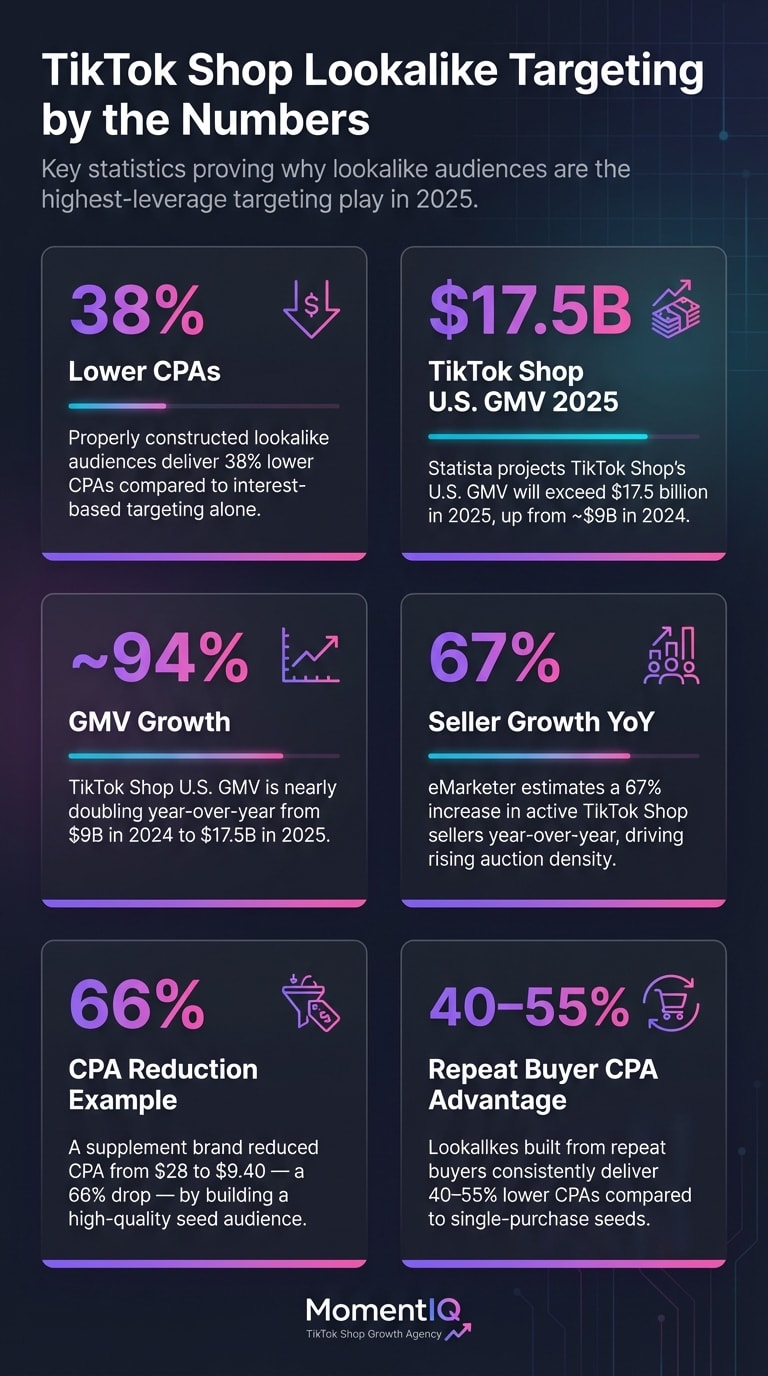
- Prioritize lookalike audiences over interest-based targeting to achieve up to 38% lower CPAs on TikTok Shop.
- Leverage TikTok-specific signals like watch time, scroll velocity, and in-app purchase history — lookalikes here don't work like Meta's.
- Establish your lookalike architecture now before the 67% year-over-year increase in TikTok Shop sellers inflates auction CPAs.
- Treat seed audience construction as a foundational strategy, not an afterthought bolted on after creative testing.
Here's the uncomfortable truth most TikTok Shop sellers won't admit: their lookalike audience strategy is either nonexistent or built on fundamentally flawed seed data. They're feeding TikTok's algorithm garbage inputs and wondering why it spits out garbage outputs.
This isn't another surface-level "set up your first lookalike audience" tutorial.You've already read those. This is the technical deep dive into TikTok Shop lookalike audience construction — the exact seed audience configurations, expansion percentages, stacking strategies, and exclusion layers that separate brands spending $50K/month profitably from brands burning through budget with nothing to show for it.
If you're a TikTok Shop seller managing $5K–$100K+ in monthly ad spend and your lookalikes aren't consistently delivering sub-$15 CPAs, you're leaving tens of thousands of dollars on the table every single month. And your competitors — the ones who figured this out three months ago — are compounding their algorithmic advantage while you're still guessing.
Let's fix that.
Why TikTok Shop Lookalike Audiences Are the Highest-Leverage Targeting Play in 2025
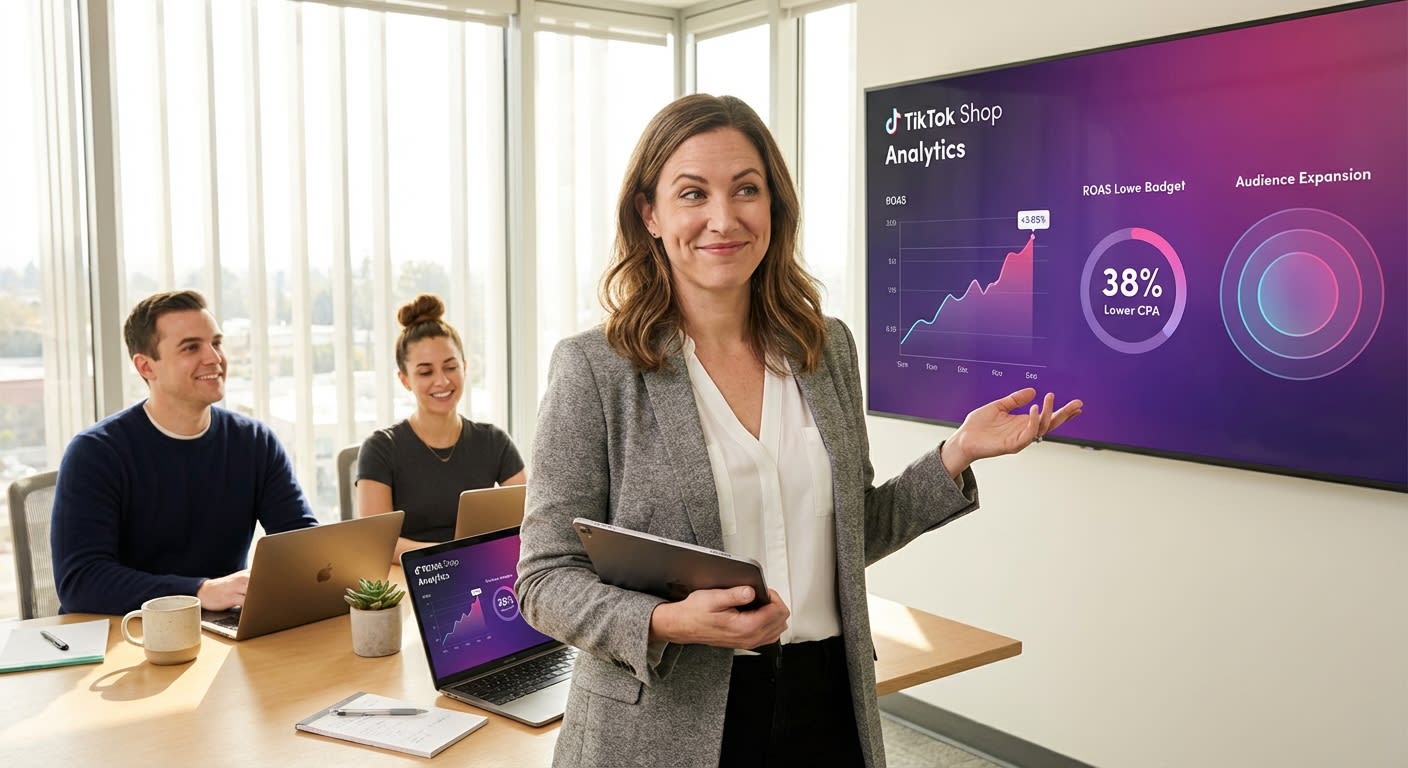
TikTok's ad platform has matured dramatically. According to TikTok's 2024 Commerce Insights Report, advertisers using properly constructed lookalike audiences see 38% lower CPAs compared to interest-based targeting alone. That gap is widening in 2025 as TikTok's machine learning models get better at pattern-matching buyer behavior.
But here's what most sellers miss: TikTok ad targeting lookalikes don't work like Meta's. The underlying algorithm processes signals differently — watch time, sound-on behavior, comment sentiment, scroll velocity, and in-app purchase history all feed TikTok's expansion model in ways that Facebook's pixel-dependent system simply can't replicate.
Statista projects TikTok Shop's U.S. GMV will exceed $17.5 billion in 2025, up from roughly $9 billion in 2024. That explosion of transaction data means TikTok's lookalike models are getting exponentially smarter every quarter.Brands building high-quality seed audiences right now are training the algorithm on their ideal buyer profile — and that training data compounds over time.
The window to establish this algorithmic advantage is narrowing. As more sellers flood TikTok Shop (eMarketer estimates a 67% increase in active TikTok Shop sellers year-over-year), auction density rises, CPAs inflate, and the brands with the most refined targeting win the bid.
This is why MomentIQ builds lookalike architecture as a foundational layer for every brand we scale — not an afterthought bolted on after creative testing.It's the single highest-leverage move you can make in your ad account today.
The Seed Audience Quality Framework: Why Your Lookalikes Fail Before They Launch
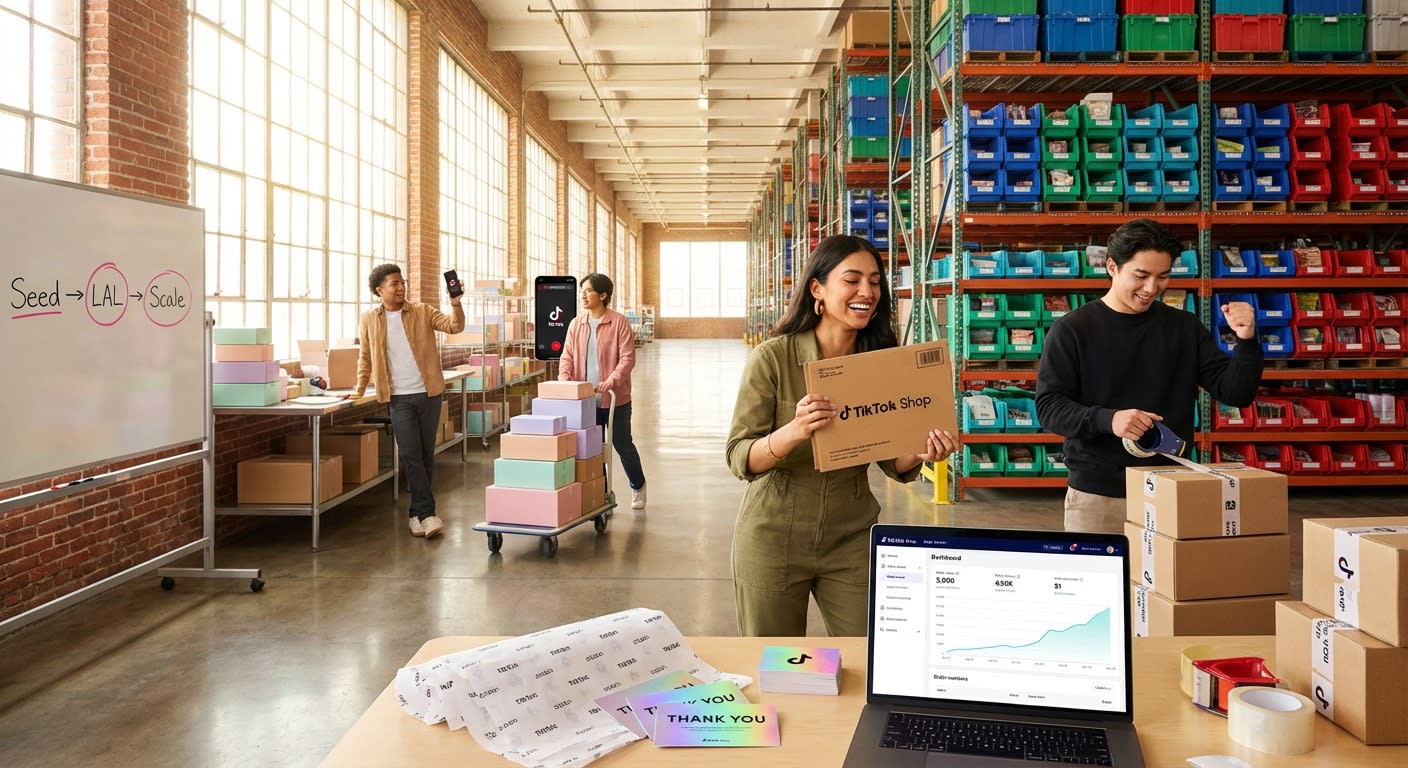
lookalike audience from customer cohort analysis](https://res.cloudinary.com/dyj6g3mtf/image/upload/f_auto,q_auto/v1773188145/momentiq/blog/tiktok-shop-lookalike-audiences-in-2025-the-advanced-targeting-playbook-to-find--data-analyst-creating-tiktok-shop-value--b.jpg)

ages/blog/tiktok-shop-lookalike-audiences-in-2025-the-advanced-targeting-playbook-to-find--creator-studio-with-tiktok-shop-video-sh-a.jpg)

Every lookalike audience is only as good as its seed. This is where 80% of TikTok Shop sellers get it catastrophically wrong.
They build a seed audience from "all website visitors" or "all add-to-carts" and call it a day. The result? A lookalike that's optimized to find more window shoppers, not buyers. TikTok's algorithm is incredibly literal — it finds people who look like your seed. If your seed is full of low-intent users, your lookalike will be, too.
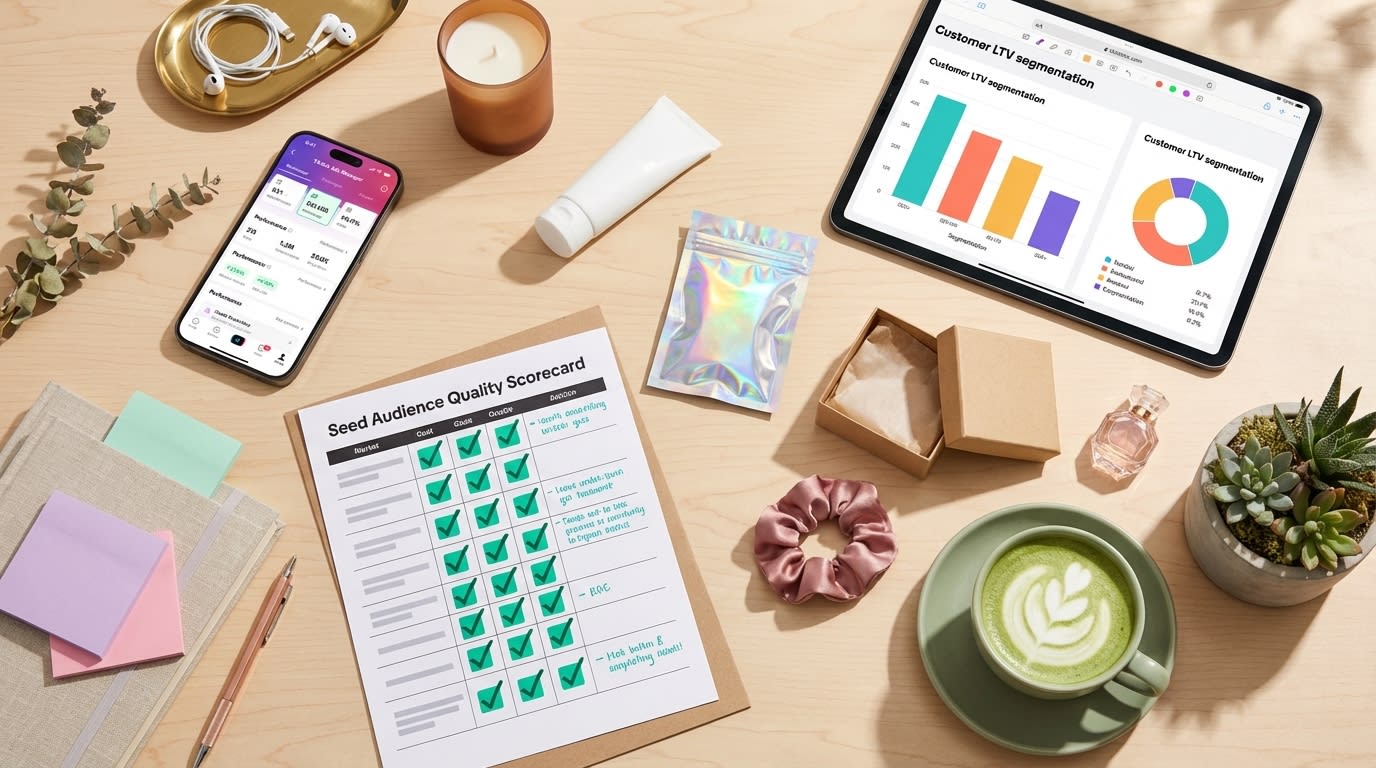
The Seed Quality Hierarchy (Ranked by Conversion Signal Strength)
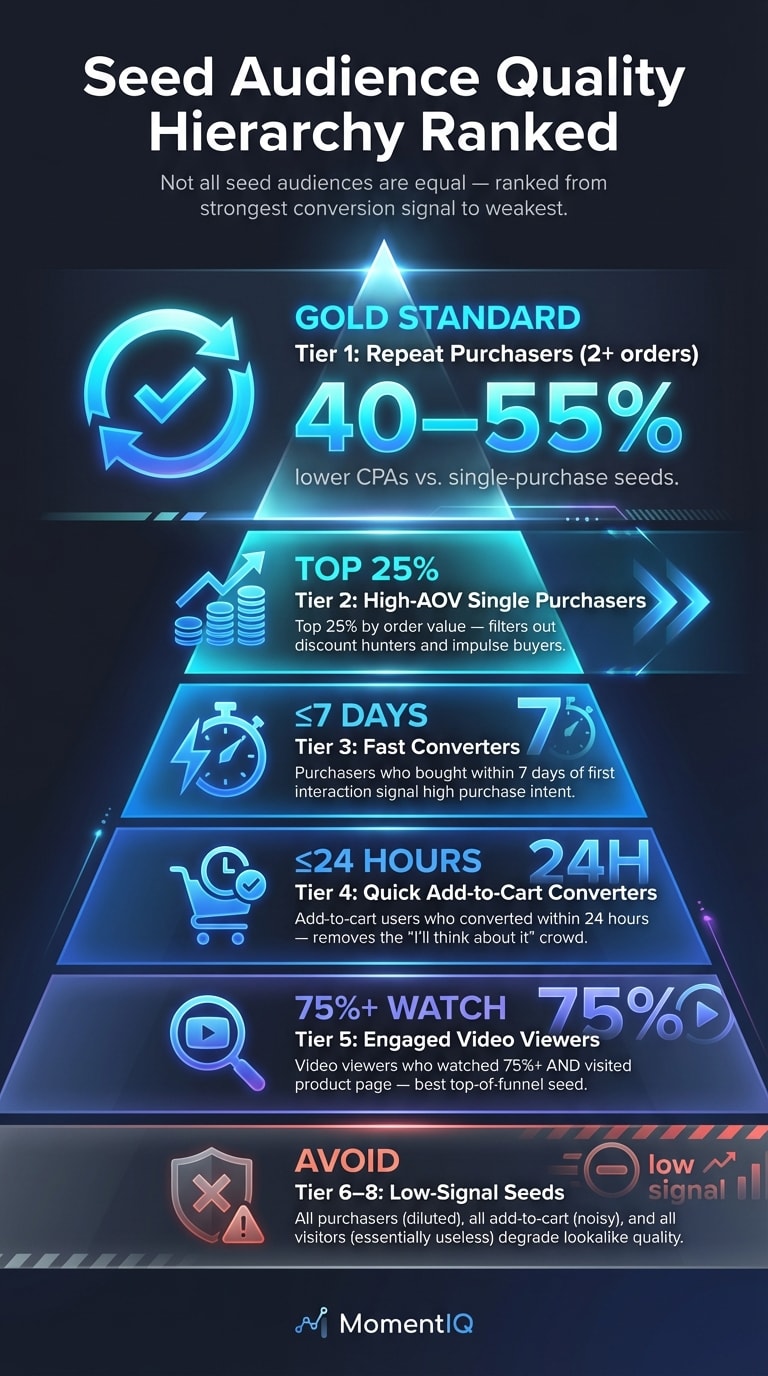
Not all seeds are created equal. Here's the hierarchy we've validated across hundreds of campaigns:
- Repeat purchasers (2+ orders) — The gold standard. These users have the strongest behavioral signal. Lookalikes built from repeat buyers consistently deliver 40–55% lower CPAs compared to single-purchase seeds.
2.High-AOV single purchasers (top 25% by order value) — Filters out discount hunters and impulse buyers. This seed tells TikTok: "find me people who spend real money."
3.Purchasers who bought within 7 days of first interaction — Fast converters signal high purchase intent. This seed produces lookalikes with shorter conversion windows. - Add-to-cart users who converted within 24 hours — Removes the "I'll think about it" crowd.
5.Video viewers who watched 75%+ AND visited product page — The best top-of-funnel seed. Combines content engagement with commercial intent. - All purchasers (unfiltered) — Better than nothing, but diluted by one-time discount buyers and gift purchasers who'll never return.
7.All add-to-cart users — Noisy. Includes abandoned carts, price comparers, and accidental taps. - All website/shop visitors — Essentially useless for lookalike construction. Avoid.
The critical insight: You need a minimum of 1,000 users in your seed audience for TikTok's algorithm to find meaningful patterns, but the sweet spot is 5,000–20,000. Below 1,000, the model doesn't have enough data points. Above 50,000, you're likely including too much behavioral noise.
How to Build a High-Signal Seed When You're Starting Small
If you're a newer TikTok Shop seller without thousands of purchasers, here's the workaround:
- Stack your Shopify/TikTok Shop purchase data with email list uploads. Upload your highest-LTV customer emails as a custom audience, then build your lookalike from that combined seed.- Use TikTok Pixel events layered with time-based filters. A "Complete Payment" event filtered to the last 30 days is dramatically more valuable than a 180-day window full of stale data.
- Leverage creator content engagement. If you're running affiliate content through TikTok Shop, build seeds from users who engaged with your top-converting creator videos. This is a massively underutilized signal.
Pro tip: One supplement brand we worked with at MomentIQ had only 800 purchasers when they came to us. By combining their email list of high-LTV subscribers with TikTok Pixel purchase data and filtering for repeat buyers, we built a seed of 3,200 users. The resulting lookalike delivered a $9.40 CPA versus their previous $28 CPA from interest-based targeting — a 66% reduction that completely changed their unit economics.
TikTok Custom Audience Strategy: The Expansion Percentage Playbook
Once your seed is locked, the next decision is expansion percentage. This is where the technical nuance lives, and where most guides give you dangerously oversimplified advice.
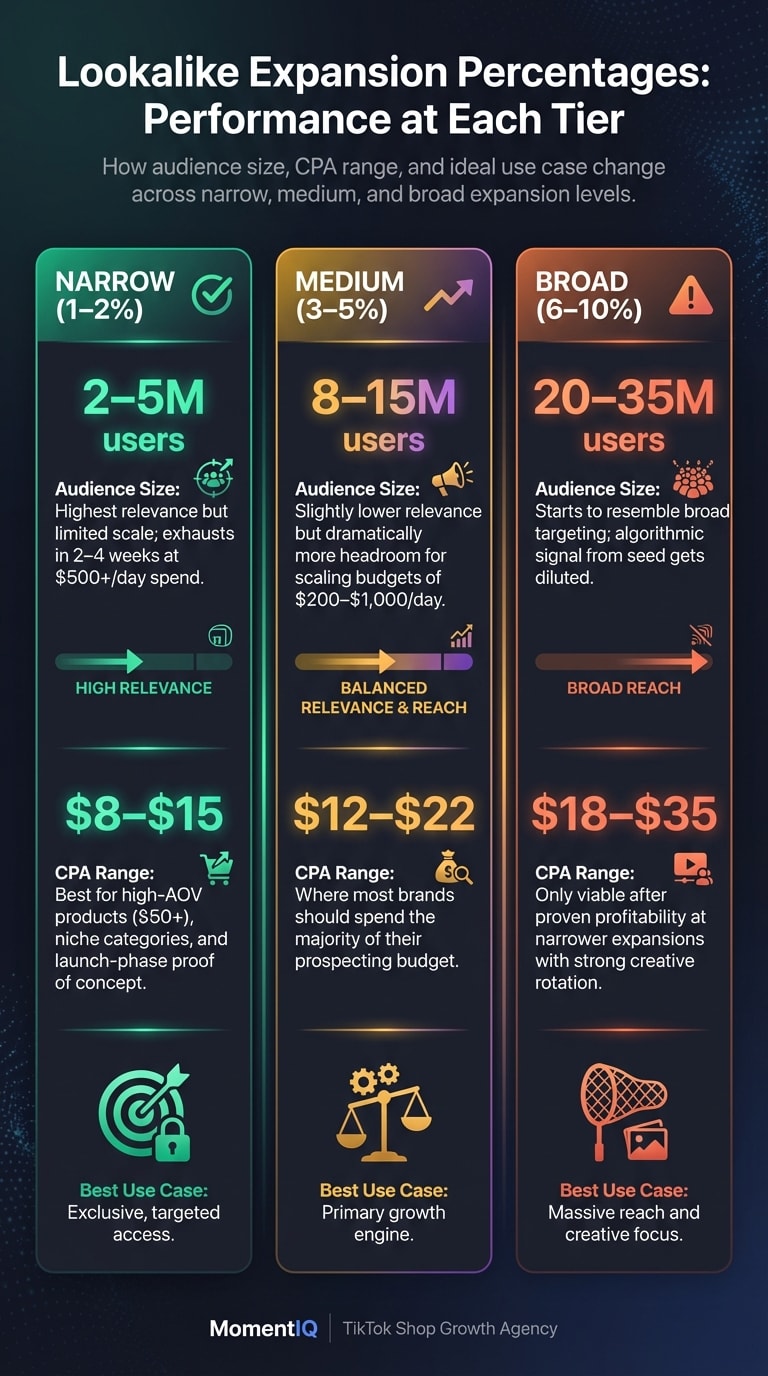
TikTok offers lookalike expansion in percentage increments that determine how broadly the algorithm searches beyond your seed's behavioral profile. Here's what actually happens at each level — and the CPA benchmarks we see consistently:
Narrow Expansion (1–2%)
- Audience size: ~2–5 million users (U.S.)
- Typical CPA range: $8–$15 for well-optimized accounts
- Best for: High-AOV products ($50+), niche categories, retargeting amplification
- The tradeoff: Highest relevance, but limited scale. You'll exhaust this audience in 2–4 weeks at $500+/day spend.
When to use it: Launch phase. This is your proof-of-concept audience. If your creative and offer can't convert a 1% lookalike, the problem isn't targeting — it's your funnel.
Medium Expansion (3–5%)
- Audience size: ~8–15 million users (U.S.)
- Typical CPA range: $12–$22
- Best for: Scaling phase, products with broad appeal, $200–$1,000/day budgets
- The tradeoff: Slightly lower relevance, but dramatically more headroom for scale.
When to use it: Once your 1–2% lookalike is converting profitably, duplicate the campaign with a 3–5% expansion. This is where most brands should be spending the majority of their prospecting budget.
Broad Expansion (6–10%)
- Audience size: ~20–35 million users (U.S.)
- Typical CPA range: $18–$35
- Best for: High-volume, low-AOV products, brands spending $2,000+/day, awareness-to-conversion plays
- The tradeoff: Starts to resemble broad targeting. The algorithmic signal from your seed gets diluted.
When to use it: Only after you've proven profitability at narrower expansions AND you have strong creative rotation to compensate for lower audience relevance.
The Expansion Stacking Strategy That Slashes CPA by 30%+
Here's the play that separates sophisticated advertisers from everyone else: don't choose one expansion percentage — run all three simultaneously with budget allocation weighted toward your best performer.
The configuration:
- Campaign 1: 1% lookalike → 30% of prospecting budget
- Campaign 2: 3% lookalike → 50% of prospecting budget
- Campaign 3: 5–7% lookalike → 20% of prospecting budget
Critically, each campaign must exclude the audiences used in the other two. Without exclusion layers, you're bidding against yourself and inflating your own CPAs. (More on exclusion architecture below.)

This stacking approach lets TikTok's algorithm optimize delivery across different audience pools simultaneously. The 3% tier typically becomes your workhorse — broad enough for scale, narrow enough for relevance. But the 1% tier often surfaces your absolute lowest-CPA conversions, and the 5–7% tier catches high-potential buyers the narrower models miss.
Ready to see what this stacking strategy could do for your specific product category and budget? Talk to a Strategist — we'll map your current audience architecture and show you exactly where the inefficiencies are hiding.
Exclusion Layer Architecture: The CPA Killer Nobody Talks About
If expansion percentages are the engine of your lookalike strategy, exclusion layers are the steering wheel. Without them, you're burning budget on users who've already converted, users in overlapping audiences, and users who've explicitly shown they're not interested.
Here's the exclusion stack every TikTok Shop advertiser should be running:
Layer 1: Purchase Exclusions
- Exclude all users who've completed a purchase in the last 30 days from prospecting campaigns
- Exception: If your product has a natural repurchase cycle under 30 days (consumables, supplements), reduce this window to 14 days
- Impact: Eliminates wasted spend on existing customers. Sounds obvious, but we audit accounts weekly where this basic exclusion isn't set up
Layer 2: Audience Overlap Exclusions
- Each lookalike tier (1%, 3%, 5%) must exclude the other tiers
- Your retargeting campaigns must exclude all lookalike audiences (and vice versa)
- Impact: Prevents internal auction competition. One home goods brand saw their blended CPA drop 22% overnight simply by adding proper overlap exclusions across their campaign structure
Layer 3: Negative Engagement Exclusions
- Exclude users who've hidden your ads or reported them
- Exclude users who've visited your product page 3+ times without adding to cart (these are price comparers, not buyers)
- Impact: Removes low-intent users from your delivery pool, improving your conversion rate and signaling to TikTok's algorithm that your audience is high-quality
Layer 4: Geographic and Demographic Refinement
- Even within lookalikes, layer on geographic exclusions for regions where your shipping economics don't work
- Exclude age brackets that historically don't convert (check your TikTok Ads Manager analytics — the data is there)
- Impact: Tightens delivery without reducing audience quality. A skincare brand we worked with excluded users under 21 from their anti-aging product lookalikes and saw CPA drop 18% with zero impact on volume
Layer 5: Creator Audience Isolation
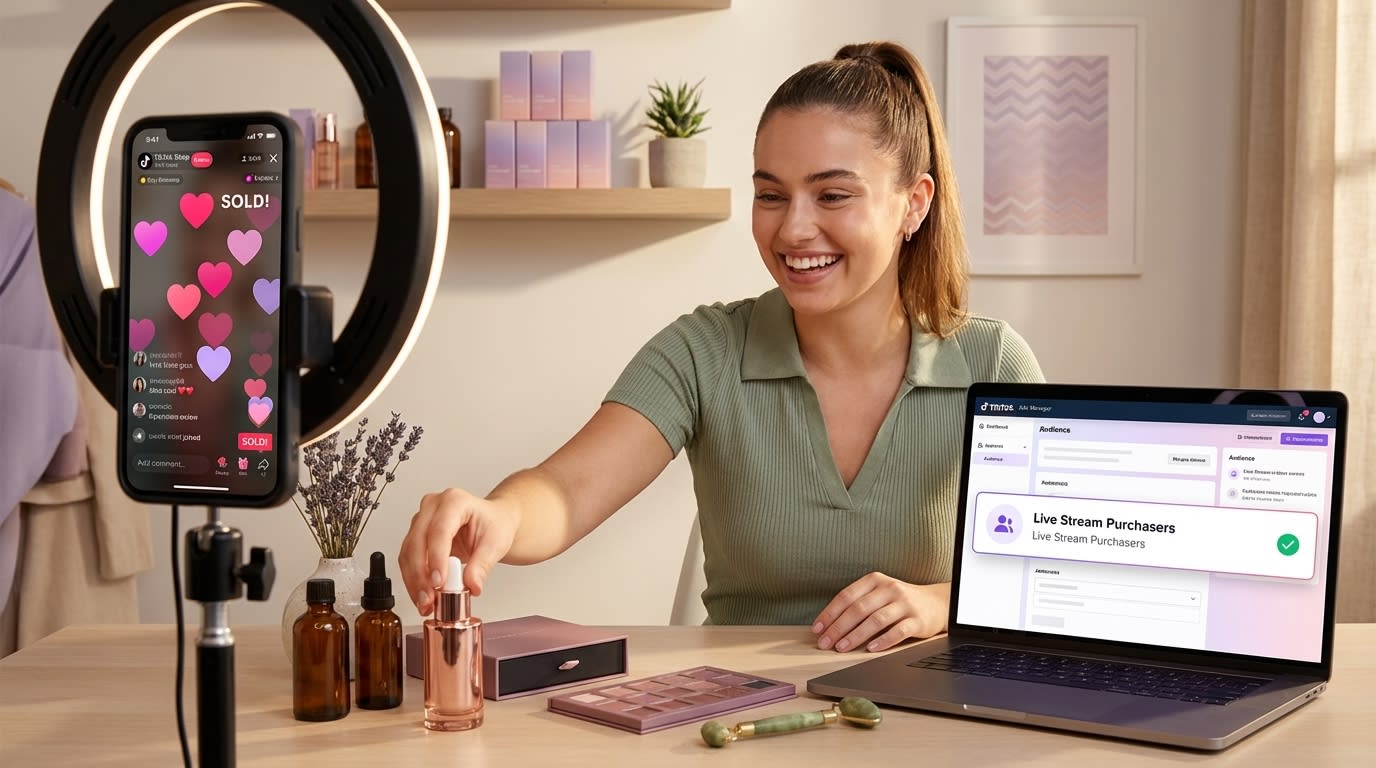
This is the advanced play. If you're running TikTok Shop affiliate content through creators:
- Build custom audiences from users who engaged with specific creator content
- Use these as BOTH seed audiences for new lookalikes AND exclusion audiences for your branded ad campaigns
- Why: Creator-engaged users convert through a fundamentally different psychological pathway than ad-exposed users. Mixing them in the same campaign muddies your attribution and confuses the algorithm's optimization signals

Advanced Stacking: Multi-Seed Lookalike Combinations
Once you've mastered single-seed lookalikes, the next level is multi-seed stacking — combining multiple behavioral signals into a single, hyper-refined audience.
Strategy 1: The Buyer + Engager Intersection
Create two separate seeds:
- Seed A: All purchasers (last 60 days)
- Seed B: Users who watched 75%+ of your top 10 converting videos
Build 3% lookalikes from each, then create a saved audience that targets the intersection (users who appear in BOTH lookalikes). This intersection audience is smaller but dramatically more qualified.
Benchmark CPA: We consistently see $7–$12 CPAs from intersection audiences versus $15–$22 from single-seed lookalikes in the same product categories.
Strategy 2: The High-AOV Ladder
Segment your purchasers by order value:
- Seed A: Top 10% AOV buyers
- Seed B: Top 25% AOV buyers
- Seed C: All buyers
Run 1% lookalikes from Seed A, 3% from Seed B, and 5% from Seed C. Allocate budget inversely to audience size — your smallest, highest-value audience gets the highest per-user bid.
This strategy is especially powerful for brands selling products at multiple price points. It lets TikTok find different buyer profiles for different products within your catalog.

Strategy 3: The Temporal Freshness Stack
TikTok's algorithm weights recent behavioral data more heavily than older data. Exploit this:
- Seed A: Purchasers from the last 7 days → 1% lookalike
- Seed B: Purchasers from the last 30 days → 3% lookalike
- Seed C: Purchasers from the last 90 days → 5% lookalike
The 7-day seed captures your most current buyer profile, which is critical during seasonal shifts, viral moments, or after creative changes that attract a different demographic. One fitness equipment seller using this temporal stacking approach saw their CPA decrease by 34% during a product launch because the 7-day seed immediately reflected the new buyer profile.
The CPA Benchmark Matrix: What Good Actually Looks Like
Let's get specific. Here are the CPA ranges we see across product categories when lookalike audiences are properly constructed:
| Product Category | Avg AOV | 1% LAL CPA | 3% LAL CPA | 5%+ LAL CPA |
|---|---|---|---|---|
| Beauty/Skincare | $25–$45 | $8–$13 | $12–$18 | $16–$25 |
| Supplements/Wellness | $35–$60 | $10–$16 | $15–$22 | $20–$30 |
| Fashion/Apparel | $30–$55 | $9–$14 | $14–$20 | $18–$28 |
| Home & Kitchen | $20–$40 | $7–$12 | $11–$17 | $15–$24 |
| Electronics/Gadgets | $40–$80 | $14–$22 | $20–$30 | $26–$40 |
| Pet Products | $20–$35 | $6–$10 | $9–$15 | $13–$20 |
If your CPAs are 50%+ above these benchmarks, your lookalike construction needs an overhaul. The issue is almost always seed quality, missing exclusion layers, or running a single expansion percentage instead of a stacked approach.
"We Can Handle This In-House" — Why Most Teams Hit a Ceiling
Let's address the elephant in the room. You might be reading this thinking, "Great, I'll implement all of this myself."
And you absolutely can — if you have:
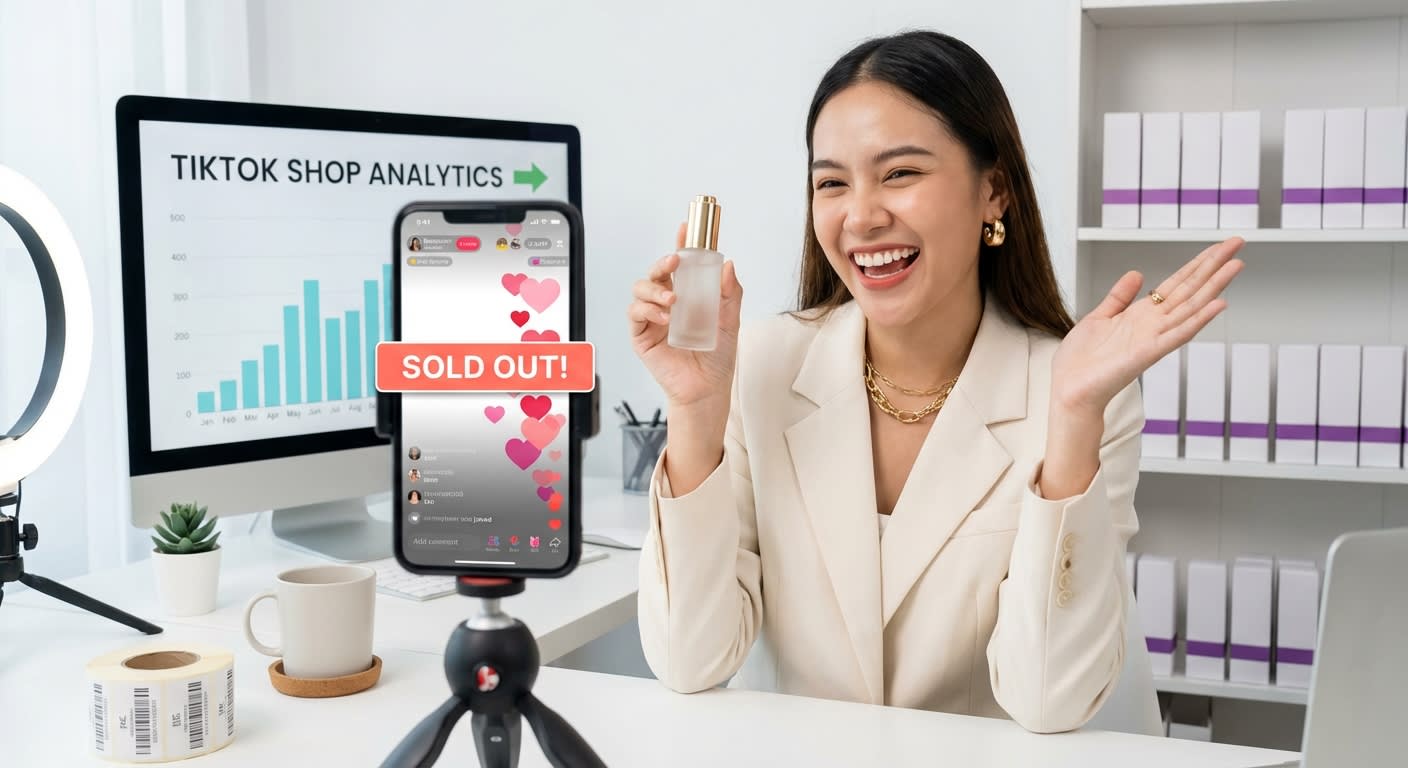
- A dedicated media buyer who lives inside TikTok Ads Manager 40+ hours/week
- Access to cross-account benchmark data across hundreds of TikTok Shop campaigns (not just your own)
- A system for continuously refreshing seed audiences as your buyer profile evolves
- The ability to simultaneously manage creative rotation, bid strategy, and audience architecture without any single element degrading
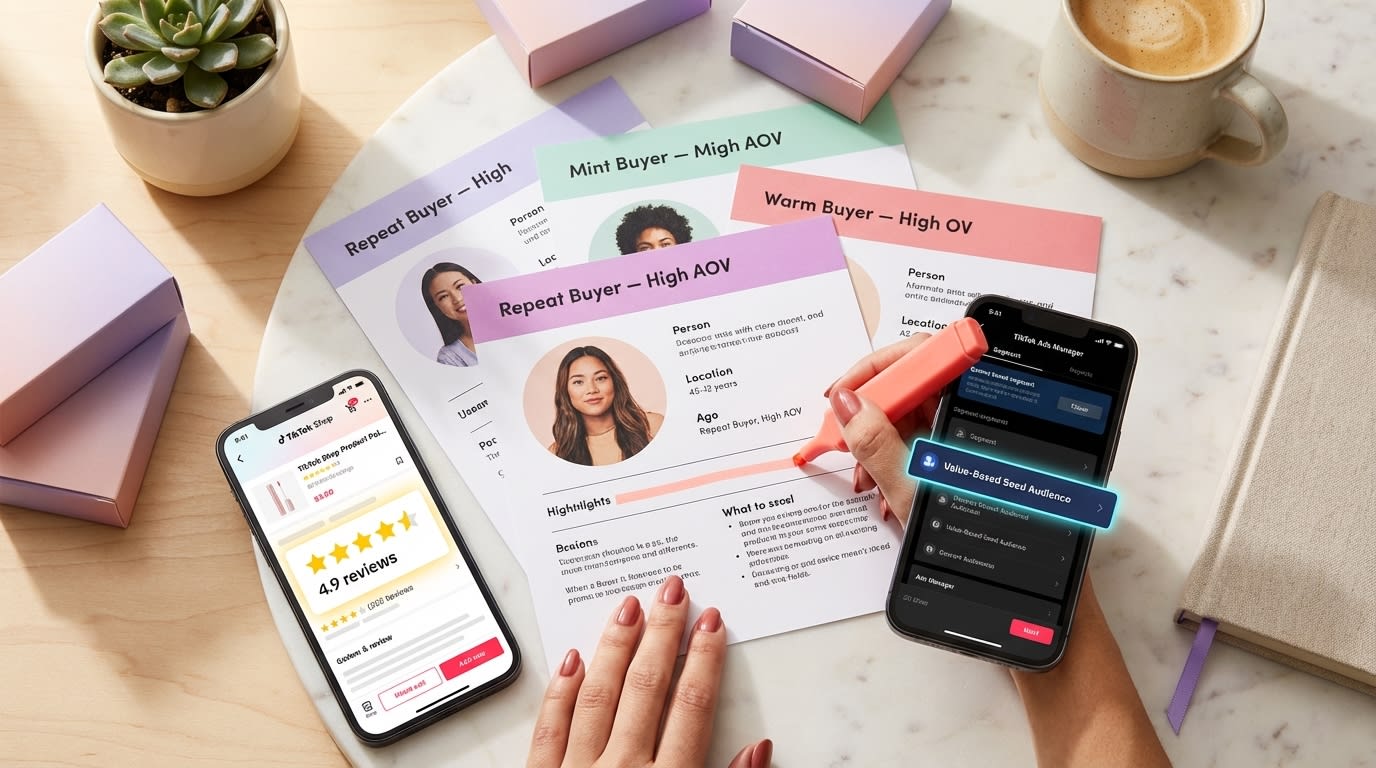
The reality for most brands: your media buyer is also managing Meta, Google, and email. They're spending maybe 10 hours/week on TikTok. They're building lookalikes from the default audience suggestions TikTok serves up. And they're not seeing the cross-category pattern data that reveals which seed configurations work best for specific product types.
This is exactly why brands partner with MomentIQ. As TikTok's Shop Partner of the Year and a certified TikTok Marketing Partner, we manage lookalike architecture across dozens of active TikTok Shop accounts simultaneously. That cross-account data creates a compounding intelligence advantage — we know what's working right now, not what worked six months ago.

One beauty brand came to us after their in-house team had been running TikTok Shop ads for five months with a $24 CPA. Within 60 days, our audience architecture rebuild — combined with creator-seeded lookalikes from our affiliate network — brought their CPA to $11.20 while simultaneously scaling spend from $8K to $47K/month.
"But we've tried agencies before." We hear this constantly. Here's what makes this different: most agencies treat TikTok Shop like another Meta channel. They apply the same playbook — broad targeting, creative testing, hope for the best. MomentIQ is built exclusively for TikTok commerce. Our strategists have managed over $50M in TikTok Shop ad spend, and our proprietary data from the Reacher platform gives us creator engagement signals that no other agency can feed into lookalike seeds.
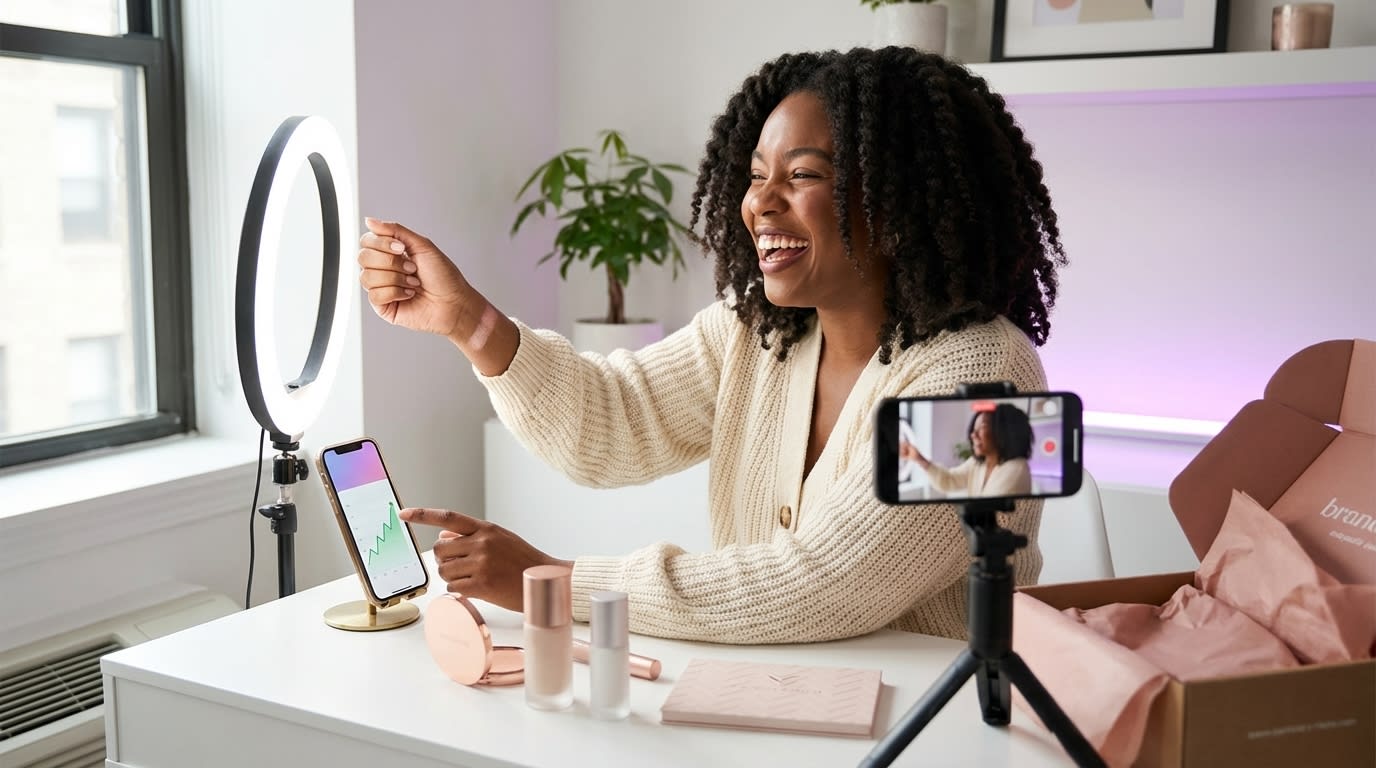
The Creator-Lookalike Flywheel: MomentIQ's Proprietary Edge
Here's where everything connects — and where this playbook intersects with your broader TikTok Shop growth strategy.
Most brands treat paid ads and creator/affiliate content as separate channels. That's a massive strategic error. The highest-performing TikTok Shop brands use creator content engagement data to fuel their lookalike audiences, and use lookalike-driven paid traffic to amplify their best creator content.

The flywheel works like this:
- MomentIQ's algorithmic creator matching identifies and activates 50–500+ creators for your brand through product seeding at scale
- Those creators produce authentic content that generates organic engagement and sales
- The engagement data from top-performing creator content becomes seed audiences for your lookalike campaigns
- Lookalike-targeted Spark Ads amplify the best creator content to audiences that behaviorally mirror your existing buyers
- New purchasers from those campaigns feed back into your seed audiences, making future lookalikes even more precise
- Repeat. Scale. Compound.
This is the flywheel that took a supplement brand from $18K to $420K/month in GMV within 90 days. It wasn't just better ads or better creators — it was the integration of creator engagement signals into paid audience architecture that created exponential returns.
No generic influencer agency can build this flywheel because they don't have the TikTok Shop transaction data, the creator matching infrastructure, or the ad management expertise to connect all three layers. And no in-house team can replicate it because they don't have access to the cross-brand creator performance data that powers the matching algorithm.
The Budget Objection: Why "We Can't Afford an Agency" Is the Most Expensive Belief in TikTok Commerce
Let's do the math.
Say you're spending $20,000/month on TikTok Shop ads with a $22 CPA. That's roughly 909 customers.
With properly constructed lookalike architecture, a realistic CPA improvement is 30–40%. Let's be conservative and say 30% — bringing your CPA to $15.40.
At the same $20K spend, you're now acquiring 1,299 customers instead of 909. That's 390 additional customers per month.
If your average order value is $40, those additional customers represent $15,600 in incremental monthly revenue — or $187,200 annually. Factor in repeat purchase rates (TikTok Shop buyers have a 28% repeat purchase rate within 90 days according to TikTok's 2024 Commerce Report), and the lifetime value multiplier makes the ROI even more dramatic.
The cost of NOT optimizing your lookalike architecture isn't the agency fee — it's the hundreds of thousands in revenue you're leaving on the table every year.
Your 30-Day Lookalike Audience Implementation Roadmap
Here's exactly how to implement everything in this playbook, week by week:
Week 1: Seed Audit & Construction
- Export your TikTok Shop and Shopify purchase data for the last 90 days
- Segment by repeat buyers, top 25% AOV, and 7-day recency
- Upload your highest-LTV email list as a custom audience
- Build 3 distinct seed audiences using the quality hierarchy above
- Minimum seed size target: 1,000 users per seed (ideally 5,000+)
Week 2: Lookalike Launch & Exclusion Setup
- Build 1%, 3%, and 5% lookalikes from your strongest seed
- Configure all 5 exclusion layers (purchase, overlap, negative engagement, geo/demo, creator isolation)
- Launch with the stacking budget allocation: 30% / 50% / 20%
- Set daily budget at a level that allows 50+ conversions per week per campaign (TikTok's algorithm needs this volume to optimize)
Week 3: Multi-Seed Stacking
- Build intersection audiences from your buyer + engager seeds
- Launch the temporal freshness stack (7-day, 30-day, 90-day seeds)
- Begin testing high-AOV ladder lookalikes if you have sufficient purchase volume
- Monitor CPA by audience tier and begin shifting budget toward best performers
Week 4: Optimization & Scaling
- Kill any lookalike tier with CPA 40%+ above your best performer
- Refresh 7-day seed audiences (this should become a weekly habit)
- Layer in creator content engagement seeds if you're running affiliate content
- Scale winning tiers by 20% budget increments every 3 days (never more — algorithm shock is real)
The Compounding Cost of Waiting
Every week you run TikTok Shop ads without optimized lookalike architecture, you're doing two things:
- Wasting current ad spend on audiences that are 30–50% less efficient than they could be
- Failing to train TikTok's algorithm on your ideal buyer profile — which means your future campaigns start from a weaker position
TikTok's algorithmic learning is cumulative. Brands that build high-quality seed audiences today are creating a targeting moat that competitors who start six months from now literally cannot replicate without spending months and tens of thousands of dollars catching up.
With TikTok Shop's U.S. seller base growing 67% year-over-year, auction competition is intensifying every quarter. The CPAs in the benchmark matrix above? They'll be 15–25% higher by Q4 2025 as more advertisers compete for the same audiences. The brands that lock in efficient lookalike architecture now will maintain their CPA advantage even as the market gets more expensive.
Stop Guessing. Start Scaling.
You now have the complete technical playbook for TikTok Shop lookalike audience construction — seed quality frameworks, expansion percentages with CPA benchmarks, stacking strategies, exclusion layers, and the creator-lookalike flywheel that compounds returns over time.
But knowing the playbook and executing it flawlessly are two very different things.
If you're spending $5K+/month on TikTok Shop ads and your CPA is higher than the benchmarks in this guide, you're leaving money on the table every single day. MomentIQ builds and manages this exact lookalike architecture — plus creator matching, product seeding, and full-funnel commerce support — for brands ready to scale aggressively on TikTok Shop.
Talk to a Strategist and we'll analyze your current audience architecture, identify the specific inefficiencies costing you money, and show you a custom scaling roadmap built on the strategies in this guide.
The brands that will dominate TikTok Shop in 2025 aren't the ones with the biggest budgets. They're the ones with the smartest audience architecture. And that advantage is being built right now — with or without you.