How Beauty Brands Crush TikTok Shop Ads
Discover how 5 beauty brands achieve massive ROAS on TikTok Shop ads. Get real paid media case studies, creative teardowns & optimization strategies for 2025.
Beauty brands running TikTok Shop ads in 2025 are splitting into two camps: those printing money and those burning it.
- Make your TikTok Shop ads feel native to the For You Page — the algorithm penalizes anything that looks like a traditional commercial.
- Target the $18–$45 price point sweet spot for beauty products to maximize impulse-driven, ad-fueled purchases on TikTok Shop.
- Use 'Dermatologist Reaction' style creatives to scale skincare ads — one brand hit 6.2x ROAS and grew from $8K to $62K monthly spend.
- Leverage TikTok's beauty category dominance: it drives 35% of total U.S. TikTok Shop GMV, outperforming every other vertical.
- Start with modest test budgets and scale over 90 days using relentless creative optimization to sustain ROAS above 4x.
The difference isn't budget. It isn't product quality. It's not even about having the "right" influencer.
It's about creative strategy, audience architecture, and the relentless optimization of every dollar flowing through TikTok's commerce ad ecosystem.
We've analyzed five beauty and cosmetics brands — spanning skincare, color cosmetics, haircare, and beauty tools — that scaled paid media on TikTok Shop from modest test budgets to six-figure monthly ad spends with sustained ROAS above 4x.This post tears apart exactly what they did: the creative formats, the audience targeting layers, the budget allocation shifts, and the 90-day ROAS trajectories that turned paid ads into their most profitable growth channel.
If you're a beauty brand manager or DTC founder staring at inconsistent GMV, rising CAC, and ad creative that gets views but not conversions Spark Ads vs Video Shopping Ads, this breakdown was written for you.
Already know your paid strategy needs an overhaul? Talk to a Strategist and get a custom beauty ad scaling roadmap built around your catalog, margins, and growth targets.
Why Beauty Brands TikTok Shop Ads Outperform Every Other Category
Before we dive into the case studies, let's establish why beauty is TikTok Shop's killer category — and why paid ads in this vertical have structural advantages most brands don't fully exploit.
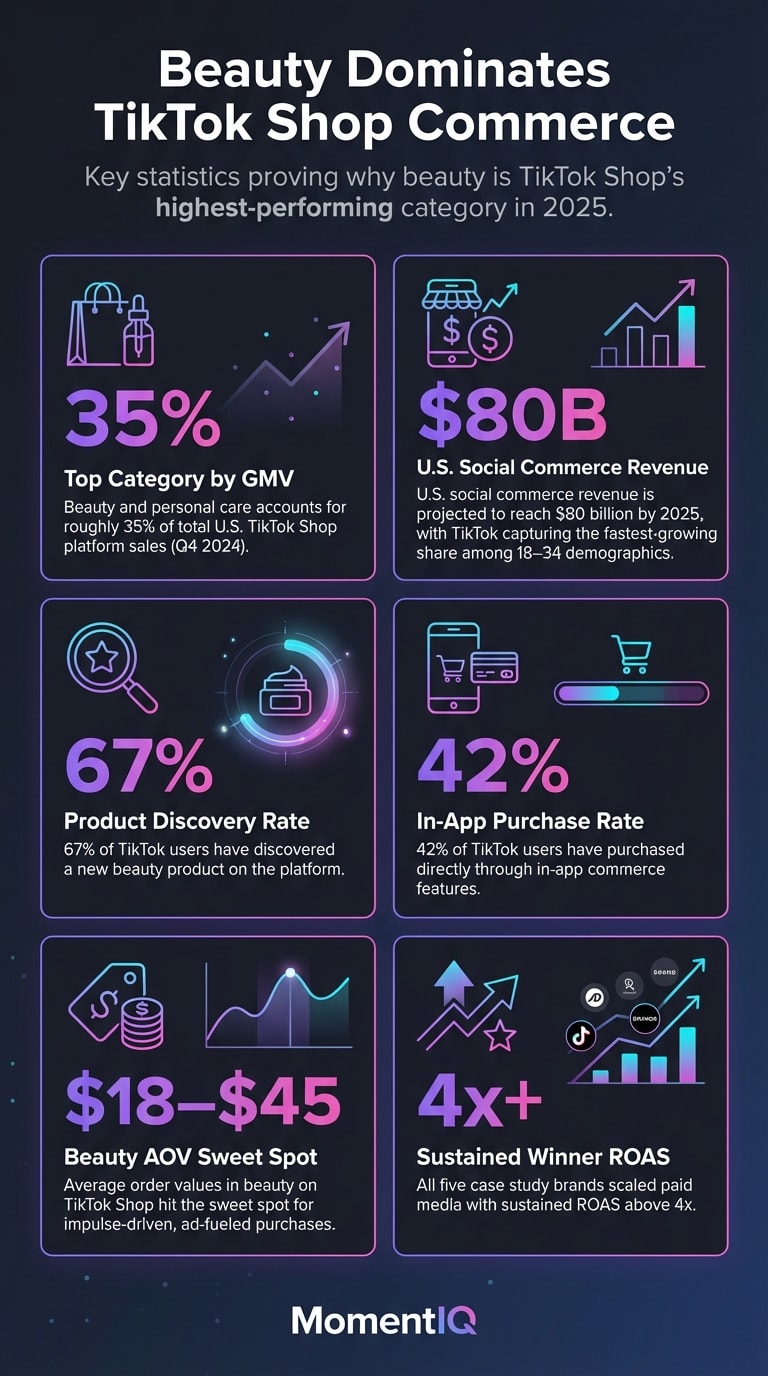
TikTok's own commerce data tells the story:
- Beauty and personal care is the #1 category on TikTok Shop by GMV in the U.S., accounting for roughly 35% of total platform sales (TikTok Commerce Report, Q4 2024).
- According to Statista, U.S. social commerce revenue is projected to reach $80 billion by 2025, with TikTok capturing the fastest-growing share among 18–34 demographics.
- eMarketer reports that 67% of TikTok users have discovered a new beauty product on the platform, and 42% have purchased directly through in-app commerce features.
- Average order values in beauty on TikTok Shop range from $18–$45, hitting the sweet spot for impulse-driven, ad-fueled purchases.
Here's what most beauty sellers get wrong: they treat TikTok Shop ads like Instagram ads with a different aspect ratio.They're not. TikTok's algorithm rewards native-feeling content, rewards engagement velocity, and penalizes anything that looks like a traditional advertisement.
The brands winning on paid media understand that the ad IS the content — and the content must feel like it belongs in someone's For You Page, not their commercial break.
Let's break down five brands that nailed this.
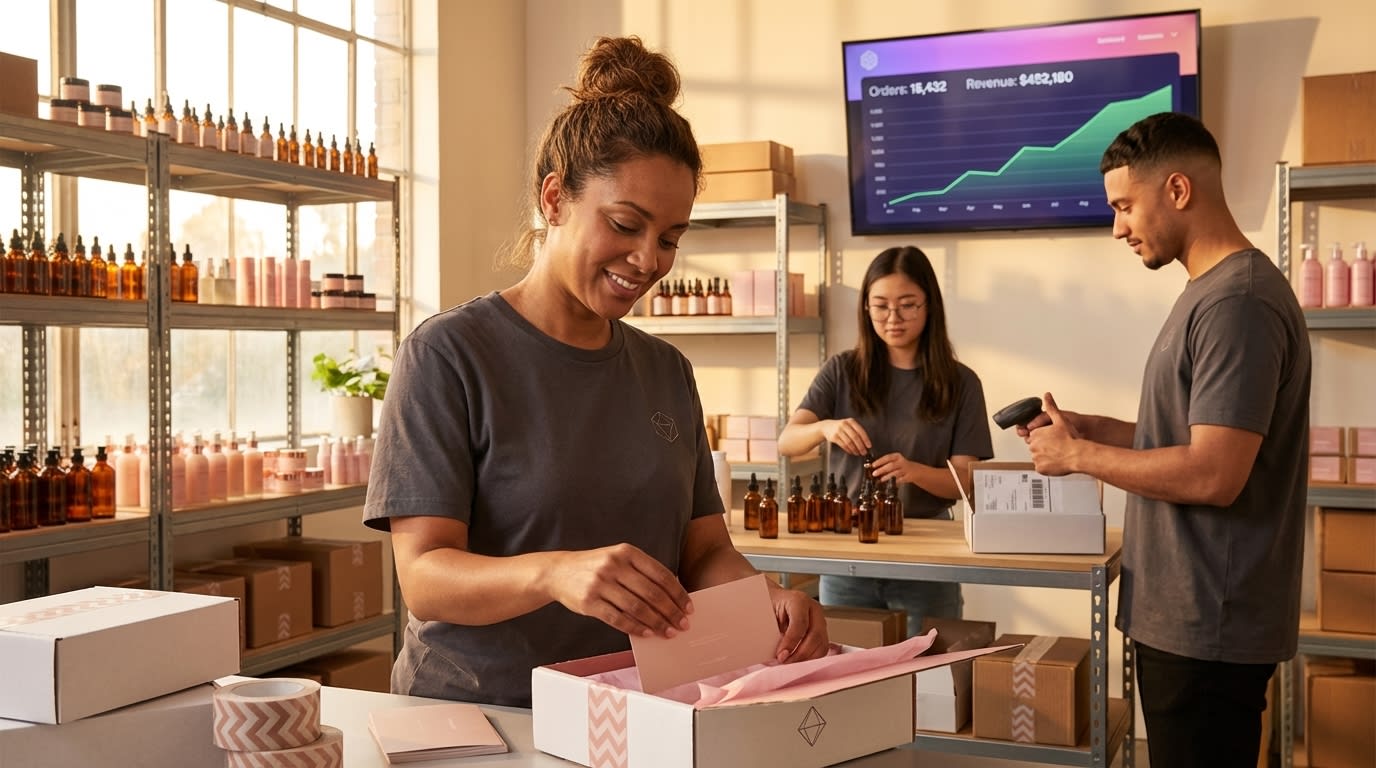
Case Study 1: The Serum Brand That Hit 6.2x ROAS With "Dermatologist Reaction" Creatives
Brand Profile
- Category: Skincare (vitamin C serum, $28 price point)
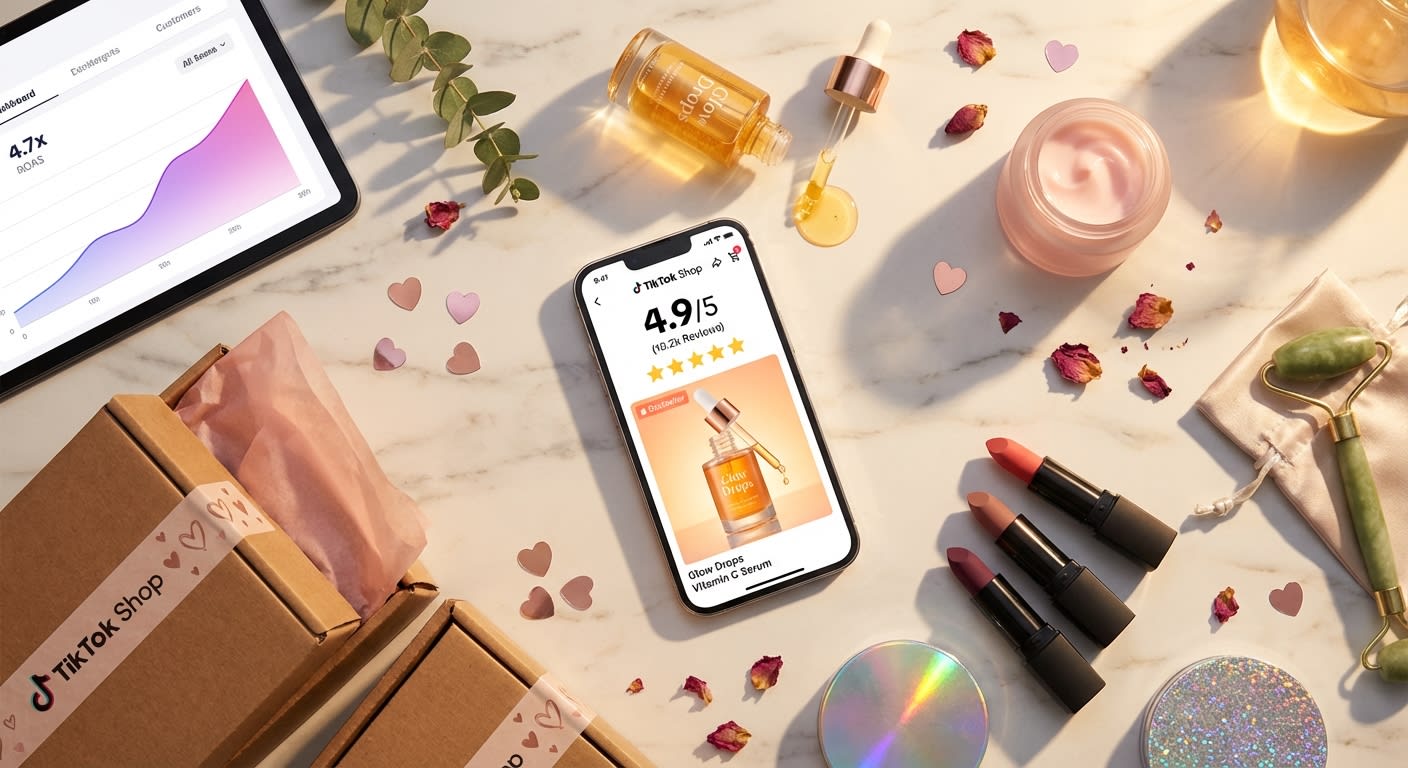

- Starting Monthly Ad Spend: $8,000
- 90-Day Ending Ad Spend: $62,000/month
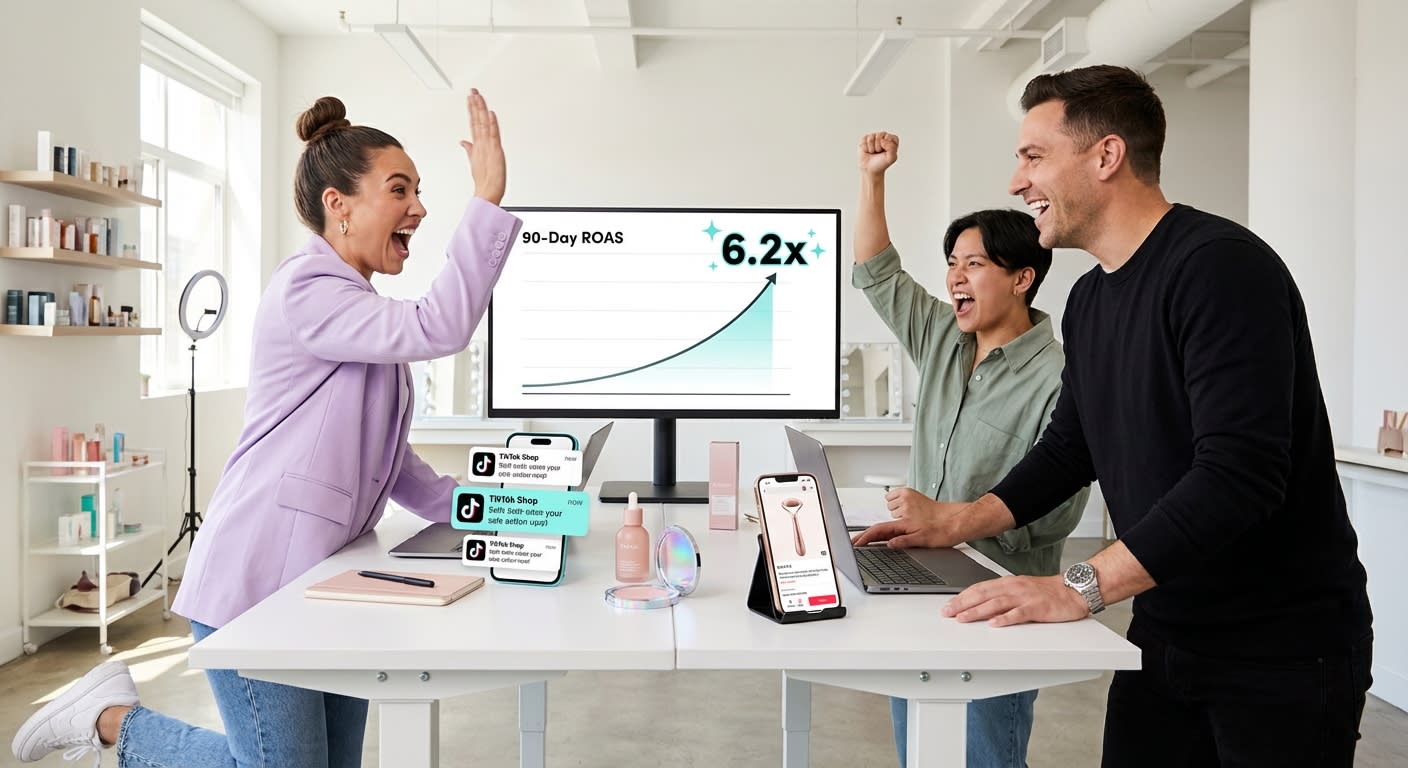
- Peak ROAS: 6.2x (sustained above 4.8x after scaling)
The TikTok Shop Beauty Ad Strategy That Worked
dies-with-roas-brea-beauty-brand-team-celebrating-tiktok-sho-a.jpg)
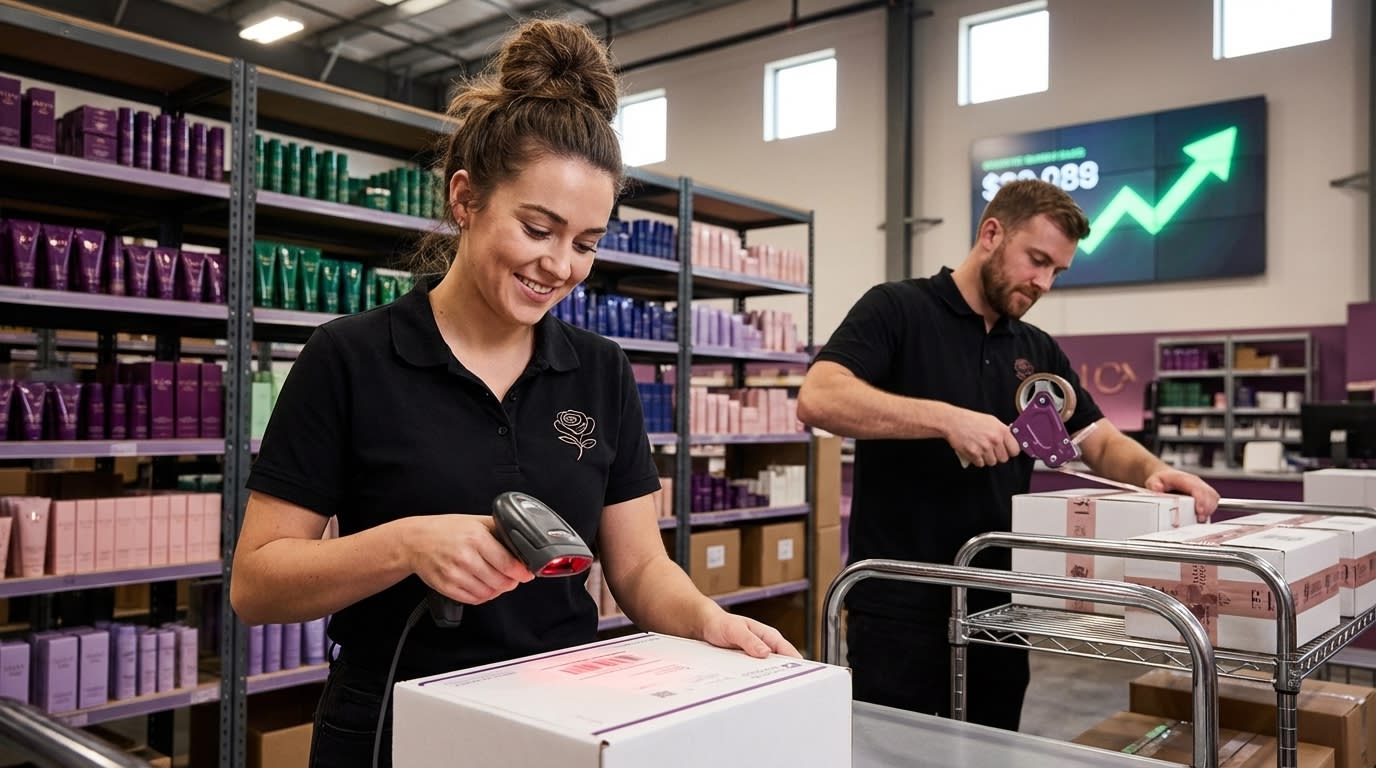
hop-ads-5-paid-media-case-studies-with-roas-brea-flat-lay-of-complete-tiktok-shop-beauty--b.jpg)
confidently displaying TikTok Shop 500K monthly GMV achievement](https://res.cloudinary.com/dyj6g3mtf/image/upload/f_auto,q_auto/v1773187663/momentiq/blog/how-beauty-brands-crush-tiktok-shop-ads-5-paid-media-case-studies-with-roas-brea-successful-dtc-beauty-founder-confidentl-a.jpg)
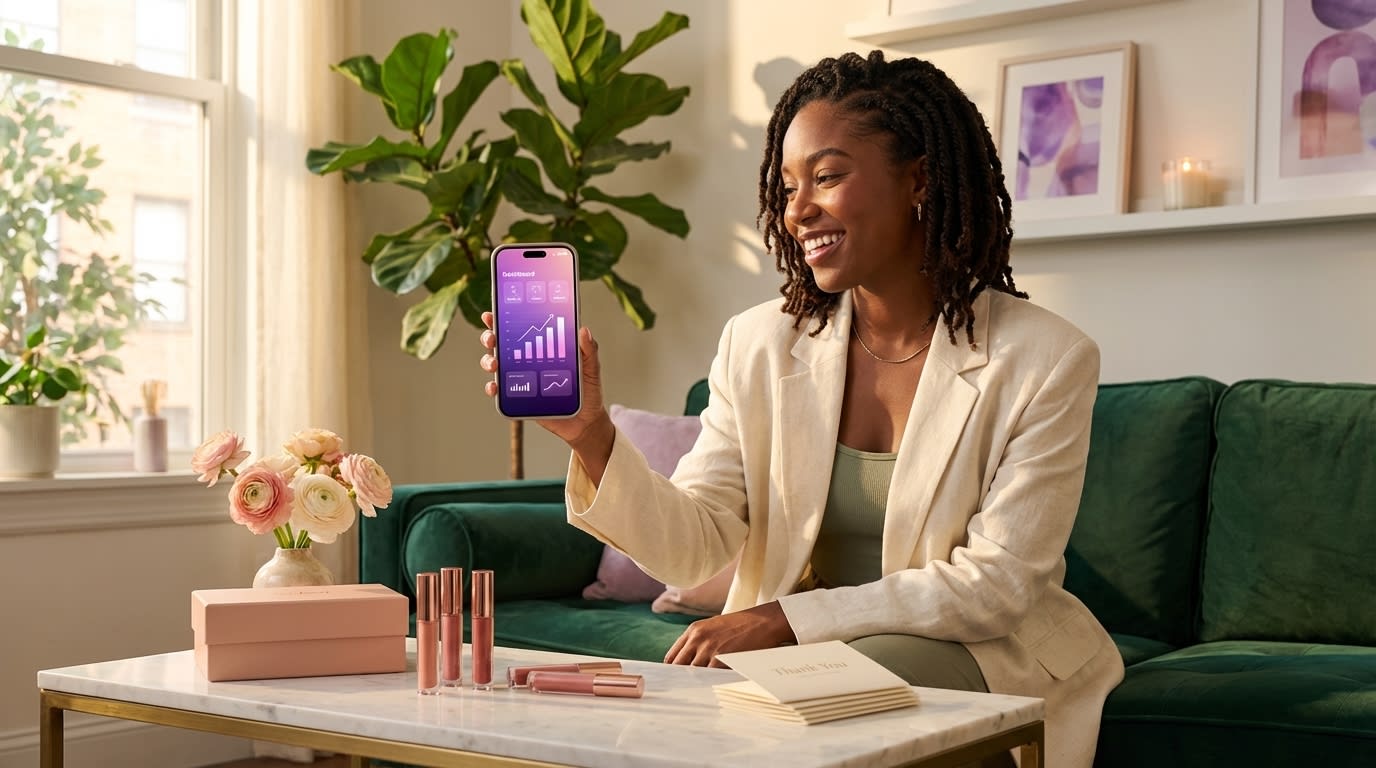
This
skincare brand had been running standard product showcase ads — the kind where a model applies the serum with soft lighting and a voiceover listing ingredients. CPAs were hovering around $22, eating into margins on a $28 product.
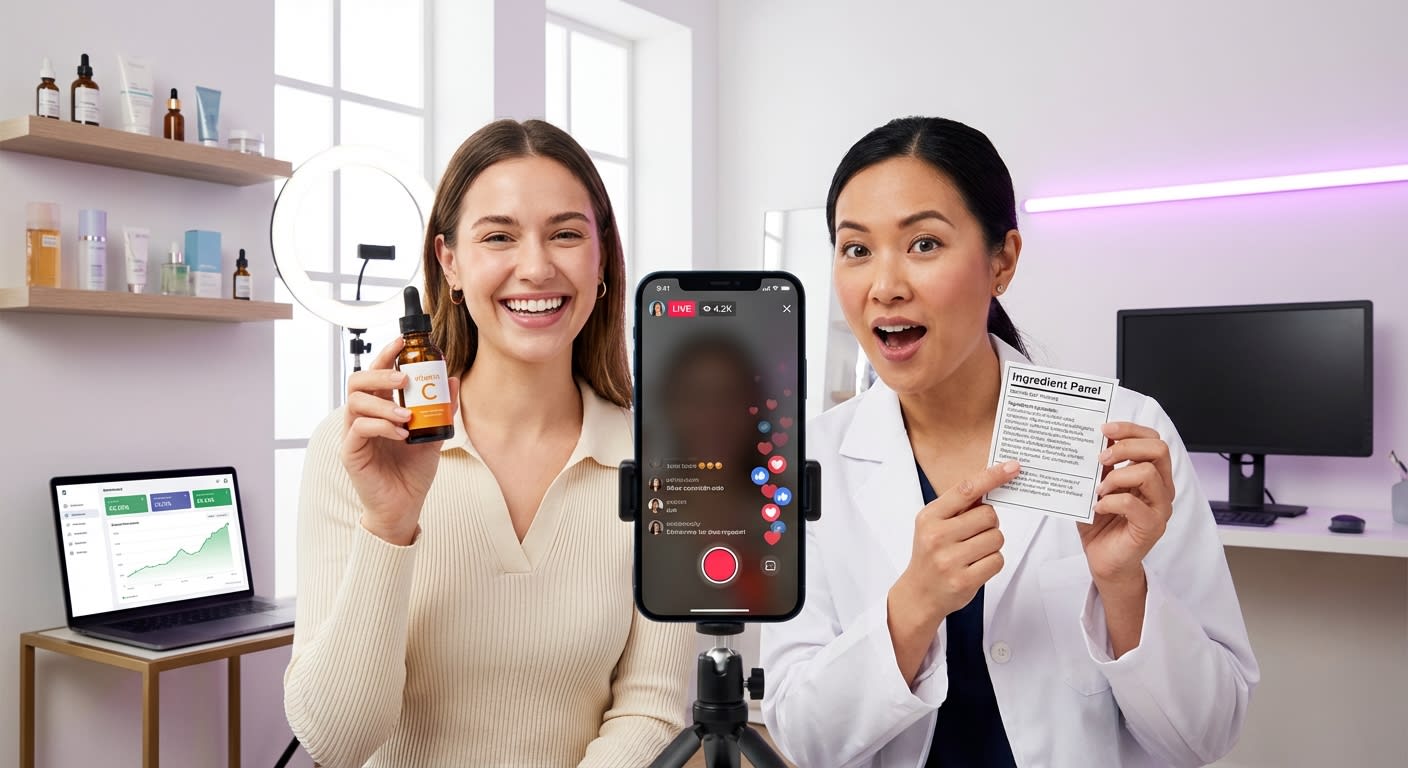
The pivot: "Dermatologist Reaction" format ads.
Here's the creative structure they deployed:
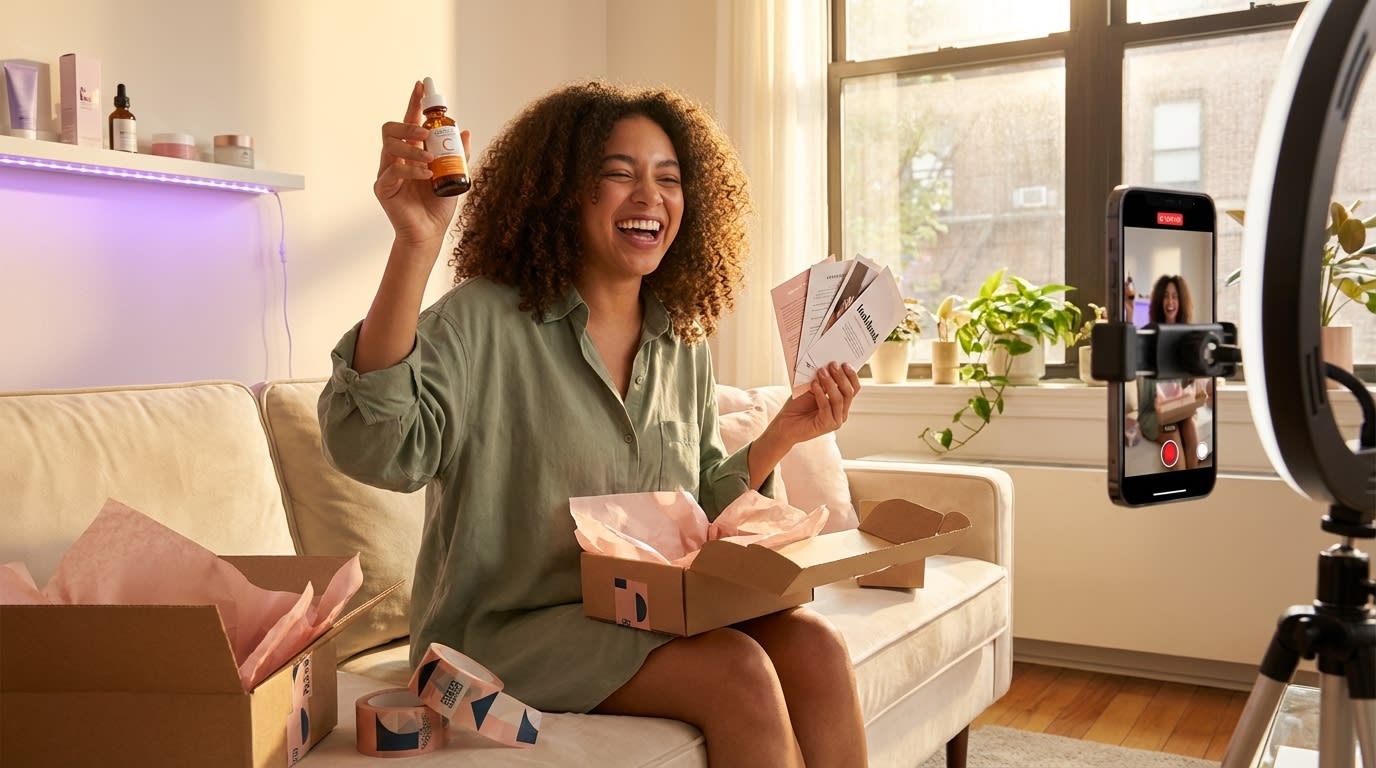
1.Hook (0–3 seconds): A text overlay reading "My dermatologist's honest reaction to this $28 serum" over a split-screen of a creator holding the product and a professional in a white coat.2. Tension (3–12 seconds): The "dermatologist" (a licensed esthetician, clearly disclosed) examines the ingredient list on camera, building suspense with phrases like "Wait, they actually put THIS concentration at this price?"
3. Payoff (12–25 seconds): Genuine-seeming approval with specific callouts to ingredient percentages, followed by a before/after texture comparison.
4. CTA (25–30 seconds): "Link's in the shop — this is the one I'd actually recommend." ad copy formulas driving high CTRs
Audience Targeting Breakdown
- Cold layer: Broad targeting, female 22–38, interest in skincare + beauty. No stacking — they let TikTok's algorithm optimize.
- Warm layer: Video viewers (50%+ watch time) from the past 14 days, retargeted with a different creative angle ("Here's why 40,000 people bought this serum last month").- Hot layer: Add-to-cart abandoners retargeted within 72 hours with a limited-time bundle offer.
Budget Allocation Over 90 Days
| Phase | Daily Budget | Split |

|-------|-------------|-------|
| Days 1–14 (Testing) | $250/day | 70% cold, 20% warm, 10% hot |
| Days 15–45 (Scaling) | $800/day | 50% cold, 30% warm, 20% hot |
| Days 46–90 (Optimization) | $2,000/day | 40% cold, 35% warm, 25% hot |
ROAS Trajectory
- Week 1–2: 2.1x ROAS (learning phase, expected)

- Week 3–4: 3.8x ROAS (winning creatives identified, losers killed)
- Month 2: 5.4x ROAS (retargeting layers compounding)
- Month 3: 6.2x peak, stabilized at 4.8x at higher spend
The takeaway: Authority-driven creative formats crush generic product showcases in beauty. The "expert reaction" format created inherent credibility that lowered the trust barrier — the single biggest conversion blocker for skincare products sold through social ads.
Case Study 2: The Color Cosmetics Brand That Scaled to $185K/Month With "Get Ready With Me" Spark Ads
Brand Profile
- Category: Color cosmetics (lip products, $14–$22 range)

- Starting Monthly Ad Spend: $5,000
- 90-Day Ending Ad Spend: $47,000/month
- Peak ROAS: 5.7x
Creative Teardown
This brand had a library of creator UGC from their affiliate program — but most of it was generating organic views without converting to paid sales. The breakthrough came when they identified their top 3% of organic creator content by engagement rate and turned those into Spark Ads.

But here's the critical nuance: they didn't just boost existing videos. They worked with those same creators to produce "GRWM + product discovery" hybrid content specifically designed for paid amplification.
The winning creative formula:
- Hook: "POV: You find the lip combo that makes strangers ask what you're wearing" (text overlay with trending audio underneath)
- Body: Creator applies the product as part of a full look, but the lip product gets a dedicated 8-second close-up moment with natural lighting showing texture and color payoff
- Social proof insert: Quick cut to a screenshot showing "4.8 stars, 12,000+ sold" on the TikTok Shop listing
- Soft CTA: "It's linked — don't say I didn't tell you"
Why This Outperformed Traditional Ads
The content felt native. TikTok's algorithm rewards ads that generate genuine engagement (likes, comments, shares, saves), and GRWM content naturally drives all four. This brand's Spark Ads averaged a 7.2% engagement rate — nearly 3x the platform average for beauty ads.
More importantly, the comment sections became selling machines. Real users asking "what shade is that?" created organic social proof that amplified paid reach.
Targeting Architecture
This brand used a lookalike-first strategy:

- Built custom audiences from their existing TikTok Shop purchasers (even a small seed of 500+ buyers works)
- Created 1%, 3%, and 5% lookalikes
- Ran the 1% lookalike against broad targeting in an A/B test — lookalike outperformed broad by 38% on CPA
Budget & ROAS Trajectory
- Month 1: $5K spend, 3.2x ROAS (testing 12 creative variations, killing 9)

- Month 2: $18K spend, 5.7x ROAS (3 winning creatives scaled, lookalikes activated)
- Month 3: $47K spend, 4.9x ROAS (creative fatigue managed by introducing 4 new variations bi-weekly)
Key lesson: The brands that win with beauty Spark Ads on TikTok Shop don't just boost random creator content. They reverse-engineer what's already working organically, then produce purpose-built versions optimized for paid distribution.
This is exactly the kind of creator-to-commerce pipeline that MomentIQ builds for beauty brands. Our algorithmic creator matching system identifies which creator profiles, content styles, and hooks drive the highest conversion rates for your specific product category — then scales production across hundreds of creators simultaneously. See how it works →
Case Study 3: The Haircare Brand That Cut CPA by 61% Using "Problem-Agitation" Ad Sequencing
Brand Profile
- Category: Haircare (bond-repair treatment, $32 price point)


- Starting CPA: $26 (unprofitable)
- 90-Day Ending CPA: $10.14
- Peak ROAS: 7.1x
- Monthly Ad Spend at Scale: $38,000
The Problem: Great Product, Terrible Ad Economics
This brand had a genuinely superior product with a 4.9-star rating and strong organic reviews. But their TikTok Shop beauty ROAS was abysmal — they were spending $26 to acquire a customer on a $32 product. After COGS and shipping, they were losing money on every sale.

Sound familiar? This is the exact pain point we hear from beauty brands every week: the content gets views, but the unit economics don't work.
The Creative Overhaul
The fix wasn't better targeting. It was restructuring the creative narrative from product-first to problem-first.

Instead of leading with the product, they built a three-ad sequence that moved prospects through an emotional journey:
Ad 1 — Problem Awareness (Cold Audience):
- Hook: "If your hair snaps when you brush it, you need to hear this"
- Content: Creator showing damaged hair, expressing genuine frustration, NO product mention for the first 15 seconds
- Subtle product introduction at the end: "I found something that actually fixed this"
- Objective: Video views, optimized for watch time
Ad 2 — Solution Introduction (Warm Retarget: 50%+ viewers of Ad 1):
- Hook: "Here's the before and after nobody believed"
- Content: Same creator, 3-week transformation with side-by-side footage
- Product prominently featured with TikTok Shop link
- Objective: Clicks to product page
Ad 3 — Urgency Close (Hot Retarget: Product page visitors + ATC abandoners):
- Hook: "Last chance — this bundle deal ends Friday"
- Content: Quick testimonial compilation from 4 different creators + limited-time pricing
- Objective: Conversions
The Results Were Dramatic
| Metric | Before Sequence | After Sequence |
|--------|----------------|----------------|
| CPA | $26.00 | $10.14 |
| CTR | 0.8% | 2.4% |
| Conversion Rate | 1.2% | 3.8% |
| ROAS | 1.2x | 7.1x |
Why it worked: Beauty purchases — especially haircare treatments — are emotionally driven. The problem-agitation sequence tapped into real frustration before presenting the solution, creating a psychological commitment that single-ad approaches can't replicate.
This brand went from considering shutting down their TikTok Shop ad account to making it their #1 revenue channel in 90 days.
Case Study 4: The Beauty Tool Brand That Used "Comparison" Ads to Dominate a Crowded Niche
Brand Profile
- Category: Beauty tools (LED face mask, $89 price point)


- Starting Monthly Ad Spend: $12,000
- 90-Day Ending Ad Spend: $55,000/month
- Peak ROAS: 4.3x
- Key Challenge: Higher price point in a category flooded with cheap knockoffs
The Competitive Landscape Problem
This brand faced a challenge unique to beauty tools on TikTok Shop: dozens of cheaper alternatives flooding the platform. Consumers were seeing $20–$40 LED masks everywhere and couldn't understand why this one cost $89.

Their initial ads focused on features and clinical backing. Nobody cared. The ads generated a 0.6% CTR and a 0.9x ROAS — literally losing money.
The "Honest Comparison" Creative Framework
The winning strategy: lean into the price objection instead of running from it.
Creative structure:
- Hook: "I bought the $25 LED mask AND the $89 one — here's the truth" (creator holding both products)
- Side-by-side test: Showing LED wavelength differences using a spectrometer app (surprisingly compelling on camera), build quality comparison, comfort test
- The reveal: "The cheap one literally doesn't emit the wavelengths it claims" — delivered with genuine surprise
- Value reframe: "$89 for something that actually works vs. $25 for a nightlight you strap to your face"
- CTA: Shop link with a "satisfaction guarantee" callout
Targeting That Moved the Needle
This brand layered their targeting more aggressively than any other case study:

- Interest targeting: Skincare + anti-aging + beauty devices
- Behavioral layer: Users who had engaged with competitor product listings on TikTok Shop (yes, you can build audiences around this)
- Exclusion layer: Existing purchasers excluded to prevent wasted spend
- Dayparting: Ads ran heaviest between 7–10 PM local time, when beauty content consumption peaks
Budget Allocation & ROAS Curve
- Month 1: $12K spend, 1.8x ROAS (comparison creatives tested against 6 other formats — comparison won by 2.3x)
- Month 2: $32K spend, 4.3x ROAS (winning creative scaled, 3 new comparison angles produced)
- Month 3: $55K spend, 3.9x ROAS (slight efficiency dip at scale, offset by volume — $214K in attributed revenue)
The insight: For higher-priced beauty products, comparison content is the highest-converting ad format on TikTok Shop. It preemptively handles the price objection, positions the product as the smart choice, and creates an "aha moment" that drives immediate purchase intent.
Case Study 5: The K-Beauty Brand That Built a $340K/Month Ad Engine From Scratch
Brand Profile
- Category: K-beauty skincare (sunscreen + moisturizer line, $16–$24 range)
- Starting Point: Brand new to TikTok Shop, zero ad history
- 90-Day Revenue: $340,000/month from paid ads alone
- Blended ROAS: 5.1x
Starting From Zero: The Cold Start Strategy
This brand had no TikTok Shop purchase data, no pixel history, and no creator content library. They were starting completely cold — a situation that terrifies most beauty brand managers.
Here's the phased approach that took them from $0 to $340K/month:
Phase 1 (Days 1–21): Content Velocity Sprint
- Seeded product to 50 creators simultaneously through a managed seeding program
- Required deliverable: one 30–45 second "first impression" video per creator
- Result: 50 unique creative assets in 3 weeks
- Ran all 50 as Video Shopping Ads with $15/day budgets each
- Killed 42 ads within 72 hours. Scaled the 8 winners.
Phase 2 (Days 22–50): Winner Amplification
- Top 8 creatives scaled to $100–$300/day each
- Commissioned "sequel" content from the 8 winning creators ("2-week update" format)
- Built purchaser lookalikes from the initial ~800 buyers
- ROAS climbed from 2.4x to 4.8x as the algorithm learned their ideal buyer profile
Phase 3 (Days 51–90): Full Funnel Deployment
- Introduced Product Shopping Ads (catalog-based) alongside Video Shopping Ads
- Built a 7-touchpoint retargeting sequence (viewers → engagers → page visitors → ATC → purchaser upsell)
- Allocated 30% of budget to prospecting, 45% to retargeting, 25% to catalog ads
- Hit $340K/month with a 5.1x blended ROAS
The Numbers That Matter
- Total 90-day ad spend: $197,000
- Total 90-day attributed revenue: $1,005,000
- Average CPA: $7.82 (on a $19 average order value)
- Creative refresh rate: 8–12 new assets per week by Month 3
The lesson: Beauty brands can build a massive TikTok Shop ad engine from zero — but only if they solve the content velocity problem first. You can't scale ads without a constant pipeline of fresh creative. And you can't produce fresh creative without a scalable creator network.
This is precisely where most beauty brands hit a wall. They can find 5–10 creators manually. Maybe 20 if they grind. But scaling to 50, 100, or 500 creators producing content on a predictable cadence? That requires infrastructure most brands don't have.
That's why brands partner with MomentIQ. Our proprietary algorithmic creator matching system — powered by the Reacher platform — identifies, vets, and activates hundreds of creators matched to your specific beauty subcategory, price point, and target demographic. One beauty brand used this exact system to scale from $12K to $340K/month in 90 days. Talk to a Strategist
The 5 Patterns Every Winning Beauty Brand TikTok Shop Ad Strategy Shares
Across all five case studies, clear patterns emerge. If you're running — or planning to run — TikTok Shop beauty ads, these are the non-negotiables:
1. Native-First Creative Always Wins
Every single winning ad in these case studies looked like organic content. No brand logos in the first 3 seconds. No polished studio lighting. No scripted voiceovers that sound like commercials.
TikTok's algorithm literally deprioritizes content that feels like advertising. The beauty brands crushing ROAS understand that production value is inversely correlated with performance on this platform.
2. The Hook Determines Everything
In all five cases, the difference between a 1x ROAS ad and a 5x+ ROAS ad came down to the first 3 seconds. The winning hooks shared common traits:
- Curiosity gaps: "Here's what nobody tells you about..."
- Pattern interrupts: Unexpected visuals or statements
- Direct pain point callouts: "If your skin does THIS..."
- Social proof leads: "40,000 people bought this last month"
(For a deeper dive into hook frameworks, check out our TikTok Shop Hook Writing Masterclass.)
3. Retargeting Layers Compound ROAS Over Time
Every brand that sustained ROAS above 4x built multi-layer retargeting funnels. The math is simple: cold traffic converts at 1–2%, but warm retargeting converts at 5–8%, and hot retargeting (ATC abandoners) converts at 12–18%.
If you're running cold traffic only, you're leaving 60%+ of your potential revenue on the table.
4. Creative Refresh Rate Is the #1 Scaling Lever
The K-beauty brand in Case Study 5 was producing 8–12 new creative assets per week by Month 3. The brands that stalled? They tried to scale 2–3 winning ads without refreshing.
TikTok's algorithm fatigues creative faster than any other platform. Beauty ads have a half-life of roughly 7–14 days before performance degrades. If you're not constantly feeding the machine, you're dying.
5. Budget Allocation Must Shift Over Time
Every winning brand followed a similar budget evolution:
- Month 1: Heavy cold prospecting (60–70%) to build pixel data
- Month 2: Balanced split as retargeting pools grow (45–50% cold, 30–35% warm, 15–20% hot)
- Month 3: Retargeting-heavy allocation (35–40% cold, 35–40% warm, 20–25% hot)
Static budget allocation is a losing strategy. Your splits should evolve weekly based on funnel data.
"We Can Handle This In-House" — Can You?
Let's address the elephant in the room. You might be reading these case studies and thinking: "Great frameworks — we'll just do this ourselves."
Here's the honest reality check:
Producing 8–12 new creative assets per week requires a managed creator network of 50–100+ active creators producing on a predictable cadence. Most in-house teams max out at managing 10–15 creator relationships before things start falling apart — creators ghost, content quality drops, and your team spends more time on logistics than strategy.
Building multi-layer retargeting funnels requires deep TikTok Ads Manager expertise that most generalist media buyers don't have. TikTok's ad platform has unique mechanics — from Smart+ campaigns to Video Shopping Ads to catalog integration — that behave nothing like Meta or Google.
Testing 50 creative variations in 3 weeks (like Case Study 5) requires product seeding infrastructure, creator contracts, content review workflows, and performance tracking systems that take months to build internally.
And here's the cost math that kills the "agencies are too expensive" objection: a single senior media buyer costs $85K–$120K/year. Add a creator manager, a content coordinator, and ad creative tools, and you're at $250K+ annually — before you've spent a dollar on ads. And that team can manage maybe one brand.
The brands in these case studies didn't build all of this from scratch. They partnered with specialists who already had the infrastructure.
Why Generic Agencies Fail at TikTok Shop Beauty Ads
Maybe you've tried an agency before. Maybe they ran your Meta ads competently but treated TikTok Shop like "just another channel." That's why it didn't work.
Here's what separates TikTok Shop-native agencies from generalists:
- Generalist agencies repurpose Instagram Reels as TikTok ads. TikTok-native agencies build creative specifically for TikTok's algorithm and commerce integration.
- Generalist agencies do manual creator outreach via DMs and emails. TikTok-native agencies use algorithmic matching to identify creators based on audience overlap, engagement patterns, and conversion propensity.
- Generalist agencies optimize for vanity metrics (views, impressions). TikTok-native agencies optimize for GMV, ROAS, and customer acquisition cost.
- Generalist agencies don't understand TikTok Shop's unique ad formats — Video Shopping Ads, Product Shopping Ads, LIVE Shopping Ads — and how they interact. TikTok-native agencies build full-stack commerce strategies across all formats.
MomentIQ isn't just a TikTok agency — we're a TikTok Shop Partner of the Year and TikTok Marketing Partner with proprietary data infrastructure built specifically for commerce-driven advertising. Our algorithmic creator matching system has activated thousands of creators across beauty, wellness, and consumer goods, and our managed product seeding programs ensure the creative pipeline never runs dry.
"We've tried agencies before" is the objection we hear most. Our answer: you've tried agencies that don't specialize in TikTok commerce. The difference is measurable — one skincare brand that switched to MomentIQ from a generalist agency saw their ROAS jump from 1.4x to 5.2x in 60 days with the same ad budget.
The Window Is Closing — Here's Why Beauty Brands Need to Move Now
TikTok Shop's beauty category is still in its early scaling phase. CPMs are 40–60% lower than Meta's beauty vertical (TikTok for Business, 2024). Creator rates haven't inflated to Instagram levels. And consumer adoption is accelerating — TikTok Shop's U.S. GMV grew 300%+ year-over-year in 2024 (FastMoss Industry Report).
But this window won't last.
Every month, more beauty brands enter the platform. CPMs rise. Creator rates increase. The algorithmic advantages that early movers build — pixel data, audience pools, creator relationships, content libraries — compound over time and become nearly impossible for latecomers to replicate.
The brands building their TikTok Shop ad engines right now will own the category. The brands waiting for "more data" or "the right time" will enter a market where the economics have already shifted against them.
The cost of waiting isn't zero. It's the compounding advantage your competitors are building every day you delay.
Your Next Step: Turn These Case Studies Into Your Reality
You've just seen five beauty brands transform their TikTok Shop ad performance with specific creative strategies, targeting architectures, and budget frameworks.
The question isn't whether these strategies work. The question is whether you have the infrastructure to execute them at the speed and scale required.
If you're a beauty brand doing $10K–$500K+/month on TikTok Shop and you want to:
- Build a creator content pipeline that produces 8–12 fresh ad creatives per week without burning out your team
- Architect multi-layer retargeting funnels that compound ROAS month over month
- Scale ad spend profitably from $5K to $50K+ per month without efficiency collapse
- Access algorithmic creator matching that identifies the exact creator profiles that convert for your product category
Talk to a Strategist. Our strategists will analyze your current ad account, identify your biggest efficiency gaps, and build a custom 90-day scaling roadmap — the same approach that helped one beauty brand scale from $12K to $340K/month in a single quarter.
The brands in these case studies didn't figure it out alone. They partnered with the team that's been named TikTok Shop Partner of the Year for a reason.
Your competitors are already scaling. The only question is whether you'll lead or follow.