TikTok Shop vs Walmart Marketplace
TikTok Shop vs Walmart Marketplace: 12 critical differences every seller must know in 2025. Compare fees, audience, and growth potential to decide where your ne
Everyone's talking about Amazon vs. Shopify. Nobody's having the conversation that actually matters for multi-channel sellers in 2025.
- Use TikTok Shop's discovery model to create net-new demand — 67% of users buy even when they weren't planning to shop.
- Prioritize TikTok Shop's lower commission rates (2–8%) over Walmart's referral fees (6–15%) to protect your margins on every sale.
- Invest in visually compelling, creator-driven content for TikTok Shop rather than keyword optimization strategies suited for Walmart's search model.
- Leverage TikTok Shop for products with a visual 'wow factor' or novel problem-solving appeal that consumers don't yet know they need.
- Audit your current channel allocation with data, not gut instinct — TikTok Shop hit $20B in global GMV in 2024, signaling massive momentum.
TikTok Shop vs Walmart Marketplace.
These two platforms are quietly reshaping where consumer dollars flow — and most brand managers are allocating budget based on gut instinct instead of data. That's a six-figure mistake waiting to happen.
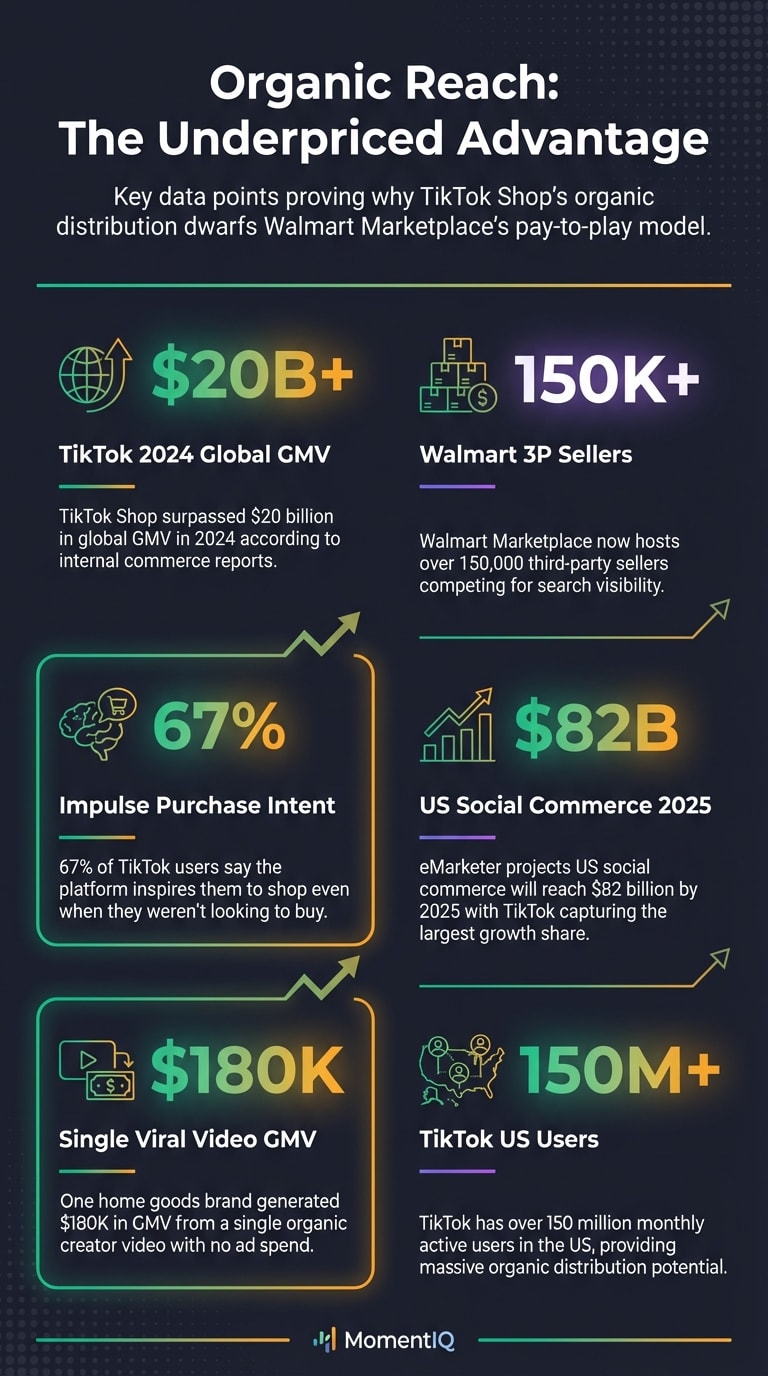
Here's the reality: Walmart Marketplace now hosts over 150,000 third-party sellers (Marketplace Pulse, 2024), and TikTok Shop surpassed $20 billion in global GMV in 2024 according to internal TikTok Commerce reports. Both platforms are growing fast. Both want your catalog. But they operate on fundamentally different mechanics, attract radically different buyers, and reward completely different strategies.
If you're a DTC founder, brand manager, or ecommerce operator trying to figure out where your next $100K in revenue comes from, this head-to-head breakdown covers the 12 differences that actually move the needle — fees, fulfillment, organic reach, ad ROAS, audience intent, and more.
And if you already suspect TikTok Shop is your highest-leverage channel but you're struggling with inconsistent GMV, low affiliate acceptance rates, or creators who ghost after one post — Talk to a Strategist and see exactly what's leaving money on the table.
Let's break this down.
1. Discovery Model: Algorithm-Driven Commerce vs. Search-Based Retail
This is the foundational difference that shapes everything else.

Walmart Marketplace operates on a search-and-browse model. Shoppers arrive with purchase intent, type a query, and compare listings. It's traditional retail digitized. Your success depends on keyword optimization, competitive pricing, and review velocity.
TikTok Shop operates on a discovery-first model. The algorithm surfaces your product to users who didn't know they needed it — through creator content, live streams, and shoppable videos that feel native to the feed. Your success depends on content quality, creator partnerships, and algorithmic momentum.
Why this matters for your budget: On Walmart, you're competing for existing demand. On TikTok Shop, you're creating demand that didn't exist five minutes ago.
According to a 2024 TikTok for Business report, 67% of TikTok users say the platform inspires them to shop even when they weren't looking to buy. That's not incremental revenue — that's net-new demand generation at a scale that search-based platforms simply can't replicate.
The bottom line: If your product has a visual "wow factor" or solves a problem people don't yet know they have, TikTok Shop's discovery engine is exponentially more powerful than Walmart's search bar.
2. Seller Fees and Commission Structures: Where Your Margins Actually Land
Let's talk numbers, because this is where most comparison articles get lazy.

Walmart Marketplace Fees
- Referral fees: 6%–15% depending on category (most categories sit at 8%–15%)

- No monthly subscription fee (unlike Amazon's $39.99/month)
- WFS (Walmart Fulfillment Services) fees: Variable based on weight and dimensions, typically $3.45+ per unit
- Returns processing: Handled by Walmart if using WFS, but costs are absorbed by the seller return and refund policies that reduce disputes
TikTok Shop Fees
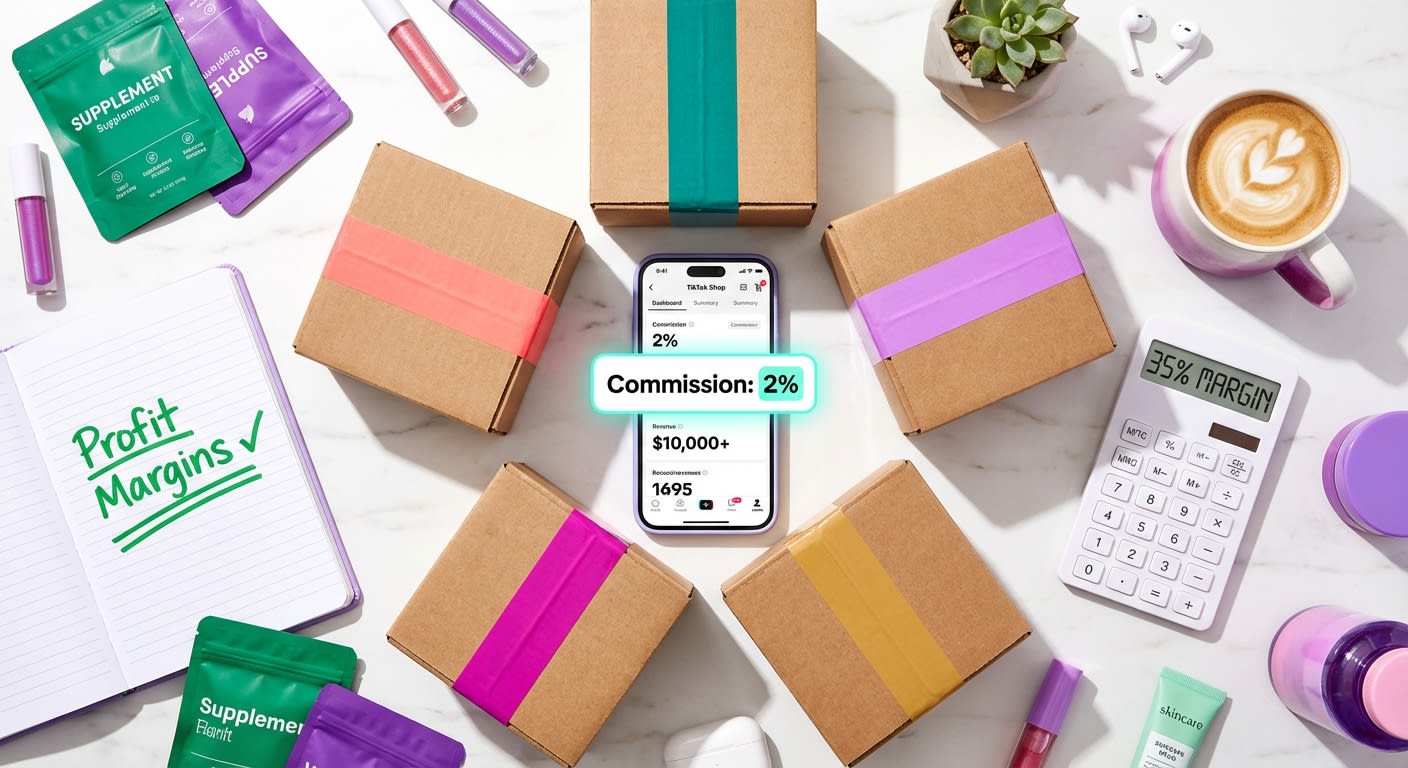
- Commission rate: Currently 2%–8% depending on category, with promotional rates as low as 1.8% for new sellers during onboarding periods

- Affiliate commissions: Set by the seller (typically 10%–20%), paid only on completed sales
- Payment processing: Included in the platform commission
- No monthly subscription fee
Here's what most sellers miss: TikTok Shop's base commission is significantly lower than Walmart's referral fee in almost every category. Yes, you'll pay affiliate commissions on top — but those are performance-based costs you control. You're paying creators only when they generate a sale, which means your effective CAC is directly tied to revenue, not impressions.
A skincare brand running on both platforms might pay 12% to Walmart on every sale regardless of how the customer found them, versus 5% to TikTok Shop plus a 15% affiliate commission — but only on creator-driven sales. The blended cost on TikTok Shop often comes in lower, especially when organic content drives a significant portion of GMV.
3. Audience Demographics: Who's Actually Buying
Your product doesn't just need a platform. It needs the right audience on that platform.
Walmart Marketplace Shoppers
- Median age: 45–55 (Statista, 2024)

- Household income: Skews toward middle-income ($50K–$75K)
- Purchase motivation: Value-driven, price-comparison shoppers
- Shopping behavior: Planned purchases, essentials, replenishment buying
TikTok Shop Buyers
- Core demographic: 18–34 (over 60% of TikTok's 150M+ US users, per Statista)

- Household income: Increasingly diverse, with strong representation in $75K–$150K brackets
- Purchase motivation: Trend-driven, impulse-meets-aspiration, community-influenced
- Shopping behavior: Discovery purchases, "TikTok made me buy it" culture, repeat buying through creator trust
The strategic implication is massive. If you sell commodity goods where price is the primary differentiator, Walmart's audience will respond. But if you sell anything where storytelling, demonstration, or social proof drives conversion — beauty, wellness, fitness, home goods, fashion, supplements — TikTok Shop's audience converts at rates that Walmart can't touch.
eMarketer projects that social commerce in the US will reach $82 billion by 2025, with TikTok capturing the largest share of growth among platforms. The buyers are there. The question is whether your brand is positioned to capture them.
4. Organic Reach Potential: Free Traffic vs. Pay-to-Play
This is where TikTok Shop pulls away from Walmart Marketplace — and honestly, from almost every other ecommerce platform.

Walmart Marketplace organic reach is essentially zero. Your listing appears in search results based on keyword relevance, price competitiveness, and review count. Without Walmart Sponsored Products ads, you're invisible beyond the first page. It's a paid-traffic platform dressed in organic clothing.
TikTok Shop's organic reach is the single most underpriced distribution channel in ecommerce right now. A single piece of creator content can reach millions of users without a dollar in ad spend. The algorithm doesn't care about your follower count — it cares about watch time, engagement, and conversion signals.
One home goods brand working with MomentIQ generated $180K in GMV from a single organic creator video that cost them nothing beyond the product sample and affiliate commission. Try getting that kind of return from a Walmart listing.
The catch? You need volume. One viral video is luck. A systematic creator seeding program that puts your product in the hands of 200+ relevant creators per month is a strategy. That's the difference between hoping for organic reach and engineering it.
*If you're running creator outreach manually — sending DMs, tracking spreadsheets, chasing follow-ups — you already know it doesn't scale. MomentIQ's algorithmic creator matching system identifies, vets, and activates creators who are statistically most likely to convert for your specific product category. See how it works — schedule a free strategy session at bemomentiq.com.*
5. Fulfillment Infrastructure: Speed, Cost, and Control
Walmart Fulfillment Services (WFS)
- Mature logistics network with 4,700+ store locations doubling as fulfillment nodes

- 2-day shipping standard for WFS sellers
- Strong infrastructure but less flexibility for small-to-mid-size brands
- Strict inbound shipping requirements and inventory performance standards
TikTok Shop Fulfillment
- Fulfilled by TikTok (FBT) expanding rapidly with warehouse partnerships

- Seller-fulfilled options with flexible shipping windows
- Integration with major 3PLs
- Still maturing — less robust than Walmart's infrastructure but improving quarterly
Honest assessment: Walmart wins on pure fulfillment infrastructure today. Their retail footprint gives them a logistics advantage that TikTok is still building. If same-day or next-day delivery is critical to your category, Walmart has the edge.
But here's the nuance most sellers overlook: Fulfillment speed matters less when the customer didn't plan to buy in the first place. TikTok Shop purchases are discovery-driven impulse buys — buyers have higher tolerance for 3–5 day shipping because they weren't comparison-shopping. They saw a creator they trust demonstrate a product, and they bought it in-feed. The emotional purchase trigger has already been pulled.
The brands winning on TikTok Shop aren't competing on delivery speed. They're competing on content, creator trust, and product-market fit within the algorithm.
6. Advertising ROAS: Where Your Ad Dollars Work Harder
Let's compare what your ad budget actually produces on each platform.

Walmart Connect Ads
- Average ROAS: 3x–5x for Sponsored Products (Pacvue benchmark data, 2024)
- CPC: $0.75–$1.50 average, trending upward as competition increases
- Ad formats: Sponsored Products, Sponsored Brands, Display ads
- Targeting: Keyword-based, limited behavioral targeting
TikTok Shop Ads
- Average ROAS: 4x–8x for Product Shopping Ads when paired with strong organic content (TikTok Commerce benchmarks)
- CPM: $4–$8 average, significantly lower than Meta's $10–$14 CPMs
- Ad formats: Spark Ads, Product Shopping Ads, Video Shopping Ads, LIVE Shopping Ads
- Targeting: Behavioral, interest-based, lookalike, and algorithmic optimization
The critical difference: TikTok Shop ads amplify organic content that's already proving itself. When you boost a creator video that's generating organic sales, you're pouring fuel on a fire that's already burning. Walmart ads are starting cold every time.
Brands running TikTok Shop Ads through MomentIQ's full-funnel strategy consistently see ROAS between 5x and 12x because the ad creative isn't produced in a studio — it's authentic creator content that the algorithm has already validated. That's a structural advantage no amount of Walmart keyword bidding can replicate.
7. Creator and Affiliate Ecosystem: Your Unpaid Sales Force
This is where the comparison gets uncomfortable for Walmart.
Walmart Marketplace has no native creator or affiliate ecosystem. You can run influencer campaigns that drive traffic to your Walmart listing, but there's no in-platform infrastructure for affiliate tracking, creator discovery, or commission management. It's bolted on, not built in.
TikTok Shop has the most sophisticated creator commerce ecosystem in ecommerce. The Affiliate Center lets sellers set open or targeted collaboration plans. Creators browse products, request samples, create content, and earn commissions — all within the platform. The flywheel is native.
But here's the pain point every TikTok Shop seller knows too well: affiliate acceptance rates for most brands hover between 5% and 15%. You list your product in the Affiliate Center, and 85%+ of creators ignore it. The ones who do accept often produce low-quality content that doesn't convert. Sound familiar?
This is exactly the problem MomentIQ was built to solve. Instead of waiting for creators to find you, MomentIQ's proprietary algorithmic matching system identifies creators whose audience demographics, content style, and historical conversion rates align with your product. One supplement brand went from a 12% affiliate acceptance rate to 67% after switching from manual outreach to MomentIQ's managed seeding program — scaling from $18K to $420K/month in GMV within 90 days.
"We can manage creators ourselves" is the most expensive sentence in ecommerce. A brand manager can realistically manage relationships with 20–30 creators. MomentIQ activates 200–500+ per month per brand. Scale is the strategy.
8. Content-to-Conversion Infrastructure: The Full Funnel
Walmart's conversion path is straightforward: listing → cart → checkout. Optimization happens at the listing level — better images, tighter bullet points, competitive pricing.

TikTok Shop's conversion path is multi-dimensional:
- Short-form video → product card → checkout
- LIVE stream → flash sale → checkout
- Creator profile → showcase tab → checkout
- Search → listing → checkout (yes, TikTok Shop has search too)
- Retargeting ad → checkout
TikTok Shop gives you five conversion pathways where Walmart gives you one. Each pathway can be optimized independently, and they compound. A customer who discovers you through a creator video, watches your LIVE stream, and then gets retargeted with a Spark Ad has been touched three times before purchasing. That's a full-funnel commerce engine built into a single platform.
The brands generating consistent six- and seven-figure months aren't using one pathway. They're orchestrating all five simultaneously. That level of orchestration requires dedicated strategy, real-time analytics, and a team that lives inside TikTok Shop's ecosystem daily.
9. Competition Density and Saturation
Walmart Marketplace: 150,000+ sellers and growing rapidly. Many categories are already approaching Amazon-level saturation, particularly in electronics, home essentials, and grocery. Price wars are common. Differentiation is difficult.

TikTok Shop: Still in relative early innings for US sellers. While the platform is growing fast, most product categories have significantly less competition than Walmart or Amazon. First-mover brands are building algorithmic advantages — content libraries, creator relationships, review velocity — that compound over time and become nearly impossible for latecomers to replicate.
This window is narrowing. Every month you delay, competitors are seeding products to creators, building content flywheels, and training the algorithm to favor their listings. The cost of waiting isn't zero — it's the compounding advantage you're handing to every brand that moves before you.
10. Data and Analytics Depth
Walmart Marketplace Analytics
- Basic sales dashboards


- Limited customer demographic data
- Walmart Luminate (paid analytics tool) for deeper insights
- Minimal content performance data (because there's minimal content)
TikTok Shop Analytics
- Real-time GMV tracking by source (organic, affiliate, ads, LIVE)
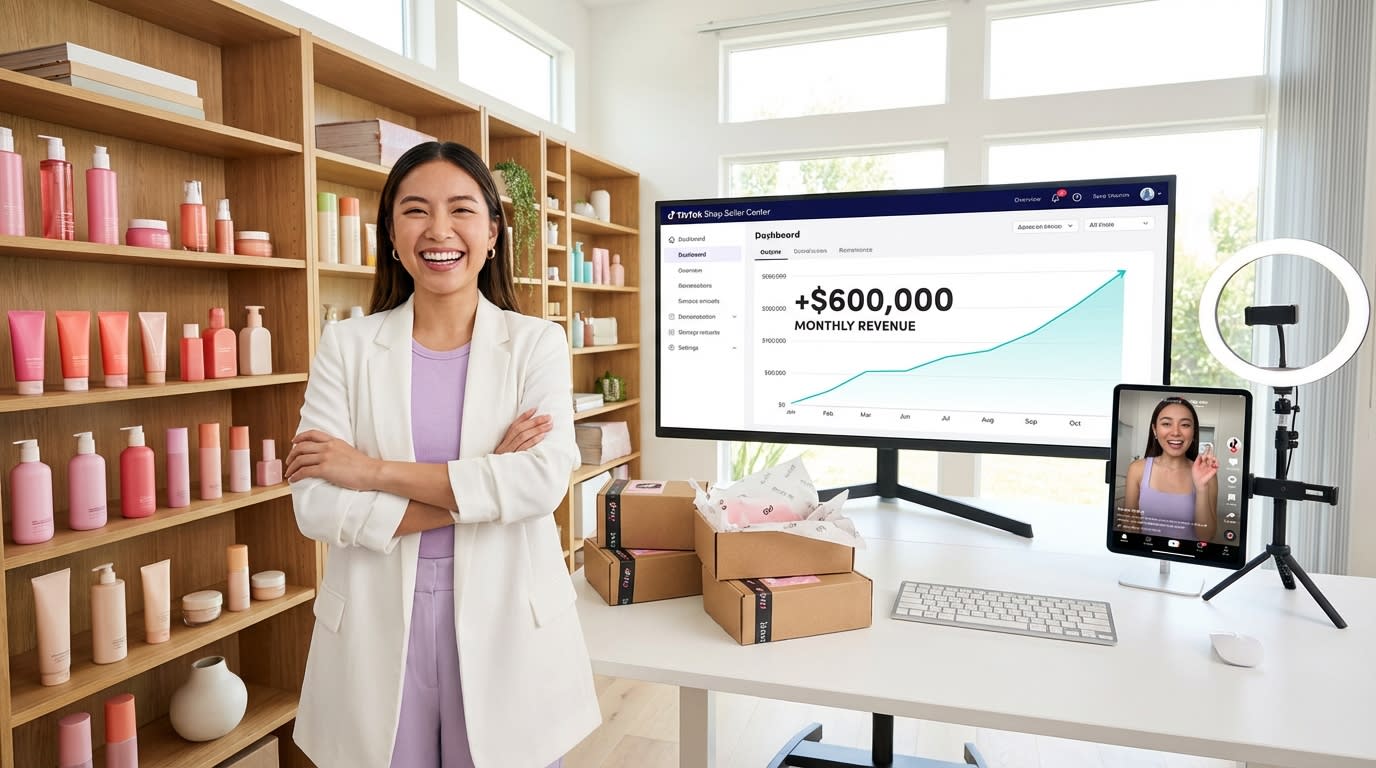
- Creator-level performance data (views, clicks, conversions, AOV)
- Content analytics showing which videos drive sales
- Audience demographic breakdowns
- Attribution modeling across touchpoints
TikTok Shop gives you granular, real-time data on what's working and why. You can see which creator drove $14K in GMV last Tuesday, which product angle converts best for 25–34 year-old women, and which LIVE stream time slot generates the highest average order value.
MomentIQ layers proprietary analytics on top of TikTok's native data, giving brands predictive insights on creator selection, content optimization, and scaling triggers. It's the difference between reading a dashboard and acting on intelligence.
11. Brand Building vs. Transaction Processing
Here's a distinction that separates short-term revenue from long-term enterprise value.

Walmart Marketplace is a transaction processor. Customers buy your product, but they associate the purchase with Walmart — not your brand. You're building Walmart's customer relationship, not yours. Brand recall is minimal.
TikTok Shop is a brand-building engine disguised as a commerce platform. When a creator with 500K followers demonstrates your product and their audience buys it, those customers associate your brand with a trusted voice they follow. You're building brand equity, community, and repeat purchase behavior simultaneously.
According to a 2024 Edelman Trust Barometer study, 63% of consumers ages 18–34 trust creator recommendations more than traditional brand advertising. On TikTok Shop, every sale comes wrapped in a creator endorsement. On Walmart, every sale comes wrapped in a Walmart box.
If you're building a brand — not just moving units — TikTok Shop's commerce model creates compounding value that Walmart's transactional model never will.
12. Scalability and Growth Trajectory
Let's zoom out to the macro picture.

Walmart Marketplace growth trajectory: Steady, incremental, tied to Walmart's overall ecommerce growth (approximately 20% YoY per Walmart's earnings reports). The platform is mature and predictable. Upside exists but is linear.
TikTok Shop growth trajectory: Exponential. TikTok Shop's US GMV grew by over 300% year-over-year in 2024. The platform is actively investing billions in seller subsidies, creator incentives, fulfillment infrastructure, and advertising tools. TikTok's parent company has stated that ecommerce is its top global priority.
When a platform is in hyper-growth mode, early sellers benefit disproportionately. Lower fees, higher organic reach, less competition, more algorithmic favorability. These advantages don't last forever. Amazon sellers who joined in 2014 built generational businesses. The same window exists on TikTok Shop right now — but it's closing faster because the platform is scaling faster.
The Verdict: TikTok Shop vs Walmart Marketplace for Sellers in 2025
Let's be direct.

Walmart Marketplace is a solid, predictable channel for brands selling commodity products to price-conscious, middle-aged shoppers who already know what they want. If you have competitive pricing, strong supply chain, and the patience for slow organic growth, Walmart deserves a place in your channel mix.
TikTok Shop is the highest-growth, highest-upside commerce channel available to brands in 2025. It offers:
- ✅ Lower platform fees than Walmart in most categories
- ✅ Organic reach that Walmart literally cannot provide
- ✅ A native creator ecosystem that turns content into commerce
- ✅ Superior ad ROAS driven by authentic content
- ✅ Brand-building mechanics that create long-term value
- ✅ A growth trajectory that rewards early movers exponentially
The question isn't whether TikTok Shop belongs in your strategy. The question is whether you're executing at the level required to capture your share of an $82 billion social commerce market before your competitors lock it down.
Why Brands Choose MomentIQ to Win on TikTok Shop
You might be reading this thinking: "This all sounds great, but we've tried TikTok Shop and our GMV is inconsistent. Our affiliate acceptance rate is embarrassing. We can't find creators who actually drive sales. And we definitely can't manage 200+ creator relationships."

That's exactly why MomentIQ exists.
As TikTok's Shop Partner of the Year and a certified TikTok Marketing Partner, MomentIQ is the agency built specifically for the mechanics of TikTok commerce — not repurposed from Instagram influencer marketing or Amazon PPC.
Here's what makes the approach different:
Algorithmic creator matching — Not manual outreach. MomentIQ's proprietary system analyzes creator audience demographics, historical conversion rates, content style, and engagement patterns to match your product with creators statistically most likely to drive sales. One beauty brand saw affiliate-driven GMV increase by 340% in 60 days after switching from in-house outreach to MomentIQ's matching system.
Product seeding at scale — MomentIQ manages the entire seeding pipeline: creator identification, outreach, product shipping, follow-up, content tracking, and performance optimization. Brands typically go from seeding 15–20 creators per month to 300+.
Full-funnel commerce strategy — From organic content and affiliate programs to LIVE shopping, Spark Ads, and retargeting, MomentIQ orchestrates every conversion pathway TikTok Shop offers.
Proprietary analytics — Real-time dashboards showing creator-level ROI, content performance trends, and scaling opportunities that TikTok's native analytics don't surface.
"But we don't have the budget for an agency."
Let's do the math. If MomentIQ's creator matching system generates an additional $150K/month in GMV at a 30% margin, that's $45K in gross profit. Even at premium agency fees, the ROI isn't close. The most expensive thing you can do is continue running TikTok Shop at 20% of its potential because you're trying to manage it with a two-person team and a spreadsheet.
"We've tried agencies before and got burned."
Most agencies offering "TikTok services" are repurposing Instagram playbooks. They don't understand TikTok Shop's affiliate mechanics, commission structures, LIVE shopping algorithms, or content-to-commerce attribution. MomentIQ was built inside TikTok's ecosystem from day one — it's why TikTok themselves named MomentIQ their Shop Partner of the Year.
Your Next Move: Stop Debating Platforms, Start Dominating One
The TikTok Shop vs Walmart Marketplace debate isn't really about choosing one over the other. Smart brands will eventually sell on both. But in 2025, the question is: where do you invest your next dollar of growth capital for maximum return?
The data points to TikTok Shop — overwhelmingly.
But only if you execute at the level the platform demands. Half-hearted TikTok Shop strategies produce half-hearted results. The brands scaling to $500K+/month are running systematic creator programs, optimizing across five conversion pathways, and leveraging data to make real-time decisions.
They're not doing it alone.
Talk to a Strategist and get a custom scaling roadmap showing exactly how much GMV you're leaving on the table — and what it takes to capture it.
The window is open. Your competitors are already walking through it. The only question is whether you'll be leading the category or chasing it.
The next $100K is waiting. The platform is TikTok Shop. The partner is MomentIQ.