TikTok Shop vs Shopify
TikTok Shop vs Shopify: 14 head-to-head comparisons for DTC brands in 2025. Discover which platform wins on fees, conversions, SEO, and more to build your ideal
Here's the conversation happening in every DTC brand's Slack channel right now: "Should we go all-in on TikTok Shop, double down on Shopify, or try to run both without losing our minds?"
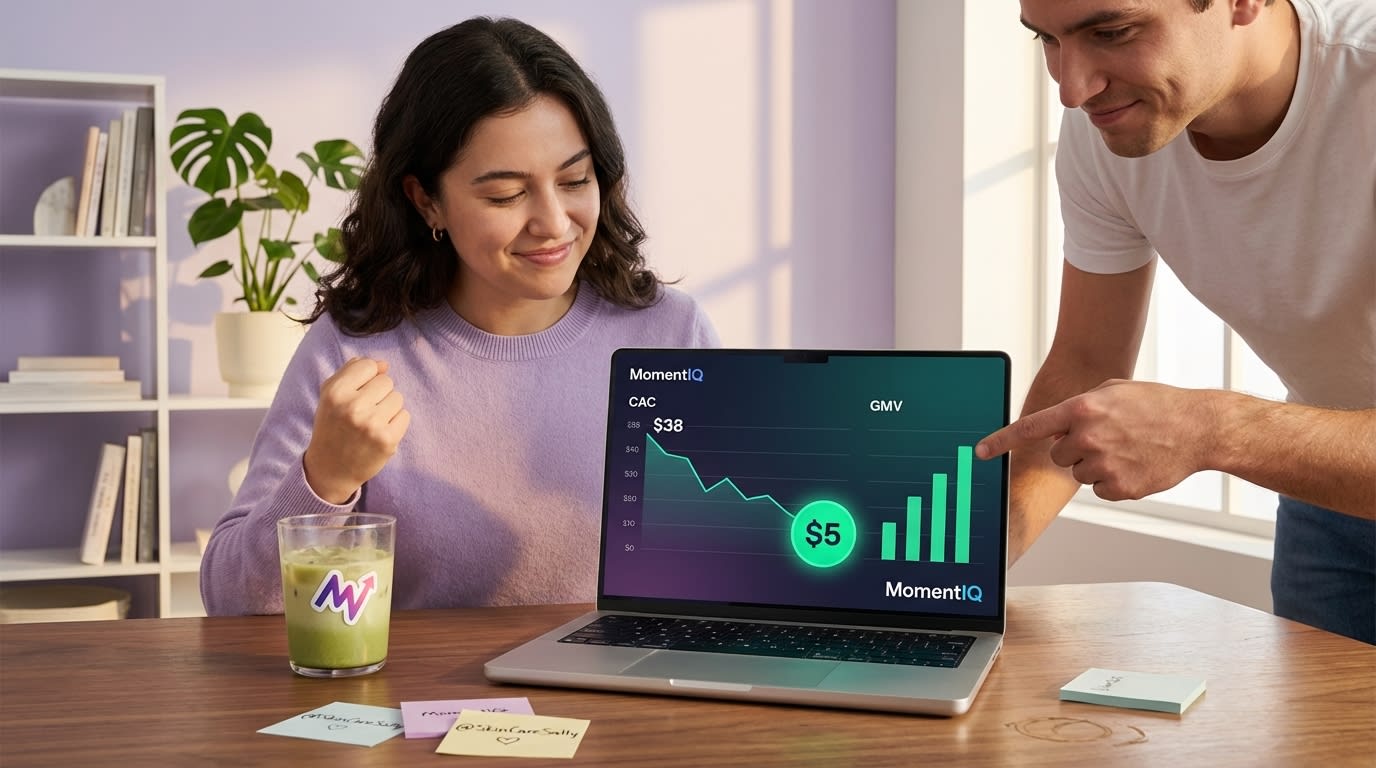
- Deploy creators at scale on TikTok Shop to drive CAC below $5, versus the $35–$85 CAC typical of Shopify stores relying on paid media.
- Recognize that TikTok Shop's U.S. GMV is projected to hit $17.5 billion by end of 2025—allocate budget now to capture early momentum.
- Don't choose between TikTok Shop and Shopify; evaluate each across specific dimensions like CAC, AOV, and organic reach, then deploy resources accordingly.
- Move beyond managing 15–30 creators manually—use algorithmic creator matching to scale affiliate content and avoid the DIY revenue leak.
- Leverage TikTok's 95 daily minutes of user attention and 67% unplanned shopping inspiration rate by prioritizing content that converts, not just attracts views.
It's the right question. It's also the wrong framing.
The brands crushing it in 2025 aren't choosing between TikTok Shop or Shopify for DTC brands — they're understanding which platform wins across which dimensions, then deploying capital and creative accordingly. The problem?Most comparisons you'll find online are surface-level feature tables that tell you nothing about customer acquisition cost trajectories, organic reach decay curves, or the creator-commerce gap that's quietly bankrupting brands who try to DIY their way through TikTok Shop.
This post goes deeper. We're pitting TikTok Shop against Shopify across 14 critical dimensions — from CAC and AOV to fulfillment complexity, brand ownership, and algorithmic reach potential — with real data, honest trade-offs, and a clear verdict on when each platform deserves your budget.
And if you're already sensing that TikTok Shop is where the momentum is but you're struggling with creator acceptance rates, inconsistent GMV, or content that gets views but not conversions — Talk to a Strategist to see exactly where your revenue is leaking.
Let's break this down.
Why the TikTok Shop vs Shopify Debate Matters More in 2025
This isn't 2023, when TikTok Shop was an experiment and Shopify was the undisputed DTC kingmaker.
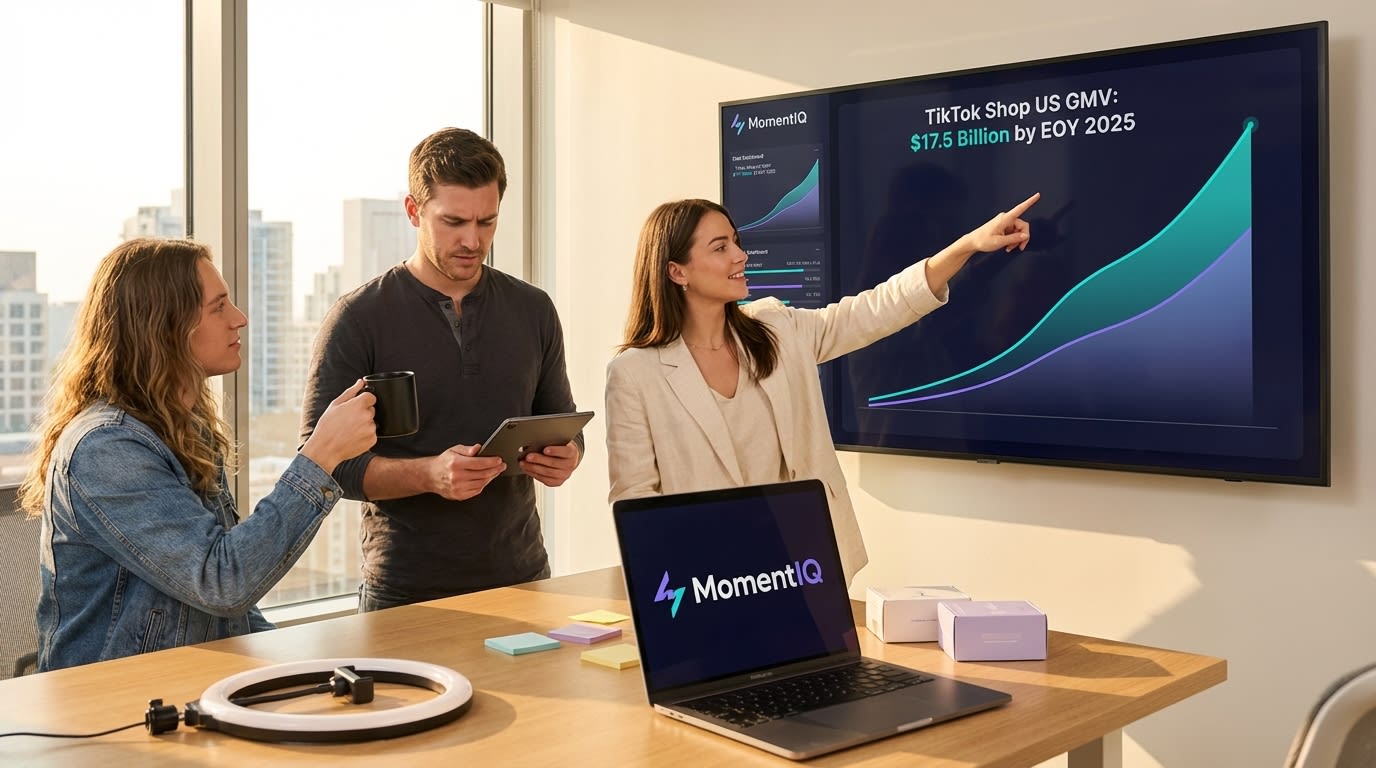
The landscape has shifted dramatically: - TikTok Shop's U.S.GMV surpassed $9 billion in 2024, according to estimates from eMarketer, and is projected to exceed $17.5 billion by the end of 2025.
- Shopify remains the backbone of DTC e-commerce, powering over 4.8 million stores globally (Statista, 2024) and processing $236 billion in cumulative GMV.- TikTok's average user now spends 95 minutes per day on the platform (DataReportal, 2024), and 67% of users say TikTok inspires them to shop even when they weren't planning to (TikTok Commerce Report, 2024).
The question isn't which platform is "better." It's which platform wins on the specific metrics that determine whether your brand scales or stalls.
Here are 14 head-to-head comparisons that actually matter.
Comparison #1: Customer Acquisition Cost (CAC)
Shopify CAC: Rising and Relentless
Shopify stores rely overwhelmingly on paid media — Meta Ads, Google Shopping, and increasingly, TikTok Ads — to drive traffic. The average Shopify store's CAC has increased 62% since 2021, driven by iOS privacy changes, rising CPMs, and ad fatigue (Triple Whale, 2024).
For most DTC brands, Shopify CAC now sits between $35 and $85 depending on category.
TikTok Shop CAC: Algorithmically Subsidized (For Now)
TikTok Shop flips the model. Creator-driven affiliate content generates organic impressions that cost you nothing beyond the affiliate commission. When a creator's video goes viral and drives 500 purchases, your effective CAC can drop below $5.
The catch? This only works if you have the right creators producing the right content at scale. Most brands running TikTok Shop in-house are managing 15-30 creators manually.The brands working with MomentIQ are deploying hundreds of algorithmically matched creators simultaneously, which is why one supplement brand scaled from $18K to $420K/month in GMV within 90 days through MomentIQ's creator matching system.
Verdict: TikTok Shop wins on CAC — but only if you solve the creator scale problem.
Comparison #2: Average Order Value (AOV)
Shopify AOV: Higher by Default
Shopify stores benefit from full site merchandising — upsells, bundles, cross-sells, and cart builders. Average Shopify AOV sits around $86 across all categories (Littledata, 2024).
TikTok Shop AOV: Lower, but Improving Fast
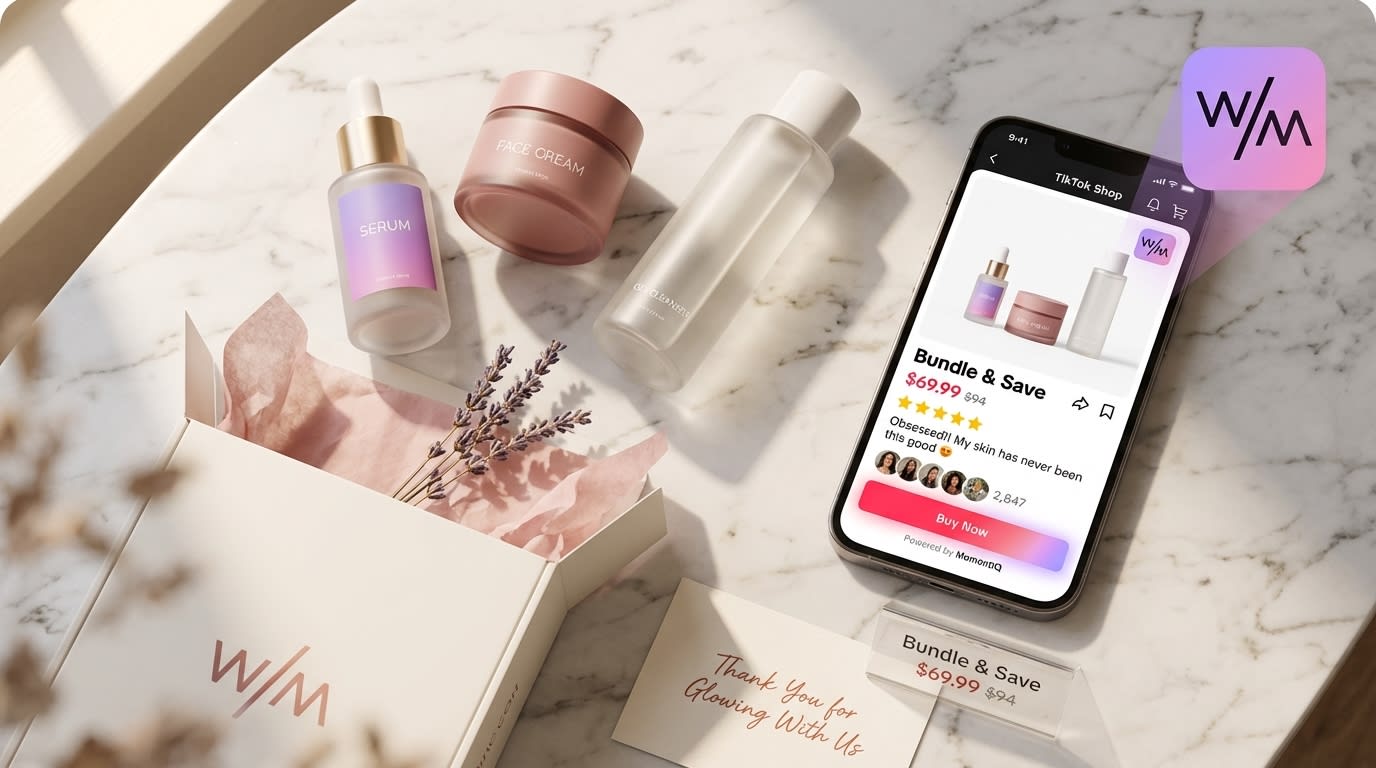
TikTok Shop's impulse-purchase nature means AOV typically ranges from $25 to $55. However, brands using bundle strategies, live commerce flash deals, and creator-led demonstrations of premium products are pushing AOV above $70.
Verdict: Shopify wins on AOV today, but TikTok Shop's gap is closing — especially for brands with strong live commerce strategies.
Comparison #3: Organic Reach Potential
Shopify: Essentially Zero Organic Reach
Let's be honest. Shopify has no native discovery mechanism. Your store is a destination, not a discovery platform. Every visitor must be driven there through paid ads, email, SEO, or social media. Organic reach from Shopify itself? Zero.
TikTok Shop: The Last Platform With Genuine Organic Distribution
This is TikTok Shop's nuclear advantage. The algorithm distributes content based on engagement signals, not follower count. A creator with 2,000 followers can generate a video that reaches 3 million people — and every view is a potential purchase with the product link embedded directly in the video.
According to TikTok's own commerce data, products featured in organic creator content see 2-3x higher conversion rates than products promoted through paid ads alone.
Verdict: TikTok Shop wins decisively. This is the single biggest reason DTC brands can't afford to ignore it.
Comparison #4: Brand Ownership and Data Control
Shopify: You Own Everything
Shopify gives you complete ownership of your customer data, email lists, purchase history, and brand experience. You control the pixel, the retargeting, the post-purchase flow. This is Shopify's enduring strength.
TikTok Shop: Platform-Mediated Relationships
On TikTok Shop, the customer relationship is partially intermediated by TikTok. You get transaction data, but you don't own the customer relationship the way you do on Shopify. You can't freely retarget, you can't build custom post-purchase email sequences natively, and your brand presentation is constrained by TikTok's interface.
Verdict: Shopify wins on brand ownership. Smart brands use TikTok Shop for acquisition and Shopify for retention — a strategy MomentIQ helps brands architect from day one.
Comparison #5: Speed to First Sale
Shopify: Weeks to Months
Building a converting Shopify store takes time — design, product photography, copywriting, payment setup, shipping configuration, then the real challenge: driving traffic. Most new Shopify stores take 30-90 days to generate their first meaningful sales.
TikTok Shop: Days to Weeks
A brand can list products on TikTok Shop, seed them to creators, and see sales within the first week if the creator content hits. One home goods brand working with MomentIQ generated $47K in GMV within their first 14 days on TikTok Shop by deploying a coordinated product seeding campaign across 85 creators.
Verdict: TikTok Shop wins on speed — especially with the right creator activation partner.
Comparison #6: Repeat Purchase Rate
Shopify: Built for Retention
Shopify's ecosystem — Klaviyo email flows, subscription apps, loyalty programs, SMS marketing — is engineered for repeat purchases. Top Shopify stores achieve 30-45% repeat purchase rates.
TikTok Shop: Acquisition-Heavy, Retention-Light
TikTok Shop is a discovery and first-purchase machine, but repeat purchase infrastructure is still maturing. Brands report repeat rates of 8-18% natively on TikTok Shop, though this is improving with features like Follow-to-Shop and in-app reorder capabilities.
Verdict: Shopify wins on repeat purchases. The winning play? Acquire on TikTok Shop, retain on Shopify.
Comparison #7: Creator and Affiliate Commerce
Shopify: Bolted On, Not Built In
Shopify supports affiliate marketing through third-party apps — Refersion, GoAffPro, ShareASale integrations — but none of these are native to the shopping experience. The creator posts on social media, the customer clicks a link, leaves the platform, navigates to your Shopify store, and then maybe converts. Every step is friction. Every step loses buyers.
TikTok Shop: Creator Commerce Is the Core Architecture
TikTok Shop was built around creator-driven commerce. The affiliate marketplace, product linking, in-video shopping, and live purchase flows are all native. There's zero friction between content consumption and purchase. A viewer watches a creator demo your product and buys it without ever leaving the app.
This is the gap that most brands underestimate — and it's the gap that MomentIQ was built to exploit. While Shopify requires you to build creator relationships externally and hope they drive traffic to your store, MomentIQ's algorithmic creator matching system identifies, recruits, and activates creators who are statistically most likely to convert for your specific product category — directly within TikTok Shop's native commerce infrastructure.
"We tried managing affiliates ourselves for four months. We had 23 active creators and couldn't break $30K/month. Within 60 days of working with MomentIQ, we had 200+ creators generating content and hit $185K in monthly GMV." — A skincare brand founder
Verdict: TikTok Shop wins overwhelmingly. Creator commerce isn't a feature on TikTok Shop — it's the entire business model.
Comparison #8: Fulfillment Complexity
Shopify: Mature, Flexible, Your Problem
Shopify integrates with virtually every 3PL, offers Shopify Fulfillment Network, and gives you complete control over shipping strategy. The ecosystem is mature. It's also entirely your responsibility to manage.
TikTok Shop: Fulfilled by TikTok (FBT) Changes the Game
TikTok's Fulfilled by TikTok (FBT) program handles warehousing, packing, and shipping — similar to Amazon FBA. For brands scaling quickly on TikTok Shop, FBT removes the operational bottleneck of sudden demand spikes. However, FBT is still rolling out across categories, and some brands report inventory management challenges during the transition.

Verdict: Shopify wins on fulfillment flexibility today, but FBT is rapidly closing the gap for TikTok-native brands.
Comparison #9: Paid Advertising Efficiency
Shopify + Meta/Google: Mature but Expensive
Shopify brands have access to the most sophisticated ad platforms in history — but they're also the most competitive. Average Meta CPMs increased 18% year-over-year in Q1 2025 (Varos), and Google Shopping ROAS has declined for 7 consecutive quarters in most DTC categories.
TikTok Shop Ads: Underpriced and Integrated
TikTok Shop Ads — including Spark Ads, Product Shopping Ads, and LIVE Shopping Ads — benefit from lower CPMs (averaging $4-8 vs. Meta's $10-14 in comparable DTC categories) and the unique advantage of blending paid promotion with organic creator content. When a Spark Ad amplifies an already-converting creator video, the ROAS can be extraordinary.
Verdict: TikTok Shop Ads are currently underpriced relative to performance. This window won't last forever — brands investing now are locking in algorithmic advantages that compound over time.
Comparison #10: Content Requirements
Shopify: Polished, Produced, Expensive
Shopify stores demand professional product photography, studio-quality lifestyle images, and polished brand creative. A single product launch might require $5,000-$15,000 in content production before a single ad runs.
TikTok Shop: Authentic, Creator-Led, Scalable
TikTok Shop rewards authenticity over production value. Creator-generated content (CGC) shot on iPhones consistently outperforms studio content in TikTok's algorithm. The content cost shifts from production budgets to creator commissions and product seeding — a model that scales linearly with revenue rather than requiring upfront capital.
This is where brands running TikTok Shop in-house hit a wall. Generating enough quality creator content to sustain algorithmic momentum requires 50-200+ active creators posting consistently. Managing that manually? Impossible. That's exactly why MomentIQ built its proprietary creator matching and product seeding infrastructure — to generate a continuous pipeline of converting content without your team drowning in DMs and spreadsheets.
Verdict: TikTok Shop wins on content scalability, but only if you solve the creator volume challenge.
Comparison #11: Platform Risk
Shopify: Stable, Predictable, Yours
Shopify isn't going anywhere. Your store exists independently. Even if Shopify raised prices or changed features, your brand, customer data, and business fundamentals remain intact. Platform risk is minimal.

TikTok Shop: Real but Manageable Risk
Let's address the elephant in the room. TikTok has faced regulatory scrutiny in the U.S., and platform dependency is a legitimate concern. However, TikTok Shop has now processed billions in U.S. transactions, major retailers are active on the platform, and the commerce infrastructure continues to receive massive investment.
The pragmatic approach? Use TikTok Shop as your most powerful acquisition channel while building owned assets (email lists, Shopify store, SMS subscribers) from TikTok-acquired customers. This hedged strategy gives you the upside of TikTok Shop's explosive growth without existential platform risk.
Objection: "But what if TikTok gets banned?"
Fair concern. But consider: brands that waited to build on Instagram in 2014 because "it might not last" missed the single greatest organic marketing window in DTC history. The cost of waiting for certainty is almost always higher than the cost of strategic, hedged action. The brands building TikTok Shop presence now — while CAC is low and organic reach is high — are accumulating customers, revenue, and brand equity that transfers regardless of platform.
Verdict: Shopify wins on platform stability. But the risk of not being on TikTok Shop in 2025 may be greater than the risk of being on it.
Comparison #12: International Expansion
Shopify: Global by Design
Shopify supports 175+ countries, multiple currencies, localized checkout, and international shipping integrations. If global expansion is your priority, Shopify is proven infrastructure.
TikTok Shop: Expanding Rapidly
TikTok Shop is live in the U.S., UK, Southeast Asia, and expanding into additional markets throughout 2025. The global footprint is growing, but it's not yet Shopify's equal in terms of geographic coverage.
Verdict: Shopify wins on international reach today. TikTok Shop is catching up fast in the markets that matter most for DTC.
Comparison #13: Analytics and Attribution
Shopify: Deep but Fragmented
Shopify's analytics are comprehensive for on-site behavior — conversion rates, cart abandonment, product performance. But attribution for off-site traffic is increasingly broken thanks to privacy changes. Brands spend thousands on attribution tools (Triple Whale, Northbeam, Rockerbox) trying to understand which ads actually drove which sales.
TikTok Shop: Closed-Loop Attribution
Because the entire purchase journey — discovery, consideration, and conversion — happens within TikTok's ecosystem, attribution is cleaner. You can see exactly which creator's video drove which sales, at what commission rate, with what conversion rate. This closed-loop data is a marketer's dream.
MomentIQ layers proprietary analytics on top of TikTok Shop's native data, giving brands visibility into creator-level ROI, content performance patterns, and predictive GMV modeling that generic dashboards can't provide.
Verdict: TikTok Shop wins on attribution clarity. When you can see exactly which creator drove which dollar, you can scale what works and cut what doesn't — fast.
Comparison #14: Competitive Saturation
Shopify: Crowded and Getting Worse
With 4.8 million+ active stores, Shopify is a crowded marketplace. Standing out requires significant ad spend, strong brand differentiation, and increasingly sophisticated marketing operations. The easy wins on Shopify ended years ago.

TikTok Shop: Early Innings with a Closing Window
TikTok Shop in the U.S. is still in relative early innings. Category competition varies — beauty and supplements are getting crowded, but home goods, pet products, fitness equipment, food and beverage, and dozens of other categories still have massive white space.
Here's the urgency: this window is closing. Every month, more brands enter TikTok Shop, more creators get saturated with partnership requests, and the algorithmic advantage of early movers compounds. Brands that establish strong creator networks and content velocity now will have structural advantages that latecomers can't replicate — because the best creators will already be locked into partnerships, and the algorithm will already favor established sellers.
Verdict: TikTok Shop wins on competitive opportunity — but the clock is ticking.
The Verdict: When to Go All-In on TikTok Shop, When to Run Both, and When Shopify Is Enough
After 14 head-to-head comparisons, here's the honest framework:
Go All-In on TikTok Shop When:
- Your product is visually demonstrable and priced under $75
- You're in a category with strong creator interest (beauty, wellness, home, fitness, food)
- You're a new brand that needs fast customer acquisition without massive ad budgets
- You can solve the creator scale problem (more on this below)
Run Both Platforms When:
- You want TikTok Shop for acquisition and Shopify for retention and brand building
- You sell products at multiple price points (impulse buys on TikTok, premium bundles on Shopify)
- You want to hedge platform risk while maximizing growth
- You're building a long-term brand, not just chasing short-term GMV
This is where most serious DTC brands should be in 2025. The dual-platform strategy — acquiring customers through TikTok Shop's creator-driven commerce engine and retaining them through Shopify's owned-channel infrastructure — is the highest-ceiling approach.
Stick with Shopify Only When:
- Your product doesn't translate to short-form video (complex B2B, highly technical)
- Your target customer skews 55+ and isn't active on TikTok
- You have a strong existing Shopify business with healthy CAC and you're not ready to add operational complexity
The Creator Commerce Gap: Why This Comparison Misses the Biggest Point
Here's what every TikTok Shop vs Shopify comparison gets wrong: the platform is only as powerful as your ability to activate it.
TikTok Shop's advantages in CAC, organic reach, attribution, and creator commerce are real — but they're theoretical advantages unless you can actually:
- Recruit creators at scale (not 20, not 50 — hundreds)
- Match the right creators to your products based on audience demographics, content style, and conversion history
- Seed products efficiently so creators actually receive, use, and post about your products
- Maintain content velocity so the algorithm continuously serves your products to new audiences
- Optimize affiliate commission structures to maximize creator motivation without destroying margins
This is where brands hit the wall. And this is where the "we can manage creators ourselves" objection falls apart.
The math is simple: if your team can manage 30 creators and each generates an average of $800/month in GMV, you're at $24K/month. If MomentIQ's algorithmic matching system deploys 300+ creators with optimized content and commission structures, and each generates $1,200/month in GMV, you're at $360K/month. The agency fee pays for itself within the first week of the engagement.
One beauty brand experienced exactly this trajectory — scaling from $22K to $310K in monthly GMV within 75 days after MomentIQ took over their creator strategy, replacing manual outreach with algorithmic matching and managed product seeding at scale.
Objection: "We've tried agencies before and they didn't deliver."
Most agencies treating TikTok Shop like traditional influencer marketing are failing because they're applying Instagram playbooks to a fundamentally different platform. MomentIQ isn't a generic influencer agency. As TikTok's Shop Partner of the Year and a certified TikTok Marketing Partner, MomentIQ operates with proprietary data, algorithmic creator matching technology, and a team that lives inside TikTok Shop's ecosystem daily. The difference between a generic agency and MomentIQ is the difference between a travel agent who's read about Paris and one who's lived there for a decade.
How MomentIQ Bridges the Gap Shopify Can't Touch
Shopify is exceptional at what it does — powering your owned storefront, managing transactions, and enabling retention marketing. But Shopify has zero native capability to help you:
- Identify which TikTok creators will actually convert for your product
- Manage product seeding logistics across hundreds of creators
- Optimize affiliate commission structures based on real-time performance data
- Maintain the content velocity required to sustain algorithmic momentum
- Execute live commerce events that drive five-figure single-session revenue
This is MomentIQ's entire reason for existing.
MomentIQ is the leading TikTok Shop growth agency — a TikTok Shop Partner of the Year and FastMoss Visionary Award winner — built specifically to solve the creator commerce challenges that determine whether brands win or lose on TikTok Shop.
Here's what that looks like in practice:
- Algorithmic Creator Matching: Not manual outreach. Not spray-and-pray DMs. MomentIQ's proprietary system analyzes creator audience demographics, content performance patterns, engagement-to-conversion ratios, and category affinity to match your products with creators statistically most likely to drive sales.
- Product Seeding at Scale: MomentIQ manages the entire seeding pipeline — creator recruitment, product shipment, content tracking, and performance optimization — so your team isn't buried in logistics.
- Full-Funnel Commerce Support: From listing optimization to live commerce strategy to ad amplification, MomentIQ provides the complete TikTok Shop growth stack.
- Proprietary Analytics: Real-time visibility into creator-level ROI, content performance, and predictive GMV modeling that goes far beyond TikTok Shop's native dashboard.
Objection: "We don't have the budget for an agency."
Consider this: if your current TikTok Shop CAC is $25 and MomentIQ's creator-driven approach drops it to $8, you're saving $17 per customer. At 1,000 customers per month, that's $17,000 in savings — likely more than the agency fee. The question isn't whether you can afford MomentIQ. It's whether you can afford the opportunity cost of scaling slowly while competitors lock in creator relationships and algorithmic advantages.
The Compounding Cost of Waiting
Here's what keeps the smartest DTC operators up at night: TikTok Shop's advantages are time-sensitive.
- Creator relationships compound. Brands building creator networks now are locking in partnerships that won't be available to latecomers.
- Algorithmic history compounds. TikTok's algorithm favors sellers with established track records of sales velocity, positive reviews, and consistent content.
- Category positioning compounds. The first brands to dominate a TikTok Shop category build moats that are expensive to breach.
- CAC advantages erode. As more brands enter TikTok Shop, competition for creator attention and ad inventory will increase costs — just as it did on Meta and Google.
According to Insider Intelligence, social commerce in the U.S. is projected to reach $108 billion by 2025, with TikTok capturing an increasingly dominant share. The brands building now will own disproportionate market share. The brands waiting will pay premium prices to play catch-up.
Your Next Move: The 14-Dimension Decision Framework
Here's a quick summary of all 14 comparisons:
| Dimension | Winner | Margin |
|---|---|---|
| Customer Acquisition Cost | TikTok Shop | Large |
| Average Order Value | Shopify | Moderate |
| Organic Reach Potential | TikTok Shop | Massive |
| Brand Ownership & Data | Shopify | Large |
| Speed to First Sale | TikTok Shop | Large |
| Repeat Purchase Rate | Shopify | Large |
| Creator & Affiliate Commerce | TikTok Shop | Massive |
| Fulfillment Complexity | Shopify | Moderate |
| Paid Advertising Efficiency | TikTok Shop | Moderate |
| Content Requirements | TikTok Shop | Large |
| Platform Risk | Shopify | Moderate |
| International Expansion | Shopify | Moderate |
| Analytics & Attribution | TikTok Shop | Large |
| Competitive Saturation | TikTok Shop | Large |
TikTok Shop wins 8 of 14 dimensions. Shopify wins 6. But the dimensions TikTok Shop wins — CAC, organic reach, creator commerce, attribution, competitive opportunity — are the dimensions that determine growth trajectory in 2025.
Shopify wins on the dimensions that determine stability and long-term brand equity — ownership, retention, fulfillment maturity, and platform risk.
The optimal strategy for most DTC brands: use TikTok Shop as your primary growth engine and Shopify as your brand fortress. Acquire aggressively through TikTok Shop's creator-driven commerce. Retain and build lifetime value through Shopify's owned-channel ecosystem.
And if you want to actually capture TikTok Shop's theoretical advantages — not just read about them — you need a partner who's built the infrastructure to activate creators at scale, optimize content for conversion, and sustain the velocity that TikTok's algorithm rewards.
That partner is MomentIQ.
Talk to a Strategist and see your custom scaling roadmap — including projected GMV, recommended creator strategy, and the specific steps to turn TikTok Shop from a side experiment into your most profitable acquisition channel.
The brands that move now will own 2025. The brands that wait will spend 2026 trying to catch up.
Your competitors are already on the call. Are you?